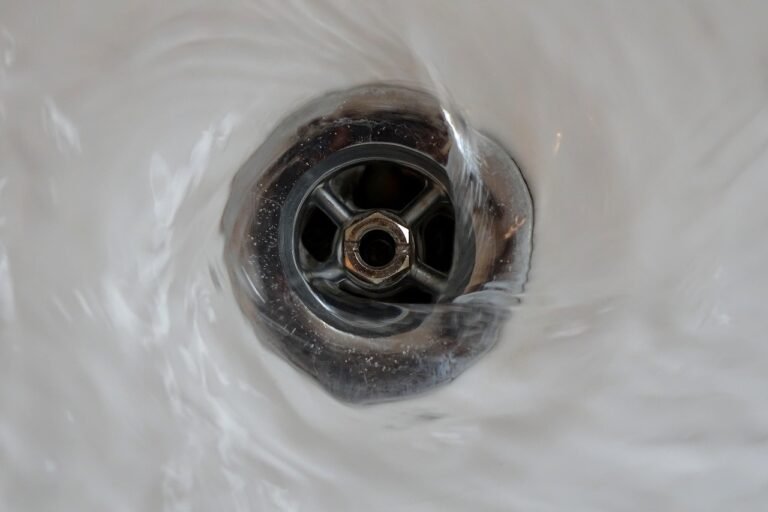

With gloves on, you can remove hair and slime, scrub reachable surfaces, and rinse away residue in a hands-on cleanup process. The dark material is usually biofilm, soap scum, body oils, and trapped hair. You should pull out debris before adding any drain product.
This practical cleanup plan helps you sort surface buildup from a deeper clog, handle odors safely, and recognize plumbing symptoms that need professional attention.
Black Sludge Forms From Biofilm, Soap Scum, and Hair
A shower drain stays damp after the tile dries. That moisture feeds biofilm, a sticky layer of bacteria and organic residue that clings to the cover and upper pipe wall. Shampoo, conditioner, body oils, soap scum, and hair give the buildup its black or dark gray color.
Surface residue and deeper material need different handling. A soft black coating near the opening can smear like wet paste, while a drain hair clog sits lower in the pipe and catches more residue. Your cleanup starts with identifying where the material is sitting.
Surface Film and Pipe Debris Look Different
Black slime in shower drain openings usually wipes away with paper towels or a small brush. Gray or black crust around a metal cover can also be mildew mixed with soap scum. You should scrub both areas, but surface staining alone does not prove that a pipe has a serious blockage.
Hair caught below the opening acts like a net. Conditioner, shaving residue, and skin oils stick to the hair, creating a dark clump that slows water and creates a stale smell. A P-trap below the drain holds water to block sewer gases, so a dry or damaged trap creates a separate odor problem.
| What you see or smell | Likely source | What it means for your next step |
|---|---|---|
| Soft black coating on the cover | Biofilm and soap residue | Scrub the reachable surface. |
| Hair near the opening | Drain hair clog | Pull it out before rinsing. |
| Water pools at your feet | Debris below the opening | Use a barbed tool or narrow snake. |
| Sewage odor or dirty backup | P-trap, vent, or line issue | Stop DIY work and contact a plumber. |
A shower drain smells bad for two main reasons: decaying residue near the opening or sewer gas from farther down. Musty or sour air points toward biofilm and hair. A sharp sewage smell, gurgling, or wastewater rising into the shower points beyond surface cleanup.
That odor difference directs the next move. You need a method suited to the material and drain behavior rather than a liquid poured into an unknown blockage.
Drain Symptoms Direct the Cleanup Method
Visible strands near the cover call for physical removal, while slow water points to debris below the rim. Watch the drain for one full minute after the water stops. Your shower gives clear clues before any liquid enters the pipe.
Water Movement Narrows the Cause
Fast flow with a dark ring around the cover is a surface-cleaning task. Slow flow without standing water points to a partial clog. Water that rises and remains for several minutes signals a denser obstruction, where liquids can remain trapped above the blockage.
Gurgling means air is struggling to move through the plumbing system. A slow tub, sink, or toilet at the same time points toward a shared branch line rather than one shower drain. Your bathroom fixtures can reveal whether the trouble extends beyond the shower.
| Symptom | Method | Expected effect |
|---|---|---|
| Black coating on the cover | Brush and hot-water rinse | Less visible residue and odor. |
| Hair below the opening | Plastic barbed tool | Physical removal of the clog. |
| Lingering organic odor | Enzyme drain cleaner | Breakdown of leftover organic film. |
| Light stale smell with normal flow | Baking soda and white vinegar | Short-term odor freshening. |
Baking soda and white vinegar fizz because an acid and alkali react. The bubbles do not have enough force to clear a dense mass of hair. You can use the mixture for light deodorizing after physical cleanup, but it will not pull a rope-like wad from the drain line.
Dawn dish soap can loosen greasy conditioner residue around a partial blockage. It is not a dependable way to unclog a shower drain with packed hair. Drano, Liquid-Plumr, and Green Gobbler face the same limit when a physical hair mass blocks the pipe.
Because a failed chemical treatment may still be sitting in the trap, protect yourself before reaching in.
Safe Preparation Limits Fumes and Splashback
Residue from an earlier drain product can remain inside the pipe even after the shower looks empty. Open a window or run the bathroom exhaust fan before starting. You should keep children and pets away until the shower floor is dry and the tools are stored.
Basic Tools Keep the Work Controlled
- Rubber gloves: Shield your hands from wet grime, sharp cover edges, and leftover product residue.
- Flashlight: Shows hair packed just beyond the drain opening.
- Paper towels: Catch slime before it drops farther into the pipe.
- Small brush: Scrubs stopper parts, cover slots, and reachable pipe walls.
- Trash bag: Holds extracted hair instead of sending it into the toilet.
- Plastic barbed tool: Reaches debris without scraping pipe walls like a metal hook.
Set a towel beside the shower before lifting the cover. The towel keeps black gunk out of grout lines and gives you a clean resting spot for screws, stopper caps, and the drain cover.
Bleach Safety Comes Before Any Rinse
Never mix bleach with white vinegar, ammonia, acidic cleaners, or an unknown previous drain product. Hazardous gases can form, and a blocked pipe can hold fumes close to your face.
Skip chemical cleaner in a fully blocked drain. Liquid can sit above the clog and splash back during snaking. Older metal pipes, some plastic fittings, and septic systems also need extra care around strong caustic products.
Ask household members about recent bleach, toilet-bowl cleaner, or drain-product use. Your safest route after an uncertain chemical history is mechanical removal followed by plain hot tap water, not another reactive product.
Manual Removal Clears Reachable Sludge and Hair
Pulling out trapped material changes water flow faster than pouring liquid over it. Start with the cover or stopper because that part holds hair you can reach without taking apart the P-trap. Your hands and a plastic tool handle most upper-drain buildup.
Stopper Parts Need Scrubbing and Extraction
Lift a snap-in cover with the edge of a flat screwdriver or remove its center screw. A pop-up stopper can lift straight out, while some designs use a small set screw. Stop before forcing any part that resists, because your shower hardware can differ by model.
Use gloved fingers or a disposable hook to lift visible strands. Drop the clump directly into the trash bag. Hair sent into the toilet can catch in another narrow bend, so disposal outside the plumbing keeps the material out of the system.
- Clear the rim: Wipe black residue from the drain cover and surrounding lip with paper towels.
- Scrub contact points: Brush cover slots, the stopper stem, and the reachable pipe wall for 30 seconds.
- Feed the tool: Slide a Zip-It drain tool or narrow drain snake slowly into the opening.
- Withdraw slowly: Pull upward without hard twisting so the barbs catch hair and slime.
- Bag the debris: Wipe the tool into the trash bag before making another pass.
- Rinse the pipe: Run hot tap water for one to two minutes after extraction.
A plastic Zip-It drain tool bends through the upper curve without gouging soft plastic. A narrow hand-crank drain snake reaches farther, but hard turning can snag a stopper linkage. Your next move is to stop at firm resistance rather than force the cable into a trap arm.
Scrubbing matters because attached biofilm behaves like wet glue. Flushing can move loose fragments while leaving a dark layer on the pipe wall. That remaining film collects fresh shampoo residue after your next shower.
Removing the bulk restores flow, yet the film left behind determines whether a follow-up product can help.
Follow-Up Products Have Limited Roles
Hot tap water carries away loose soap residue after you pull the clog. It cannot dissolve a thick knot of hair by itself. Boiling water can stress some plastic drain parts or loosen old seals, so hot tap water is the safer rinse.
Enzyme Products Address Organic Residue
During its stated dwell time, biological enzymes break down organic residue inside the drain. Bio-Clean is one named example sold for organic drain buildup. Your label directions control the amount, contact time, and rinse timing.
Use an enzyme product after brushing and extraction, not instead of those tasks. Its slower action fits lingering odor or film on reachable surfaces. A physical wad still needs a Zip-It tool or drain snake.
Kitchen Products Work Only on Light Residue
| Option | Useful role | Limit |
|---|---|---|
| Hot tap water | Rinses loose soap residue. | Does not pull out hair. |
| Baking soda and white vinegar | Freshens a light stale smell. | Does not clear dense clogs. |
| Dawn dish soap | Helps rinse greasy conditioner residue. | Does not open a packed blockage. |
| Enzyme drain cleaner | Works on residual organic film. | Needs dwell time and clear flow. |
The right drain cleaner for black sludge depends on what remains after extraction. A brush removes attached surface film, a drain snake grabs hair below the rim, and an enzyme product suits leftover organic residue. You should reserve harsh chemical openers for situations where the label fits both your pipe material and blockage type.
Do not pour baking soda, white vinegar, Dawn, or an enzyme product into a drain that still contains a caustic opener. Flush only after the product label allows it, or contact a plumber for direction.
Routine Hair Removal and Plumbing Signs Shape Your Next Step
A hair catcher turns a hidden pipe chore into a visible five-second task. Empty it after showers, wipe the cover each week, and brush the opening once a month. Your drain stays cleaner because loose hair never reaches the narrow upper bend.
Small Habits Limit Returning Slime
- Clear the catcher: Remove strands after each shower before conditioner dries around them.
- Wipe the cover: Use a damp cloth each week to lift oils from metal or plastic slots.
- Rinse with water: Run hot tap water for one minute after a heavy product wash.
- Brush monthly: Scrub accessible surfaces before a black ring becomes thick and sticky.
- Use enzyme care: Follow label directions for periodic odor control after manual cleanup.
Repeated chemical pouring creates uncertainty inside the pipe. Another mistake is treating a returning sewage-like odor as surface grime. Your bathroom can need a P-trap, vent, or branch-line inspection rather than more drain product.
System Symptoms Require a Plumber
Contact a plumber after manual work fails to restore normal flow or after black buildup returns within days. Water backing into the shower, gurgling during toilet flushes, foul sewage odor, and multiple slow fixtures point to a deeper blockage or vent issue.
A dry P-trap can release sewer gas after a long vacancy, while a clogged line can push wastewater toward the lowest fixture. How to clean black sludge from a shower drain stops being a surface task once those system signs appear. Your next step is professional diagnosis rather than stronger chemicals.
Final Thoughts
Dark shower residue becomes manageable once you separate surface biofilm from hair packed below the drain opening. Pull out physical debris, scrub the parts within reach, and use rinses or enzymes for residue left behind. You protect your pipes and indoor air by avoiding chemical mixtures, while persistent odors, gurgling, and backups need plumbing attention.
FAQ
What is the black slime in my shower drain?
Inside a damp shower drain, the dark buildup often combines biofilm, bacteria, hair, soap scum, body oils, and product residue. You can also see mildew around the cover, but a dark coating near the opening does not automatically mean mold has spread inside your plumbing.
How do you clean black sludge from a shower drain step by step?
Remove the stopper or cover, wipe away visible slime, scrub the rim and reachable pipe wall, then pull hair with a Zip-It drain tool or narrow drain snake. You should bag the extracted debris and run hot tap water for one to two minutes after removal.
What drain cleaner works for black sludge?
After removing hair and scrubbing reachable surfaces, an enzyme cleaner can target leftover organic film. A brush works better for cover residue, while a barbed tool or drain snake works better for a hair clog. You should not rely on any liquid product to pull out dense hair.
Do baking soda and vinegar actually work to unclog drains?
Baking soda and white vinegar can loosen light residue and freshen a mild drain odor, but they do not reliably clear a dense hair clog. You get better results by pulling out hair with a barbed tool, then using the fizzing mixture only for light follow-up cleaning.
Does Dawn dish soap unclog drains?
Dawn can help rinse greasy soap and conditioner residue through a drain that already has decent flow. It will not dissolve or pull out packed hair. Your shower needs physical extraction with a Zip-It tool or drain snake before dish soap has a useful role.
Is it safe to use bleach for black sludge in a shower drain?
Bleach can create hazardous fumes when it contacts white vinegar, ammonia, acidic cleaners, or unknown drain products. You should ventilate the room and avoid bleach in a blocked drain, where liquid and fumes can remain trapped near the opening.