
Walk-in cooler doors that fog up the moment the sun hits them, lobby entrances that swap summer air for AC, and side doors that funnel flies straight into the kitchen: an air curtain won’t fix every climate problem, but it solves the ones most people quietly accept. These six over-door fans are built to keep conditioned air in, outdoor air out, and pests on the wrong side of the threshold. Each one earned its spot by matching a real doorway, not by padding a list.
An Overview Of The Picks
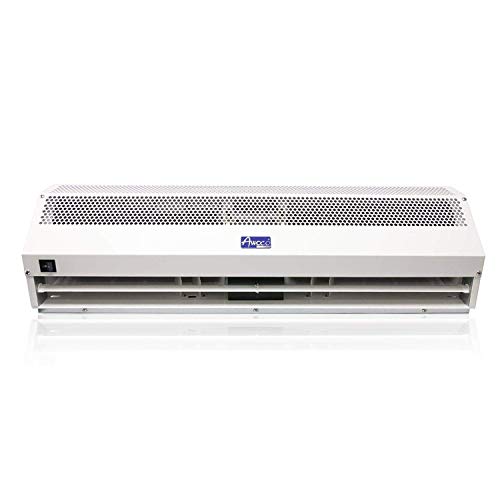
Awoco 36″ Super Power 1200CFM Air Curtain (UL Certified)

Awoco 42″ Super Power 1350CFM Air Curtain

DuraSteel 60-Inch Wall Mounted Air Curtain

DuraSteel 40-Inch Wall Mounted Air Curtain

DuraSteel 36-Inch Wall Mounted Air Curtain

Awoco 36″ Elegant 900 CFM Air Curtain
More On The Choices That Made The List
Front-of-house doorways that swing open every few minutes need more than a polite breeze, and this Awoco unit delivers that without sounding like a small jet. The 1200 CFM motor pushes a steady column of air across a 36-inch opening, while a two-speed switch lets you drop output during slower shifts.
Setup is one of the easier installs in this category. The included magnetic door switch is the real upgrade: walk through and the curtain powers on, shut the door and it powers down, so the unit isn’t burning electricity while nobody’s around. For a coffee shop, server room entry, or service counter, that on-demand behavior pays off in cooler bills within a season.
What Stands Out
- 1200 CFM airflow tackles a standard 3-foot door with room to spare.
- UL certification on the motor means it’s cleared for commercial installations.
- Magnetic switch cuts power automatically when the door is shut, saving energy on slow days.
- Two-speed control lets you tone it down in offices or during off-peak hours.
Trade Offs To Consider
- Unheated only, so it’s a year-round cooling/insulation tool, not a winter heater.
- At full speed, owners commonly note the noise level suits commercial lobbies better than quiet home offices.
Who It Suits Best
Shop owners and facility managers running a 3-foot commercial door who want a code-friendly, automatic unit that won’t idle through the night.
Look Elsewhere When
Your doorway is wider than 40 inches or you need a quieter presence in a customer-facing boutique, where the Awoco 36″ Elegant 900 CFM Air Curtain is a calmer match.
Step up six inches and the airflow story changes. The 42-inch Awoco moves 1350 CFM, which is the highest output in this roundup, and the wider housing gives that column better coverage over sliding or double-door entries. The first pick above is plenty for a single front door, but this is the one for warehouse and back-of-house use.
It still runs on a standard 120V outlet, so no special wiring is needed at most small-business sites. The same magnetic switch logic carries over, which is genuinely useful for loading bays where staff forget to flip a switch at the end of the day.
Positive Points
- 1350 CFM handles wider entries without the air stream breaking up mid-door.
- 42-inch width is a good match for double commercial doors and sliding storefronts.
- Standard 120V power keeps installation simple for small businesses.
- Magnetic door switch keeps energy use tied to actual foot traffic.
Worth Bearing In Mind
- It’s overkill for a single home entry or a 30-inch door.
- Unheated, so winter insulation depends on other measures like vestibules or strip curtains.
Built With In Mind
Warehouse managers, back-of-house staff, and shop owners with double or sliding doors that see constant traffic through the workday.
Swap It Out When
Your entry is a standard 3-foot single door, where the Awoco 36″ Super Power 1200CFM Air Curtain covers the same idea at a friendlier size.
Wide openings break narrow air columns: the stream disperses halfway across, and conditioned air leaks around the edges. The DuraSteel 60-inch solves that with sheer width, which is why it earns a spot ahead of the Awoco pair for very large entries. Loading docks, restaurant patios with roll-up doors, and auto-shop bays all open wider than a standard door.
The metal body is the kind of detail that matters in industrial settings, where plastic housings tend to yellow or crack after a couple of summers. DuraSteel also includes its MS switch for the same on-demand behavior the Awoco units offer, so the motor isn’t running while the bay door is closed for hours.
Useful Strengths
- 60-inch housing covers roll-up doors and oversized garage entries in a single unit.
- Metal construction handles the dust, grease, and temperature swings of a working bay.
- MS door switch ties operation to actual door use, not a manual toggle.
- Wall-mount design keeps the floor clear of carts and equipment.
Honest Caveats
- Larger housing means a heavier unit, so the wall or header above the door needs proper mounting hardware.
- Unheated, so it’s not a substitute for a heated vestibule in deep winter.
Key Advantages
Right Fit For
Workshop owners, warehouse staff, and restaurant operators with wide roll-up or patio doors that need year-round pest and dust control.
A Better Fit Elsewhere
Your doorway is a standard 3-foot entry, where the DuraSteel 36-Inch Wall Mounted Air Curtain is sized for the door you actually have.
Between the 60-inch giant above and the 36-inch smaller sibling below sits this 40-inch DuraSteel, which is the right fit for the bulk of commercial doorways. Most walk-in coolers, prep-room entries, and back-of-house doors measure right around 40 inches, and that’s exactly the width this housing is built to cover.
The metal build and MS switch mirror the wider DuraSteel unit, so the on-demand behavior is consistent across the brand. The difference is footprint: smaller housing, lighter weight, and easier to mount above a door that doesn’t have a beefy header to spare.
Good Reasons To Consider
- 40-inch width matches a standard commercial doorway without overshooting the frame.
- Metal housing stands up to back-of-house humidity and cleaning chemicals.
- MS switch makes the unit hands-free for staff who forget to toggle a switch.
- Wall-mount design keeps the unit out of the way of carts and foot traffic.
Less Ideal Details
- Doesn’t stretch to cover a double or roll-up door, where the 60-inch DuraSteel is the right tool.
Feature Rundown
Best Suited To
Back-of-house staff, prep cooks, and small-business owners running a standard 3 to 4-foot commercial door with steady foot traffic.
Not Your Match When
Your entry is a roll-up or double door, where the DuraSteel 60-Inch Wall Mounted Air Curtain is the right scale.
Single back doors and side entries don’t need a 60-inch housing, and a too-wide unit looks bulky above a 36-inch opening. The 36-inch DuraSteel shares the metal construction and MS switch of its bigger siblings, just in a frame that suits tighter commercial or back-of-house doors.
For a home shop, small restaurant, or garage side door, this is a sensible size. The motor is rated for long continuous runs, which matters in environments where the door stays open on and off through a full shift.
The Helpful Details
- 36-inch housing fits a single back door or service entry without overhang.
- Metal build handles the same workshop and kitchen environments as the wider DuraSteel units.
- MS switch is included, so door activity controls the unit without manual toggling.
- Motor rated for extended operation suits busy single-shift environments.
Points To Keep In Mind
- Too narrow for a double door or roll-up entry.
- Unheated only, so deep winter insulation needs a different layer.
Made For
Small-shop owners, garage hobbyists, and back-of-house staff running a single 3-foot door with steady but not constant traffic.
Reach For A Different Pick When
You have a 40-inch or wider commercial doorway, where the DuraSteel 40-Inch Wall Mounted Air Curtain covers the same door with proper width.
The 1200 CFM Awoco at the top of this list is built for loud, busy entries. This Elegant 36-inch keeps the same housing and magnetic switch but trims output to 900 CFM, which lands in a quieter, more customer-friendly zone. Boutique retail, dental offices, and tasting rooms all benefit from a softer air column that doesn’t shout over conversation.
Two-speed control still lets you bump up for the morning rush and dial it back during the afternoon lull, and the white housing blends into most interior trim. In our view, this is the easiest pick on the list for a first-time installation in a small business.
Practical Pluses
- 900 CFM output runs quieter than the higher-CFM Awoco units above.
- 36-inch housing fits a standard 3-foot entry without visual bulk.
- Two-speed switch supports a low setting for slow hours.
- White housing suits customer-facing lobbies and boutique interiors.
Small Caveats
- Lower CFM means a weaker barrier against strong wind or heavy door traffic.
- Unheated, so it won’t add warmth on cold winter days.
- Lighter airflow may not be enough for industrial settings with constant forklift or pallet traffic.
Spec Overview
Who Will Love This
Boutique retail owners, office managers, and small-clinic staff running a 3-foot entry who want a quieter unit that doesn’t dominate the lobby.
Consider Something Else When
You run a high-traffic commercial kitchen or loading dock, where the Awoco 36″ Super Power 1200CFM Air Curtain handles the heavier workload.
What To Weigh Before Choosing An Air Curtain
Air curtains look simple, but the wrong size or the wrong motor turns one into a noisy decoration. Match the unit to the doorway first, then dial in the features that fit your space.
Door width is the starting line. A curtain that’s narrower than the opening leaves gaps along the edges where outdoor air slips in. Measure the door frame across the top, then add a few inches of housing overhang on each side. That’s why this list moves from 36 inches through 60 inches, so you can match your actual frame rather than settling.
CFM tells you how hard it pushes. CFM, or cubic feet per minute, is the volume of air the motor moves each minute, and it’s the single number that predicts whether the column will hold up against wind, foot traffic, or pressure differences between inside and outside. Higher CFM suits busy commercial doors; lower CFM suits quieter entries where noise matters more than brute force.
Mounting and power matter before the box arrives. Most of these units run on standard 120V household current, but heavier housings need a solid header or wall anchor. Check the wall material above the door, and confirm the mounting points line up with studs or backing, not just drywall.
Door switches and speed control shape the day-to-day. A magnetic door switch is one of those features that feels small until you stop noticing the unit altogether, because it powers on when the door opens and shuts off when it closes. Two-speed control adds a quieter mode for slow hours. Both are worth prioritizing if the door sees variable traffic through the day.
Key Considerations Across These Picks
Where Shoppers Go Wrong
The most common mistake is matching width to the door slab instead of the rough opening. A 36-inch curtain over a 36-inch slab leaves the air stream short of the frame edges, and conditioned air sneaks around the sides. Measure across the top of the door frame before ordering.
Another trap is buying a heated unit for a climate where insulation is the only real need. In mild zones, an unheated curtain handles 90% of the work by separating indoor and outdoor air, and the simpler motor lasts longer with less maintenance.
Where The Extra Money Goes
Higher CFM and wider housings cost more because the motors and metalwork are larger, not because of fancy branding. The 1350 CFM Awoco at number two, for instance, is sized for warehouses and busy entries where a smaller unit would fall short.
Premium units also tend to add refinements that quietly pay off: longer-lasting motor bearings for continuous run, metal housings that survive commercial cleaning, and door switches that prevent the unit from idling all night. Those details show up in lower energy bills and fewer service calls over years of use.
Frequently Asked Questions
How wide should an air curtain be compared to my door? The housing should match or slightly exceed the width of the door frame, so the air column reaches edge to edge. A 36-inch door typically takes a 36-inch housing, while double doors usually need 48 to 60 inches of coverage.
Do air curtains actually block insects? A properly sized unit creates a continuous air stream that most flying insects won’t cross. Results vary by species and wind, but in low-wind conditions a barrier-style curtain keeps flies and mosquitoes out of kitchens and food prep areas.
Can an air curtain replace a door? No, an air curtain is not a substitute for a closed door in terms of security or heating. It works alongside a door to reduce air exchange when the door is open, and is most effective when paired with a door that closes between uses.
Are these units loud enough to bother customers? Higher CFM models run louder, and you may find the 1200 and 1350 CFM units too noisy for quiet lobbies. The 900 CFM Elegant Awoco is designed for customer-facing spaces where conversation matters.
Do air curtains use a lot of electricity? Most unheated units draw similar power to a household fan on its higher setting, and the door switch on several of these models means the motor only runs when the door is actually open. That’s a meaningful difference over a 12-hour shift compared to leaving the unit on all day.