
A wobbly window AC unit is more than an annoyance; it puts real stress on a window sash that wasn’t designed to hold 70+ pounds of machinery season after season. The right bracket takes that weight off the frame and transfers it down to the wall or sill, so the window opens, closes, and tilts without complaint. Apartment dwellers, single-story homeowners, and anyone renting a place with strict exterior rules all land in the same search: something solid that installs without a parade of tools. These seven picks cover the spread from light-duty 85-lb brackets built for compact 5,000 BTU units up to heavy-duty steel frames ready for 24,000 BTU workhorses. A few skip the drill entirely, which matters for renters who can’t punch holes into vinyl siding. Others lean on epoxy-coated steel for coastal climates where rust moves in fast.
The Choices Worth Comparing

Daisypower Window AC Support Bracket, Up to 85lbs

Gulrear Window AC Support Bracket with Bubble Level

LuckIn No-Drill Window AC Bracket, 220 lbs
Superunner No-Drill Steel AC Bracket, 200 lbs

LEOPO No-Drill AC Bracket, 300 lbs Capacity
DuctlessAire DA-80 Mini Split Wall Bracket, 80 lbs
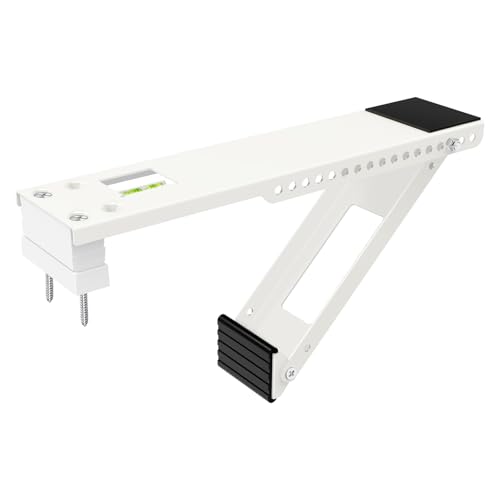
Fioracl Universal AC Window Bracket, Up to 85 lbs
The Details Behind The Selections
Bedroom window, compact 8,000 BTU unit, third-floor walkup where nobody wants to climb out a window with a drill: that’s the everyday scene this Daisypower bracket is built for. It installs entirely from inside, requiring only three holes drilled into the window sill, which keeps the exterior untouched. A U-shaped design cradles standard single and double-hung sashes, and the bracket adapts to sill thickness between two and fifteen inches.
For renters who manage with a smaller AC and a tighter budget, this lands as the practical starting point. Where the Daisypower stands out is its indoor-only setup, no ladder or exterior mounting required, so most people finish the job in under fifteen minutes. Compared with the heavier steel options later in the list, it’s clearly on the lighter end of the spectrum, but for 5,000 to 12,000 BTU units it does the job without overengineering.
What Works In Its Favor
- Full installation from indoors, no ladder or exterior work required
- Adapts to window sill thickness from 2 to 15 inches, covering most older homes
- Holds up to 85 lbs, a comfortable margin for standard 5,000 to 12,000 BTU window units
- Compatible with single and double-hung window styles, the most common residential types
Things To Consider
- Three holes must be drilled into the window sill, so it’s not a fit for renters who can’t modify the apartment
- At 85 lbs of capacity, larger 18,000+ BTU units are out of reach
Who It Suits Best
Homeowners with small to mid-size window units who want a quick, indoor install without renting a drill or climbing outside.
Look Elsewhere When
The LuckIn No-Drill Window AC Bracket is a better match for renters who can’t drill into the sill at all.
Tilting an AC slightly off-level can lead to condensate drainage problems and uneven compressor wear over the years. The Gulrear bracket bakes a small bubble level right into the rail, so you can see at a glance whether the unit will sit true. It installs from inside the house, supporting up to 85 lbs, and is designed to relieve the stress that heavy window units put on the sash frame.
For someone mounting their first window AC without help, that built-in level is genuinely useful, since guessing at the angle with a phone app rarely produces a reliable reading. The bracket pairs with the same single and double-hung window styles as the Daisypower, but adds that leveling cue during install. You may find the 85-lb limit restrictive if you plan to upgrade to a larger 15,000 BTU unit next summer.
Everyday Perks
- Integrated bubble level helps you mount the unit truly plumb the first time
- Indoor-only installation, no exterior mounting or ladder work required
- Engineered to relieve weight stress from the window frame, extending sash life
- 85 lb capacity suits most 5,000 to 12,000 BTU residential units
Trade Offs
- Still requires drilling into the window sill, so it’s not ideal for strict rentals
- No exterior-grade coating described, so longevity depends on indoor conditions
Made For
First-time installers who want a foolproof level reference and a light-duty mount for a standard bedroom AC.
Consider Something Else When
The Superunner No-Drill Steel AC Bracket suits people who need a higher weight rating and zero drilling.
Landlords tend to draw a firm line at holes in the sill or siding, and that rules out a lot of traditional brackets. The LuckIn update sidesteps the problem completely: no drilling, no tools, the support legs angle manually to wedge between the window frame and the exterior wall. It fits wall thicknesses from three to twelve inches and adjusts from 31.5 to 41.7 inches wide, so it covers a wide range of standard window openings.
What separates this from the Daisypower and Gulrear brackets is the tool-free, no-drill approach combined with a much higher 220 lb weight capacity. You may find the wider adjustment range a little loose-feeling on very narrow double-hung sashes. Casement and sliding windows are explicitly off the list, so measuring before purchase matters.
The Case For It
- No drilling, no tools, ideal for rentals where modifications aren’t allowed
- 220 lb capacity handles units well beyond standard 12,000 BTU models
- Adjusts from 31.5 to 41.7 inches wide, covering most residential windows
- Fits wall thicknesses from 3 to 12 inches for varied construction styles
Some Limits To Know
- Not compatible with casement or sliding windows, so confirm your window type first
- No-drill design transfers load to the window frame, so heavier units may stress the sash over time
Who Will Love This
Renters and leaseholders who need a tool-free, removable mount that won’t violate their lease terms.
A Better Fit Elsewhere
The Daisypower Window AC Support Bracket is a stronger match for homeowners who prefer a permanent drilled mount.
Older brick homes and stucco exteriors don’t forgive drill mistakes, which is why no-drill brackets earn their keep there. The Superunner uses a solid epoxy-coated thick steel plate to resist rust and rot, with adjustable arms that fit single or double-hung windows from 22 to 38 inches wide. The wall thickness range runs from 4 to 11 inches, and there’s no drilling or tools required for assembly.
For a mid-size AC unit in a humid climate, the epoxy coating is the detail that extends service life. The 200 lb weight capacity sits between the LuckIn and the LEOPO, making it a flexible middle option. Owners commonly report the no-drill design holding firm on vinyl and aluminum siding, though a snug initial fit helps the wedge action stay tight.
The Practical Payoff
- No-drill design keeps siding, stucco, and brick completely untouched
- Epoxy-coated steel plate resists rust and weather exposure over time
- 200 lb capacity covers most 12,000 to 18,000 BTU units comfortably
- Adjustable for 22 to 38 inch window widths, covering most residential openings
Honest Caveats
- Doesn’t fit extra-large window ledges, so measure your sill depth first
- Tool-free wedge design can loosen over years of seasonal removal and reinstall
Right Fit For
Homeowners with stucco or brick exteriors who want heavy-duty support without touching the outside wall.
Skip It When
The DuctlessAire DA-80 Wall Bracket is a better match for ductless mini split systems that mount entirely to a wall.
Large living rooms and open floor plans often call for 20,000+ BTU units that tip the scale past 130 pounds, and most brackets max out well below that. The LEOPO No-Drill bracket is built for that scenario, with a 300 lb weight capacity and a premium steel plate construction. It expands from 31.5 to 41.7 inches wide and adapts to exterior wall thickness from 2 to 11 inches, supporting 5,000 to 24,000 BTU units.
The honest read is that this is the bracket to reach for when the AC is the heavy, whole-house kind rather than a bedroom compact. The coated steel plate suggests it can take weather exposure if you ever mount it on an exterior-facing wall. You may find the wider adjustment range a touch loose on narrow kitchen windows, so measure your opening before committing.
A Few Highlights
- 300 lb weight capacity, the highest in this roundup, ready for 24,000 BTU units
- Premium steel plate construction suited to long-term outdoor exposure
- Adjusts from 31.5 to 41.7 inches wide for flexible fit on standard windows
- No-drill install protects siding, stucco, and exterior finishes
Points To Keep In Mind
- Heavier steel frame means more weight to handle during initial positioning
- Best fit is single or double-hung windows, not casement or sliding styles
Best Suited To
Homeowners running large window units in open living spaces who need serious load capacity without drilling.
Another Choice May Suit
The Gulrear bracket fits smaller bedroom ACs with its built-in level for an easier first install.
Ductless mini splits don’t sit in a window, so the typical window AC bracket isn’t the right tool. The DuctlessAire DA-80 is built specifically for the outdoor condenser unit, which mounts to an exterior wall via a heavy-gauge, epoxy-coated steel bracket. It supports up to 80 lbs and aims to improve airflow around the unit while keeping the maintenance access clear underneath.
For anyone installing a mini split in a condo, garage conversion, or home addition, this fills a specific role. The epoxy-coated steel is described for outdoor use, suggesting it tolerates rain and sun cycles well. You may find the 80 lb capacity tight for larger 24,000+ BTU condensers, so check the weight of your specific outdoor unit before settling on this bracket.
Key Advantages
- Designed specifically for ductless mini split condensers, not standard window units
- Epoxy-coated heavy-gauge steel handles outdoor weather conditions
- Wall mount design improves airflow around the condenser for better efficiency
- Raises the unit off the ground, simplifying routine maintenance access
Practical Considerations
- 80 lb capacity may be limiting for larger multi-zone mini split condensers
- Not a fit for traditional window AC units, so it serves a narrow use case
Whose Shelf It Belongs On
Homeowners and light-commercial installers setting up a ductless mini split system on an exterior wall.
Reach For A Different Pick When
The LEOPO No-Drill AC Bracket handles standard window units, not mini splits, so swap choices if your AC sits in a window.
Sometimes the AC lives on the outer wall of a garage, workshop, or sunroom, and the bracket needs to handle sun, rain, and freeze-thaw cycles for years. The Fioracl bracket is a steel-constructed, powder-coated design rated for long-term outdoor service. It supports most 5,000 to 12,000 BTU units up to 85 lbs, fitting mounting surfaces from 2 to 11 inches thick.
For a light-duty outdoor install, the powder-coated finish is the headline feature, since plain steel brackets tend to streak rust within a season or two of weather exposure. It supports the same AC class as the Daisypower but with a more weather-resilient build. You may find the 85 lb rating limiting if you plan to step up to a 15,000 BTU unit later, since it lands on the same capacity ceiling as the indoor-focused brackets.
Advantages To Know
- Powder-coated finish survives outdoor weather, ideal for garage and workshop walls
- Steel construction rated for long-term exterior service
- Fits mounting surfaces from 2 to 11 inches thick for varied siding depths
- Supports 5,000 to 12,000 BTU units, covering most residential window ACs
Where It May Fall Short
- 85 lb capacity caps it at smaller units, so larger BTU classes need a heavier bracket
- Outdoor mounting typically requires drilling into the wall, so check before installing
Perfect Match For
Workshops, garages, and sunrooms where the AC bracket sits exposed to the elements year-round.
Where A Sibling Pick Shines
The Superunner No-Drill Steel AC Bracket suits homeowners who want heavy-duty indoor support without exterior mounting.
What To Weigh Before Choosing a Window AC Bracket
Weight capacity is the first filter. Add up the AC unit’s own weight plus any side panels or insulation, then pick a bracket with at least a 25 to 30 percent safety margin above that number. For a 70 lb unit, that points to a bracket rated 90 lbs or higher. The Daisypower, Gulrear, and Fioracl all top out at 85 lbs, so they’re a fit for 5,000 to 12,000 BTU compacts. Anything 15,000 BTU or larger needs to step up to the Superunner (200 lbs), LuckIn (220 lbs), or LEOPO (300 lbs).
Window type matters just as much. Single and double-hung windows, which are the most common residential styles, are covered by every bracket on this list. Casement and sliding windows are a different story: the LuckIn explicitly excludes them, and most others assume the lower sash drops into a track. Measure the open window width and the wall thickness before buying, since “fits most windows” usually means standard 22 to 38 inch openings.
Drill versus no-drill is the decision that shapes installation. Permanent drilled mounts (Daisypower, Gulrear) tend to feel the most rigid once installed, since lag bolts anchor them into the sill framing. No-drill brackets (LuckIn, Superunner, LEOPO) rely on wedge pressure against the wall and window frame, which is reversible and renter-friendly but can loosen after years of seasonal removal. The DuctlessAire DA-80 sits in its own category, since it’s a wall mount for the outdoor half of a ductless mini split, not a window bracket at all.
Material and finish determine how the bracket ages outdoors. Epoxy-coated and powder-coated steel are the two common weather-resistant finishes in this list, and both are described for outdoor service. Plain painted steel tends to streak rust within a season of rain exposure, which matters for anyone mounting on a garage or workshop exterior.
Key Considerations Across These Picks
Mistakes Worth Dodging
The most common slip-up is picking a bracket by window width alone and forgetting the wall thickness. A bracket that adjusts to a 40-inch window opening still won’t seat correctly if the exterior wall is thicker than its upper limit. The other frequent miss is underestimating the unit’s actual installed weight: manufacturers list shipping weight, not the weight once the side curtains and support panels are attached. Always weigh or look up the spec sheet weight for the specific model number before settling on a bracket capacity.
Where The Extra Money Goes
Higher-tier brackets cost more for three concrete reasons: thicker steel plate (LEOPO’s 300 lb build), weather-resistant coatings (epoxy and powder finishes), and wider adjustment hardware. The extra spend pays off when the AC unit is heavy, the exterior wall is thick, or the bracket faces constant weather. For a 60 lb bedroom unit on a covered porch, an 85 lb bracket is plenty. The upgrade matters when you’re pushing past 150 lbs or installing on a sun-exposed exterior wall where finish quality controls service life.
Frequently Asked Questions
Do window AC brackets need to be drilled into the wall?
Not always. Several brackets on this list, including the LuckIn, Superunner, and LEOPO, use a tool-free wedge design that transfers weight through pressure against the wall and window frame. Drilled mounts like the Daisypower and Gulrear feel more rigid but require permanent holes in the sill.
What weight capacity do I need for a 12,000 BTU window AC?
A 12,000 BTU unit typically weighs 60 to 75 lbs, so an 85 lb bracket like the Daisypower or Fioracl provides a thin safety margin. Stepping up to a 200 lb bracket like the Superunner adds headroom for vibration, side panels, and future unit upgrades.
Can a window AC bracket work with casement or sliding windows?
Most universal brackets on the market assume single or double-hung windows with a lower sash that drops into a track. The LuckIn explicitly excludes casement and sliding styles. For those window types, a custom side-mount solution is usually the safer path.
Is an epoxy-coated bracket worth it for indoor installs?
For indoor-only brackets that never see rain, a basic painted finish is typically fine. Epoxy and powder coatings become valuable when the bracket sits in a damp basement, an enclosed porch, or anywhere with condensation or seasonal humidity swings.
How long do window AC brackets typically last?
Steel brackets with a proper outdoor-rated finish commonly last 8 to 15 years before finish breakdown or metal fatigue becomes visible. Plain painted brackets in outdoor service can show rust within 2 to 4 seasons, especially in coastal or humid climates.