

A compressor that draws a heavy surge on every cycle can trip breakers, brown out a generator, and stress the motor that does the real work. An air conditioner soft start kit tames that initial inrush, letting rooftop units, mini splits, and big residential systems start on smaller power sources with less noise and fewer flickers. RV owners, off-grid households, and anyone tired of dimming lights when the compressor kicks in will find something useful in the picks below.
A Quick View Of The Lineup

MICRO-AIR EasyStart FLEX 398 Bluetooth Soft Start Kit

Briidea Soft Starter for RV Air Conditioner

AIRGO Soft Starter for AC and Heat Pumps

Spartan Power SpartanStart RV Soft Start Kit
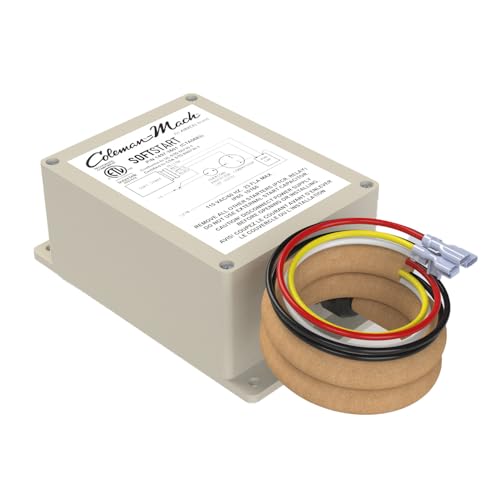
MACH Coleman Soft Start Kit 1497-3601
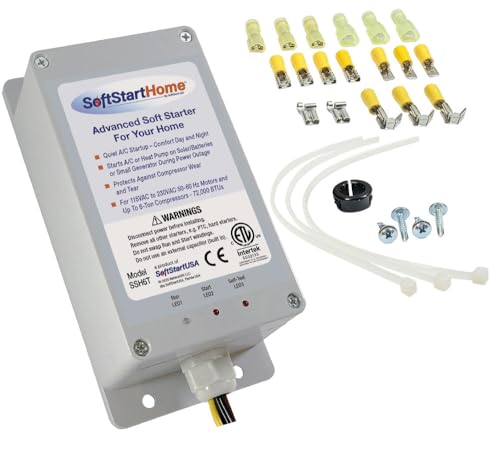
SoftStart Home Soft Starter for AC and Heat Pumps

Hyper Engineering SS1B16-32SN Soft Starter
A Deeper Look At The Lineup
The MICRO-AIR EasyStart FLEX 398 sits at the top of the heap for travelers and homeowners who want more than a one-size-fits-all box. It supports units up to roughly 6 tons (about 75,000 BTU), so it spans the gap between a rooftop RV air conditioner and a full residential split system. The included installation kit covers the wiring hardware most people need, and the Bluetooth radio lets you adjust start behavior from a phone rather than climbing back on the roof.
Where it differs from the Briidea pick below is scope. The Briidea is tuned for smaller RV compressors, while the EasyStart FLEX 398 stretches into light commercial and whole-home territory. For RV owners running one rooftop unit plus a microwave, it may feel like more controller than necessary. The honest read is that anyone running a single 15,000 BTU rooftop can usually save a few dollars going simpler.
The Upside
- Bluetooth tuning removes guesswork from start current adjustments
- Wide 6 ton capacity covers RV, residential, and light commercial installs
- Installation kit bundled, so most people skip a second trip to the hardware store
- Plays nicely with generators and inverter power for off-grid setups
Points To Keep In Mind
- Priced above single-purpose RV starters, so overkill for a 13,500 BTU rooftop
- Bluetooth setup assumes comfort with app-based configuration
- Owners of very small trailer A/Cs may find the menu of settings more than they need
Key Product Details
Who It Suits Best
RVers and homeowners running a 3 to 6 ton compressor who want app-level control and a single unit that covers both travel and stationary installs.
Skip It When
The Briidea Soft Starter fits better for a small trailer owner running a single low-BTU rooftop who wants the simplest possible install.
The Briidea Soft Starter is built for one job: getting a 15,000 BTU RV air conditioner running on a 2200W generator without tripping the campsite breaker. That focus is the whole point, and it shows in the price. Travelers running modest rooftop units, a fridge, and a few lights at the same time will recognize the use case the moment they read the spec sheet.
Compared to the MICRO-AIR EasyStart FLEX 398 above, this is a simpler device with no Bluetooth radio and a tighter capacity window. You give up the ability to fine-tune start curves from a phone, but you also skip a chunk of cost. For weekend campers on a tight budget, the trade makes sense.
Standout Benefits
- Lets a 15,000 BTU rooftop start on roughly 2200W of generator power
- Simple install that most RV owners handle themselves
- Lower cost than feature-heavy alternatives like the EasyStart FLEX 398
- Compact enough to tuck near the compressor housing
Honest Caveats
- Not designed for residential or light commercial systems
- Lacks the diagnostic feedback a Bluetooth model offers
Made For
Casual RVers running a single rooftop unit on small portable generators or 20A household outlets at campgrounds.
Where Another Pick Suits Better
The SpartanStart fits better for owners running larger rooftop units who want a generator anti-stall preload feature built in.
The AIRGO Soft Starter handles both cooling and heating cycles, which matters more than it sounds. Heat pumps (units that heat and cool by reversing refrigerant flow) put unique stress on a starter when they switch modes, and not every soft start kit on the market accounts for that. AIRGO builds reverse motor protection into the design, so a homeowner with a year-round heat pump system can install once and stop thinking about it.
Compared to the Briidea pick, the AIRGO swings toward residential and stationary off-grid use. It plays well with generators, solar arrays, and stored energy systems, which makes it a fit for backup power setups. The 16 to 32A current range covers most common residential compressors without oversizing the box.
What Makes Sense
- Reverse motor protection handles heat pump mode switching cleanly
- Compatible with generator, solar, and battery backup systems
- DIY-friendly wiring layout for homeowners comfortable with a multimeter
- 16 to 32A range covers the bulk of residential compressors
Things To Consider
- DIY install assumes basic electrical comfort; novices may want a technician
- Not designed for 12V RV rooftop units like the Briidea
Quick Facts
Right Fit For
Homeowners with year-round heat pump systems who also run a generator, solar array, or battery bank for backup power.
Not Your Match When
The Briidea Soft Starter suits a budget-minded RV owner with a 15,000 BTU rooftop far better than this residential-focused unit.
The Spartan Power SpartanStart was designed for the boondocking crowd, people running rooftop units far from shore power and stretching every amp-hour of their battery bank. Its claim to fame is the generator anti-stall preload feature, which eases the compressor up to speed before demanding full torque. For travelers running a 2200W inverter or a small portable generator, that preload is the difference between a smooth startup and a stalled engine.
Unlike the Briidea’s 15,000 BTU ceiling, the SpartanStart handles up to 20,000 BTU units, so larger rooftop installations fit. It also manages seamless switching between generator, inverter, and campsite pedestal power, which matters on long trips where the power source changes daily.
Where It Excels
- Anti-stall preload keeps small generators from choking on startup
- Handles up to 20,000 BTU units, beating the Briidea ceiling
- Seamless power source switching for travelers who swap between hookups
- Preserves battery life during inverter operation
Trade Offs
- Higher cost than the simpler Briidea for a single low-BTU rooftop
- RV-focused design, not suited for residential HVAC
Feature Snapshot
Best Suited To
Full-time or frequent RVers with mid-size to larger rooftop units who regularly run small generators or inverters off the battery bank.
A Better Fit Elsewhere
The MACH Coleman Soft Start Kit fits better for owners of Coleman-Mach branded systems who want an OEM-style match.
The MACH Coleman Soft Start Kit 1497-3601 is the option for owners who already run Coleman-Mach equipment and want a match built for that ecosystem. Coleman-Mach has been making RV climate gear since the late 1960s, and an accessory tuned for their rooftop units tends to install cleanly without adapter headaches. The 1497-3601 part number is the shorthand the Coleman community uses to identify this exact soft start module.
Where it differs from the SpartanStart is brand alignment. Spartan sells a more universal RV product, while MACH targets a specific rooftop family. Coleman-Mach owners tend to trust the brand match, and the install is typically straightforward because the wiring and form factor were designed together.
Good Reasons To Consider
- OEM-style fit for Coleman-Mach rooftop units
- Install typically takes less time than universal kits
- Brand alignment reduces wiring guesswork for matched equipment
Points To Note
- Less useful if the rooftop unit is not a Coleman-Mach model
- Smaller feature set than app-controlled units like the EasyStart FLEX 398
Whose Shelf It Belongs On
Coleman-Mach RV owners who want a soft start kit purpose-built for their existing equipment without improvising wiring.
Reach For A Different Pick When
The SpartanStart suits a traveler with a non-Coleman rooftop who needs anti-stall preloading on a small generator.
The SoftStart Home promises up to 70 percent reduction in startup power, and the spec reflects what most homeowners actually want from a residential soft start kit: a quieter compressor wake-up with no flicker across the rest of the house. The unit handles systems up to 6 tons (about 72,000 BTU), and the brand advertises a roughly 15 minute install, which matters to anyone who has paid a technician by the hour before.
Versus the AIRGO pick, this one leans harder into residential whole-home and backup power use cases, including RVs and solar setups. Where AIRGO emphasizes heat pump mode switching, SoftStart Home emphasizes the magnitude of surge reduction. Either approach works, but the SoftStart Home’s 70 percent figure is the louder number on the box.
Strengths Worth Knowing
- Up to 70 percent startup power reduction lowers generator demand significantly
- 15 minute advertised install saves on electrician time
- Works with generators, RVs, and solar for flexible setups
- Extends compressor life by reducing heat buildup at startup
Small Caveats
- Not designed for commercial three-phase equipment
- May require checking compatibility with older compressor models
Spec Overview
Perfect Match For
Homeowners with whole-home backup generators or solar arrays who want a quieter startup and a smaller surge drawn from limited power sources.
Swap It Out When
The Hyper Engineering SS1B16-32SN fits better for homes with oversized 4 to 7 ton compressors that need heavier-duty industrial-grade hardware.
The Hyper Engineering SS1B16-32SN is the workhorse of the list. Built specifically for large single-phase compressors and motors in the 4 to 7 ton range, it lives in a double-insulated, flame-retardant enclosure that takes up about as much space as a thick paperback. The starting current drops sharply, while full start torque is preserved, so the compressor still gets the push it needs to break free from a stopped position.
Unlike the SoftStart Home above, the SS1B16-32SN is not built for the casual DIYer. The enclosure and wiring assume a confident hand or a professional install. For households with oversized central air and a standby generator that needs every bit of headroom, the trade is worth it.
A Favorable Mix
- Handles 4 to 7 ton residential systems that smaller kits cannot
- Compact, double-insulated, flame-retardant enclosure
- Reduces starting current while preserving full start torque
- Useful with generators during emergency operation
A Few Limitations
- Not suited for 12V RV rooftops like the Briidea or SpartanStart
- Install assumes a higher skill level than a typical homeowner kit
- Overkill for anything below 4 tons
Built With In Mind
Homeowners with large central air systems, especially those with standby generators who need every bit of surge headroom during an outage.
Look Elsewhere When
The SoftStart Home fits better for households with mid-size 3 to 5 ton systems who want a friendlier DIY install.
Picking The Right Air Conditioner Soft Start For Your Setup
A soft start kit is only as useful as it is matched to the compressor it sits next to. The most important number is the BTU or ton rating of the air conditioner itself, since undersized controllers can overheat and oversized ones waste money. Match the kit to the compressor first, then think about the power source: rooftop RVers running a 15,000 BTU unit on a 2200W generator have very different needs from a homeowner with a 5 ton heat pump tied to a standby generator.
Next, weigh the install. RV owners usually have limited space near the compressor housing, so a compact module with clear wiring labels saves a Saturday afternoon. Homeowners with heat pumps should look for reverse motor protection, since mode changes put extra stress on a starter that does not expect them. Bluetooth tuning is genuinely useful for anyone who tweaks equipment seasonally, but for a one-time install it adds cost without much payoff.
Finally, look at the power source carefully. Solar and battery backup systems dislike high inrush, so a kit advertising 60 to 70 percent surge reduction pays off. Smaller portable generators benefit from anti-stall preloading, which the SpartanStart builds in. Once those three match the actual environment, the choice usually narrows to two or three candidates.
Key Things To Weigh Across These Picks
Mistakes Worth Dodging
Picking by price alone is a common trap. A cheap RV soft start kit on a 5 ton residential compressor can overheat within weeks, and an industrial-grade unit on a small trailer A/C wastes money. Buyers also underestimate the wiring step, since most kits assume a comfort level with line-voltage work and a multimeter.
Where The Extra Money Goes
Higher-tier kits like the MICRO-AIR EasyStart FLEX 398 add Bluetooth tuning, broader capacity ranges, and reverse motor protection for heat pumps. The cost reflects better enclosure materials, broader compatibility testing, and software features that pay off for anyone adjusting their system more than once. For a one-time, fixed install, those features matter less.
Frequently Asked Questions
How does an air conditioner soft start actually work?
It slowly ramps voltage to the compressor motor during startup, which reduces the sudden inrush current that normally dims lights and trips breakers.
Will a soft start kit let me run my RV air conditioner on a smaller generator?
In many cases, yes. Several kits in this list advertise compatibility with 2200W generators for typical rooftop units, though performance depends on the specific A/C and generator pairing.
Can I install a soft start kit myself?
Most RV kits are designed for DIY installs with basic tools and a multimeter, while residential units sometimes benefit from a licensed electrician depending on local code.
Do soft start kits work with heat pumps as well as air conditioners?
Some do, particularly units with reverse motor protection that handle the mode-switching cycle. Standard kits built only for cooling compressors may struggle with a heat pump.
How long does a soft start kit typically last?
Owners commonly report many years of service from a properly installed kit, with lifespan tied more to operating environment and electrical conditions than to the unit itself.