

Mini-splits used to feel like a luxury reserved for full-home renovations. These days, ductless systems that both heat and cool have become one of the most practical upgrades for apartments, additions, converted garages, and small offices. Picking the right one matters more than ever, because the gap between a smooth install and a frustrating one usually comes down to sizing, electrical setup, and whether the unit plays nicely with your breaker panel.
A Fast Comparison Of The Options
A Fast Comparison Of The Options
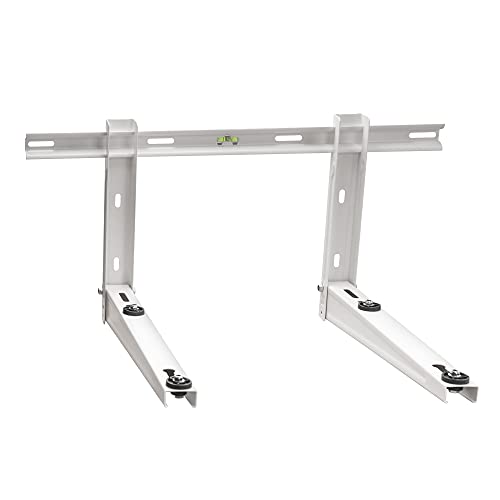
ICOOL Mini Split Wall Mounting Bracket for 9000-36000 BTU Ductless AC

ROVSUN 9000 BTU Wifi Enabled Mini Split Air Conditioner & Heater with Inverter

Mountman 12000 BTU Mini Split AC/Heating System, 19 SEER2 Ductless Inverter

ROVSUN 9000 BTU Mini Split AC/Heating System with Inverter, 20 SEER2

Albott 12,000 BTU Mini Split Air Conditioner and Heater SEER2 18, 115V

Rellytech Mini Split AC/Heating System, 12000 BTU, 19 SEER2 Ductless Inverter
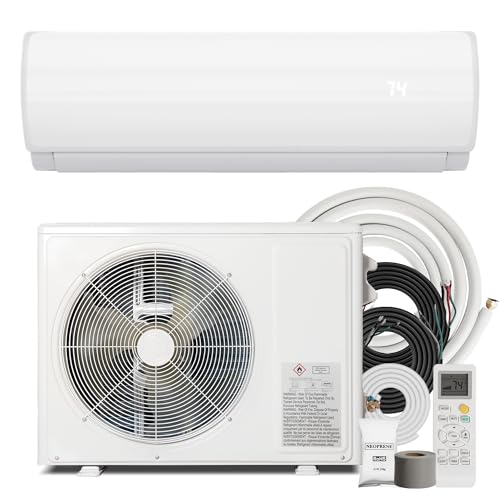
12000BTU Mini Split Air Conditioner Heat Pump, 19 SEER2 Inverter Compressor
A Closer Look At Each Pick
Most of the picks on this list are full heating and cooling systems, but the ICOOL bracket is the unsung hero behind a safe install. It supports outdoor condensers ranging from 9,000 to 36,000 BTU, so it scales from a single-room unit to a whole-home setup. The foldable design helps when you need to swing the condenser away from the wall for service or seasonal cover. If you are mounting to masonry, brick, or wood siding, the bracket is the kind of hardware that decides whether your system sits securely for the next decade or wobbles after the first storm.
Compared to the ductless units reviewed below, the ICOOL is purely structural: it does not cool or heat anything, but it carries the weight of the equipment that does. For anyone planning a self-install, budgeting for a quality bracket up front is the kind of detail that pays off in fewer return trips and a more stable compressor pad.
Useful Touches
- Supports 9,000 to 36,000 BTU condensers, giving you headroom for future upgrades without swapping hardware
- Foldable arm design lets you tilt the unit away from the wall for cleaning or winter covers
- Galvanized and epoxy-painted steel resists rust in coastal or humid climates
- Rated to hold over 330 pounds, which exceeds the weight of most residential condensers
Things To Consider
- Mounting hardware and lag bolts are not always included, so confirm the package contents before installation day
- You will need a helper to lift and align the condenser during mounting, since the bracket alone does not support the unit’s full weight until bolted
Who Should Grab It
Homeowners and contractors who want a corrosion-resistant, heavy-duty mount that will not need to be replaced when sizing up to a larger condenser.
Where Another Pick Suits Better
If your project is only a small studio and you do not want to commit to a wall-mount setup, the ROVSUN 9000 BTU system covered later is a more complete all-in-one starting point.
The ROVSUN 9000 BTU Wifi-enabled model stands out for shoppers who want more than just a basic remote. It runs on a 115V outlet, which in most homes means you can skip the dedicated 220V circuit that heavier units demand. The inverter compressor (a motor that adjusts its speed to match demand instead of just switching on and off) trims electricity use, and the 20 SEER2 rating is competitive for this size class. The included pre-charged line set saves a step during install, since you are not paying an HVAC tech to vacuum and charge refrigerant on day one.
In a real bedroom or home office up to 400 square feet, the WiFi control is the feature that quietly changes habits. You can pre-cool the room on the drive home, set schedules, or hand the controls to a voice assistant. The trade-off is that WiFi setup relies on a stable 2.4 GHz network, and the app experience may feel basic compared to mainstream smart thermostats.
Advantages To Know
- WiFi control from a phone app adds scheduling and remote adjustments
- 20 SEER2 efficiency rating helps keep monthly operating costs reasonable
- Runs on standard 115V household current, so electrical upgrades are usually unnecessary
- Pre-charged condenser line set simplifies the install for a licensed tech
Worth Noting
- WiFi pairing can be finicky on crowded 2.4 GHz networks with interference from neighboring routers
- Coverage tops out around 400 square feet, so it is best for single rooms rather than open-plan layouts
- Professional installation is still recommended, and that cost should be factored into the total project
Made For
Renters, condo owners, and smart-home enthusiasts who want app-driven comfort in one defined room without rewiring for 220V.
Look Elsewhere When
You need to condition a larger open space, in which case the Nexaro 12,000 BTU model further down handles closer to 750 square feet.
The Mountman 12,000 BTU unit covers up to 750 square feet, which puts it in the sweet spot for master bedrooms, small apartments, and finished basements. The 19 SEER2 inverter keeps power draw in check, and four operating modes (Cool, Heat, Dry, Fan) plus a Sleep setting give you flexibility across seasons. The sleep mode dropping toward 26 dB (a whisper-level hum, quieter than most refrigerators) is the kind of detail that matters if you are a light sleeper running the unit through summer nights.
Set against the ROVSUN 9000 BTU model reviewed above, the Mountman is the right step up when a single room is not enough. The ECO mode is a nice energy-saving touch for shoulder seasons, and the included installation kit covers the line set and mounting plate. Owners should plan for an annual filter rinse to keep airflow strong, which is standard for any wall-hung mini-split.
A Strong Showing
- Sleep mode drops to roughly 26 dB, which is genuinely quiet for a bedroom
- ECO mode can trim power use by up to 30 percent in mild conditions
- Covers up to 750 square feet, fitting most studio and one-bedroom layouts
- Pre-charged condenser streamlines the install for a licensed HVAC tech
Trade Offs
- Runs on 110/120V, so the compressor ramps more gradually than a 220V system in extreme heat
- Remote-only controls mean losing the remote can be inconvenient until a replacement arrives
Key Specs
Right Fit For
Apartment dwellers and home office workers who want quiet, year-round climate control in one medium-sized room.
Swap It Out When
You prefer built-in WiFi and app scheduling, in which case the ROVSUN 9000 BTU Wifi-enabled unit is the more connected choice.
The ROVSUN 9000 BTU inverter is the more traditional sibling of the WiFi-enabled model above, trading smart-home integration for a slightly leaner price tag. It still carries a 20 SEER2 efficiency rating and runs on 115V, which keeps install simple in older homes without 220V service. The included installation kit and pre-charged refrigerant line set are the practical features that matter most on install day, and the heat pump function means one unit handles both summer cooling and shoulder-season warmth.
For a 350 to 400 square foot bedroom, den, or small office, this is the kind of unit that quietly does the job without drawing attention. Without WiFi, all programming happens through the included remote, which is a slight step back from app-driven controls but keeps the system simple for anyone who prefers a tactile interface.
The Helpful Details
- Heat pump function means year-round use in a single appliance
- 20 SEER2 rating trims long-term electricity costs compared to older 10 SEER window units
- 115V compatibility avoids electrical panel upgrades in most homes
Points To Keep In Mind
- No WiFi, so scheduling and remote access require the included handheld remote
- Coverage is best around 400 square feet, and performance drops in larger or poorly insulated spaces
- Filters need a monthly rinse during heavy use to maintain airflow
Best Suited To
Shoppers who want efficient, no-frills climate control in a single bedroom or home office and do not need app integration.
Consider Something Else When
You want self-cleaning convenience, which the Albott 12,000 BTU system covered next offers alongside comparable efficiency.
The Albott 12,000 BTU unit leans into low-maintenance ownership, with a self-cleaning mode that dries the indoor coil to reduce mold and mildew between manual cleanings. That alone changes the experience for anyone who has fought dusty mini-split smells. The 18 SEER2 rating is a touch below the ROVSUN 9000 BTU model above, but for a 750 square foot living area the trade-off buys app control, a 24-hour timer, and a sleep mode that is genuinely useful for nightly cooling.
In a real-world living room, the self-cleaning cycle is the kind of feature you forget about until the unit smells fresh months in. The HVAC-tech-required note in the spec sheet is worth flagging: while the kit is complete, line-set routing and refrigerant handling still call for a licensed professional. The honest read is that this is a great match for households that want set-and-forget operation without a smart-home learning curve.
Why It Works Well
- Self-cleaning function cuts down on the musty odor that some mini-splits develop over time
- App and remote control offer flexible programming for different routines
- 24-hour timer and sleep mode help manage overnight energy use
- Covers up to 750 square feet for medium-sized living spaces
Room For Improvement
- 18 SEER2 is slightly less efficient than the 20 SEER2 ROVSUN units earlier in the list
- App control requires stable WiFi and may need firmware updates out of the box
Feature Snapshot
Who Will Love This
Set-and-forget households that want a low-maintenance 12,000 BTU unit and value the self-cleaning cycle.
A Better Fit Elsewhere
You want the highest efficiency rating in this size class, in which case the Nexaro 12,000 BTU model at the end of the list delivers 19 SEER2.
The Rellytech 12,000 BTU system is built for spaces that swing from cold to hot fast, like detached garages, basements, and home workshops. With 12,500 BTU of heating capacity (slightly higher than its cooling output) and a low ambient operating range, it can keep working through shoulder seasons when other units start to struggle. The 19 SEER2 efficiency rating keeps operating costs reasonable even when the unit runs all day.
Next to the Albott 12,000 BTU model above, the Rellytech skips the self-cleaning feature but compensates with stronger heating performance. For a converted garage that doubles as a home gym or hobby space, that heating headroom matters more than app polish. The pre-charged system is a real time-saver on install day, and the standard 115V plug means no panel upgrades for most households.
What Makes Sense
- 12,500 BTU heating output handles cold-weather operation better than many 115V peers
- 19 SEER2 efficiency trims electricity use during long heating or cooling runs
- Pre-charged refrigerant line set shortens the install visit
- Covers up to 750 square feet for open shop or studio layouts
Honest Caveats
- No self-cleaning mode, so manual filter maintenance matters more during dusty shop use
- Outdoor condenser needs clearance from sawdust and fine debris to keep coils clean
- Lacks WiFi control, so all adjustments happen via the included remote
Technical Reference
Perfect Match For
Workshop owners and garage converters who need reliable heating as much as cooling and do not need smart-home features.
Reach For A Different Pick When
Your space is dust-sensitive or you want app-based scheduling, in which case the Albott 12,000 BTU unit offers a self-cleaning cycle.
The Nexaro 12,000 BTU unit rounds out the list as a balanced all-rounder, pairing a 19 SEER2 inverter compressor with coverage up to 750 square feet. The 1.5-ton capacity sits in the middle of the residential comfort range, which is a useful sweet spot for open living areas that include a kitchen. The pre-charged condenser and included installation kit keep the install path simple for a licensed tech.
Set beside the Rellytech 12,000 BTU model above, the Nexaro trades a slight edge in heating output for a more polished everyday experience. For a primary living area where the system will run most hours of the day, that balance is what you actually want. The honest read is that this is a dependable pick for households that do not have unusual heating demands but still want inverter efficiency.
Practical Advantages
- 1.5-ton capacity handles open living areas up to 750 square feet
- 19 SEER2 inverter compressor keeps long-term running costs reasonable
- Pre-charged condenser and included kit simplify install scheduling
- Heat pump function delivers year-round comfort from a single unit
Less Ideal Details
- No built-in WiFi, so scheduling lives on the included remote
- Monthly filter cleaning is a must in homes with pets or open windows nearby
Quick Facts
Whose Shelf It Belongs On
Mainstream households with open living areas who want a balanced, efficient 12,000 BTU system without paying extra for app features.
Not Your Match When
You want app control and self-cleaning in a similar-capacity unit, in which case the Albott 12,000 BTU model is the more convenient alternative.
Matching Mini-Splits To Your Space And Budget
Right-Sizing For The Room You Actually Have
BTU ratings (British Thermal Units, a measure of how much heat a system can move per hour) are the single most useful starting point, and they tend to be overestimated. A 9,000 BTU unit is usually the right call for a 350 to 400 square foot bedroom or office, while a 12,000 BTU system covers closer to 750 square feet of open living space. Bigger is not better: an oversized unit short-cycles (turns on and off rapidly without fully dehumidifying), while an undersized one runs constantly and never quite catches up. Measure your room, account for high ceilings and sun exposure, and use the BTU figure as a sanity check, not a wish list.
Voltage And Electrical Reality
Most of the picks on this list run on standard 115V or 120V outlets, which is a quiet superpower for older homes without dedicated 220V service. Skipping an electrical panel upgrade can save several hundred dollars and a few days of scheduling. That said, 115V units ramp more gradually in extreme heat, so a 220V system still makes sense in some installations.
Efficiency Ratings That Actually Matter
SEER2 (Seasonal Energy Efficiency Ratio 2, a standardized efficiency measurement updated in recent years) tells you how much cooling you get per watt of electricity, and higher numbers mean lower monthly bills. In this price class, 18 to 20 SEER2 is the realistic range, and the difference adds up over years of summer use. Inverter compressors (motors that vary their speed rather than simply switching on and off) are the bigger story, since they keep the system running at lower power most of the time instead of cycling hard.
Installation Expectations
Every mini-split on this list ships with a pre-charged line set, but the line set still needs to be routed through a wall, the indoor unit mounted, and the vacuum test run before the system is sealed. Most manufacturers recommend or require a licensed HVAC tech, and that labor is a real line item in your project budget. Plan for it before falling in love with a price tag.
Key Considerations Across These Picks
Common Shopping Slip Ups
The most frequent mistake is sizing up based on a hot day rather than an average one. A 12,000 BTU unit in a 300 square foot bedroom will cool quickly but never dehumidify properly, leaving the room clammy. The other trap is ignoring the electrical panel until install day: confirm the breaker space, wire gauge, and outlet type before ordering. Skipping the line-set cover and condensation pump in the budget is the third classic miss, since both are easier to add during install than after.
What The Higher Tier Buys
Stepping up to a higher-tier system usually means a better inverter compressor, a higher SEER2 rating, and quieter indoor operation. The bigger gains show up in cold-climate heating performance and smart-home integration, not raw cooling power. For households that run the system year-round, the higher efficiency pays back over several seasons. For occasional or seasonal use, a mid-tier 18 to 19 SEER2 unit is the smarter value play.
Frequently Asked Questions
How many BTU do I need for my room?
A 9,000 BTU unit typically fits a 350 to 400 square foot space, while a 12,000 BTU system handles up to about 750 square feet. High ceilings, large windows, and sun exposure can push you toward the higher end of that range.
Can I install a mini-split myself?
Most manufacturers recommend or require a licensed HVAC technician for the refrigerant line, vacuum, and electrical connections. Homeowners with renovation experience can often handle the mounting and line-set routing, but the final charging step usually needs a pro.
Do mini-splits heat as well as they cool?
Most modern mini-splits include a heat pump function that delivers effective heating down to moderate winter temperatures. Performance drops in extreme cold, so a supplemental heat source is worth considering in climates that regularly drop well below freezing.
What is SEER2 and why does it matter?
SEER2 is the updated efficiency rating that measures cooling output per unit of electricity over a typical season. A higher SEER2 number means lower monthly operating costs, which adds up over years of summer use.
How often do filters need cleaning?
Plan to rinse the indoor unit’s filter roughly once a month during heavy use, and less often in shoulder seasons. A clean filter keeps airflow strong, improves efficiency, and reduces strain on the compressor.