
Summer heat has a way of turning a small bedroom or home office into a sauna by mid-afternoon, and central air isn’t always an option in older apartments, rentals, or converted spaces. A window unit is still the most direct, affordable path to real relief, and the 2026 lineup is quieter and smarter than what you probably remember from a decade ago. This guide covers seven solid options for rooms of nearly every size, from compact 5,000 BTU picks to a 10,300 BTU inverter that can handle a sun-drenched living room. Every entry is mapped to a specific room and user profile, so you can match the unit to your window, your square footage, and how much you want to fiddle with apps.
Your Options, Compared

Midea 8,000 BTU U-Shaped Smart Inverter Window AC

GE 6,000 BTU Electronic Window Air Conditioner

Frigidaire 5,000 BTU Window AC with Remote

hykolity 8,000 BTU WiFi Window AC

LG 5,000 BTU Window AC (LW5023)
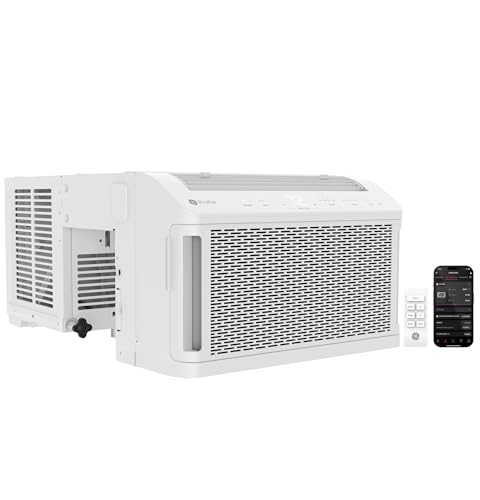
GE Profile ClearView 10,300 BTU Inverter
LG 6,000 BTU Smart Window AC (LW6024RSMX)
Taking A Closer Look At The Options
Midea’s U-shaped design is the single most interesting twist on window air conditioning in years, because the bulk of the hardware sits outside the window frame while only a slim panel blocks your view. That geometry does double duty: it allows the window sash to close almost all the way around the unit, so street noise, pollen, and hot outdoor air stay separated from the room more effectively than with a traditional through-the-frame chassis.
For a roughly 350-square-foot bedroom or studio, the cooling is more than enough, and the inverter compressor (a variable-speed design that ramps output up and down instead of cycling on and off) keeps the temperature steady without the constant click of compressor kicks. Light sleepers, remote workers on calls, and anyone whose window faces a noisy street get the most from this build.
Key Advantages
- The U-shape lets you keep the window mostly closed, which most renters and security-conscious users will appreciate.
- Open-window flexibility means you can vent the room without uninstalling the unit, useful during shoulder seasons.
- Inverter operation at roughly 32 dBA on the low setting, so conversation and sleep aren’t competing with a compressor.
- Voice and app control through standard smart-home platforms add daily convenience beyond the included remote.
Things To Consider
- Installation is a two-person job because the outer bracket carries most of the weight; planning ahead saves real frustration.
- The unique bracket is specific to this model, so replacement parts aren’t interchangeable with a standard window unit.
At A Glance
Who It Suits Best
Light sleepers, home office workers on calls, and renters who want a sealed-window feel without losing real cooling power.
Where Another Pick Suits Better
For a tighter budget or a smaller bedroom, the LG 5,000 BTU Window AC (LW5023) covers a 150-square-foot space without the smart features or premium price.
GE’s 6,000 BTU unit is the kind of dependable mid-size workhorse that doesn’t try to be anything fancier than what you need. It covers up to 250 square feet, which is the sweet spot for most bedrooms and home offices, and the digital control panel with included remote is straightforward enough that anyone in the household can adjust it without pulling out a phone.
The 24-hour timer and energy saver mode are the practical touches that matter week to week: you can set it to cool the bedroom an hour before bed and trust it to ramp down overnight. Where the LG LW5023 leans toward simplicity with mechanical dials, this GE pushes a little further into set-it-and-forget-it territory without overcomplicating the interface.
Practical Pluses
- Digital readout and remote make temperature targeting precise, a real upgrade over dial-only units.
- Energy saver mode reduces runtime without sacrificing comfort in mild weather.
- 24-hour timer is genuinely useful for sleep schedules and weekend naps.
- Install kit is included, so you don’t need a second trip to the hardware store.
Worth Noting
- Without an inverter compressor, you’ll hear more frequent on-off cycling compared to the Midea.
- Window compatibility is standard double-hung, so older casement or slider windows may need a custom fit.
Feature Snapshot
Made For
Anyone cooling a 200 to 250-square-foot bedroom or office who wants digital precision without paying for smart-home integration.
Look Elsewhere When
Large open living areas over 400 square feet will underperform, and the GE Profile ClearView 10,300 BTU Inverter is the better fit there.
Frigidaire’s 5,000 BTU unit hits a comfortable middle ground for small rooms up to 150 square feet, like a guest bedroom, nursery, or den. The remote comes standard, so you can adjust from bed, and the eco mode dials back output in milder weather to keep electricity use modest. For first-time window AC shoppers, the controls and install kit are forgiving.
Six-way directional airflow (louver adjustments on both horizontal and vertical axes) is a step up from the basic two-way louvers on the LG LW5023, and the auto-restart feature brings the unit back to your last setting after a power blip. Three fan speeds and a washable filter round out a low-maintenance package for spaces that don’t need premium noise control.
Positive Takeaways
- Auto-restart recovers your settings after a power outage, helpful in storm-prone areas.
- Six-way airflow gives finer control over where cool air lands in the room.
- Washable filter cuts down on replacement costs and is easy to rinse under a faucet.
- Eco mode helps trim energy use on cooler nights without manual intervention.
Trade Offs
- Coverage tops out at 150 sq ft, so open studios or living rooms will be under-served.
- Clean-filter alerts are useful, but loud compressor cycling is common for non-inverter units in this class.
Who Should Grab It
First-timers cooling a guest room, nursery, or small den who want remote convenience and a forgiving install process.
Skip It When
Heavier cooling needs above 200 square feet are better served by the hykolity 8,000 BTU WiFi Window AC, which covers larger rooms with similar controls.
The hykolity 8,000 BTU sits in the same 350-square-foot class as the Midea U-shaped unit, but takes a more conventional chassis approach and adds app-based Wi-Fi control on top. For a mid-size living room or large bedroom, the cooling is in the right ballpark, and the companion app lets you set schedules or check status from the couch or the office.
Compared to the Midea’s U-shape, the trade-off here is simpler installation with a standard window frame and broader accessory compatibility. Where the LG 6,000 BTU Smart model leans into voice assistants, this unit is more app-centric, which may suit households that prefer phone control over smart speakers.
Useful Strengths
- Wi-Fi app control means you can cool the room before walking in the door.
- Manual and remote operation are both supported, so the app isn’t a single point of failure.
- 350 sq ft coverage handles open studios and combined living-dining layouts.
- Install kit is included, keeping the unbox-to-running process short.
Points To Note
- App ecosystem is smaller than the Midea or LG, so feature updates may be slower.
- Standard chassis means more window obstruction than the Midea U-shape.
Best Suited To
Mid-size households that want app-based scheduling for a roughly 300 to 350-square-foot living area.
Reach For A Different Pick When
You want the quietest possible sleep environment, because the Midea U-shaped unit’s sealed-window design holds a clear edge there.
The LG LW5023 is the most analog option on this list, and that is its appeal. Mechanical dial controls mean you can hand the unit to a relative, set it up in a dorm, or move it between rooms without worrying about Wi-Fi passwords, app updates, or smart-home compatibility. At 5,000 BTU and a 150-square-foot ceiling, it covers exactly the small spaces it was designed for.
Where the Frigidaire 5,000 BTU offers a remote and digital display, the LG trades those touches for mechanical simplicity. The washable filter and ultra-quiet operation are shared traits, and the compact chassis fits tighter window frames where larger units physically don’t fit.
What Works In Its Favor
- Mechanical controls are intuitive, and there’s no app to learn.
- Compact footprint fits narrower window frames that reject bigger units.
- Two-way air deflection covers the basics for a small room.
- Easy installation is achievable solo with the included kit.
Points To Keep In Mind
- No remote, so adjustments require reaching the unit directly.
- Limited to 150 sq ft, so anything larger leaves the room under-cooled.
Perfect Match For
Guest rooms, dorms, or anyone who wants a simple, durable cooling solution without a learning curve.
Swap It Out When
A larger room or app control is a priority, and the hykolity 8,000 BTU WiFi Window AC steps up to both.
The GE Profile ClearView is the muscle pick of this roundup, rated for rooms up to 450 square feet, which covers most open-concept living areas and large primary bedrooms. The ClearView chassis design preserves more of the window’s natural light and view, a real upgrade in rooms where a boxy unit would dominate the wall.
The inverter compressor keeps the operation quiet even at the high end of its output range, and Energy Star certification is a practical nod to lower operating costs over the summer. Where the Midea U-shape was about reducing window noise, the ClearView is about pushing more cool air into a larger volume without dominating the room visually.
Real-World Strengths
- 450 sq ft coverage is the largest on this list, suited to open living spaces.
- ClearView design preserves more window light than a standard chassis.
- Wi-Fi connectivity and remote control cover both smart and traditional preferences.
- Energy Star certification signals better efficiency for the runtime hours you’ll log.
Worth Bearing In Mind
- At this size, the unit is heavy and benefits from a second pair of hands during install.
- Premium build means a higher upfront investment than the 5,000 to 8,000 BTU options.
Key Attributes
Built With In Mind
Owners of larger open-concept spaces or sun-drenched lofts who need real BTU output without giving up the window view.
Not Your Match When
The room is a small 150-square-foot bedroom, where the LG 5,000 BTU Window AC (LW5023) is more appropriately sized and far easier to install solo.
The LG LW6024RSMX rounds out the list with a 6,000 BTU capacity aimed at 250-square-foot rooms, paired with the broadest smart-home support of any unit here. The LG ThinQ app handles scheduling and remote control, and compatibility with major voice platforms means you can adjust the room without lifting the phone or the included remote.
Compared to the GE 6,000 BTU, this LG leans more aggressively into connectivity. Compared to the Midea, it uses a more conventional chassis without the U-shape sealed window. For smart-home households, the integrated ecosystem is the headline feature, and the washable filter and quiet operation match the other LG on this list.
A Favorable Mix
- Voice assistant compatibility across major platforms adds hands-free control.
- 250 sq ft coverage is a versatile fit for most bedrooms and home offices.
- LG ThinQ app supports routines and scheduling, useful for predictable workdays.
- Ultra-quiet operation keeps the unit unobtrusive during calls or sleep.
Honest Caveats
- Smaller room coverage than the GE Profile, so large living rooms are out of reach.
- Smart features add setup steps that pure-mechanical users may not want.
The Right Fit
Smart-home households cooling a 200 to 250-square-foot space who already use voice assistants in their daily routine.
Consider Something Else When
Simplicity matters more than connectivity, and the LG 5,000 BTU Window AC (LW5023) offers the same brand reliability without the smart features.
Sizing And Specs That Actually Matter
Room size drives everything. BTU, or British Thermal Units, is the standard measurement of how much heat an air conditioner can pull from a room per hour, and matching the rating to your square footage is the single biggest decision you’ll make. A 5,000 BTU unit is right for 100 to 150 square feet, 6,000 BTU fits 150 to 250, 8,000 BTU handles 250 to 350, and 10,000-plus BTU is the territory of 350 to 450-square-foot open spaces.
Window compatibility matters just as much as cooling power. Measure your window’s width and the height of the opening before you order, because every unit on this list assumes a standard double-hung window with a sill that can support the weight. Casement and slider windows typically need a custom support bracket, and rental rules often require you to leave the window frame undamaged.
Noise and smart features trade off against each other. Inverter compressors cost more but run quieter and more efficiently, especially overnight. Wi-Fi and voice control add daily convenience, but mechanical units win on durability and zero-fuss operation.
Installation and maintenance are practical ownership considerations most buyers underweight. Every unit on this list needs a two-person lift during install, and the washable filter on each model needs a monthly rinse during heavy use. Window inserts and side curtains block hot air leaks, which is where most efficiency gains happen after install.
Smart Considerations Before You Commit
Common Buying Mistakes
Picking a unit that’s too small for the room is the most common error, and it shows up as constant running, high humidity, and a room that never quite feels cold. A unit that’s slightly oversized cycles on and off too quickly, which can leave some corners cool and others warm. The other frequent slip is ignoring the window type, where the unit physically doesn’t fit and a return becomes the only option.
Where The Premium Tier Earns Its Place
The jump from a basic mechanical unit to an inverter model with smart-home integration isn’t just about features. Inverter compressors typically use less energy over a cooling season, run quieter at low settings, and maintain more stable temperatures. For heavy daily use, or in rooms where you sleep, work, or take calls, that smoother operation earns its higher upfront cost. For guest rooms or weekend-only use, the simpler units hold their value just fine.