

A window AC that’s left uncovered through winter bleeds heat, collects dust, and ages faster than it should. A good cover solves all three problems for a few dollars and a minute of your time. The trick is matching the right style to your unit, climate, and tolerance for fiddly installation, which is exactly what this shortlist is built to help you sort out.
The Main Contenders
BEWAVE Indoor AC Cover 25″x17″x3.5″
HOXHA Double Insulation Indoor AC Cover

Homydom Window AC Cover Indoor 21″x15″x3.5″

Qualward Outdoor Window AC Cover 21.5″x16″x15″

Luxiv Mesh Window AC Cover Outdoor
Luxiv Mesh Outdoor Window AC Cover
Porch Shield Outdoor AC Cover 17″x12″x13″
The Strengths Of Each Pick
The BEWAVE Indoor AC Cover is the kind of no-fuss solution most renters actually want: a soft 210D polyester and cotton panel that slips over the front of the unit, cinches tight with a drawstring, and stays put without screws, brackets, or tools. The 25″ x 17″ footprint fits many of the medium-sized window units on the market, and the gray color blends into most room palettes without looking like a patch job.
For anyone running the heat all winter with a wall sleeve or window unit mounted, this cover acts as a fabric barrier against cold air seeping through the front grille. Compared to the HOXHA that follows, it’s a single-layer build, so the insulation feel is lighter, but the wash-and-reuse cycle is the real convenience win for households that pull the cover on and off each season.
The Practical Payoff
- Tool-free installation: the drawstring tightens by hand in under a minute
- Machine-washable fabric, so spring dust and pet hair rinse out cleanly
- Polyester and cotton blend softens the look compared to plastic sheeting
- Lightweight build stores flat in a closet when the AC season returns
Things To Consider
- Single-layer construction offers modest insulation, not a full thermal seal
- Best suited to indoor use, so exterior units need a different option
Key Specs
Made For
Apartment dwellers with a mid-size window unit who want a soft, washable indoor cover they can install without tools or drilling.
Consider Something Else When
Anyone with a particularly drafty room or a larger cabinet-style unit should look at the HOXHA Double Insulation Indoor AC Cover, which uses two fabric layers for stronger cold-air blocking.
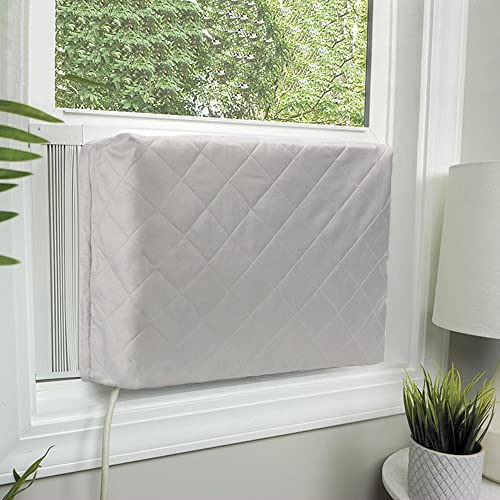
The HOXHA Double Insulation Indoor AC Cover leans into the energy-saving angle harder than the BEWAVE that opened the list. The build uses two layers of polyester and cotton stacked together, which is the fabric equivalent of doubling up a blanket over a window: more material means more resistance to cold air sneaking in around the front grille. Free elastic straps come in the box to cinch the cover tight without any extra purchases.
For homes that run heating non-stop from November through March, the extra layer can take the edge off the constant chill that builds up where a window unit sits. The trade-off is a slightly bulkier fit, so measuring the AC face is more important here than with the slimmer single-layer options. Anyone whose unit sits behind curtains or in a tight window frame may feel the added thickness.
Notable Gains
- Two-layer fabric construction holds back cold air better than single-layer covers
- Includes elastic straps, so installation stays a tool-free process
- Helps stabilize indoor temperature around the unit, which can ease furnace cycling
Worth Noting
- Thicker profile may not suit narrow window frames or decorative curtains
- Double fabric means a longer dry time after machine washing
Feature Snapshot
Right Fit For
Homeowners in cold climates who want stronger draft blocking and don’t mind a thicker cover that takes a bit longer to dry.
Look Elsewhere When
Anyone with a smaller wall sleeve should look at the Homydom Window AC Cover Indoor, which is sized specifically for compact 5,000 to 7,000 BTU units.
The Homydom Window AC Cover Indoor is built for the smaller end of the window-unit spectrum. At 21″ x 15″ x 3.5″, it lines up with most 5,000 to 7,000 BTU units, the kind that slide into bedroom and office windows where a full-size 25″ panel would hang over the edges. The white polyester shell reads cleanly against white window trim, which matters more than it sounds in a room where the cover stays up all winter.
Compared with the BEWAVE and HOXHA, the value here is precision sizing rather than maximum coverage. There’s no double insulation and no included straps listed in the source, so it’s a more straightforward slip-on design. For shoppers whose priority is getting a cover that actually matches the dimensions of a smaller unit, that trade is usually worth making.
The Value In It
- Tailored dimensions for compact 5,000 to 7,000 BTU window units
- White finish blends with most window trim and cabinetry
- Soft polyester fabric wipes clean and washes without much fuss
Points To Note
- Single-layer build, so insulation against cold drafts is modest
- Not sized for larger 8,000+ BTU units common in living rooms
Quick Facts
Best Suited To
Owners of smaller bedroom or office window units who want a cover that fits without excess fabric bunching up at the edges.
Not Your Match When
Anyone with a larger living-room unit or anyone needing exterior coverage should consider the Qualward Window Air Conditioner Cover for Outside Unit instead.
The Qualward Window Air Conditioner Cover for Outside Unit is where the roundup shifts from the room side of the wall to the weather side. This cover slips over the back of the unit where it juts out of the window, blocking cold drafts and shielding the metal housing from snow, rain, and the kind of freeze-thaw cycles that turn bare aluminum into a rust patch within a few seasons. The heavy-duty waterproof polyester is a step up from the soft indoor fabrics above.
The brand offers three sizes, and the 21.5″ x 16″ x 15″ small fits 3,000 to 7,000 BTU units, which is the most common size range for window air conditioners in older homes. Anyone who has scraped ice off a back grille in January will appreciate how much easier spring startup becomes when the housing isn’t holding moisture all winter.
Positive Points
- Waterproof polyester shell keeps rain and snow off the metal housing
- Blocks cold drafts at the back of the unit where indoor covers can’t reach
- Reduces rust and corrosion on aluminum coils and casing over time
- Three available sizes cover most 3,000 to 7,000 BTU window units
A Few Limitations
- Exterior-only design, so it doesn’t help with indoor room-side drafts
- Requires climbing outside or reaching through a window to install
Who It Suits Best
Homeowners with standard window units in regions with wet winters, where rust and ice buildup on the exterior housing are real concerns.
A Better Fit Elsewhere
Anyone running the AC in summer and only needing summer protection should look at the Luxiv Mesh Window AC Cover, which is designed to stay on while the unit operates.
The Luxiv Mesh Window AC Cover is the rare cover designed to stay on while the unit is actually running. Mesh fabric lets exhaust air pass through instead of trapping heat against the back of the housing, which means the AC doesn’t have to fight the cover to push hot air out. Two adjustable straps wrap around the unit to keep the cover from blowing off in summer storms.
This is a different animal from the Qualward above. The Qualward is a solid waterproof shell for winter, while this Luxiv is a breathable sun-and-dust shield for summer. For window units that stay installed year-round, owning both styles is a common setup: mesh in the warm months, solid cover once the heating season starts.
The Case For It
- Mesh design allows airflow, so the AC can keep running underneath
- Blocks sun exposure, which slows UV damage to plastic housings
- Keeps dust, leaves, and debris out of the back coil area
- Four available sizes for different unit dimensions
Honest Caveats
- Mesh won’t insulate, so it does nothing for cold-weather draft protection
- Black fabric can absorb heat on south-facing exterior walls
Perfect Match For
Shoppers in hot, dusty climates who run window ACs through summer and want a low-friction way to keep debris off the coils.
Swap It Out When
Anyone in a four-season climate should plan on switching to the Porch Shield Outdoor Window Air Conditioner Cover for winter, since mesh alone won’t handle snow.
The second Luxiv mesh cover on the list is a near-sibling of the previous pick, sharing the same mesh-and-straps design language but listed as a separate SKU. The pitch is the same: a breathable cover that lives outside year-round, slows sun damage, and keeps the back coil area cleaner. Two adjustable straps cinch around the unit to keep the cover from peeling off in wind.
In practice, having two mesh options in the roundup gives shoppers whose ACs vary in size a real choice. The mesh build remains a strong fit for anyone whose window unit runs in shoulder seasons when a solid cover would trap heat against the housing. The honest read is that picking between the two Luxiv covers mostly comes down to which size your unit actually measures.
The Good Stuff
- Breathable mesh won’t choke airflow while the AC is running
- Two adjustable straps hold the cover secure in everyday wind
- Helps slow UV fading on plastic end caps and side panels
Where It Is Less Suited
- Provides no insulation value in winter
- Won’t shed heavy rain or snow the way a solid shell does
Feature Rundown
Who Should Grab It
Shoppers running window ACs in dry, dusty, or sunny climates where debris and UV are bigger concerns than winter cold.
Another Choice May Suit
Anyone in a region with freezing winters and snow should look at the Porch Shield Outdoor Window Air Conditioner Cover, which uses a layered waterproof shell instead of mesh.
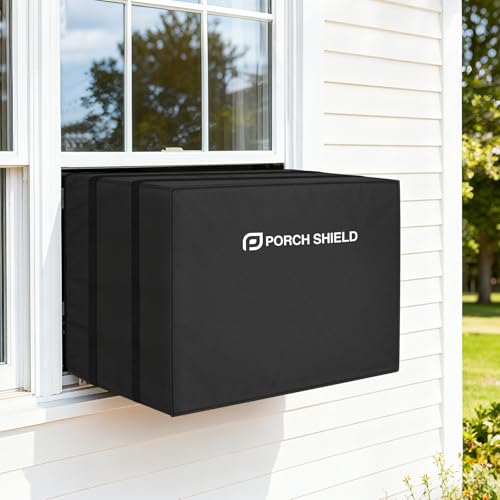
The Porch Shield Outdoor Window Air Conditioner Cover is the most layered shell on the roundup. The fabric stack is three materials laminated together: waterproof polyester on the outside, a PE sponge layer in the middle, and aluminum foil on the inside that reflects radiant heat. For a window unit that takes direct sun all afternoon, the reflective layer is the feature that does the most work, bouncing solar gain back off the housing instead of letting it bake into the coils.
The 17″ x 12″ x 13″ dimensions fit most 5,000 to 8,000 BTU units, which is the size range that covers the majority of household window ACs. Compared to the Qualward’s single-layer polyester, this is a sturdier build, and the trade-off shows up in weight: the cover is heavier to handle when pulling it on and off from a step stool.
Useful Touches
- Aluminum foil inner layer reflects sun and heat off the housing
- Waterproof outer shell sheds rain and snow without soaking through
- Three-layer laminate resists tearing at corners and seam points
Trade-Offs To Consider
- Heavier than single-fabric covers, so installation from a ladder takes more care
- Reflective layer adds cost compared to basic polyester shells
Core Details
Whose Shelf It Belongs On
Homeowners in mixed climates who want one cover that handles both summer sun and winter precipitation on the same window unit.
Reach For A Different Pick When
Anyone whose AC stays running through the warm months should reach for the Luxiv Mesh Window AC Cover instead, since a sealed shell like this one would trap heat against the housing.
Picking The Right Cover For Your Window AC
The first decision is where the cover needs to live. Indoor covers sit against the room-side grille and focus on blocking cold air leaks and dust; outdoor covers wrap the back housing where weather hits the coils. Many households end up using both across the year, swapping the indoor cover for an outdoor shell once the heating season starts.
Sizing is the most common place to go wrong. Measure the width, height, and depth of the unit face or housing and compare against the cover dimensions before ordering. Covers that run too small stretch at the seams; covers that run too large flap in the wind and let moisture creep underneath. The picks above cover a range of 17″ to 25″ widths, which lines up with most 3,000 to 8,000 BTU window units.
Material matters more than people expect. A basic polyester shell is fine for indoor dust control, while outdoor protection calls for waterproof or laminated fabric that can handle rain, snow, and UV. For units that run while covered, mesh is the only safe call, since solid covers trap heat and force the compressor to work harder. Drawstrings and elastic straps make installation simpler than hook-and-loop, especially in tight window frames.
Key Considerations Across These Picks
Where Shoppers Go Wrong
The most common slip-up is treating all AC covers as interchangeable. An indoor fabric cover does almost nothing for a back housing that takes direct rain, and a sealed outdoor shell will cook a unit that’s still running in summer. Matching the cover to whether the AC stays installed, whether the cover goes on the room side or the weather side, and whether the unit runs while covered prevents most returns.
The Case For Spending Up
Higher-tier covers in this category earn their keep through material layering: a waterproof shell plus a foam middle plus a reflective inner layer, like the Porch Shield, handles both heat reflection and winter precipitation in one piece. For households that would otherwise buy a separate summer mesh and a winter solid cover, the multi-layer shell can be a sensible single-purchase upgrade for a unit that lives outside year-round.
Frequently Asked Questions
Do window AC covers really save energy?
They reduce air leaks at the unit’s face or housing, which can lower the workload on your heating system in winter. The exact savings depend on how drafty the original install was, but most people notice the room feels less chilly near the window.
Should I cover the inside or outside of my AC?
Both, depending on the season. An indoor cover handles room-side drafts and dust, while an outdoor cover protects the metal housing from rain, snow, and rust. Many people use an indoor cover all winter and an outdoor shell during shoulder seasons.
Can I leave the cover on while the AC is running?
Only if it’s a mesh cover designed for that purpose, like the Luxiv options above. Solid covers trap heat against the housing and force the compressor to work harder, which can shorten the unit’s life.
How do I know what size cover to buy?
Measure the width, height, and depth of the front face for indoor covers, or the back housing for outdoor covers. Compare those numbers against the cover’s listed dimensions and pick the size that matches within roughly half an inch.
How long do AC covers typically last?
Indoor fabric covers tend to last several seasons with machine washing. Outdoor covers depend heavily on sun exposure, with basic polyester shells fading after a couple of years and laminated builds like the Porch Shield holding up longer under UV.