

Summer rooms without proper cooling drag down everything, from sleep quality to focused work. A wall-mounted or through-the-wall air conditioner solves the problem without the ductwork of central air, and it tucks into the wall like a permanent fixture. Window units still cover the basics, while mini splits add heat pump versatility for shoulder seasons. The seven picks below span small bedrooms, large living areas, and full year round climate control, with notes on noise, coverage, and installation effort to help you match the right unit to your space.
A Quick View Of The Lineup

GE 6,000 BTU Electronic Window Air Conditioner, 250 sq ft

LG 10,000 BTU Through the Wall Air Conditioner, 115V

Albott 12,000 BTU Mini Split Air Conditioner and Heater, 115V

Midea 12,000 BTU Window Air Conditioner with Heat, 550 Sq Ft
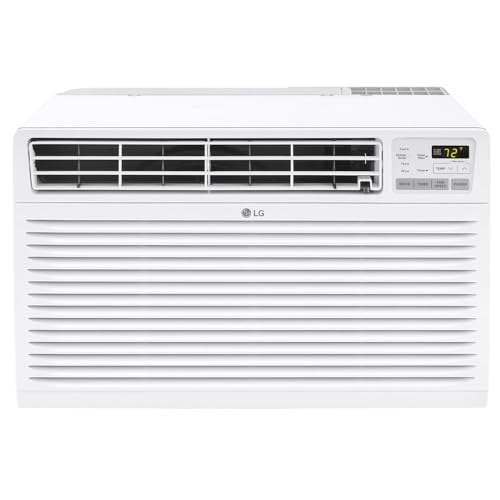
LG 14,000 BTU Through the Wall Air Conditioner, 230/208V
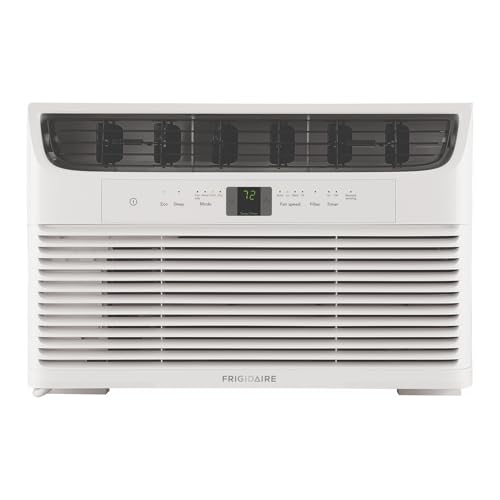
Frigidaire 8,000 BTU Window Air Conditioner with Remote

Nexaro 12,000 BTU Mini Split Air Conditioner and Heater, 115V
The Details Behind The Selections
The GE 6,000 BTU Electronic Window Air Conditioner targets the tightest spaces in a home. At a rated coverage of 250 square feet, it fits comfortably inside small bedrooms, nursery corners, and home offices where a larger unit would short-cycle and waste energy. Digital controls with a remote let you nudge the temperature from across the room, and the energy saver mode trims power draw during lighter loads.
Installation leans beginner-friendly. The included easy install kit covers the side curtains and basic mounting hardware, so most people handle the swap in a single afternoon with a screwdriver and a helper. Two-way air direction keeps the airflow directed where it matters rather than blowing straight back into the window frame.
Positive Takeaways
- Right-sized cooling for rooms up to 250 square feet without overworking the compressor.
- Digital readout and remote make temperature tweaks painless from bed or a desk.
- Energy saver mode reduces wattage during mild weather, easing monthly bills.
- 24-hour timer schedules around your sleep and work patterns automatically.
Things To Consider
- Coverage tops out at roughly 250 square feet, so open-concept living areas will outpace it.
- Window mount requires a compatible double-hung window of standard width, which may not suit every wall.
- Filter cleaning every few weeks is standard practice to keep airflow steady and efficiency high.
Who It Suits Best
Renters, dorm occupants, and anyone outfitting a single small bedroom will find this GE unit a sensible match for everyday summer comfort.
Where Another Pick Suits Better
The Midea 12,000 BTU Window Air Conditioner with Heat covers more than double the square footage and adds supplemental heat, making it the better swap for larger multi-use rooms.
The LG 10,000 BTU Through the Wall Air Conditioner (model LT1015CER) drops into a dedicated wall sleeve rather than a window opening, freeing up your window for natural light. It handles rooms up to 440 square feet, which covers most apartments and modest living rooms. Three cooling and fan speeds let you match output to humidity and activity, while the included remote keeps adjustments within reach.
Where the GE window unit from earlier forces a tradeoff between light and cooling, this through-the-wall design preserves both. The 4-way air deflection moves air horizontally and vertically, distributing comfort more evenly across wider rooms. You may find the sleeve cutout and electrical routing more involved than a basic window install, but the result is a clean, permanent look.
Notable Upsides
- 4-way air deflection spreads cool air across wider floor plans without a strong directional draft.
- Three cooling and fan speeds give meaningful control during both humid afternoons and dry evenings.
- Through-the-wall sleeve setup keeps the window free for curtains, blinds, or daylight.
Trade Offs
- Requires a compatible wall sleeve and a routed electrical outlet, which adds planning before purchase.
- At 10,000 BTU, the unit is heavier than a 6,000 BTU window model and benefits from a second pair of hands during install.
Feature Snapshot
Made For
Apartment dwellers and condo owners who want a permanent cooling solution without sacrificing window access will appreciate the through-the-wall form factor.
Skip It When
Anyone renting a space that prohibits wall modifications should look instead at the GE 6,000 BTU window model, which installs without permanent cuts.
The Albott 12,000 BTU Mini Split Air Conditioner and Heater steps well beyond the simple cooling-only window units. It cools, heats, dehumidifies, and circulates air in a single wall-mounted system, covering rooms up to 750 square feet. The SEER2 18 rating puts it among the more efficient inverter options in this list, and the self-cleaning function reduces the dust buildup that typically collects on indoor coils over time.
Control flexibility stands out. You can adjust temperature from the included remote or through a smartphone app, which is useful when you want to pre-cool a room before walking through the door. A word of practical honesty: the listing itself notes that professional HVAC installation is required, so plan for a licensed tech and the associated line-set routing before adding to cart.
Key Advantages
- Year-round versatility with cooling, heating, dehumidification, and fan modes in a single unit.
- SEER2 18 inverter efficiency trims power use during extended runtime.
- Self-cleaning function limits dust accumulation on the indoor coil, simplifying upkeep.
- App and remote control let you adjust temperatures from anywhere on your network.
Points To Note
- Professional installation is required, adding labor cost on top of the unit price.
- 115V power keeps wiring simple, but the wall-mounted line set routing still requires wall penetration.
Right Fit For
Homeowners outfitting a garage conversion, sunroom, or addition who want heating and cooling in a single package will find this Albott model well suited.
Not Your Match When
Renters and anyone avoiding permanent wall modifications should reach for the Frigidaire 8,000 BTU Window Air Conditioner, which needs only a standard window opening.
The Midea 12,000 BTU Window Air Conditioner with Heat answers a question many shoppers forget to ask: what happens when summer ends? With cooling for rooms up to 550 square feet and a heat mode for cooler months, it pulls double duty without demanding a second appliance. Smart inverter control adjusts compressor output based on demand rather than cycling hard on and off, which typically keeps rooms quieter and more stable.
One practical limit to know: the heat function will not operate once outdoor temperatures drop to about 41°F, so this is supplemental heat for shoulder seasons, not a replacement for a furnace in cold climates. Inside that range, the dehumidifier mode tackles sticky summer days, and the included remote keeps you from getting up to change settings at bedtime.
Where It Delivers
- Combined cooling and supplemental heat eliminate the need for a separate window unit in spring and fall.
- Smart inverter operation reduces compressor cycling, generally keeping noise lower than fixed-speed units.
- 550 square feet of coverage handles main living areas, open kitchens, and larger bedrooms with margin to spare.
Worth Noting
- Heat mode disengages around 41°F outdoor, limiting its usefulness as a primary winter heat source.
- Larger chassis than the 6,000 BTU GE unit, so measuring the window opening before purchase pays off.
Quick Facts
Best Suited To
Households in mild climates who want one window unit to handle both warm and cool shoulder seasons will get solid value from this Midea model.
Look Elsewhere When
Anyone in a cold-winter region needing reliable heat should consider the Albott 12,000 BTU Mini Split, whose heat pump is built for broader temperature ranges.
The LG 14,000 BTU Through the Wall Air Conditioner scales up the cooling muscle for open living areas and apartments with high ceilings. Rated for spaces around 700 square feet, it stands as the largest through-the-wall option in this lineup. The 230/208V power supply differs from the 115V LG model covered earlier, so an electrician should verify your panel and outlet compatibility before you commit.
Once wired, the cooling output handles heat-generating rooms with south-facing windows or kitchen-adjacent layouts. The 4-way air deflection and three fan speeds work the same way as the smaller LG, so existing owners will find the controls familiar. Expect a heavier chassis that needs two people during install, and budget time for sleeve mounting and electrical routing.
Notable Gains
- 14,000 BTU output covers roughly 700 square feet, suiting open floor plans and large living rooms.
- 4-way deflection spreads air evenly across wider footprints.
- Three fan speeds give meaningful adjustment for both daytime cooling and nighttime quiet.
Honest Caveats
- 230/208V power requires a compatible outlet or new circuit, adding install complexity.
- Heavier than smaller through-the-wall units, so sleeve support and structural checks matter.
- Cooling-only operation means pairing it with a separate heat source for winter.
Details At A Glance
Who Will Love This
Homeowners with large living areas, finished basements, or open-concept spaces that need serious cooling capacity will appreciate the extra BTU headroom.
Another Choice May Suit
Anyone in a smaller 300 to 500 square foot room can save on energy use and cost with the Midea 12,000 BTU Window Air Conditioner, which also adds heat.
The Frigidaire 8,000 BTU Window Air Conditioner lands in the comfortable middle of the cooling range. It covers rooms up to 350 square feet, which suits most bedrooms, guest rooms, and small dens without overkill. Eco mode trims wattage during lighter loads, and auto restart brings your settings back after a brief power interruption, a useful touch in storm-prone areas.
Compared to the GE 6,000 BTU unit reviewed earlier, this Frigidaire steps up to 8,000 BTU and adds 6-way directional airflow, a step beyond simple two-way louvers. Three fan speeds pair with the included remote for convenient adjustments. You may notice a slightly louder high-fan output than smaller window models, but the low setting runs quietly enough for most sleepers.
The Case For It
- 6-way directional airflow aims cool air precisely where it works hardest in the room.
- Eco mode balances comfort and efficiency during mild summer days.
- Auto restart restores previous settings after a power outage, a small but appreciated detail.
- 350 square feet of coverage handles most medium bedrooms and home offices comfortably.
Less Ideal Details
- Higher fan speeds produce noticeable noise, so light sleepers may want to stick to the low setting at night.
- Washable filter needs regular rinsing every few weeks to keep output consistent.
Perfect Match For
Mid-size bedroom owners and home office workers who want a balance of coverage, efficiency, and straightforward controls will find this Frigidaire a comfortable everyday choice.
Reach For A Different Pick When
Anyone cooling a much larger space around 700 square feet should consider the LG 14,000 BTU Through the Wall Air Conditioner, which has the headroom for open layouts.
The Nexaro 12,000 BTU Mini Split Air Conditioner and Heater rounds out the list with a wall-mounted ductless design and a 17 SEER2 rating, an efficiency mark that signals serious inverter hardware under the hood. It covers rooms up to 750 square feet with both cooling and heat pump operation, so you get a single system that handles summer highs and cool shoulder evenings.
Running on 115V power keeps electrical requirements manageable compared to 230V alternatives, though a dedicated circuit is still a smart move for any mini split. The wall-mounted indoor unit sits high on the wall and leaves floor space free, which is a real benefit in studio apartments and converted basements. Owners should plan for professional line-set installation, the same trade-off the Albott mini split above requires.
What Helps Most
- 17 SEER2 inverter efficiency reduces power draw during long cooling seasons.
- Heat pump function adds winter usability without a separate appliance.
- Wall-mounted design keeps floor space open, useful in small or multi-use rooms.
- 115V power avoids the higher-voltage outlet work that the LG 14,000 BTU unit requires.
Points To Keep In Mind
- Professional installation is required for the line set, refrigerant lines, and electrical hookup.
- 750 square feet of coverage fits most rooms, but open layouts with multiple exposures may push it hard during heat waves.
Key Product Details
Built With In Mind
Homeowners ready to invest in a permanent ductless system for a primary living space, addition, or garage conversion will benefit most from the Nexaro’s efficiency and year-round function.
Swap It Out When
Anyone renting or avoiding permanent wall modifications should choose the Frigidaire 8,000 BTU Window Air Conditioner, which installs with a standard window kit.
What Matters Most Before Choosing Ac Wall Units
Right-Sizing The BTU To Your Room
The first practical question is square footage. A 6,000 BTU unit covers about 250 square feet, while a 14,000 BTU through-the-wall model handles around 700. Oversized units short-cycle, which wastes energy and wears components faster. Undersized units run constantly without reaching the set temperature, also driving up bills. Measure the room, then add a small buffer for kitchens, sun-exposed walls, or high ceilings.
Window, Through-Wall, Or Ductless Mini Split
The mounting style shapes both installation effort and the look of the room. Window units clamp into an existing window opening and are usually the easiest swap. Through-the-wall models need a dedicated sleeve cut into the exterior wall, which is a bigger project but keeps the window free. Mini splits require a line set routed through the wall to an outdoor condenser and professional installation, but they bring heat pump function and the highest efficiency ratings.
Voltage And Electrical Needs
Most window and through-the-wall units run on standard 115V outlets. Some larger through-the-wall models, like the LG 14,000 BTU, run on 230/208V, which requires a compatible outlet and possibly new wiring. Mini splits vary, with the Albott and Nexaro models reviewed here sticking to 115V. Check your panel capacity before committing to a higher-voltage unit.
Noise Levels And Sleep Quality
For bedrooms, low fan speed noise matters as much as cooling power. Units that mention quiet operation or inverter compressors tend to run more evenly at lower volumes. Lighter sleepers should prioritize the lowest fan setting’s noise rating over peak cooling claims, and consider a wall-mounted mini split whose indoor unit runs quieter than most window chassis.
Key Considerations Across These Picks
Common Shopping Slip Ups
The most frequent mistake in this category is buying by BTU number alone without checking voltage, sleeve dimensions, or room layout. A 12,000 BTU unit is a great match on paper, until you discover your window opening is too narrow. Always measure twice: the window or wall sleeve, the electrical outlet type, and the room’s actual square footage including alcoves.
Where The Extra Money Goes
Higher-tier models in this category invest in inverter compressors, heat pump functionality, and higher SEER2 efficiency ratings, all of which lower long-term energy costs. You also pay for quieter fans, self-cleaning coils, and app control. For year-round use in a primary living space, that premium tends to pay itself back in comfort and energy savings. For a guest room used a few weeks a year, a basic 6,000 or 8,000 BTU window unit usually makes more sense.
Frequently Asked Questions
How do I know what BTU rating I need for my room?
Measure the room’s length and width, then multiply to get square footage. A rough rule of thumb is 20 BTU per square foot, so a 250 square foot bedroom works well with a 6,000 BTU unit, while a 700 square foot living area needs closer to 14,000 BTU. Add about 10 percent extra capacity for kitchens or rooms with heavy sun exposure.
Can a window air conditioner be installed in a sliding window?
Most window units are designed for double-hung windows with vertical sashes, but some manufacturers offer slider kits for horizontal sliding windows. Check the product listing for compatible window types before ordering, since the included side curtains and brackets typically only fit vertical setups.
What is the difference between a window unit and a through-the-wall unit?
A window unit sits in an existing window opening and uses side curtains to seal the gaps. A through-the-wall unit installs in a permanent sleeve cut into the exterior wall, freeing the window entirely. Through-the-wall units tend to have higher BTU ratings and a cleaner finished look, but require more involved installation.
Do mini split air conditioners heat as well as cool?
Yes, most modern mini splits include a heat pump that works in reverse for heating. They are effective in mild to moderate cold weather, though performance drops as outdoor temperatures approach freezing. The Albott and Nexaro models reviewed here both include this heat function for year-round use.
How often should I clean the air filter on a wall or window AC?
Most manufacturers recommend checking the filter every two to four weeks during active cooling months. A quick rinse under warm water and full air dry before reinstalling is usually enough. A clean filter keeps airflow strong, reduces energy use, and helps the unit reach the set temperature faster.