

Texas summers don’t flirt with the thermostat; they set it on fire. From Austin triple-digit stretches to Houston Gulf humidity that turns your living room into a sauna, picking the right cooling setup means the difference between sleeping through August and counting ceiling tiles at 2 a.m. This roundup covers seven AC units built for the kind of heat the Lone Star State throws at you, whether you’re cooling a converted garage, a suburban living room, or a top-floor apartment that bakes under direct sun.
The Essentials At A Glance

EUHOMY 8,000 BTU Portable Air Conditioner (350 Sq. Ft.)

Midea 8,000 BTU Smart Inverter Window AC with Heat
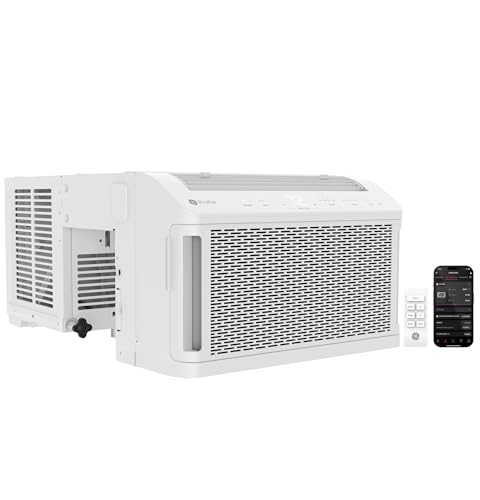
GE Profile ClearView 12,200 BTU Inverter Window AC

Frigidaire 12,000 BTU Window AC with Remote
Midea 12,000 BTU U-Shaped Inverter Window AC

ftocase 14,000 BTU Portable AC Unit (650 Sq. Ft.)
LG 23,500 BTU Dual Inverter Smart Window AC
More On The Choices That Made The List
Renters and dorm dwellers in Texas know the pain of blistering bedrooms with no central air. The EUHOMY 8,000 BTU portable AC tackles that exact problem, rolling from living room to bedroom with 350 CFM (cubic feet per minute) of airflow behind it. Set the thermostat anywhere from 61 to 90°F and let the four-mode system handle cooling, dehumidifying, fan-only circulation, and overnight sleep cycles.
Unlike the window-mounted options later in this roundup, this one needs no permanent install. The included window kit fits 20- to 50-inch openings, and at 50 dB on its lower settings, you may find it quieter than the cicadas outside. It also has a 24-hour timer for hands-off scheduling.
Useful Touches
- 350 CFM airflow moves cooled air quickly into mid-size rooms, so a 12×15 bedroom hits comfort in minutes rather than an hour
- Four operating modes cover most Texas seasons: cool for July, dry for sticky September mornings, fan for spring breezes, sleep for overnight
- 24-hour timer lets you set it to start cooling before you get home from work
- Both remote and onboard panel control, so a lost remote isn’t a crisis
Things To Consider
- Like all portable units, the exhaust hose must vent through a window, which means the included kit seals off part of your opening and reduces natural light
- Owners commonly report the water reservoir needs manual draining in high-humidity Texas conditions unless the self-evaporative mode keeps up
Who It Suits Best
Renters, dorm residents, and anyone in a 350-sq-ft space who can’t or won’t install a window unit will get the most from this pick.
Look Elsewhere When
Anyone cooling a living room over 400 sq ft should step up to the Midea 12,000 BTU U-Shaped Inverter Window AC for serious coverage.
Texas may run hot most of the year, but North and Central Texas still get chilly January mornings that demand more than a space heater. The Midea 8,000 BTU Smart Inverter pulls double duty with both cooling and a heat pump, covering roughly 350 sq ft of living space. The inverter compressor also earns Energy Star efficiency, which matters when summer utility bills in Houston or San Antonio can rival a car payment.
Compared to the EUHOMY portable above, this one is a fixed window install. That trade-off brings quieter operation, better seal against outdoor heat, and dehumidification that the portable can’t match. The electronic controls and included remote cover day-to-day adjustments.
Real Benefits
- Combined cooling and heat pump stretches usefulness across Texas shoulder seasons, not just July and August
- Energy Star-rated inverter design typically uses less power than fixed-speed window units, easing summer electric bills
- Built-in dehumidification mode pulls moisture out of Gulf Coast air that pure cooling can’t touch
Worth Noting
- The heat pump function does not engage once outdoor temps drop below 41°F, so Panhandle homeowners still need a separate heat source on the coldest nights
- Window installation requires basic tools and a willing helper, since the chassis is heavier than smaller 5,000 BTU units
Made For
Homeowners in 350-sq-ft rooms who want year-round climate control without a separate heating unit will get strong value here.
Consider Something Else When
Open-concept living areas over 500 sq ft are a stretch for this Midea 8,000 BTU, and the LG 23,500 BTU Dual Inverter Smart Window AC handles those spaces far better.
Mid-size Texas living rooms run 400 to 550 sq ft, and that’s exactly the GE Profile ClearView’s wheelhouse. The 12,200 BTU inverter design cools those spaces without the harsh on-off cycling cheaper units suffer through, and it runs quiet enough for open layouts where the kitchen flows into the family room. WiFi connectivity means you can pre-cool the house from the office parking lot, a real plus in July.
Where the Midea 8,000 BTU above stops at 350 sq ft, the ClearView picks up another 200 sq ft of coverage. The remote is included for those who don’t want to dig out a phone every time someone argues over the temperature.
What Earns Its Place
- 550 sq ft coverage handles the typical Texas great room, the kind attached to most new suburban builds
- Inverter compressor adjusts output continuously rather than blasting cold then coasting, which tends to feel less drafty
- Smart-home compatibility links with routines and voice assistants once configured
Points To Note
- Some owners find the ClearView design obstructs the window glass more than traditional front-vent units, partially blocking the view
- Setup typically requires two people because the chassis is wide and a 230V outlet may be needed depending on home wiring
Right Fit For
Tech-forward homeowners cooling a single 550-sq-ft zone will appreciate the connectivity and quieter inverter operation.
A Better Fit Elsewhere
Anyone whose top priority is silent operation above all else should look at the Midea 12,000 BTU U-Shaped Inverter Window AC, which drops to 32 dBA in low mode.
Not everyone wants a smart fridge whispering to their thermostat. The Frigidaire 12,000 BTU Window AC is the workhorse option: 550 sq ft of coverage, three fan speeds, Eco Mode for energy savings, and a clean filter alert that reminds you when maintenance is due. Auto Restart is genuinely useful in Texas, where summer thunderstorms knock power out often enough to matter.
Compared to the GE Profile ClearView above, you give up WiFi and the inverter’s smoother output, but gain a simpler, more traditional control panel. Six-way directional airflow also means you can point the cool air exactly where it pools on a hot afternoon.
Why It Works Well
- Eco Mode drops compressor cycling once the room hits the set temperature, trimming power use during long August runs
- Auto Restart picks up your last settings after an outage, no reprogramming at midnight
- Washable filter with a clean alert cuts down on guesswork, especially helpful in dusty West Texas
- 6-way airflow directs cool air across long, narrow rooms that single-direction units struggle with
Honest Caveats
- The non-inverter compressor cycles on and off more noticeably, which some sensitive sleepers find distracting compared to the Midea U-Shaped
- Like most 12,000 BTU window units, the chassis requires a sturdy window frame and may need support brackets on wider installations
Best Suited To
Homeowners wanting straightforward, dependable cooling in a 550-sq-ft room without smart-home complexity.
Reach For A Different Pick When
Bedroom-focused shoppers who prize silence should pivot to the Midea 12,000 BTU U-Shaped Inverter Window AC, which is purpose-built for low-noise operation.
Bedrooms, nurseries, and home offices need a different breed of AC: one you forget is running. The Midea 12,000 BTU U-Shaped Inverter runs as low as 32 dBA in its quiet mode, roughly library-quiet, because the U-shaped chassis blocks outdoor noise with the window itself. The 2026 refresh adds improved energy savings over standard units, around 37% by Midea’s claim, which pays off across a four-month Texas cooling season.
Where the Frigidaire and GE Profile above mount flush and seal off most of the window, the U-shape lets you actually open the window slightly for fresh air. The inverter compressor also avoids the constant start-stop that wakes light sleepers.
What Makes Sense
- 32 dBA low-mode operation is among the quietest window ACs available, which matters when your bedroom window faces a busy street
- Open-window flexibility, the U-design keeps the sash usable, unlike fully-sealed window units
- Voice control compatibility with Alexa and Google Assistant fits into most smart-home setups
A Few Limitations
- The U-shape installation is more involved than a standard window sleeve, so first-timers should budget extra setup time
- You may find the unique bracket design limits compatibility with certain slider windows common in older Texas ranch homes
Who Should Grab It
Light sleepers, remote workers, and nursery-focused parents will value the near-silent operation above all else.
Where A Sibling Pick Shines
For larger open areas over 600 sq ft, the ftocase 14,000 BTU Portable AC Unit brings more raw cooling muscle in a flexible form factor.
Open floor plans, converted garages, and bonus rooms over 600 sq ft need portable power, and the ftocase 14,000 BTU delivers it. This is a 3-in-1 unit: cooling, dehumidifying, and fan, covering up to 650 sq ft. The Smart Sleep Mode gradually adjusts temperature overnight so you don’t wake up shivering at 4 a.m., and a 24-hour timer schedules around your routine.
Compare that to the EUHOMY 8,000 BTU at the start of this list: you give up the smaller footprint and gain nearly double the BTU and 300 extra sq ft of coverage. Setup stays similar: roll it into place, attach the exhaust hose, vent through a window.
A Strong Showing
- 14,000 BTU handles 650-sq-ft bonus rooms, converted garages, and small open offices that smaller portable units can’t touch
- Smart Sleep Mode ramps temperature gradually, which feels more natural than a fixed overnight setpoint
- 3-in-1 functionality replaces a separate fan and dehumidifier in humid Gulf or Hill Country climates
Practical Considerations
- Larger portable units tend to be louder at full output than window-mounted equivalents, and you may notice the compressor during a quiet conversation
- Exhaust hose venting still blocks part of the window, similar to the EUHOMY, so plan for a window you can spare
Who Will Love This
Homeowners with big bonus rooms, workshop spaces, or open layouts up to 650 sq ft get strong coverage without a permanent install.
Not Your Match When
Shoppers cooling a single defined room under 550 sq ft should save space and cost with the Frigidaire 12,000 BTU Window AC instead.
Some Texas homes need a single unit to do the work of two. The LG 23,500 BTU Dual Inverter cools up to 1,440 sq ft, which covers most small homes, open great rooms with adjacent kitchens, and accessory dwelling units. The dual inverter compressor ramps smoothly instead of slamming on and off, and sleep mode drops to about 44 dB, roughly library-quiet for a unit this size.
LG ThinQ integration plus Alexa and Google Assistant compatibility puts this in the same smart-home conversation as the GE Profile above, but at nearly four times the BTU output. The catch is electrical: at 230V, this is a serious install that may require an electrician.
Well-Handled Touches
- 1,440 sq ft coverage handles entire floors in many Texas homes, reducing the need for multiple units
- Dual inverter technology adjusts output in fine increments, keeping temperature stable and humidity under control
- LG ThinQ plus voice assistant support covers app-first households and voice-first households equally well
Trade Offs
- 230V power requirement means many homes need an electrician to run a proper outlet, adding to setup cost
- Size and weight make window mounting a two-person job at minimum, and the chassis may overwhelm smaller window frames
Built With In Mind
Homeowners with large open floor plans, casitas, or single-zone whole-home cooling needs will find this LG covers ground smaller units can’t.
Skip It When
Anyone cooling a single bedroom or 350-sq-ft space should save the investment and consider the Midea 8,000 BTU Smart Inverter Window AC with Heat instead.
Picking The Right Cooling Setup For Texas Heat
Texas cooling decisions usually come down to room size, install type, and noise tolerance. Start with square footage: a unit rated for 350 sq ft struggles in a 500-sq-ft room, and an oversized 1,440-sq-ft model in a small bedroom wastes energy and short-cycles. Match the BTU (British thermal units, the standard measure of cooling capacity) to the actual space you need cooled, not the whole house.
Window Units vs Portable Units
Window units seal against outdoor heat better and tend to run quieter, but they require a compatible window and a more permanent install. Portable units roll between rooms and need no permanent mounting, but the exhaust hose venting reduces efficiency slightly. Renters who can’t modify windows typically lean portable; homeowners with a spare bedroom window often prefer the seal and quiet of a window unit.
Inverter vs Standard Compressors
Inverter compressors adjust their output continuously, which generally means lower energy use, more stable temperatures, and quieter operation. Standard compressors cycle on and off at full power, which works fine but tends to feel drafty and spike your electric bill. For Texas summers that run four months or longer, the inverter premium often pays back through lower utility costs.
Noise Levels Matter More Than You Think
A window unit running at 50 dB feels loud in a quiet bedroom at 2 a.m. Units in the low 30s dBA, like the Midea U-Shaped, are barely noticeable. If the AC is going in a bedroom, nursery, or home office, prioritize noise ratings over peak BTU.
Smart Features Worth Considering
WiFi, app control, and voice assistant compatibility aren’t required, but they let you pre-cool a room before you get home, which is genuinely useful in a state where cars can hit 150°F interiors in July sun. Filter-clean reminders also reduce the chance of running a clogged, inefficient unit through peak season.
Key Considerations Across These Picks
Where Shoppers Go Wrong
The most common misstep is buying by BTU alone. A 14,000 BTU unit crammed into a 200-sq-ft room short-cycles, wastes energy, and never dehumidifies properly. The opposite error is buying a 5,000 BTU unit for a 600-sq-ft great room and wondering why it never cools down. Measure your space, check ceiling height (tall ceilings need more capacity), and account for sun exposure, since west-facing rooms in Texas run noticeably hotter.
When Paying More Pays Off
Premium picks in this roundup, the LG Dual Inverter, the Midea U-Shaped, and the GE Profile ClearView, all share inverter compressors, quieter operation, and smarter energy use. The upgrade pays off most for anyone running their AC four to five months a year, where the efficiency gap shows up directly in the electric bill. For occasional use in a guest room, the more basic Frigidaire 12,000 BTU delivers solid cooling without the premium.
Frequently Asked Questions
How many BTU do I need for a Texas bedroom?
A typical Texas bedroom between 150 and 350 sq ft generally does well with a 6,000 to 8,000 BTU unit. Larger master bedrooms over 350 sq ft benefit from stepping up to 10,000 or 12,000 BTU. Always check the manufacturer’s room-size recommendation rather than guessing.
Are portable air conditioners good for Texas humidity?
Portable units help, but they don’t dehumidify as effectively as window units or mini-splits. In high-humidity areas like Houston, Galveston, or the Gulf Coast, a window unit with a dedicated dehumidification mode, such as the Midea 8,000 BTU Smart Inverter, typically pulls more moisture out of the air.
How loud are window AC units at night?
Most window units run between 40 and 55 dB on low settings, which is roughly the level of a quiet conversation or soft rainfall. The Midea 12,000 BTU U-Shaped Inverter runs as low as 32 dBA, close to library-quiet, making it a strong fit for light sleepers.
Can a single window AC cool a whole Texas home?
Only in small homes or open studios under 1,000 sq ft. The LG 23,500 BTU Dual Inverter covers up to 1,440 sq ft, but larger homes typically need either central air, a mini-split system, or multiple window units placed strategically across zones.
Do inverter air conditioners really save money on Texas electric bills?
Inverter compressors use less electricity on average because they avoid the high-power startup cycles of standard units. Over a long Texas cooling season, the savings can be meaningful, especially for units that run 12 or more hours a day during July and August.