
A studio that turns into a sauna by mid-afternoon, a bedroom where the ceiling fan just shuffles warm air around, a home office where Zoom calls get interrupted by your own sweat. Sound familiar? Small apartments rarely come with central air, and a clunky window unit from 2003 only makes things worse. The good news: today’s compact ACs and portable units are quieter, smarter, and far more apartment-friendly than the boxy dinosaurs of the past. This list covers seven solid options across window, portable, and multi-mode categories, so you can match a unit to your square footage, your window situation, and how loud you can let it run.
The Essentials At A Glance

GE 5,000 BTU Window Air Conditioner for Small Rooms

LG 5000 BTU Window Air Conditioner (LW5023)

Midea 8,500 BTU Portable Air Conditioner with App Control

Antarctic Star 8000 BTU 5-in-1 Portable AC

BLACK+DECKER BPACT05SM 8,500 BTU Portable AC
Line Blaster 8500 BTU 3-in-1 Portable AC
GarveeHome 6000 BTU Window AC with Remote
A Breakdown Of The Leading Choices
The GE 5,000 BTU window unit is the kind of appliance that quietly does its job without demanding attention. Mechanical dial controls sit on the right side, two cooling settings cover most situations, and a pair of fan speeds let you trade noise for airflow. For a 10×12 bedroom or a small home office, it pulls room temperature down fast enough that you stop thinking about it within an hour.
It installs in a standard double-hung window with the side panels and chassis you probably remember from older units, and the included foam insulation strips help seal the gaps that let hot air leak back inside. Owners commonly find the washable filter slides out for a quick rinse in the sink, which keeps maintenance to about once a month during heavy use.
Practical Advantages
- Mechanical dial controls mean no learning curve and no remotes to lose
- Washable filter cuts down on replacement costs and is easy to rinse
- Lightweight enough for a single person to mount and remove between seasons
- Energy draw stays modest for a 150 sq ft space, which keeps operating costs reasonable
Things To Consider
- No remote control, so adjusting from bed means getting up to reach the dial
- At 5,000 BTU it is firmly a small-room unit; opening it up to a larger space will leave it running nonstop
Key Specs
Right Fit For
A renter with one bedroom to cool and a no-frills approach to home comfort.
Consider Something Else When
The LG LW5023 window AC suits light sleepers who need a noticeably quieter cycle.
Where the GE leans on simplicity, the LG LW5023 leans on stealth. It is one of the quieter 5,000 BTU window units you’ll find, which is why it shows up in so many nursery and shift-worker setups. A 2-way air deflection system spreads cool air across the room rather than aiming it straight at one corner, so you don’t get that “freezer zone right under the window” effect.
Mechanical controls keep the interface straightforward, and the washable filter pulls out from the front without tools. For a small bedroom where the unit runs through the night, the lower noise floor makes a real difference; whether you’re working early shifts, recording audio, or just value not hearing the compressor cycle on and off.
Features That Help
- Ultra-quiet compressor keeps bedroom noise to a minimum
- 2-way air deflection distributes cooling more evenly across the room
- Washable filter reduces maintenance and long-term costs
Worth Noting
- Like the GE, this is strictly a small-room unit and will struggle beyond 150 sq ft
- Mechanical-only controls mean no remote, no scheduling, no smart features
- Chassis is somewhat deep, so older shallow windows may need a support bracket
Key Specs
Built With In Mind
Light sleepers, nursery parents, and home studio operators who need steady cooling without background hum.
Skip It When
The Midea 8,500 BTU portable model fits better when your apartment lacks a suitable window for mounting.
Portable units get a bad rap for being noisy and underpowered, and some of that reputation is deserved. The Midea 8,500 BTU (5,000 BTU SACC, which is the newer, more honest rating standard) sidesteps a lot of the usual complaints by leaning on smart features. The companion app lets you set schedules, adjust temperature, and switch modes from your phone, so the included remote feels almost secondary.
Setup is the standard portable routine: roll it into place, attach the window kit, vent the exhaust hose. The included foam seals help reduce the warm-air leak around the window panel that often plagues portable units. For renters whose lease forbids window ACs, or anyone with awkward window shapes, this is a sensible trade-off of cooling power for installation flexibility.
A Favorable Mix
- App control means you can adjust settings without getting up or finding the remote
- Includes dehumidifier and fan modes, useful during muggy shoulder seasons
- Rolls on built-in casters, so you can move it between rooms as needed
- Window kit ships in the box, no extra accessory purchase required
Trade Offs
- Portable units are inherently louder than window units because the compressor lives in the room
- Exhaust hose must stay connected during cooling, limiting where you can place it
- Condensate tank needs occasional draining in very humid conditions, though many setups allow continuous drain
Who It Suits Best
Urban renters, especially those with window restrictions, who want remote and app control over their cooling.
Look Elsewhere When
The Antarctic Star 5-in-1 portable unit makes more sense for shoppers who want multiple dedicated modes including sleep.
The Antarctic Star 8000 BTU trades the LG and GE’s two-mode minimalism for genuine versatility. Five operating modes cover cooling, dehumidifying, fan-only, sleep, and timer, so the unit can pull double or triple duty across different seasons. Auto swing spreads airflow across the room, and the child lock is a thoughtful touch for family households.
The sleep mode gradually adjusts temperature overnight, which helps avoid that 3am wake-up where the room has gone from too cold to clammy. Continuous drain via the included hose is a real plus in humid climates, since you won’t have to remember to empty the tank. The 350 sq ft coverage makes it a step up from the Midea for larger studio layouts.
What Makes Sense
- Five modes including dedicated sleep and dehumidifier functions
- Auto swing distributes air without manual adjustment
- Continuous drain option prevents tank-emptying chores in humid weather
- Child lock adds a layer of safety for family apartments
Honest Caveats
- More modes means more buttons; expect a longer learning curve than the GE or LG
- At full output the compressor noise is noticeable; sleep mode helps but does not silence it
- Physical footprint is larger than the Midea, so tight corners may be a challenge
Quick Facts
Made For
Apartment dwellers who want one unit that does cooling, dehumidifying, and air circulation without buying three appliances.
Not Your Match When
The GE 5,000 BTU window unit fits better for buyers who want dead-simple mechanical controls and minimum noise.
The BLACK+DECKER BPACT05SM is the portable unit that most apartment dwellers end up comparing everything else to, and for good reason. It pairs 8,500 BTU (5,100 BTU SACC) of cooling with 3-in-1 flexibility, so you get cooling, dehumidifying, and fan circulation in one chassis. The full-function remote covers the basics without forcing you to walk across the room.
What sets it apart for shared spaces is the castor-based mobility: you can roll it from the living room to the bedroom at night without much fuss, and the window kit is straightforward to install. Coverage up to 350 sq ft covers most studio and one-bedroom layouts, though in a west-facing apartment with afternoon sun you may find the compressor working harder than in shaded units.
Where It Helps
- Rolls easily between rooms on built-in casters, ideal for studio living
- Remote control included for adjustments from the couch or bed
- 350 sq ft coverage handles most one-bedroom and studio layouts
- 3-in-1 design covers cooling, dehumidifying, and fan-only needs
Softer Spots
- Like most portables, the compressor noise travels in open layouts
- Exhaust hose length limits how far from the window you can place the unit
- Filter cleaning is straightforward but easy to forget until performance drops
Feature Snapshot
Best Suited To
Renters in studios or one-bedrooms who need one portable unit that can move with their routine.
Another Choice May Suit
The Line Blaster 8500 BTU 3-in-1 covers more ground for loft-style apartments up to 450 sq ft.
The Line Blaster pushes the upper boundary of what “small apartment” can mean. With coverage claimed up to 450 sq ft and dual-turbo airflow, it tackles open-concept lofts, studio-plus-den layouts, and home offices that double as workout spaces. The 3-in-1 design keeps cooling, dehumidifier, and fan modes in one chassis.
Setup follows the same portable playbook: exhaust hose out the window, window kit sealed with foam, condensate drain routed if you want continuous operation. For a west-facing apartment with tall ceilings, you may find the cooling more honest than smaller 150 sq ft units, but remember that more square footage always means more compressor noise, so plan placement accordingly.
Benefits That Matter
- Higher square footage coverage than most competitors in the portable category
- Complete window mount kit included, no extra accessory runs
- Dual-turbo airflow speeds up initial room cooldown
Points To Note
- Chassis is larger and heavier than smaller 150 sq ft portables
- Powerful output means more compressor noise at peak settings
- Smaller brand footprint may mean thinner support documentation than the bigger names on this list
Who Should Grab It
Loft dwellers and home office operators with open layouts that smaller 150 sq ft units simply cannot handle.
Swap It Out When
The BLACK+DECKER BPACT05SM is a better fit for standard studios under 350 sq ft where the smaller footprint matters more than top-end coverage.
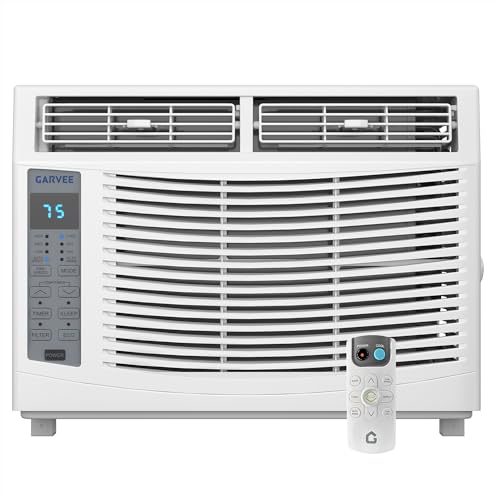
The GarveeHome 6000 BTU window unit lands in the gap between the smaller 5,000 BTU options and the bigger portable monsters. At 250 sq ft of coverage, it handles medium bedrooms, living rooms, and home offices that the GE and LG leave gasping. Three cooling and fan speeds give you finer temperature control than the two-step competitors.
The included remote and LED digital display are a welcome upgrade for anyone who has gotten used to adjusting things from bed. Quiet operation is the other selling point, particularly for bedrooms where a louder compressor would be a dealbreaker. Installation is standard window-mount, and the digital readout makes it easy to see the current setting at a glance.
Bright Spots
- Remote control and digital display add real convenience over dial-only models
- Three cooling and fan speeds allow finer temperature tuning
- 250 sq ft coverage fits larger bedrooms and small living rooms
- Quieter operation than most portable units at similar capacity
Some Limits To Know
- Window-mount only, so renters with restricted windows need a portable instead
- At 6,000 BTU, energy draw is slightly higher than the 5,000 BTU competitors on this list
- Brand recognition is lower than LG or GE, so spare parts and accessories may be harder to source
Key Attributes
Perfect Match For
Shoppers with a medium bedroom or small living room who want remote and digital convenience without going portable.
Reach For A Different Pick When
The Antarctic Star 5-in-1 portable unit fits better when window mounting is not an option in your apartment.
What To Weigh Before Choosing Ac Units For Small Apartment
Square Footage First, BTU Second
The single most common mistake is shopping by BTU number alone. A 5,000 BTU unit rated for 150 sq ft in a tightly insulated bedroom performs nothing like the same 5,000 BTU in a sun-baked studio with a west-facing window. Measure the room you actually want to cool, then factor in ceiling height, sun exposure, and how many heat-generating devices live in the space (ovens, computers, fish tanks). For most bedrooms and small offices, 5,000 to 6,000 BTU is the sweet spot. Studios and open layouts benefit from the 8,000 to 8,500 BTU portable range.
Window Or Portable, And Why It Matters
Window units cool more efficiently per BTU because the compressor lives outside the living area. They are also quieter. Portables trade that efficiency for installation flexibility: no window required, no landlord negotiation, no bracket mounting. The honest read is that window units win on cooling per dollar when you have a compatible window. Portables win on flexibility and lease compliance when you don’t. The Midea, Antarctic Star, BLACK+DECKER, and Line Blaster on this list all lean into the portable trade-off with thoughtful features that older models lacked.
Noise, Filters, And Long-Term Ownership
Compressor noise is the biggest lifestyle factor, and the difference between a quiet and a loud unit is the difference between sleeping through the night and not. The LG LW5023 and the GarveeHome are both marketed as quiet options, with the LG specifically targeting the bedroom use case. Filters need monthly rinsing on most units, and forgetting that step drops performance fast. Build quality and brand support vary, with names like LG, GE, and BLACK+DECKER offering thicker documentation and easier warranty pathways than smaller brands.
Real Decisions Behind These Picks
Wrong Turns To Avoid
A lot of first-time AC shoppers chase the highest BTU number they can find, then end up with a unit that short-cycles (constantly turning on and off without ever dehumidifying the room properly) because it is oversized for the space. On the flip side, under-sizing a west-facing studio means the compressor runs nonstop and still cannot catch up. Another common trap is buying a portable unit and expecting window-unit-quiet operation; the compressor lives in the room, so noise is unavoidable. Always check window dimensions and lease restrictions before picking a window-mount model.
Where The Extra Money Goes
The jump from a basic 5,000 BTU dial unit to a higher-tier model usually buys three things: lower noise, smarter controls, and broader coverage. The LG LW5023 charges a slight premium for the ultra-quiet compressor and 2-way airflow. The Midea portable earns its higher tier with app and remote control plus dehumidifier mode. The Antarctic Star and Line Blaster push the ceiling on square footage, which matters for lofts and open studios. For a small bedroom in a temperate climate, the value pick is clear. For a hot, sunny, open-concept space, the upgrade pays off in fewer sweating-through-summer afternoons.
Frequently Asked Questions
What size AC do I need for a small apartment?
For a typical 10×12 bedroom or small home office, a 5,000 to 6,000 BTU unit is generally sufficient. Larger studios or open layouts benefit from 8,000 to 8,500 BTU portable units. Measure your room and factor in sun exposure and ceiling height before deciding.
Are portable air conditioners as good as window units?
Portable units are less efficient per BTU than window units because the compressor stays inside the room, which means more noise and slightly higher energy use. The trade-off is flexibility: portables work in apartments where window mounting is not allowed or where window shapes are awkward. For cooling power per dollar, window units usually win.
How loud are small apartment AC units?
Window units with the compressor outside the room tend to run quieter, and the LG LW5023 is specifically marketed as ultra-quiet for that reason. Portable units are inherently louder because the compressor lives in the living space. Noise ratings vary, so check product documentation before buying for a bedroom or home office.
Can I install a window AC in a rented apartment?
Most leases allow window AC units, but some buildings have specific rules about bracket types, window panel materials, or whether the unit can extend past the building exterior. Check your lease and building management before purchasing. Portable units are a common alternative when window mounting is restricted.
How often do AC filters need cleaning?
Most manufacturers recommend rinsing the washable filter once a month during heavy summer use. A clogged filter reduces cooling efficiency, raises energy use, and can shorten compressor life. The rinse-and-reuse design on most units here takes about five minutes per cleaning.