
A living room doubles as a movie room, a home office, and a nap zone, so picking the right cooling setup matters more than raw BTU numbers. The wrong unit either rattles the windows or never quite catches up on a 95° day. The right one hums quietly, holds temperature, and disappears into the routine. This guide walks through seven solid options across window, portable, and smart categories, sized for everything from a small apartment den to an open-plan family room. Whether you’re battling a west-facing sun trap or just trying to make a converted bonus room livable, there’s a fit here worth a closer look.
The Lineup, Simplified

GE 6,000 BTU Electronic Window Air Conditioner with Remote, White

Midea 8,000 BTU Smart Inverter Window Air Conditioner with Heat and Dehumidifier

HUMHOLD 14,000 BTU Portable Air Conditioner 3-in-1 with Remote

hykolity 10,000 BTU WiFi Window Air Conditioner, Smart Window AC Unit

DREO Portable Air Conditioner 515S, 12,000 BTU ASHRAE Smart AC Unit
VACOOR Portable Air Conditioner, 14,000 BTU for Large Rooms up to 700 Sq.Ft
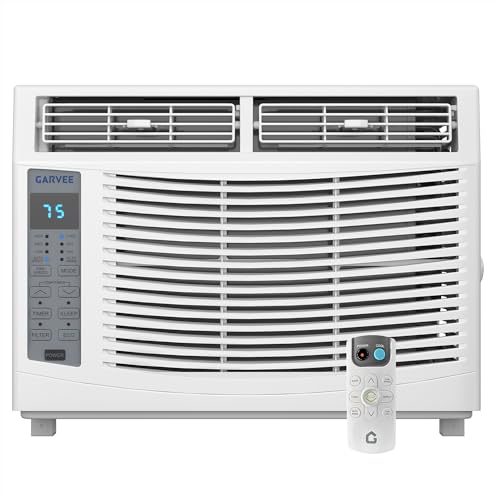
GarveeHome 6,000 BTU Window Air Conditioner with Remote, 250 Sq. Ft
More Details On Our Top Picks
The GE 6,000 BTU window unit targets the smaller end of the living room spectrum, covering up to 250 square feet. It fits the bill for studio apartments, guest rooms, and converted dens where a full 10,000 BTU monster would be overkill. The digital control panel sits up top with a matching remote, so you can adjust temperature from the couch without getting up.
For renters and first-time AC owners, the included install kit removes one of the most common roadblocks. The Energy Saver mode is the real star for utility-conscious shoppers, dialing back compressor cycles once the room hits target. In our view, anyone with a single window and a tight budget will find this unit approachable.
What Pays Off
- 6,000 BTU cooling handles spaces up to 250 square feet without straining
- Energy Saver mode reduces compressor runtime to lower utility draw
- Digital controls paired with a remote make adjustments effortless
- Included install kit cuts out a separate hardware run
- Two-way air direction lets you aim the cool stream where it’s needed most
Things To Consider
- 250-square-foot ceiling means a sun-soaked open-plan living room will overwhelm it
- Window compatibility should be confirmed before ordering since the chassis size varies by model
Who It Suits Best
Renters, studio dwellers, and anyone cooling a single room under 250 square feet will find this GE unit a sensible, no-drama pick.
Where Another Pick Suits Better
For a large, open-plan family room, the HUMHOLD 14,000 BTU Portable Air Conditioner covers more ground and rolls wherever needed.
Step up from the GE and you land at the Midea 8,000 BTU Smart Inverter, which covers up to 350 square feet with a multi-season twist. Unlike the earlier GE unit, this one adds a heat function (the heat pump stops working when outdoor temps drop below 41°F) and a dehumidifier mode for sticky shoulder seasons. For transitional climates, that year-round versatility is the real draw.
The inverter compressor is the quiet efficiency play: it ramps up and down rather than cycling on and off at full blast. Homeowners who care about steady temperatures and a lower electric bill will appreciate the smooth operation. You may find the controls feel slightly busy at first, but the remote keeps everything within reach.
The Case For It
- 8,000 BTU output handles mid-size living rooms up to 350 square feet
- Built-in heat pump extends use into cool months above 41°F
- Dehumidifier mode tackles muggy summer air without overcooling
- Inverter technology adjusts output gradually for quieter, steadier operation
- Energy Star rating points to better long-term efficiency
Honest Caveats
- Heat function won’t activate in freezing outdoor conditions
- Window install requires a sturdy sash, since the unit is heavier than 6,000 BTU models
Key Product Details
Right Fit For
Homeowners in four-season climates who want one window unit to handle both summer heat and chilly fall mornings will get strong mileage from this Midea.
Look Elsewhere When
You need to cool a larger open-plan space, in which case the HUMHOLD 14,000 BTU Portable Air Conditioner delivers more reach without a window mount.
Now we’re in portable territory, where the HUMHOLD 14,000 BTU flexes serious muscle for rooms up to 700 square feet. While window units stay put, this one rolls on casters from the living room to the bedroom as the day demands. The 3-in-1 mode set covers cooling, fan-only, and dehumidification, so it earns its keep through muggy August nights as much as dry July afternoons.
Auto-swing and three fan speeds give the airflow enough range to push cool air across a wide room without creating a single cold spot. Smart and Sleep modes trim noise once the room is dialed in. Setup involves a window exhaust kit, which takes a bit more effort than a window chassis but rewards you with no permanent install.
Bright Spots
- 14,000 BTU tackles open living areas up to 700 square feet
- Three operating modes (cool, fan, dehumidify) cover seasonal shifts
- Auto-swing distributes airflow across the whole room
- Castors make room-to-room moves simple
- 24-hour timer supports overnight scheduling without babysitting
Points To Keep In Mind
- Exhaust hose must vent through a window or sliding door, limiting placement options
- Portable units are noisier than comparable window ACs at full output
- Internal reservoir needs draining in high-humidity conditions
Made For
Renters without a suitable window, or anyone cooling large, open spaces that need flexible placement and don’t mind some exhaust setup.
Not Your Match When
You’re after near-silent bedroom cooling, where the DREO 515S with drainage-free operation and a quieter profile is a calmer fit.
The hykolity 10,000 BTU splits the difference between the GE 6,000 and the Midea 8,000, cooling rooms up to 450 square feet. The standout here is WiFi: a companion app puts mode, temperature, and fan speed control on your phone from anywhere on the home network. Coming home to a pre-cooled living room after a long day changes how you use the unit.
Manual louvers adjust the airflow angle, which helps when the couch sits off-center from the window. Compared to the Midea, this one skips the heat function and dehumidifier, leaning purely into cooling efficiency. For smart-home households already running routines, it slots in nicely without a separate hub.
What Earns Its Place
- 10,000 BTU suits living rooms and combined office nooks up to 450 sq ft
- App-based control adds genuine convenience for connected homes
- Remote control included for non-app moments
- Manual air direction adjustment helps target specific zones
- Install kit included to simplify window mounting
Where It Is Less Suited
- WiFi setup can frustrate shoppers on older routers or mesh systems
- No heat function means it’s a summer-only solution
Feature Snapshot
Best Suited To
Smart-home enthusiasts and connected households who want to automate cooling alongside lights, blinds, and routines.
Skip It When
You want year-round climate control from a single window unit, in which case the Midea 8,000 BTU Smart Inverter with heat is the better year-round tool.
The DREO 515S steps into the portable category with a different priority: a quieter experience and drainage-free operation. “Drainage-free” means the unit evaporates condensate internally under most conditions, so you’re not hauling a reservoir to the sink every few hours. For bedroom use, that detail alone changes the ownership experience.
12,000 BTU ASHRAE (with 8,000 BTU DOE, a more conservative real-world measure) covers most bedrooms and smaller living rooms with room to spare. App, voice, and remote control mean you’re never hunting for the manual. You may find the 16-foot airflow reach a tight fit in unusually long rooms, so measure before committing.
Strengths Worth Knowing
- Drainage-free cooling reduces day-to-day maintenance
- 12,000 BTU ASHRAE handles bedrooms and small living rooms
- Three control options (app, voice, remote) suit different routines
- Quieter operation makes it friendly for light sleepers
- 3-in-1 cool, fan, and dehumidify modes cover seasonal needs
Trade-Offs To Consider
- Exhaust hose still requires a window or vent for the heated air to escape
- Real-world cooling in BTU DOE is lower than the headline ASHRAE figure
Who Will Love This
Light sleepers, bedroom AC users, and anyone tired of emptying a portable unit’s reservoir will appreciate the DREO’s low-fuss design.
Another Choice May Suit
For a bigger living room where coverage matters more than drainage, the VACOOR 14,000 BTU Portable Air Conditioner pushes air across larger floor plans.
The VACOOR 14,000 BTU takes a different approach to airflow with an upward, full-width vent design rather than the typical front grille. That layout pushes cool air toward the ceiling, where it cascades down across the whole room instead of blasting a single spot. For tall-ceilinged apartments and rooms with high heat loads, that geometry matters.
At 235 CFM airflow, this unit is built to circulate air across spaces up to 700 square feet. The 3-in-1 cooling, fan, and dehumidifier setup covers muggy days and dry afternoons alike. In our view, anyone who has watched a portable AC cool a narrow cone of air will value the wider throw.
A Few Strong Suits
- 14,000 BTU output covers large rooms up to 700 sq ft
- Upward full-width vent promotes whole-room circulation
- 235 CFM airflow moves air effectively across wide spaces
- 3-in-1 cool, fan, and dehumidify modes suit year-round use
- Sleep mode trims noise for overnight comfort
Practical Considerations
- Upward airflow design works best in rooms with enough vertical clearance
- Portable form factor still demands window exhaust setup
Quick Technical Notes
Perfect Match For
Apartment dwellers and open-plan households with tall ceilings who want portable placement without the typical cold-spot problem.
Reach For A Different Pick When
You prioritize low-noise bedroom cooling, where the DREO 515S handles drainage-free operation more gracefully.
The GarveeHome 6,000 BTU lands in the same size class as the GE at the top of the list, cooling up to 250 square feet. Three cooling speeds plus a fan-only mode give you a few more tuning options than a basic two-speed unit. For a home office, dorm, or den where straightforward cooling is the only job, that flexibility is plenty.
The LED digital display keeps set temperatures readable from across the room, which helps in low-light bedrooms. Compared to the GE, this model leans into quiet operation and a straightforward install. It won’t have WiFi, an inverter, or a heat pump, but it covers the essentials without overcomplicating things.
Practical Advantages
- 6,000 BTU handles small living spaces up to 250 sq ft
- Three cooling speeds and fan-only mode give useful tuning
- Quiet operation suits bedrooms and study areas
- LED digital display remains easy to read in dim rooms
- Easy installation kit included for straightforward window mounting
Soft Spots
- No smart connectivity or scheduling app
- Limited to 250 sq ft, so larger rooms will leave it working overtime
Who Should Grab It
Students, first-time renters, and home office users who want dependable, no-frills cooling without paying for features they won’t use.
Swap It Out When
You’re cooling a larger room or want app control, in which case the hykolity 10,000 BTU WiFi Window Air Conditioner is the next step up.
What To Weigh Before Picking Your Cooling Setup
Sizing comes first. A unit that’s too small runs constantly, struggles in heat waves, and shortens its own lifespan. A unit that’s too large short-cycles and pulls excess moisture, leaving a clammy feeling. Measure your room’s square footage and match it to the coverage area, not just the BTU number. BTU ratings use a standardized test, but a sun-drenched west-facing wall or a kitchen that bleeds into the living room adds hidden load.
Window compatibility is the second decision point. Window units need a sash that fits the chassis dimensions, plus enough support for the unit’s weight. Portable units trade the window install for a flexible exhaust hose that vents through a window or sliding door, which is friendlier for renters but adds setup steps.
Noise is the third factor people underestimate. Inverter compressors on units like the Midea ramp up and down smoothly, which most people perceive as quieter. Portable units with a single-speed compressor tend to announce themselves on every cycle. For bedrooms and light sleepers, the DREO’s drainage-free and quieter operation pays off in daily use.
Smart features are worth thinking about honestly. The hykolity’s WiFi app is genuinely useful for households already running routines, but it adds nothing for someone who walks to the thermostat once a day. Spending on connectivity you won’t use is wasted money.
Common Shopping Slip Ups
The biggest mistake is choosing by BTU alone, then discovering the room layout fights the airflow. A 14,000 BTU portable in a long, narrow room still leaves one end warm if the vent points the wrong way. Measure, then match the unit to both room size and the path the cool air actually has to travel.
The second slip is ignoring window constraints. Many shoppers order a window unit without checking sash width, vertical opening range, or the depth of the sill. A unit that doesn’t physically fit is just an expensive return. Skim the spec sheet before clicking.
Where The Extra Money Goes
Higher-tier models tend to spend the budget on three things: inverter compressors, multi-season capability, and noise engineering. The Midea 8,000 BTU’s heat function and inverter are the kind of upgrades that earn their keep over years, not weeks. The VACOOR’s upward-vent design is a thoughtful engineering move that solves a real-world airflow problem.
You’re paying for refinement, not raw cooling. A cheaper unit will cool a 250 sq ft room, but a more expensive one will do it more quietly, more efficiently, and with less maintenance. For a unit you run five months a year, the upgrade math usually works out.
Frequently Asked Questions
What size AC unit do I need for my living room?
Measure your room’s square footage (length times width), then match the unit’s rated coverage. For most living rooms under 350 square feet, an 8,000 to 10,000 BTU window unit works well. Larger open-plan spaces over 400 square feet usually need a 12,000 to 14,000 BTU portable or a higher-capacity window unit.
Is a window or portable air conditioner better for a living room?
Window units generally cool more efficiently and run quieter because the compressor sits outside. Portable units win on flexibility and renter-friendliness, since they don’t require a permanent install. Choose based on whether you have a suitable window and whether you’ll move the unit between rooms.
How many BTUs do I need per square foot?
A common starting point is roughly 20 BTU per square foot for a typical living room. Rooms with high ceilings, heavy sun exposure, or significant heat-generating appliances (kitchen equipment, lots of electronics) often need closer to 25 to 30 BTU per square foot. Always check the manufacturer’s coverage rating rather than calculating alone.
Can a portable air conditioner cool an entire apartment?
A single portable unit can cool an open-plan living area effectively, but closed-off bedrooms usually need their own cooling. Portable units are great for single-room solutions but aren’t designed to push air through doorways and walls the way central air does.
How often do portable AC units need to be drained?
It depends on humidity. In dry climates, many modern units like the DREO 515S evaporate condensate internally and need no manual draining under normal conditions. In humid regions, the internal reservoir may need emptying every few days, or you can route a continuous drain hose to a sink or floor drain.