

That familiar thump from the condenser, the flicker in the living-room lights, the slow groan before cool air finally arrives: a struggling compressor wastes energy and shortens equipment life. An AC hard start kit gives the motor the extra push it needs to spin up quickly, cutting wear on the compressor and contactor. The seven options below cover residential condensers, light commercial units, RV-friendly soft starters, and budget-friendly universal fits.
The Picks In Brief

Wadoy CSR-U2 Hard Start Kit for 3.5–5 Ton Units

Seentech SPP6 Relay/Capacitor Hard Start Kit
ATMA SUPPLY CSR-U1 Hard Start for 1–3 Ton Units

AMI PARTS SPP6 Hard Start Capacitor 115V–288V
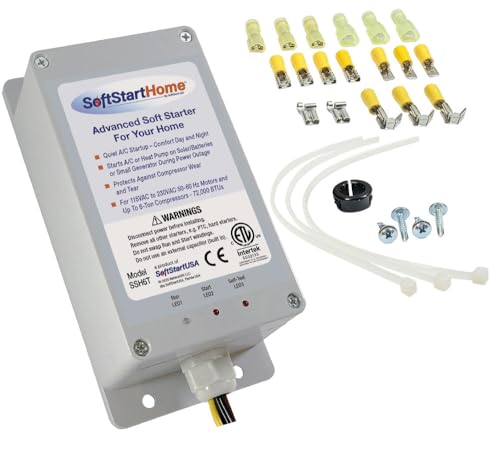
SoftStart Home Soft Starter for AC & Heat Pumps
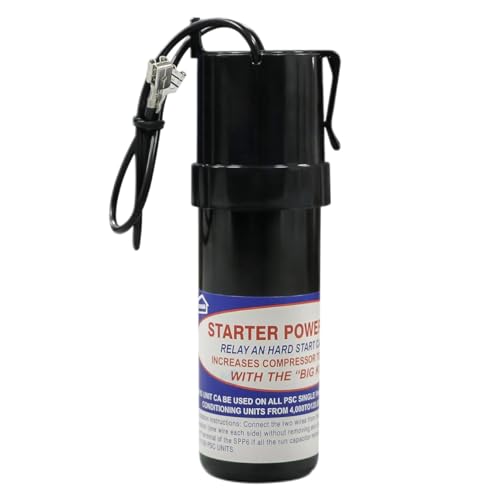
FRIOCASA SPP6 Hard Start Kit 115V–288VAC

Vypart SPP6 Hard Start Capacitor Kit
The Picks, Examined More Closely
Larger condensers place enormous demand on the start winding, and that is exactly where the Wadoy CSR-U2 earns its place. The potential relay (a small electromagnetic switch that kicks the start capacitor out of the circuit once the motor reaches running speed) coordinates a multi-layer starting capacitor to deliver a stronger, faster kick than a basic relay kit.
For homeowners with three-and-a-half to five-ton systems, the appeal is shorter startup time and reduced high-amp stress on the compressor. Compared to the smaller CSR-U1 from ATMA SUPPLY later in this list, this kit targets a noticeably larger compressor class. Owners of older units in hot climates tend to see the most benefit, since harder-starting compressors are exactly what this kit was built to rescue.
Noteworthy Benefits
- Engineered for larger 3.5–5 ton residential condensers
- Potential relay design drops the start capacitor out of the circuit quickly, reducing heat soak
- Shorter inrush window can translate into lower energy draw during each cycle
- Helpful for older compressors that groan before spinning up
- Installs inside the existing electrical compartment of most condensing units
Things To Consider
- Overkill for 1.5 or 2-ton window or mini-split setups
- Wiring must be checked against the run capacitor terminals before powering on
Key Product Details
Whose Shelf It Belongs On
Homeowners with 3.5 to 5 ton condensers, especially aging units that hesitate on startup.
A Better Fit Elsewhere
The ATMA SUPPLY CSR-U1 Hard Start for 1–3 Ton Units is the more appropriate match for smaller residential systems.
The SPP6 platform shows up in HVAC service trucks everywhere, and the Seentech version leans hard into replacement flexibility. It cross-references TJ90HS6, AP4502872, 35702, DST-6, ERPP6, HS6, and HS650, so technicians chasing a legacy part number can usually land on this kit without hunting through old stock.
That broad fit makes it appealing for service work where the exact compressor brand is not always known up front. The relay plus start capacitor pair aims to raise starting torque (the rotational force that gets a stopped motor moving) enough to free a sluggish compressor. Compared to the Wadoy CSR-U2 above, this kit trades dedicated tonnage tuning for a wider compatibility window.
Notable Gains
- Long cross-reference list simplifies service-call part selection
- Suitable for a wide span of compressor sizes from 4000 BTU window units up to commercial 120000 BTU equipment
- Two-wire style install across the run capacitor
- Helpful for legacy units where the original part is no longer stocked
Worth Noting
- Compatibility this broad can mean it is not tuned to any single compressor class
- Quality control on lower-volume replacement brands can vary between batches
Feature Snapshot
Best Suited To
Technicians and DIYers replacing an aging SPP6-class hard start component on a mixed fleet of condensers.
Consider Something Else When
Reach for the SoftStart Home Soft Starter if you specifically need reduced inrush for generator or solar operation.
Most single-family homes run a one to three-ton condenser, which is exactly the slot the ATMA SUPPLY CSR-U1 targets. The CSR-U1 designation is the smaller sibling to the Wadoy CSR-U2 reviewed above, and the size split keeps homeowners from buying more boost than their compressor actually needs.
The kit pairs a start capacitor with a potential relay to cut startup time and ease the brown-out flicker when the condenser kicks in. For anyone noticing their lights dim every time the AC cycles, this is a sensible first upgrade. Compared to the broader SPP6-style kits, the CSR-U1 trades universal fit for a more focused match with smaller residential equipment.
Why It Works Well
- Tailored to the most common 1–3 ton residential range
- Compact form factor fits inside tight electrical compartments
- Quick win for flickering lights on startup
Trade Offs
- Not appropriate for 4 or 5 ton condensers, which need the CSR-U2 class
- Wiring diagram should be read carefully before connecting to the run capacitor
Perfect Match For
First-time installers and homeowners with standard one to three-ton systems experiencing slow or noisy compressor starts.
Look Elsewhere When
Step up to the Wadoy CSR-U2 Hard Start Kit for 3.5–5 Ton Units if your condenser sits in the larger residential class.
The 115V to 288V voltage range is the headline feature on the AMI PARTS SPP6, since it accepts both common residential supplies and the higher-voltage feeds found on light commercial equipment. For a shop or garage unit running on 240V or 277V, that range removes the guesswork.
The kit is designed to give a stuck compressor the rotational force it needs to break free and reach running speed. Compared to the Seentech SPP6 earlier, the AMI PARTS version leans into the same universal SPP6 footprint with a slightly broader voltage window. Depending on the wiring layout of the unit, the install can take under thirty minutes for someone comfortable with a multimeter.
What Stands Out
- Voltage window covers residential 115V through light commercial 288V
- Compatible with compressors from 4000 BTU window units to 120000 BTU commercial gear
- Acceptable for 50Hz and 60Hz AC motor circuits
Points To Note
- Confirm the run capacitor rating matches before installing
- Universal fit is helpful, but less efficient than a tonnage-specific CSR-U1 or CSR-U2 on matched equipment
Right Fit For
Workshops, light commercial spaces, and homeowners with non-standard supply voltage who need one kit for several compressors.
Reach For A Different Pick When
The SoftStart Home Soft Starter is the smarter choice for off-grid and generator-powered systems where inrush matters more than raw torque.
A traditional hard start kit adds torque all at once, which is great for a stuck compressor but loud on the electrical system. A soft starter does the opposite: it ramps voltage up gradually to cut the inrush spike (the brief surge of current a motor draws the moment it turns on) by a reported seventy percent, which is exactly what off-grid owners and generator users need.
The SoftStart Home targets condensers up to six tons, and the install is positioned as a fifteen-minute job for someone who has done it before. The payoff is a quieter condenser, dimmer-friendly lights, and a much friendlier draw on inverter generators and battery banks. Compared to the relay-based kits above, this one is less about rescuing a struggling compressor and more about preventing strain on the entire electrical chain.
Positive Takeaways
- Smooth ramp-up reduces flickering lights and startup thumps
- Plays well with inverter generators, RV hookups, and solar inverters
- Supports condensers up to 6 tons (72000 BTUs)
- Lower startup stress can extend compressor winding life over time
Honest Caveats
- Higher price than most relay-based kits in this list
- Less helpful for a genuinely seized compressor that needs the full kick of a CSR-U2
Quick Facts
Who Should Grab It
Off-grid homeowners, RV owners, and anyone running a condenser on a generator or solar system who wants a gentler startup profile.
Swap It Out When
The Wadoy CSR-U2 Hard Start Kit is the better tool for a clearly sluggish compressor that needs maximum torque to spin up.
The FRIOCASA SPP6 leans into versatility. It covers compressors from 4000 BTU window units through 120000 BTU commercial equipment, and the voltage range of 115V to 288VAC makes it just as at home on a kitchen fridge compressor as it is on a rooftop condenser.
The two-wire install across the run capacitor is the headline feature for anyone who has wrestled with multi-lead kits in the past. The reported 500% boost in starting torque is the same figure you will see across the SPP6 family, including the Seentech and AMI PARTS versions earlier. You may find the build slightly less refined than the CSR-U series, but for garage workshops and older refrigerators the trade-off is fair.
Everyday Advantages
- Two-wire hookup keeps wiring simple in cramped compartments
- Useful beyond air conditioning, including heat pumps, refrigerators, and freezers
- Handles low-voltage starting conditions that cause short-cycling
Some Limits To Know
- Generic housing may not sit as neatly as form-fit kits in some condensing units
- Not tuned to a specific tonnage, so sizing depends on the installer
Feature Card
Best Suited To
DIYers juggling multiple appliances or older heat pumps that need a simple, two-wire hard start solution.
Not Your Match When
Step up to the ATMA SUPPLY CSR-U1 Hard Start for 1–3 Ton Units for a more tailored fit on a standard residential condenser.
Rounding out the list is another SPP6-platform kit, this time from Vypart. The voltage window of 115V to 288VAC and the 500% torque-boost claim keep it right in line with the rest of the SPP6 family covered above. For most backyard condensers and older garage units, it offers the same broad fit that makes this platform so popular.
The honest read is that the Vypart kit does not bring a unique feature to the table compared to the AMI PARTS or Seentech versions. It earns its slot by giving shoppers one more well-documented SPP6 option to choose from, which can matter when one listing is out of stock. If your compressor falls inside the 4000 to 120000 BTU window, it will likely fit.
The Helpful Details
- Standard SPP6 form factor, familiar to many HVAC technicians
- Compatible with a wide range of residential and light commercial compressors
- Sensible fallback choice when other SPP6 listings are unavailable
Points To Keep In Mind
- Functionally similar to the AMI PARTS and Seentech kits above, with little to differentiate it
- Universal fit means no compressor-specific tuning
Made For
Homeowners who want a standard SPP6 hard start and value listing availability over brand-specific tuning.
A Better Fit Elsewhere
The Wadoy CSR-U2 Hard Start Kit is the more focused pick for larger 3.5–5 ton condensers that need more than a generic boost.
Choosing The Right Hard Start Kit For Your System
Sizing the kit to the compressor is the single biggest decision. A 1.5-ton window unit and a 5-ton condenser live in different electrical worlds, and the CSR-U1 and CSR-U2 split from the Wadoy line reflects that. Match the tonnage range on the kit label to the nameplate on your condenser, and you will avoid both an underwhelming boost and a wasted investment.
Voltage and frequency matter next. Most US homes run 208 to 240V single-phase, but light commercial and shop equipment can push to 277V or 288V. The SPP6 family, including the Seentech, AMI PARTS, FRIOCASA, and Vypart kits in this list, accepts a wide 115V to 288V window, which simplifies service work across mixed equipment.
Relays, Capacitors, And Soft Starters Explained
A hard start kit pairs a start capacitor (a short-duration energy store that dumps power into the motor at startup) with a relay that disconnects the capacitor once the motor is running. A soft starter is a different animal: it ramps voltage up gradually, reducing inrush rather than multiplying torque. The SoftStart Home covered above is the right call when startup current is the problem, not raw torque.
When Universal Beats Specific
Cross-reference lists earn their keep on service calls where the original part number is unknown. The Seentech SPP6, for example, covers TJ90HS6, AP4502872, 35702, DST-6, ERPP6, HS6, and HS650, which often clears up legacy replacements. For a known residential system, a tonnage-specific CSR-U1 or CSR-U2 still tends to give cleaner results.
Off-Grid And Generator Use Cases
Inverter generators and solar inverters hate inrush spikes. If your condenser cycles when the batteries are already busy, a soft starter like the SoftStart Home will play much more nicely than a relay-based kit. The tradeoff is cost and a less aggressive torque boost when a compressor is genuinely stuck.
Key Considerations Across These Picks
Mistakes Worth Dodging
The most common error is buying a kit without confirming the run capacitor rating and tonnage on the compressor nameplate. A CSR-U2 bolted onto a 2-ton system delivers more boost than the motor was designed to absorb, and a tiny kit on a 5-ton condenser barely moves the needle. The second trap is wiring across the wrong terminals; the start capacitor must land on the correct side of the relay or the kit never disengages.
Where The Extra Money Goes
Spending more typically buys smoother electronics, broader voltage tolerance, and a softer startup profile rather than more torque. The SoftStart Home sits at the top of this list because it actively reduces inrush, while the SPP6 kits cluster in the middle for replacement flexibility. The CSR-U1 and CSR-U2 earn a small premium for being tonnage-tuned to common residential condensers, which is a quieter, more reliable result than a one-size-fits-all universal kit on a matched system.
Frequently Asked Questions
What does an AC hard start kit actually do?
It stores a brief burst of energy in a start capacitor and releases it through a relay to spin the compressor up faster, which reduces the high-amp stress that wears out motor windings.
Will any of these kits fix a seized compressor?
No. A hard start kit adds torque to a sluggish but functional motor. A truly locked compressor needs professional service, not a capacitor boost.
Can I install a hard start kit myself?
Homeowners comfortable with a multimeter and the run capacitor terminals can usually handle the CSR-U1, CSR-U2, or SPP6 kits. The SoftStart Home also targets a short install but still requires safe electrical practice.
Are these kits safe for heat pumps as well as air conditioners?
Yes, the SPP6 family and the soft starter listed here both work on heat pump compressors within their stated tonnage and voltage ranges. Always confirm the nameplate ratings first.
How do I know which tonnage kit to buy?
Read the condenser nameplate. Match the ton rating to the kit’s stated range, such as 1 to 3 tons for the ATMA SUPPLY CSR-U1 or 3.5 to 5 tons for the Wadoy CSR-U2, before ordering.