

A water stain spreading across a hardwood floor or a slow drip soaking a ceiling tile is the kind of problem you only think about after it starts. The right drain pan catches condensate (the moisture your AC pulls from indoor air) before it becomes a repair bill, and the seven options below cover everything from attic mini-splits to portable units sitting on apartment carpet. Each one was chosen for a different kind of installation, so you can match a pan to your system rather than the other way around.
A Side-By-Side Look
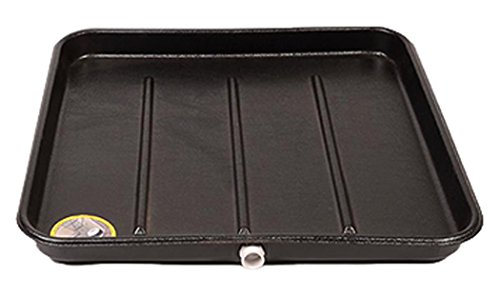
DiversiTech 6-2626L Secondary Plastic Condensate Drain Pan 26″ x 26″

VANPET 22″ x 21″ Large Drip Tray (1 Pack)

VANPET 22″ x 21″ Large Drip Tray (2 Pack)

VANPET 22″ x 21″ Large Drip Tray (4 Pack)

EWX Portable Air Conditioner Silicone Mat 20″ x 20″

F and L Aluminum Heavy-Duty Galvanized Steel Drain Pan 22″ x 24″

Sptnabv Portable AC Drip Pan 20″ x 16″ Non-Slip Silicone
More On The Choices That Made The List
When HVAC contractors reach for a secondary drain pan, this 26-inch square is usually what they grab. The rolled edges stiffen the body so it sits flat on a ceiling joist or attic platform, and the black ABS plastic (a tough, impact-resistant thermoplastic) handles the constant wet-dry cycle that cheaper pans tend to crack under.
Unlike the smaller portable-AC trays later in this list, the DiversiTech is built for whole-system installation. It lives beneath a primary condensate pan and only fills if that primary pan fails, which makes it a true safety net rather than a daily drip catcher.
The Upside
- Generous 26″ x 26″ footprint fits most residential air handlers
- ABS plastic resists cracking under repeated thermal cycling
- Rolled edges add rigidity so the pan holds shape when carried
- Acts as a code-friendly secondary layer for attic installations
- For most homes, a single pan covers the entire catch area
Things To Consider
- No pre-drilled drain hole, so you’ll need a hole saw and PVC fitting for an active drain line
- Black color hides grime, making routine inspection harder
Key Specs
Whose Tool Bag It Belongs In
Homeowners with attic or closet-mounted air handlers who want a code-style secondary pan beneath the primary one.
Where Another Pick Suits Better
For a portable unit sitting in a living room, the EWX silicone mat is easier to set up and far less obtrusive than a 26-inch structural pan.
This single-pack tray is the entry point into the VANPET line. With 22.8 by 21.6 inches of floor coverage and a 1.2-inch depth, it holds roughly two gallons of liquid, which is more than a single-room portable AC produces even during the worst stretch of summer humidity.
Where the DiversiTech pan is a permanent install item, this one is a slip-under-and-forget accessory. It works equally well under a small washing machine or a dehumidifier, which makes it a sensible pick for apartment dwellers juggling multiple appliances on a tight budget.
Where It Excels
- Holds around two gallons before overflow, plenty for overnight AC runoff
- Low 1.2-inch profile keeps portable units level and stable
- Light enough to slide out for cleaning without wrestling a heavy basin
Worth Noting
- Plastic shell can feel thin when lifted; owners commonly report flexing under the corners of a heavy appliance
- Single-pack format means you’re buying one tray at a time
Right Fit For
Someone with a single portable AC or mini fridge who needs an affordable catch tray without buying extras.
Swap It Out When
If you want to protect more than one appliance at the same time, the two-pack VANPET offers better per-tray value for the same footprint.
The two-pack gives you the same 22.8 by 21.6 inch tray as the single, but in a pair, so you can cover a portable AC in the bedroom and a mini fridge in the home office from one order. The footprint stays compact enough to tuck out of sight under most rolling appliances.
Compared to the heavier galvanized F and L pan, the VANPET is a strictly floor-protection solution. There’s no drain fitting and no metal body, so the trade-off is portability versus permanence.
Everyday Perks
- Two trays let you protect a portable AC and a washing machine simultaneously
- Two-gallon capacity handles a full humid night without needing a mid-cycle empty
- Smooth interior wipes clean in seconds with a paper towel
Trade Offs
- No raised lip beyond the basic 1.2-inch wall, so a heavily sloshed bucket could still creep over the edge
- Lighter plastic can bow if you slide it across carpet repeatedly
Key Specs
Who Should Grab It
Renters with two or three small appliances who need basic floor protection without a permanent install.
Skip It When
Your main concern is a whole-house air handler in an attic, where the galvanized F and L pan is the better structural match.
Four trays in one box, identical 22.8 by 21.6 inch shells, and the same two-gallon capacity that earns the smaller packs a place on this list. For households running a portable AC, a basement dehumidifier, a small washer, and a beverage fridge, this is the only order that covers all four without a second checkout.
The plastic is still on the lighter side, so think of this as a fleet of floor guards rather than a structural upgrade. Where the F and L steel pan handles an entire air handler, these four trays cover the appliances nobody ever thinks to put a pan under.
The Practical Payoff
- Four trays cover every leak-prone appliance in a typical apartment
- Lower per-tray cost than buying singles or two-packs separately
- Stackable design makes them easy to store when not in use
A Few Limitations
- More trays than most single-apartment households actually need
- Plastic body can develop a slight bow if you store heavy items on top of a stacked column
Made For
Homeowners and small-office managers outfitting several appliances at once on a single order.
Not Your Match When
You only have one appliance to protect, in which case the single-pack VANPET keeps the budget tighter.
This silicone mat is a different category from the rigid pans above. It is a soft, flexible pad with a 0.4-inch raised edge that rolls up for storage and lays flat on hardwood, tile, or low-pile carpet. For renters who can’t put a bulky tray in the middle of a living room, it disappears visually.
The 20 by 20 inch footprint targets smaller portable ACs and similar-sized appliances. Where the VANPET trays feel like utility plastic, the EWX feels more like a kitchen counter liner that happens to handle gallons of water.
Well-Handled Touches
- Flexible silicone rolls up for off-season closet storage
- Waterproof surface wipes clean with a damp cloth, no scrubbing
- Raised 0.4-inch lip contains small spills before they reach the floor
Points To Note
- No drain fitting, so any captured water has to be poured out by hand
- Smaller 20″ x 20″ footprint won’t fully catch runoff from larger dual-hose portable units
Feature Snapshot
Who It Suits Best
Apartment dwellers with finished floors who want a low-profile mat that doesn’t announce itself to guests.
Where Another Pick Suits Better
For carpeted rooms where you need a taller lip to contain bigger spills, the Sptnabv silicone mat offers a deeper raised edge in the same flexible format.
This is the only galvanized steel (steel coated in zinc to slow rust) pan on the list, and the difference shows the moment you lift it. At 22 by 24 inches with a 2-inch wall, it is a permanent install piece meant to sit under an air handler for years, not a slip-under tray you move during cleaning.
The steel build pairs with a hole option so you can plumb a dedicated drain line if you want, which makes it a smarter long-term answer than the plastic VANPET trays for whole-home systems. The trade-off is weight and the look of a steel pan in any finished space.
Useful Touches
- Galvanized steel resists rust in damp basement and crawlspace conditions
- 2-inch wall depth buys you time before a leak becomes a flood
- Optional pre-drilled hole for a dedicated drain line, ordered to match your install
Honest Caveats
- Heavier than plastic alternatives, so plan a helper if you’re mounting overhead
- Steel construction needs careful handling to keep the galvanized coating intact at cut edges
Quick Facts
Best Suited To
Homeowners with attic, basement, or garage air handlers who want a permanent, rust-resistant catch pan.
Look Elsewhere When
If you just need a tray under a portable AC, the Sptnabv silicone mat is far easier to position and costs less.
The Sptnabv closes the list with a soft silicone mat built specifically for portable ACs. At 20 by 16 inches it is the most compact option here, but the 0.6-inch raised edge is the tallest of the silicone mats, so it can catch a larger accidental spill before water creeps onto carpet.
Compared to the EWX mat, you trade a bit of width for a noticeably taller lip and a non-slip underside. In a studio or bedroom where every inch of floor space is visible, that taller edge can be the difference between a clean mat and a soaked rug.
A Strong Showing
- Tallest raised edge (0.6″) among the silicone mats, so a tipped bucket still stays contained
- Non-slip underside keeps the mat from creeping on smooth flooring
- Soft silicone is easy to rinse in a sink when the mat needs a deeper clean
Where It Is Less Suited
- 20″ x 16″ footprint is the smallest on the list and may leave corners exposed on bigger portable units
- No drain spout, so a full mat means lifting and pouring
Who Will Love This
Renters with carpet or area rugs who want a low-profile mat with a tall enough lip to keep spills in one place.
Another Choice May Suit
For a larger portable AC with a wider housing, the EWX mat covers more floor area in the same flexible format.
What To Weigh Before Choosing Ac Unit Drain Pans
Match The Pan To The Installation
The first decision is whether you need a primary drain pan, a secondary safety pan, or a floor-protection tray. Whole-home air handlers live or die by their primary condensate pan, and the F and L galvanized model handles that role with a deeper wall and an optional drain tap. A secondary overflow pan, like the DiversiTech, goes beneath the primary and only earns its keep when the primary fails. The VANPET trays and silicone mats are floor-protection pieces that catch whatever an appliance drips in a finished room.
Material Shapes The Ownership Experience
ABS plastic like the DiversiTech resists cracking and stays light enough to carry, but it can yellow over years of UV exposure if the pan sits in a sunlit attic. Galvanized steel is heavier and permanent, but the zinc coating is what keeps rust from creeping across the welds, so any field cuts should be sealed. Silicone mats are the most renter-friendly because they roll up, but they also have the lowest wall height, so the appliance above them should not be prone to gush-style leaks.
Size And Capacity For Your Climate
Measure the footprint of the appliance first, then look at the wall depth. A portable AC in a humid coastal climate can produce several quarts of condensate on a 90-degree day, which is where a 1.2-inch wall on the VANPET trays earns its keep. In drier climates, a slimmer silicone mat may be enough. For the catch area, a pan should extend at least two to three inches beyond the appliance footprint on every side to catch splash and drip routing.
Drainage Options Matter Long-Term
A pan without a drain means you’ll eventually pour water out by hand, and the EWX and Sptnabv silicone mats live in that world. The F and L pan can be ordered with a pre-drilled hole, which lets you run a dedicated drain line. The DiversiTech does not include a fitting, so an installer typically drills and seals one on site. None of these choices are wrong, but they do change how often you’ll need to touch the pan after installation.
Key Considerations Across These Picks
Pitfalls Shoppers Hit
One common slip is buying a portable-AC tray for a central air handler. A 1.2-inch-deep plastic tray under an attic evaporator coil simply does not have the wall height or the structural rigidity to hold a meaningful leak, and you can find yourself with the DiversiTech or F and L sized correctly for a fraction of the time you spent swapping out the wrong one. The reverse mistake is grabbing a permanent steel pan for a portable unit, which is overkill and will look out of place in a finished room. Measure first, then match the material to the install.
Where The Extra Money Goes
The jump from a VANPET plastic tray to the galvanized F and L pan buys you rust resistance, deeper walls, and a drain option you can plumb. For whole-home HVAC protection, those upgrades are usually worth it because the consequences of a leak are measured in ceiling tiles and hardwood floors. For under a portable AC in a living room, that extra spend is harder to justify, and a silicone mat with a taller lip covers the same risk for far less. The honest read is that the upgrade only pays off when the failure mode would be expensive, and that scales with how much is below the pan, not above it.
Frequently Asked Questions
How do I know what size drain pan to buy under my air handler?
Measure the footprint of the air handler itself, then add two to three inches on every side for splash and routing margin. For a secondary pan, match the footprint of the primary pan, then size up if your local code calls for it. The DiversiTech 26″ x 26″ is sized to cover most residential air handlers when used as a secondary safety net.
Can I use a portable AC tray under a mini split?
A silicone mat like the EWX or Sptnabv can sit on the floor beneath a floor-mounted mini split head to catch any condensate that drips past the primary drain, but it is not a substitute for the secondary pan your installer should mount under the indoor unit. Think of the tray as a backup to the backup, not a replacement for proper plumbing.
How often should I clean a drain pan?
For a permanent HVAC pan, a quick visual check every change of season and a wipe-down if you see biofilm (the dark, slippery layer of bacteria and mold that grows on wet plastic) is a sensible rhythm. Portable-AC trays and silicone mats need emptying whenever the water level gets close to the rim, which in humid weather can be every few days. A wet-dry shop vacuum speeds up the job considerably.
Do I really need a secondary pan for my attic unit?
Most building codes require a secondary drain pan with a float switch for any air handler installed above a finished ceiling, and a single pan in the attic is the difference between a contained drip and a ceiling collapse repair. The DiversiTech 26″ x 26″ or the F and L galvanized pan are both reasonable secondary-pan answers, with the steel version lasting longer under prolonged moisture.
What’s the difference between a plastic pan and a silicone mat?
Plastic pans are rigid, hold their shape, and are built for permanent or semi-permanent installs, including under whole-home air handlers. Silicone mats are flexible, roll up for storage, and are designed to slide under portable appliances in finished rooms. Both catch water; the difference is whether the pan needs to be light and movable or sturdy and structural.