

Your vehicle’s A/C stops blowing cold on a 95-degree afternoon, and suddenly you’re searching for a tiny sensor you didn’t even know existed. Most cabin comfort problems trace back to a small temperature sensor that quietly feeds data to the compressor, the blower, or the climate controller. Picking the right replacement (or the right diagnostic tool) saves you a second trip to the shop and keeps the system running the way it should. This roundup covers OE-grade OEM sensors for common GM and Ford applications, a couple of versatile NTC probes for hobby builds, an infrared thermometer for quick diagnostics, and a smart climate probe for grow tents or controlled indoor spaces.
The Leading Options At A Glance

GM Genuine Parts 15-51267 A/C Refrigerant Temperature Sensor
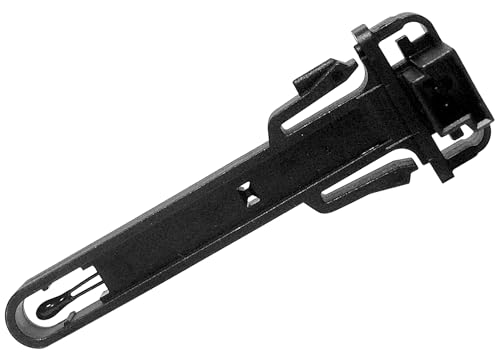
GM Genuine Parts 15-50795 A/C Evaporator Temperature Sensor

DROK 10K NTC Temperature Sensor Probe 5-Pack

DROK 10K NTC Temperature Sensor Probe 4-Pack

Motorcraft YH1662 Ambient Air Temperature Sensor

Eventek Infrared Thermometer Gun
AC Infinity Controller Sensor Probe for AI+
A Deeper Look At The Lineup
This low-side refrigerant sensor sits in the line downstream of the evaporator and reports the temperature of the refrigerant leaving the core. The HVAC module uses that reading to cycle the compressor on and off, preventing evaporator freeze-up on humid days. When the data goes bad, the A/C either refuses to engage or runs in limp mode, leaving you sweating through stop-and-go traffic.
For GM truck and SUV owners (think Silverado, Tahoe, Yukon, or Suburban generations that use part number 25953349), this is the factory-grade replacement that matches the original spec. Because it’s the genuine GM part, the connector, calibration curve, and sealing profile line up with the wiring harness without any adapter trickery.
What Earns Its Place
- True GM OE component, so connector fit and calibration are exact
- Restores compressor cycling on vehicles that have defaulted to a failsafe mode
- Designed specifically for the low-side refrigerant line location
- Backed by General Motors engineering standards
Points To Keep In Mind
- Only fits specific GM models and model years that use the 25953349 part number
- Requires confirming your existing sensor’s part number before ordering to avoid mismatch
Who It Suits Best
GM truck and SUV owners who have already confirmed the refrigerant line sensor is the failed component and want a like-for-like factory replacement.
Where Another Pick Suits Better
Owners of Ford products should look at the Motorcraft YH1662 Ambient Air Temperature Sensor instead, which matches their OE harness and connector.
Where the previous pick lives in the refrigerant line, this sensor sits right at the evaporator core itself, tucked inside the HVAC housing. Its job is to tell the controller how cold the air passing over the evaporator actually is, so the system can adjust blower speed and prevent the core from icing over. A failing sensor can leave you with weak airflow, intermittent cold air, or a system that cycles on and off rapidly.
Compared to the refrigerant line sensor above, this one is more about the cold side of the heat exchange rather than the refrigerant flow. It’s a common failure point on older GM sedans and crossovers, and the OE-grade part number 25786418 helps you match it to your specific vehicle quickly.
Points In Its Favor
- Factory GM construction means the thermistor curve matches the original
- Restores proper evaporator temperature feedback to the HVAC module
- Designed to slot into the evaporator housing without modification
- Helps resolve weak airflow and icing complaints at the evaporator
Trade Offs To Consider
- Reaching the sensor typically requires partial dashboard disassembly on most GM models
- Limited to GM applications that use the 25786418 part reference
- Will not fix refrigerant line sensor issues that the GM Genuine Parts 15-51267 addresses
Right Fit For
GM sedan and crossover drivers chasing a weak-airflow or evaporator-ice complaint, who are comfortable with a moderate-difficulty HVAC teardown or have a trusted shop lined up.
Consider Something Else When
For a simple in-cabin ambient reading without housing disassembly, the Motorcraft YH1662 Ambient Air Temperature Sensor may be the more accessible fix on Ford vehicles.
Stepping away from the automotive world, this DROK pack is aimed squarely at the maker crowd. Each probe uses a 10K-ohm NTC thermistor, which is a type of resistor whose resistance drops predictably as temperature rises, paired with a 1-meter PVC lead. The 5-piece count means you can leave one in your 3D printer hot end, one in a fermentation chamber, and still have spares for that custom HVAC controller project on your workbench.
It’s the kind of sensor that quietly lives behind the scenes in a homemade incubator, a garage ventilation controller, or an Arduino-based A/C monitor. Stainless steel tips handle moisture, and the PVC jacket tolerates typical indoor conditions without complaint.
Where It Excels
- Five-probe count offers genuine value for tinkerers running multiple projects at once
- 1-meter lead gives flexibility for remote mounting away from the controller board
- Stainless steel tip resists corrosion in humid or damp environments
- Standard 10K NTC curve pairs with most popular microcontroller dev boards
Honest Caveats
- Not a direct plug-in replacement for any specific vehicle’s OE sensor
- Requires wiring, a pull-up resistor, and basic code to read meaningfully
Key Features
Made For
DIYers building custom A/C monitors, fermentation chambers, or greenhouse controllers who need several probes on hand and are comfortable wiring their own circuit.
A Better Fit Elsewhere
For a plug-and-play climate solution without writing code, the AC Infinity Controller Sensor Probe for AI+ handles temperature and humidity out of the box.
This is the slightly leaner sibling of the 5-pack above, trading one probe for what is, in many cases, a more current production run. The 4-piece count covers most home-brewed HVAC and refrigeration projects without leaving a pile of unused spares in your parts drawer. Each probe carries the same 10K NTC thermistor and stainless waterproof tip, so behavior in your project is essentially identical.
For someone running a single-zone controller or a small grow tent, four probes is plenty: one for intake air, one for exhaust, one for ambient, and one backup. The 1-meter lead matches the 5-pack and gives you room to route the cable neatly through a panel or cable gland.
Useful Touches
- 4-pack hits a sweet spot for small-to-medium project counts
- Stainless waterproof tip stands up to typical grow-tent humidity
- 1-meter cable length reaches distant mounting points without splices
- Same widely supported 10K NTC curve as the larger DROK pack
Some Limits To Know
- You’ll still need a microcontroller or ADC board to interpret the readings
- PVC jacket is fine indoors, but not rated for outdoor direct sun exposure
Best Suited To
Hobbyists wiring a 3D printer enclosure, a small grow tent, or a basic Arduino-based A/C monitor who want a smaller, focused probe count.
Skip It When
Auto owners chasing a true plug-in OE part should grab the GM Genuine Parts 15-51267 or Motorcraft YH1662 instead, which install without any wiring work.
Switching camps to Ford, the Motorcraft YH1662 sits at the front of the vehicle (often behind the grille or in the air intake path) and reports the outside air temperature to the HVAC and PCM modules. That reading drives the automatic climate control’s interpretation of “outside” versus “set” cabin temperature, and it feeds the display on your dash. When it fails, the outside-temp readout starts showing wildly wrong numbers, or the automatic A/C behaves inconsistently on mild days.
Compared to the GM parts reviewed above, this one is designed to live in a harsher under-hood environment, and Ford owners know Motorcraft as the factory OE brand. The body is built to resist fatigue over time, which is the most common failure mode of plastic-housed ambient sensors.
Bright Spots
- Ford OE-grade part, so connector and calibration match the factory wiring
- Resists fatigue failure from repeated thermal cycling under the hood
- Reliable operation under extreme cold and hot conditions
- Straightforward replacement, usually accessible from the front grille area
Soft Spots
- Specific to Ford, Lincoln, and Mercury applications using the YH1662 reference
- Only addresses the ambient reading, not in-cabin evaporator or refrigerant line issues
Quick Facts
Who Should Grab It
Ford, Lincoln, or Mercury owners noticing a wrong outside-temp display or finicky automatic climate control, who want a direct OE-style replacement.
Look Elsewhere When
GM drivers chasing a similar ambient or refrigerant fix should look at the GM Genuine Parts 15-51267 instead, since this Motorcraft part is not cross-compatible.
An IR thermometer isn’t an installed sensor, but it earns its spot here because it’s the fastest way to check whether your installed sensors are telling the truth. Point it at an A/C vent to confirm outlet air temperature, sweep it across an engine bay to spot a hot compressor, or check the air around a fridge or freezer coil. The -58°F to 1112°F range means it covers everything from sub-freezing evaporator readings to scorching oven interiors.
For an A/C diagnostic session, you can compare the reading on the center vent against what the system should be producing, and decide whether to chase a sensor or a deeper mechanical problem. The 12:1 distance-to-spot ratio is the kind of spec that determines how precisely you can aim at a specific vent from a few feet away.
Everyday Perks
- Wide -58°F to 1112°F range covers A/C, cooking, automotive, and HVAC use
- Non-contact reading is safer around hot engine components
- Handy cross-tool for verifying what installed sensors are reporting
- Useful well beyond A/C work, including griddle, pizza oven, and refrigeration checks
Possible Compromises
- Measures surface temperature, not the air temperature in a vent, so technique matters
- Glossy or reflective surfaces can throw off the reading unless you adjust emissivity
Useful Strengths
Who Will Love This
DIYers and home cooks who want one tool that can verify A/C vent output, check oven and griddle temps, and double-check installed sensor readings.
Reach For A Different Pick When
For a sensor that physically mounts in your vehicle and reports back to the HVAC module, the GM Genuine Parts 15-51267 or Motorcraft YH1662 is the right tool instead.
Closing out the list, this is a smart sensor probe built for AC Infinity’s Controller AI+ platform, aimed at growers and climate-controlled room owners. The probe head uses a type 316 stainless steel thermal alloy, which is a corrosion-resistant grade that handles humidity swings far better than standard hardware. At 20 feet of cable, you can place the probe inside a tent or closet while the controller sits outside.
Unlike the bare NTC probes from DROK, this one is designed to feed temperature and humidity data straight into a purpose-built controller, which then calculates VPD (vapor pressure deficit) for plant health. It’s the polished, ready-to-go alternative for people who don’t want to write code.
Useful Strengths
- Type 316 stainless head handles humid environments without corroding
- 20-foot cable reaches from inside a tent to a controller mounted outside
- Pairs directly with the Controller AI+ without custom wiring
- Tracks both temperature and humidity for VPD-aware climate control
Where It Is Less Suited
- Only works with the AC Infinity Controller AI+ ecosystem
- Overkill for a single-room household thermostat use case
Spec Snapshot
Whose Shelf It Belongs On
Growers and indoor climate hobbyists already using the Controller AI+ who need a durable, long-cable probe to monitor a tent or remote room.
Swap It Out When
If you want a more general-purpose or multi-pack option, the DROK 10K NTC Temperature Sensor Probe 5-Pack works with whatever microcontroller project you have in mind.
Matching A/C Sensors To The Job At Hand
Picking the right sensor starts with naming the job clearly, since the term “A/C temperature sensor” hides at least three different parts. In a typical car, you’ll find the ambient air sensor (outside temp), the in-cabin sensor, the evaporator core sensor inside the HVAC box, and the refrigerant line sensors. Knowing which one is misbehaving narrows the search from a hundred listings to a handful of exact-fit OE parts.
For OEM automotive replacements, fitment data matters more than features. Match the OE part number from your vehicle’s service manual to the listing before you order. For DIY electronics, the conversation shifts to resistance curve, lead length, and waterproofing. Look for an NTC thermistor with a curve your controller board natively supports, and confirm the cable is long enough for the mounting point you have in mind.
Think about the environment too. An under-hood ambient sensor needs fatigue-resistant housing, while a probe inside a humid grow tent needs stainless and sealed construction. Quick diagnostics across a vent or engine bay pair naturally with a non-contact IR thermometer. Specialty controllers, like AC Infinity’s AI+, prefer their own matched probes for cleanest data. If you’re chasing a specific symptom (weak airflow, wrong outside temp reading, intermittent cooling), diagnose the root sensor first rather than guessing.
Mistakes Worth Dodging and When Paying More Pays Off
Where Shoppers Go Wrong
The most common slip-up is buying a sensor that matches the part name but not the application. “Ambient air temperature sensor” can refer to an in-cabin sensor on one model and a grille-mounted outside sensor on another. Always cross-check the OE part number before checkout. Another pitfall is choosing a generic NTC probe when the system needs a calibrated OE-grade part, since the resistance curve has to match the controller or the readings will be off. Finally, don’t confuse surface temperature with air temperature. An IR thermometer reads the surface you point it at, and a vent louver measured at an angle can return a misleading number.
When Paying More Pays Off
A higher-tier sensor earns its keep when the part lives in a hard-to-reach location. A stainless, fatigue-resistant housing on an ambient sensor under the hood can outlast a generic plastic one by years, and you avoid the labor of pulling the grille apart twice. Premium probes also make sense in humid environments, where a sealed 316 stainless head resists corrosion that would slowly degrade a cheaper alternative. For a quick one-off diagnostic, though, a value-priced NTC probe or an IR thermometer handles the job just as well as a premium model.
Frequently Asked Questions
What does an A/C temperature sensor actually do? It measures the temperature of refrigerant, evaporator air, or ambient cabin air and sends that data to the HVAC or climate controller, which then decides how to cycle the compressor and blower.
How do I know which A/C sensor is failing? Compare the symptom to the sensor location. A wrong outside-temp display points to the ambient sensor, weak airflow or icing points to the evaporator sensor, and an A/C that won’t engage can point to the refrigerant line sensor.
Can I replace an A/C sensor myself? Ambient and grille-mounted sensors are usually accessible with basic hand tools, while evaporator sensors often require partial dashboard disassembly, which most people leave to a shop.
Are aftermarket A/C temperature sensors reliable? OE-grade parts from the vehicle’s original brand are the safest match for connector and calibration, though reputable aftermarket sensors can work if the part number and curve match exactly.
Is an infrared thermometer a good way to check A/C performance? Yes, it’s a quick way to verify vent output temperature and spot a weak evaporator, but it’s a diagnostic tool rather than a replacement for an installed sensor.