

A moisture-laden A/C system corrodes from the inside out. Refrigerant mixes with water, forms acids, and slowly eats seals, bearings, and compressor windings, so a filter drier is small insurance against a four-figure repair. The picks below cover automotive receiver-drier kits, refrigeration liquid-line driers, and HVAC heat-pump filters, with honest trade-offs for each. Whether you’re flushing an old system or sealing a new line, the right drier makes the rest of the job easier.
The Choices Worth Comparing

UAC RD 10898KTC A/C Receiver Drier Kit (White)
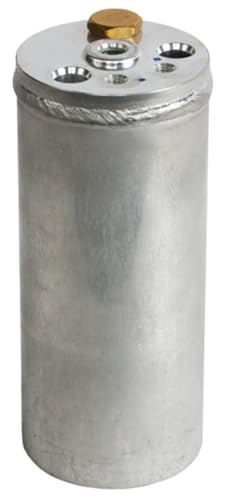
Four Seasons 33595 Filter Drier

Four Seasons 83008 Aluminum Filter Drier

Appli Parts APFD-032S Liquid Line Filter Drier

Four Seasons 33589 Aluminum Filter Drier

SDML-083S 3/8″ Liquid Line Filter Drier
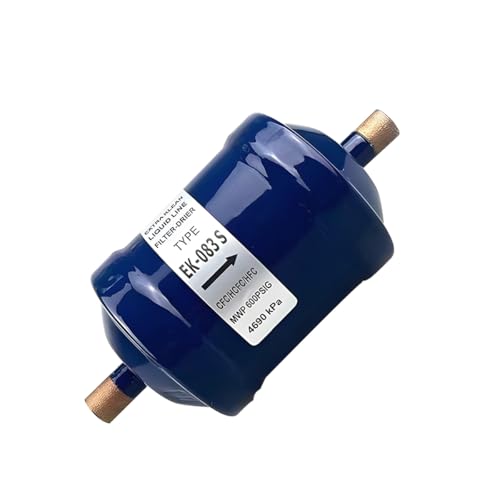
HZEL EK-083S 3/8″ Liquid Line Filter Drier
The Details Behind The Selections
The UAC RD 10898KTC is a desiccant-element kit rather than a sealed can, which makes it a smart fit when you’re rebuilding a vehicle’s receiver assembly instead of swapping the whole tank. The element itself is the part that actually grabs moisture and acid from circulating refrigerant, and UAC builds it as a direct fit for the listed applications.
It’s the kind of part a tech reaches for when an A/C job is already open and a quick, brand-trusted replacement is the priority. DIYers restoring a classic may find the kit format easier than wrestling with a fully assembled drier.
A Few Highlights
- Element-only design saves the cost of a full receiver assembly
- Targets the desiccant core, which is the actual moisture-removal component
- Drop-in fit simplifies a mid-job swap
- Backed by a brand that supplies automotive climate-control parts broadly
Things To Consider
- Not a universal crossover, so cross-check the vehicle’s part number before ordering
- Requires opening the receiver housing, which means fresh O-rings and a clean workspace
Who It Suits Best
Techs or hobbyists restoring a vehicle A/C system who already have the receiver opened and just need a fresh desiccant element.
Where Another Pick Suits Better
For a closed-system flush on a modern car, the Four Seasons 33595 is a simpler in-line swap with no housing teardown.
Compact, light, and built for the high side of an automotive A/C loop, the Four Seasons 33595 is a straightforward replacement part. It weighs about 0.8 pounds in its retail box, which gives you a rough idea of the small footprint once installed. Where the UAC kit is an internal element, this is a sealed in-line filter.
It’s a good fit for a basic A/C service where you want a brand-name part without overthinking the spec sheet. Most weekend mechanics can swap it in with standard line-wrench tools.
Notable Upsides
- Light 0.8 lb package keeps shipping and handling easy
- Compact dimensions suit tight engine-bay layouts
- Part of the broader Four Seasons climate-control catalog
Worth Noting
- Spec sheet is thin, so confirm the inlet and outlet sizes match your lines
- Pack-of-one format means a second unit costs another full order
Quick Facts
Made For
Weekend mechanics handling a single-vehicle A/C refresh who want a compact, easy-to-source drier.
Skip It When
You need a desiccant element only, in which case the UAC RD 10898KTC keeps the original housing in play.
Aluminum is the call here. The Four Seasons 83008 ships in an aluminum body with a pad mount, weighing about 0.7 pounds, which is friendly for underbody installs where road grime would attack a steel can. It’s also noticeably lighter than the 33595, which is worth thinking about if a bracket is marginal.
Where the 33595 is a general-purpose small drier, the 83008 leans into corrosion resistance. For vehicles that see winter salt, that can be the difference between a clean removal at the next service and a seized fitting.
Why It Works Well
- Aluminum body resists the corrosion common to undercarriage parts
- Pad-mount design gives the installer a stable mounting surface
- Light 0.7 lb package eases bracket loading
Trade Offs
- Aluminum threads call for careful torque to avoid stripping
- Pad-mount hardware may need to be sourced separately on some applications
Best Suited To
Shops and home techs working on vehicles that see salted winter roads and need a corrosion-resistant receiver drier.
A Better Fit Elsewhere
For larger-displacement systems, the heavier Four Seasons 33589 handles higher refrigerant flow with the same aluminum construction.
The Appli Parts APFD-032S steps away from automotive and into stationary refrigeration. It’s a 1/4 inch liquid-line filter drier with ODF (Outside Diameter Female) sweat solder connections, about 4-1/2 inches long and 1-3/4 inches wide, and it flows in one direction only. The internal molecular sieve is solid, which is the right format for pulling humidity out of a closed loop.
Technicians working on residential fridges, walk-in coolers, or small A/C splits reach for this style of drier when contamination is suspected. The 032S size is a common replacement footprint, so it tends to drop into many systems without re-engineering the line.
Real-World Strengths
- Solid molecular sieve core targets both moisture and acid
- 1/4″ ODF sweat connections match standard refrigeration line sets
- Compact 4-1/2″ body fits tight equipment cabinets
- Unidirectional design removes installation guesswork
Room For Improvement
- Requires silver solder and a torch, so it’s not a no-tools swap
- Flow direction is fixed; reverse installation will starve the metering device
At A Glance
Perfect Match For
Refrigeration techs and HVAC service folks replacing a contaminated liquid-line drier on a residential or light-commercial system.
Reach For A Different Pick When
Your line set is 3/8″ ODF rather than 1/4″, in which case the SDML-083S or HZEL EK-083S will drop in without adapters.
The 33589 is the bigger sibling to the 83008, with an aluminum body, pad mount, and about 0.95 pounds of heft. That extra mass over the 83008 hints at a larger internal desiccant volume, which suits higher-capacity systems where refrigerant flow rates are higher and moisture load builds faster.
Full-size trucks, vans, and SUVs with long liquid lines benefit most from the extra capacity. The pad mount still gives you a clean mounting point under the hood or along the frame.
Standout Benefits
- Aluminum body adds corrosion resistance for underbody service
- Larger 0.95 lb package suggests more desiccant capacity than smaller siblings
- Pad-mount design stabilizes the install on rough roads
- Long-standing Four Seasons part number 33589 simplifies cross-reference
Small Caveats
- Heavier than the 83008, so confirm the bracket can carry the load
- Aluminum threads still demand careful torque
Key Specs
Who Should Grab It
Techs working on full-size domestic trucks or SUVs that need a corrosion-resistant, higher-capacity receiver drier.
Where A Sibling Pick Shines
For compact cars and lighter applications, the Four Seasons 33595 keeps weight and cost down without giving up the basic function.
The SDML-083S is a 3/8″ ODF sweat-solder liquid-line drier aimed squarely at heat pumps and straight-cool A/C. It covers a wide refrigerant list (R1234YF, R134A, R290, R22, R407C, R410A, R404A, R507A, and R600), which is helpful when you service a mix of older and newer equipment. Rated for -40°F to 160°F and up to 680 psig working pressure, it covers most residential and light-commercial service envelopes.
The 4-1/2″ body length matches common HVAC line spacing, and the unidirectional design removes any installer guesswork. The molecular sieve core is solid, so desiccant attrition stays low over time.
What Stands Out
- Covers nine refrigerants, including modern R1234YF and legacy R22
- 680 psig working pressure suits high-side heat-pump service
- Solid molecular sieve core reduces desiccant attrition
- 3/8″ ODF sweat connections are standard in residential HVAC
Points To Note
- Requires torch work for the sweat-solder joints
- Unidirectional flow must be respected during installation
Feature Snapshot
The Right Fit
Residential HVAC techs servicing heat pumps or straight-cool systems who want one drier SKU to cover multiple refrigerants.
Swap It Out When
The line set is 1/4″ rather than 3/8″, in which case the Appli Parts APFD-032S handles smaller residential refrigeration runs.
The HZEL EK-083S is the steel-bodied counterpart to the SDML-083S. Same 3/8″ sweat flow format, similar footprint at about 5.31″ long and 2.64″ tall, but the housing is painted steel rather than the typical copper or aluminum. Steel adds rigidity for tight line work, though it does change the corrosion story versus the aluminum and copper options higher on the list.
Compatibility covers R22, R134a, R404A, and R407C refrigerants, which lines up with the bulk of residential split systems. The unidirectional sweat flow design makes it a clean fit for shop stock.
Practical Advantages
- Steel housing adds mechanical rigidity for tight line work
- 3/8″ sweat connections match common residential line sets
- Unidirectional design removes installation ambiguity
- Works across R22, R134a, R404A, and R407C refrigerants
Honest Caveats
- Steel housing is more vulnerable to external corrosion than aluminum or copper
- Larger 5.31″ length may not fit every tight cabinet
Whose Shelf It Belongs On
Small HVAC shops and serious DIYers who want a rugged steel-bodied 3/8″ drier for general residential service.
Not Your Match When
You’re servicing equipment in a damp or coastal environment, where the aluminum-bodied SDML-083S will outlast a steel can.
Picking The Right Filter Drier For Your System
The job starts with refrigerant type and line size, then narrows from there. R134a automotive systems, R1234YF modern vehicles, R410A residential heat pumps, and legacy R22 equipment all need different drier formulations, and a mismatch can plug a metering device or worse. Line size is the next gate: 1/4″ ODF sweat fits small refrigeration runs, while 3/8″ covers most residential A/C and heat-pump work.
Material matters more than it looks. Aluminum resists corrosion under the car and holds up to road salt, copper is the long-time HVAC standard for thermal cycling, and painted steel trades some corrosion resistance for rigidity. The molecular sieve inside the can is the real worker; a 100% solid core pulls both moisture and acid out of the refrigerant, which is why cheap loose-fill driers tend to shed desiccant dust into the system.
A unidirectional flow arrow on the body isn’t a suggestion. Reverse installation, and the drier becomes a flow restriction at best and a system-failure cause at worst. Sweat-solder joints need a clean, oxide-free surface and proper nitrogen purge during brazing to keep scale out of the line, and that’s where most field callbacks originate.
Key Considerations Across These Picks
Pitfalls Shoppers Hit
The most common error is matching by brand alone instead of part number. A Four Seasons 33595 and a 33589 look similar in photos, but they fit different vehicle applications, and forcing one in is a fast way to leak refrigerant. The second pitfall is ignoring flow direction on liquid-line driers; the arrow points the way refrigerant should travel, and reversing it pressures the metering device.
Buyers also tend to undervalue the molecular sieve. A loose-fill core sheds desiccant dust, which then migrates into the expansion valve. Solid-core driers (like the Appli Parts APFD-032S, the SDML-083S, and the EK-083S) avoid that failure mode and are worth the small premium for sealed systems.
What The Higher Tier Buys
Stepping up to a solid molecular sieve core, an aluminum body, or a broader refrigerant list costs more up front but pays back in service life. An aluminum pad-mount drier like the Four Seasons 83008 or 33589 resists the corrosion that takes a steel can out of service in salt-belt states. Wider refrigerant compatibility, as on the SDML-083S, means one SKU covers a mixed fleet of older and newer equipment, which trims shop inventory over time. The honest read is that the upgrade earns its keep when the install environment is harsh or the system is critical, not on a one-off garage repair.