
Drainage headaches with mini splits, furnaces, or dehumidifiers are more common than most homeowners expect. A quality AC condenser pump moves that collected water out of the way automatically, protecting ceilings, walls, and equipment. The seven options below cover everything from compact units for tight equipment closets to high-flow workhorses for larger commercial setups.
The Leading Options At A Glance
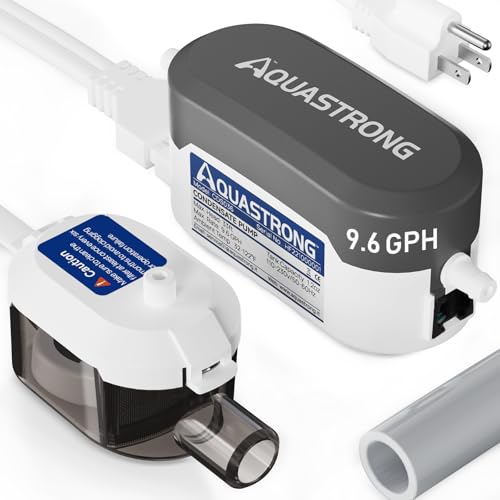
Aquastrong Mini Split HVAC Condensate Pump (9.6 GPH, 33 FT Lift)
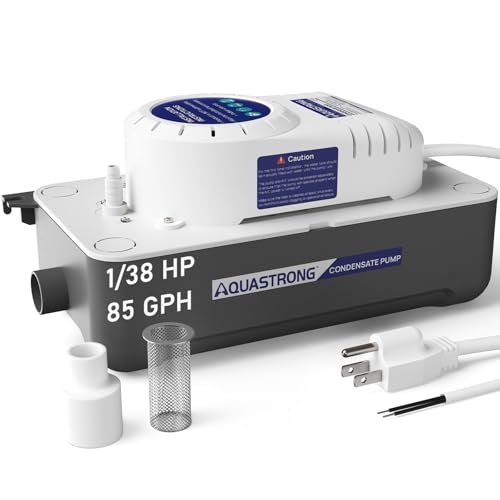
Aquastrong 1/38 HP 85 GPH HVAC Condensate Pump (20 FT Lift)

Aquastrong HVAC Condensate Pump (85 GPH, White)

Roamoris Small Pump With Level Sensor (PM01, 110V)

Aquastrong 115V 70 GPH HVAC Condensate Pump (Dark Gray)
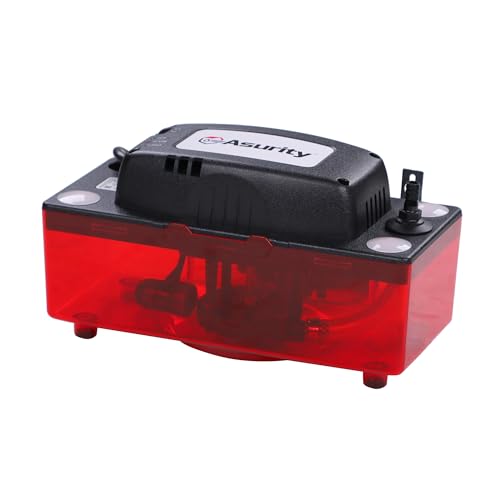
Asurity by Diversitech ULTRACP-22 120V Condensate Pump (22′ Lift)
DiversiTech CP-22LP Automatic Condensate Pump (120V, 22′ Lift)
The Picks, Examined More Closely
Mini splits tucked above a bedroom doorway or beside a home office need a pump that disappears into the background, and this Aquastrong model earns its place by doing exactly that. Rated at roughly 20 dB, the thermally protected motor runs quiet enough to ignore during a conference call or while falling asleep, yet still pushes condensate up to 33 feet vertically when routing drainage is awkward. The dual 115V/230V compatibility is a small but useful perk for anyone replacing an existing pump on a non-standard circuit.
Compared to the higher-flow Aquastrong options further down this list, the trade-off is gallons per hour. At 9.6 GPH, this is built for single mini split duty, not whole-home HVAC loads. For homeowners running one or two heads with modest condensate output, the math works out cleanly.
Points In Its Favor
- Near-silent operation around 20 dB suits noise-sensitive rooms
- 33-foot vertical lift handles ceiling-mounted and second-story equipment
- Accepts both 115V and 230V, simplifying replacements on legacy wiring
- Automatic safety switch shuts the system down before overflow becomes a problem
- Compact enough to sit beside a wall-mounted mini split without crowding service loops
Things To Consider
- 9.6 GPH flow is generous for a single head but light for multi-zone systems
- Owners commonly recommend a yearly reservoir rinse to prevent algae buildup in humid climates
Who It Suits Best
Owners of a single mini split in a bedroom, office, or studio where noise levels matter more than raw flow.
Consider Something Else When
The Aquastrong 1/38 HP 85 GPH HVAC Condensate Pump is a stronger match for whole-home setups that need to move far more water per hour.
Step up in condensate volume and the requirements change fast. A whole-home air handler, a basement furnace, or a multi-head mini split setup can outpace a 9 GPH pump in a humid July. The Aquastrong 1/38 HP moves up to 85 GPH, which is meaningful headroom for households running several indoor units off a common drain line. The 1/38 horsepower motor is thermally protected, and the safety switch cuts the system before a reservoir overflow becomes a ceiling stain.
The 20-foot lift rating is lower than the Mini Split model above, so routing constraints matter. Most attics and basements are well within range, but a basement-to-attic run may need a more careful pipe path.
Reasons It Performs
- 85 GPH flow handles whole-home and multi-zone HVAC loads
- Hall-effect switch provides reliable automatic start and stop behavior
- Dual 115V/230V wiring eases retrofit projects on older circuits
- Float-based safety switch integrates with most HVAC shutoff logic
Worth Noting
- 20-foot lift ceiling is lower than quieter single-head models on the list
- Larger reservoir footprint needs planning in shallow ceiling cavities
Key Product Details
Made For
Households with multi-zone mini splits, basement furnace installations, or anywhere condensate volume is the main concern.
Look Elsewhere When
The Aquastrong Mini Split HVAC Condensate Pump fits a single quiet-zone install better, especially where 33-foot vertical lift is needed.
The white-cased Aquastrong 85 GPH pump targets a specific shopper: someone who wants the same 85-gallon-per-hour muscle as the previous pick but does not need the gray industrial styling. Spec-wise the flow rate, lift, and dual-voltage wiring mirror its sibling, so the practical question is mostly about cost and aesthetics rather than capability.
For a finished basement mechanical room or a closet where the pump is visible, a white housing reads cleaner against painted drywall. Routine maintenance stays simple since the reservoir and float switch layout are familiar to anyone who has worked on the previous Aquastrong model.
Positive Points
- 85 GPH flow supports whole-home HVAC condensate output
- White housing blends into finished basements and utility closets
- Float-based safety switch protects against overflow events
- Compatible with 115V and 230V wiring configurations
Trade Offs
- 20-foot lift ceiling may limit routing in tall basements
- Reservoir cleaning takes planning in shallow ceiling cavities
Best Suited To
Homeowners who want 85 GPH headroom without paying for premium industrial finishes.
A Better Fit Elsewhere
The Roamoris Small Pump With Level Sensor is a smarter pick when the application is a dehumidifier or ice maker, not a whole-home HVAC system.
Not every condensate job involves a multi-ton air handler. Dehumidifiers draining into a basement sink, ice makers in a garage bar, and air coolers in a workshop all need a small pump that can sit in a tight spot. The Roamoris PM01 is a submersible-style mini pump with an integrated level sensor, so it cycles on and off without a separate float mechanism. The 110V design plugs into a standard outlet, which simplifies installs where hardwiring is not practical.
Because the Roamoris is a submersion pump rather than a reservoir-and-float system like the Aquastrong models, installation looks different. The unit drops into a collection vessel or tray, which is a clean approach for hobby setups.
Notable Upsides
- Tiny footprint fits behind dehumidifiers and inside small drip trays
- Integrated water level sensor skips the external float switch
- 110V plug-in design suits renters and retrofit installs
- Auto shut-off behavior protects against dry running
Honest Caveats
- Flow and lift are modest compared to the 85 GPH Aquastrong pumps above
- Submersion design requires a suitable collection vessel to function properly
Feature Snapshot
Who Will Love This
Garage workshops, finished basements, and hobby spaces running a dehumidifier, ice maker, or air cooler on a standard 110V outlet.
Not Your Match When
The Aquastrong 1/38 HP 85 GPH HVAC Condensate Pump is a better answer for whole-home HVAC condensate volume.
Not every home needs 85 GPH, and not every home needs 9.6 GPH. The dark gray Aquastrong 70 GPH lands in the middle of the range, offering a sensible 16-foot vertical lift for basements and crawl spaces without oversizing the pump. The 115V configuration is a clean fit for standard residential wiring, which removes the extra step of verifying 230V service.
Compare that to the Mini Split pick at the top of this list. The Mini Split is whisper-quiet, but the 70 GPH unit carries more headroom for households running an air handler plus a dehumidifier off the same drain run. In our view, that middle ground suits a wide range of homes.
Practical Pluses
- 70 GPH flow covers most residential HVAC and dehumidifier combinations
- 16-foot lift suits standard basement and crawl space routing
- Standard 115V design simplifies residential wiring
- Float switch triggers reliably between roughly 1.6 and 0.9 inches of water
Points To Keep In Mind
- Not suited to multi-zone mini split arrays that demand 85 GPH or more
- 16-foot vertical lift is limiting for basement-to-attic drain paths
Perfect Match For
Mid-sized homes with one or two indoor units and a dehumidifier tied into a common drain.
Skip It When
The Aquastrong Mini Split HVAC Condensate Pump is a smarter match for installations where 33-foot lift or sub-25 dB operation matters more than raw flow.
Diversitech is a familiar name in the HVAC trade, and the Asurity ULTRACP-22 brings that reputation to a residential-friendly 120V package. The 22-foot vertical lift rating gives routing flexibility that the 16- and 20-foot options above cannot match, which is useful in split-level homes or basement utility rooms that drain upward. The compact design saves space inside tight equipment closets, where every inch matters.
Across this list, the ULTRACP-22 sits between the higher-flow Aquastrong 85 GPH models and the quieter Mini Split pick. For tradespeople and homeowners who want brand familiarity on the spec sheet, the Diversitech pedigree carries weight.
Bright Spots
- 22-foot vertical lift handles split-level and basement drain routing
- Compact chassis fits inside crowded equipment closets
- 120V operation suits standard residential circuits
- Backed by a brand commonly stocked in HVAC supply channels
Possible Compromises
- Flow rate is moderate compared to the 85 GPH Aquastrong models
- Replacement parts may require HVAC supply channels rather than general retailers
Quick Facts
The Right Fit
HVAC installers and homeowners who want a recognized brand with strong vertical lift in a compact housing.
Another Choice May Suit
The Aquastrong 1/38 HP 85 GPH HVAC Condensate Pump is the better answer when higher flow matters more than 22-foot lift.

The CP-22LP closes out this list with a long-standing workhorse design. At roughly 4-3/8 inches tall, the reservoir is shorter than most residential condensate pumps, which lets it slip into ceiling cavities and soffits where height is at a premium. The removable check valve is a thoughtful maintenance feature since that small part is the usual failure point on aging pumps, and being able to swap it without replacing the whole unit is genuinely useful.
Vibration-dampening feet and motor mounts keep operation quiet, which matters when the pump lives above a living area. Compared to the Asurity ULTRACP-22 reviewed just above, the CP-22LP trades a slimmer profile for the same 22-foot lift ceiling.
Standout Benefits
- Low-profile reservoir at roughly 4-3/8 inches tall fits shallow soffits
- Removable check valve simplifies routine service
- 22-foot vertical lift supports split-level routing
- Vibration-dampening feet and motor mounts reduce operating noise
- Designed for HVAC/R equipment in residential and light commercial settings
Less Ideal Details
- Flow rate is moderate, not aimed at multi-zone high-volume systems
- 120V-only design, so 230V retrofits need a different model
Feature Rundown
Whose Shelf It Belongs On
Long-term residential and light commercial HVAC/R installations where serviceability and a slim profile matter most.
Swap It Out When
The Roamoris Small Pump With Level Sensor is a smarter fit for dehumidifier or ice maker applications that benefit from submersible design.
Picking The Right Pump For Your Setup
Flow rate, lift, and installation footprint drive most of the decisions in this category. Flow rate, measured in gallons per hour (GPH), tells you how much condensate the pump can move during a duty cycle. Vertical lift, measured in feet, sets the maximum height the pump can push water up a drain line. Footprint matters when the pump is going into a ceiling cavity, a closet, or a soffit where clearance is tight.
For most homes with a single mini split, 10 GPH and roughly 20 feet of lift covers the job with margin to spare. Households running a furnace, a dehumidifier, and an air handler off one drain line usually want at least 70 GPH to handle peak demand. Workshop and basement-only applications often get by with a compact submersible like the Roamoris PM01, since the volumes are smaller and the routing is short.
Voltage is the third spec that surprises first-time shoppers. Many replacement pumps support both 115V and 230V, but 120V-only models like the Diversitech picks need a standard household circuit. The safety switch is the quiet hero of any condensate pump, since it cuts the air handler before a reservoir overflows into a ceiling. Every pump in this list includes some form of automatic shutoff, but float-style and level-sensor designs behave differently in dusty or algae-prone drain pans.
Comparing Across The Seven Picks
The Aquastrong lineup dominates the residential side of this list, with three 85 GPH variants and two quieter or mid-range options. Diversitech fills the brand-loyal slot with the ULTRACP-22 and the long-running CP-22LP, both aimed at standard HVAC condensate jobs. The Roamoris PM01 stands apart as the only true submersible option, which gives it an edge in tight dehumidifier and ice maker setups.
A simple way to narrow the list: match pump type to equipment, then match flow to room count. Mini split only with a single head points toward the quiet Aquastrong 9.6 GPH. Multi-zone or whole-home HVAC points to the 70 or 85 GPH Aquastrong models or the Diversitech pumps. Dehumidifier, ice maker, or air cooler points to the Roamoris PM01.
Common Shopping Slip Ups
The most common mistake is oversizing on flow while undersizing on lift. A 9.6 GPH pump with 33-foot lift outperforms an 85 GPH pump with only 10 feet of lift when the drain run climbs a wall. Always measure the vertical rise from the pump to the discharge point, not the horizontal distance.
The second slip is ignoring the safety switch rating. Some budget pumps include a switch rated for low-voltage signaling only, which means it cannot directly break the HVAC blower circuit. Verify whether your air handler expects a dry-contact shutdown or a hot-line interrupt, and pick a pump that matches the control scheme.
Where The Extra Money Goes
Higher-tier pumps earn their cost through longer-life components, better thermal protection, and quieter motor mounts. The CP-22LP’s removable check valve is a good example, since that single part usually dictates how many years a condensate pump lasts. Quieter motors with rubber-dampened mounts also matter in living areas, where a buzzy pump quickly becomes a nuisance.
For most households, a mid-tier pump with a reliable float switch and a thermally protected motor is the sensible spend. Upgrading to a premium model makes sense when the pump sits above a finished ceiling, when lift exceeds 20 feet, or when the system runs year-round rather than seasonally.
Frequently Asked Questions
How often should a condensate pump be cleaned?
Most manufacturers recommend a quick reservoir rinse once or twice a year, with more frequent cleaning in humid climates where algae and biofilm can build up faster. A yearly visual check of the float switch and check valve keeps the pump cycling reliably.
Can one pump handle multiple indoor units?
Yes, provided the combined condensate flow stays below the pump’s GPH rating. Two or three mini split heads often fall under 85 GPH during peak load, which is why higher-flow pumps are common in multi-zone installs. A single 9.6 GPH pump is not a safe choice for more than one head.
What is a safety switch on a condensate pump?
A safety switch is a float or sensor that triggers when the reservoir reaches a high-water mark, then signals the air handler to shut down before water spills over. It is the primary overflow protection, and a pump without one is a risky choice in a ceiling cavity.
Do condensate pumps need a dedicated circuit?
Most residential condensate pumps run on a standard 115V or 120V outlet, and they do not require a dedicated circuit in typical installs. The air handler itself should be on its own circuit, but the pump can share a general-purpose outlet in many cases.
Can a condensate pump sit outdoors or in unconditioned space?
Indoor-rated pumps should stay in conditioned or semi-conditioned spaces to avoid freezing water in the reservoir. Outdoor or attic installations during cold winters benefit from a freeze-rated design or a heat trace on the drain line.