
Skimming leaves out of an above-ground pool every other weekend gets old fast. A purpose-built robot takes that chore off your hands, rolling along the floor while you handle the rest of the backyard. This lineup covers cordless units sized for flat-bottomed above-ground pools alongside a few heavy-duty options that handle larger inground basins, so you can match the robot to the water you actually own.
A Closer Look At The Lineup

Zebary C1 Cordless Robotic Pool Vacuum for Above Ground & Inground Pools (Butter)

Hayward TigerShark QC Robotic Pool Cleaner

Hayward Poolvergnuegen 2-Wheel Suction Pool Cleaner

EZIOOV Y20 Cordless Robotic Pool Cleaner

Polaris PCX 868 iQ Smart Robotic Pool Cleaner

Poolease X1A Cordless Robotic Pool Vacuum (960 Sq.ft)

Hayward Navigator Pro Suction Pool Cleaner (20x40ft)
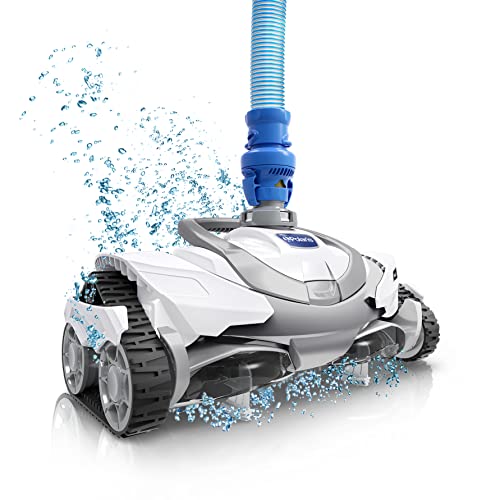
Polaris MAXX Premium Suction-Side Pool Cleaner
What Each Pick Brings To The Table
The Zebary C1 leans into a simple promise: drop it in, press a button, walk away. With a cordless build and a claimed 200 minutes of runtime, it covers pools up to roughly 2500 square feet, which is plenty for most backyard above-ground setups and many smaller inground ones. The dual-suction configuration aims at leaves, sand, and fine grit, and the self-parking behavior pulls the unit toward an edge when the battery runs low, so retrieval stays painless.
For a first-time robot owner, the appeal is the lack of setup ceremony. No hoses to route, no booster pump to install. Owners commonly find the lightweight shell easy to lift out one-handed, and the top-access filter basket rinses out with a garden hose in under a minute.
Bright Spots
- 200-minute battery window supports full cleans on mid-size pools without a mid-cycle recharge.
- Self-parking near the pool edge takes the guesswork out of finding the robot at the end of a run.
- Top-load filter bin cuts routine maintenance to a quick rinse, which matters in busy backyards.
- Cordless design removes the trip-hazard of a floating cable across a deck or lawn.
Worth Noting
- Rated for slopes up to roughly 15 degrees, so steep-sided deep-end pools may outpace its climbing ability.
- Charging between cycles can stretch cleanup timelines over a busy weekend.
Key Product Details
Made For
First-time robot owners with flat or gently sloped above-ground pools who want a cordless, low-fuss option.
Look Elsewhere When
You maintain a large inground basin with deep slopes, in which case the Hayward TigerShark QC is a stronger match.
The Hayward TigerShark QC takes a different stance than the Zebary C1. Instead of cordless simplicity, it relies on a tethered connection and an onboard pump to deliver what Hayward calls intensive vacuum power. A standard cleaning cycle covers floor, walls, coves, and the waterline in around four hours, while a separate quick-clean mode shortens that to roughly 90 minutes for fast touch-ups.
This is a dedicated inground-pool workhorse, sized for basins up to about 20 by 40 feet. Owners who already manage a more complex pool setup often appreciate the microprocessor-based pattern that keeps the unit moving deliberately across surfaces rather than wandering randomly.
A Strong Showing
- Two cycle options let you choose between a full scrub or a quick sweep on busy weekends.
- Onboard pump creates strong vacuum suction without depending on the pool’s existing filtration system.
- Wall-climbing pattern reaches the waterline, which is where oils and surface debris tend to collect.
Trade Offs
- Tethered power cable requires untangling and proper storage between uses.
- Heavier than most cordless units, so pulling it out of the water after a long cycle can be a two-hand job.
- Filter cartridge cleaning takes a few extra minutes compared to a top-load basket design.
Best Suited To
Households with larger inground pools up to 20 by 40 feet who want a deep clean that goes beyond the floor.
Consider Something Else When
You only have a small flat-bottomed above-ground pool, in which case the lighter Poolease X1A is a friendlier fit.
The Poolvergnuegen 2-Wheel pulls power from your existing pump and filter instead of carrying its own motor. That makes setup a matter of connecting a hose to a suction port or skimmer and dropping the unit into the water. Pools up to 16 by 32 feet are within its working range, which covers a healthy slice of residential inground layouts.
Hayward leans on self-adjusting turbine vanes to keep suction steady as flow rates shift, and the tire treads are designed to help it climb over obstacles without stalling out. It is a hands-off design in the sense that your pump does the work, and the cleaner focuses on coverage.
What Makes Sense
- No batteries or charging routines since the unit draws from your pool’s pump.
- Turbine vanes self-adjust to keep performance consistent as flow conditions change.
- Compact two-wheel form navigates tighter corners more easily than larger three-wheel designs.
Honest Caveats
- Performance depends heavily on the strength of your existing pump, so a weak pump translates to weak cleaning.
- It does not climb walls in the same way that corded robotic units do, so the waterline may need separate attention.
Right Fit For
Pool owners with a healthy pump and filter setup who prefer a low-electricity, hose-driven cleaner for floor coverage.
Reach For A Different Pick When
You want the unit to scrub walls and the waterline, in which case the Hayward TigerShark QC does more of the work.
The EZIOOV Y20 brings dual-motor suction to the cordless category without stepping into premium pricing. Two suction inlets and an extended brush work together to lift leaves and settled dirt, and the unit is built for both above-ground and inground flat-bottom pools with a gentle slope tolerance.
For shoppers watching the budget, the Y20 hits a useful middle ground. It borrows the cordless convenience of the Zebary C1 while adding a brushing element that helps loosen debris before suction pulls it in. Owners commonly find that the brush design pays off when fine silt starts to accumulate.
Everyday Advantages
- Dual-motor setup moves more water than single-motor units at the same battery class.
- Active brush stirs up fine debris that plain suction ports often miss.
- Cordless operation suits pools without convenient outlet access nearby.
Points To Note
- Floor-only design means the waterline needs occasional manual attention.
- Slope rating below 15 degrees puts deeper inground pools out of reach.
Quick Facts
Perfect Match For
Cost-conscious owners with flat-bottom above-ground or shallow inground pools who want more than a basic vacuum.
A Better Fit Elsewhere
You need a connected, app-controlled experience, in which case the Polaris PCX 868 iQ offers that step up.
The Polaris PCX 868 iQ is the entry point into connected pool care on this list. It links to your home WiFi and pairs with the iAquaLink app, which means starting, stopping, and scheduling cycles happens from a phone rather than at the unit itself. A lift system helps bring the robot toward the surface for easier retrieval.
Polaris pairs the app with a Double Helix brush layout, where staggered rubber blades work both the front and rear of the unit. That setup agitates stuck-on debris and channels it toward a sizeable intake. In most backyards with a stable WiFi signal at the equipment pad, the app experience feels like a natural extension of the robot.
The Upside
- iAquaLink app control removes trips to the pool pad to start or stop cleaning.
- Double Helix brush design handles both fine grit and larger debris without a second pass.
- Easy-lift system simplifies pulling a heavy, waterlogged robot out of the pool.
Possible Compromises
- App-dependent control may frustrate owners with patchy outdoor WiFi coverage.
- Larger footprint takes up more deck storage space than compact cordless models.
Who Should Grab It
Tech-forward pool owners with a strong WiFi signal at the equipment area who like the idea of remote scheduling.
Not Your Match When
You prefer a simpler cordless routine without an app layer, in which case the Zebary C1 keeps things straightforward.
The Poolease X1A is purpose-built for smaller flat-bottom above-ground pools up to about 960 square feet. The dual-motor design aims to push more water through the suction path while extending overall motor life. At this size class, every minute of runtime counts, and the cordless setup means no hose routing across a deck.
Compared with the larger Zebary C1, the X1A trades pool-size coverage for a more compact shell. For a small backyard pool, that is the right swap. Owners commonly find that the lighter weight makes lifting it out for charging a one-hand job, which matters after a long summer day.
What It Does Well
- Tailored footprint for flat pools up to 960 square feet avoids overkill on small setups.
- Dual-motor architecture aims to balance suction strength with longer motor lifespan.
- Cordless design keeps small yards free of trailing cables.
Small Caveats
- Coverage ceiling at 960 square feet limits use on larger above-ground or inground pools.
- Floor-only operation leaves walls and waterline untouched.
Whose Shelf It Belongs On
Owners of small to mid-size flat above-ground pools who want a cordless robot that is easy to lift and store.
Swap It Out When
You want more coverage on a bigger pool, in which case the EZIOOV Y20 stretches further without a tether.
The Hayward Navigator Pro uses the brand’s SmartDrive steering to move through the pool in a more deliberate pattern than a random-walk design. It targets in-ground gunite pools up to 20 by 40 feet, with “shoes” tuned for rougher gunite surfaces and improved maneuverability around obstacles.
Like the Poolvergnuegen, it pulls from your pool’s filtration system, so no extra power outlet is required. The trade-off shows up in pump dependency: in our view, a robust pump makes the Navigator Pro feel like a set-and-forget tool, while a marginal pump leaves it underpowered.
What Helps Most
- SmartDrive steering creates a more methodical coverage pattern across floors, walls, and coves.
- Specialized shoes for gunite surfaces help it keep traction on textured finishes.
- No extra energy draw, since it relies entirely on the existing pump and filter.
Less-Strong Areas
- Requires a strong existing pump to perform as designed, which adds a prerequisite for some owners.
- Vinyl and fiberglass surfaces call for a different shoe variant, so confirm compatibility before purchase.
Feature Snapshot
Built With In Mind
Owners of gunite inground pools up to 20 by 40 feet who already run a capable pump and want methodical coverage.
Where A Sibling Pick Shines
You need a vinyl-safe option with similar coverage, in which case the Polaris MAXX is a more surface-flexible alternative.
The Polaris MAXX closes the list with a premium suction-side design built around HALO technology for debris handling. It is intended for in-ground pools of every common surface type, from plaster to vinyl to fiberglass, which gives it broader compatibility than a gunite-tuned cleaner like the Navigator Pro.
Active scrubbing plus a strong intake aims to clear everything from fine silt to leaves without frequent clogging. For inground owners who do not want to think about surface-specific shoes or app connections, the MAXX keeps the mental model simple: connect, drop in, let the pump do the work.
Well-Handled Touches
- HALO debris management reduces the chances of clogs from larger leaves or acorns.
- Surface-agnostic design works across plaster, vinyl, and fiberglass finishes.
- Floor-to-waterline scrubbing handles oils that collect at the surface line.
Details To Watch
- Like other suction-side units, performance tracks closely with pump strength, so weaker pumps will see weaker results.
- Higher initial cost than hose-driven entry-level suction cleaners.
Who Will Love This
Inground pool owners with mixed surfaces and a robust pump who want a premium, low-software cleaning experience.
Skip It When
You are maintaining a flat above-ground pool, in which case the Zebary C1 is a more appropriately sized option.
Matching The Right Robot To Your Pool Type
Pool size dictates most of the decision. A flat-bottom above-ground pool up to roughly 1000 square feet pairs well with a lightweight cordless unit like the Poolease X1A, while larger above-ground or shallow inground pools stretching past 2000 square feet benefit from longer runtime models such as the Zebary C1 or the dual-motor EZIOOV Y20. If your pool climbs past 15 degrees of slope, you have moved out of the cordless flat-floor category and into the realm of wall-climbing robots.
Surface finish matters more than many shoppers expect. Gunite is abrasive and rewards cleaners with rugged shoes, which is exactly what the Hayward Navigator Pro is built for. Vinyl and fiberglass need softer contact, and a unit that is too aggressive can mark the liner over time. Suction-side cleaners generally treat surfaces more gently than corded robotic units with hard brushes, though neither is automatically safer across the board.
Filtration strength sets a hidden ceiling. Suction-side models like the Poolvergnuegen, Navigator Pro, and Polaris MAXX draw their power from your existing pump. If that pump is undersized for your pool’s volume, the cleaner’s pickup will suffer, and the situation will not improve until either the pump or the cleaner changes. Cordless and corded robotic units carry their own pumps, which removes that variable but introduces a charging or tethering routine instead.
App control, brushes, and debris handling are the real upgrade points. The Polaris PCX 868 iQ layers WiFi control and a programmed lift system on top of standard scrubbing, which suits owners who already use apps for other backyard gear. Brush design, like the Double Helix layout on that same unit, changes how well the robot lifts fine silt that plain suction leaves behind.
Key Considerations Across These Picks
Pitfalls Shoppers Hit
Buying by feature list alone can lead to a robot that does not fit your pool’s geometry. A common miss is selecting a cordless floor-only model for a deep-end pool with steep slopes, which leaves most of the basin untouched. Another is ignoring pump capacity when choosing a suction-side unit, which makes the cleaner feel sluggish even when nothing is mechanically wrong with it.
Where The Extra Money Goes
Premium pricing in this category buys longer runtime, wall-climbing ability, and smarter debris handling. The Polaris MAXX earns its tier through HALO debris management and surface-agnostic design, while the PCX 868 iQ adds app-driven control and an assisted lift system. If your pool is small, flat, and lightly used, those upgrades are hard to justify. If it is large, sloped, or sees heavy leaf fall, they often pay for themselves in saved manual cleaning time.
Frequently Asked Questions
How long does a robotic pool cleaner typically run per charge?
Most cordless units in this category run between 90 and 200 minutes per charge, depending on battery capacity and floor conditions. For mid-size above-ground pools, a single charge usually covers the entire floor in one pass.
Can a robotic cleaner handle pool walls and the waterline?
Only certain models include wall-climbing behavior. The Hayward TigerShark QC and Polaris PCX 868 iQ are built to scale walls and scrub the waterline, while many cordless floor-only units stay on the bottom by design.
Do suction-side cleaners work without a separate pump?
No, suction-side cleaners draw their cleaning power directly from your existing pool pump and filter. A pump that is too small or partially clogged will noticeably reduce the cleaner’s pickup performance.
How often should the filter basket or cartridge be cleaned?
A quick rinse after every cycle is a good baseline, especially during heavy leaf seasons. Letting debris sit in the filter between cycles reduces suction on the next run and can encourage odor or clogging over time.
Are cordless pool robots safe to leave unattended in the water?
Modern cordless units are designed to sit in the water for the duration of their cycle and self-park when the battery runs low. Still, common sense applies: keep the unit out of reach of small children, and remove it promptly after the cycle ends rather than leaving it submerged indefinitely.
Bottom Line
The right pick comes down to pool size, surface, and slope, not feature count. Cordless models like the Zebary C1, EZIOOV Y20, and Poolease X1A handle small and mid-size above-ground pools with minimal setup. Tethered and suction-side units step in when walls, waterlines, and larger inground basins enter the picture. Match the robot to the water you own, and the rest of the season becomes a lot less hands-on.