
Skimming leaves off the waterline before guests arrive gets old fast, and dragging a hose around the pool deck is no one’s idea of a Saturday morning well spent. A reliable above ground automatic pool cleaner changes that rhythm, handling debris while you handle everything else. The eight cordless and suction-driven options below cover flat-floored above ground setups, in-ground pools, and the larger backyard builds that need wall-climbing reach.
The Lineup, Simplified

Zebary C1 Cordless Robotic Pool Cleaner 200-Min Runtime

EZIOOV Y20 Cordless Robotic Pool Cleaner

Polaris Freedom Cordless Robotic Pool Cleaner

Polaris Lynx Automatic Suction Pool Cleaner

Polaris PCX 868 iQ Smart Robotic Pool Cleaner

Poolease X1A Cordless Robotic Pool Vacuum

Polaris Vac-Sweep 280 Pressure-Side Pool Cleaner
Polaris MAXX Premium Suction-Side Pool Cleaner
The Details Behind The Selections
Drop a cordless cleaner into a flat-bottomed pool and skip the hose-and-pump dance entirely. The Zebary C1 is built for that exact workflow, with a dual-suction layout and a high-speed motor aimed at lifting leaves, sand, and fine grit from floors that are flat or tilted up to roughly 15 degrees. For most backyards, the 200-minute cordless window is enough to cover the floor of a mid-size above ground pool without mid-cycle babysitting.
It targets pools up to around 2,500 square feet, which catches most residential installs. Compared with the EZIOOV Y20 below, this one leans toward longer runtimes and larger footprints rather than minimalist operation. Homeowners with a busy summer schedule and a pool that collects debris from nearby trees get the most value from the extended cordless cycle.
The Value In It
- 200-minute cordless runtime handles most flat above ground pools in a single pass
- Dual-suction ports pull fine sand alongside leaves without clogging on the first sweep
- Self-parking routine brings the unit to the edge for a no-dive retrieval
- Covers up to 2,500 square feet, so mid-size and larger flat pools fit comfortably
Honest Caveats
- Floor-focused design, so walls and the waterline stay untouched
- Slope tolerance caps near 15 degrees, which can leave sloped pool bottoms only partially scrubbed
Key Product Details
Best Suited To
Flat-floored above ground pool owners with mid-to-large footprints who want long cordless cycles and minimal hose setup.
Look Elsewhere When
You need full wall and waterline coverage, where the Polaris MAXX is the stronger match.
The Y20 keeps the cordless promise simple: charge, drop, retrieve. Dual motors and twin suction inlets give it the pulling power to handle leaf drops after a storm, while the extended brush helps loosen sediment that has settled into the floor. The trade-off shows up in slope handling, since anything steeper than 15 degrees nudges this cleaner out of its comfort zone.
It straddles the above ground and in-ground flat-bottom worlds, which is rare at this level. Compared with the Zebary C1 just above, the Y20 leans toward a more compact pool profile and a simpler user interface. First-time robotic pool owners get an easy entry without committing to a premium app ecosystem.
Everyday Advantages
- Cordless operation removes hose tangles and pump-side setup from the routine
- Dual-motor layout supports both above ground and flat in-ground pools
- Extended brush loosens settled sediment before suction pulls it in
- Twin suction inlets catch leaves and finer grit on the same pass
Trade-Offs To Consider
- Floor-only coverage, so vertical surfaces remain untouched
- Slope tolerance sits under 15 degrees, which excludes sharply contoured pools
Who It Suits Best
First-time cordless cleaner owners with flat-floored above ground or small in-ground pools who want a low-fuss routine.
Consider Something Else When
Your pool climbs walls or has steps, where the Polaris PCX 868 iQ earns its place.
Going cordless without giving up waterline scrubbing is the trick the Polaris Freedom pulls off. It works the floor up to the waterline and finishes in roughly 2.5 hours, then surfaces near the edge so retrieval stays light. A long-lasting lithium-ion battery handles full cycles between charges, which keeps weekend maintenance predictable.
App control via iAquaLink is the real differentiator. Start, stop, switch cycles, or trigger the lift system from a phone, with notifications when the cycle ends. Compared with the budget cordless options above, the Freedom trades a higher entry cost for connected convenience and wall-and-waterline reach.
What Works In Its Favor
- Cable-free design clears the deck of hose clutter during cleaning
- iAquaLink app gives you remote start, stop, and cycle selection from anywhere on the property
- Waterline evacuation system surfaces the unit near the pool edge for easier pickup
- Floor-to-waterline cleaning path covers surfaces the basic cordless units miss
Small Caveats
- Premium tier pricing puts it above the entry-level cordless options
- App-dependent features may frustrate homeowners who prefer button-only controls
Feature Snapshot
Made For
Connected homeowners with in-ground or large above ground pools who want app-driven cycles and waterline scrubbing in one unit.
Skip It When
You want a strictly budget pick, where the Poolease X1A makes more sense.
The Polaris Lynx skips the battery entirely and taps the pool’s existing filtration pump for power. Suction-side cleaners like this one feed debris directly to the filter system through HALO technology, so there is no on-board bag or canister to empty after each cycle. Dynamic turbines translate pump flow into movement, with spinning brushes widening the cleaning pass to about 15 inches.
You trade the cordless convenience of the Zebary C1 for unlimited runtime tied to pump operation. Owners with already-tuned filtration systems tend to see the best results, since pump health directly drives cleaning power. For silt, sand, and longer debris that slips past skimmers, the Lynx is a strong filter-side answer.
Where It Excels
- HALO technology channels fine silt and sand straight to the filtration system, no on-board bag to empty
- Spinning brushes create a 15-inch cleaning path for faster floor coverage
- Suction-driven design means no charging downtime between cycles
- Strong climbing performance on typical in-ground pool walls
Possible Compromises
- Performance ties directly to your pool pump’s flow rate
- Suction-side setup needs plumbing or skimmer adapter hardware that may not be included
Right Fit For
Homeowners with healthy in-ground filtration pumps who want continuous debris handling without recharging batteries.
A Better Fit Elsewhere
You run a portable above ground pool without a strong pump, where the cordless Zebary C1 fits more naturally.
The PCX 868 iQ aims squarely at in-ground pools up to about 50 feet, with WiFi connectivity that ties into the iAquaLink app for full remote control. Start and stop cycles, monitor timers, switch modes, or trigger the lift system from a phone, and the unit gently surfaces when the cycle wraps. Double helix brushes with staggered rubber blades agitate stuck-on debris before the wide inlet draws it in.
It weighs more on smart features than the cordless pool floor specialists higher in this list. Compared with the Polaris Freedom, the PCX 868 iQ keeps the app layer but lands in a different cleaning category, with a larger filter canister and a deliberate in-ground focus. Larger residential pools get the most from its cycle range and brush design.
Advantages To Know
- WiFi plus iAquaLink app cover start, stop, mode switching, and lift-system control
- Double helix brushes with staggered rubber blades agitate debris before suction pulls it in
- Large filter canister handles full cycles between rinses
- Lift system brings the cleaner up for easier removal at the end of a cycle
Details To Watch
- Built primarily for in-ground pools up to 50 feet, so it over-delivers for small above ground setups
- Smart features require a stable home WiFi signal at the equipment pad
Who Should Grab It
Homeowners with mid-to-large in-ground pools who want app control, robust brushing, and a large filter canister in one unit.
Another Choice May Suit
Your pool is a compact above ground model, where the Poolease X1A is a more right-sized fit.
Smaller above ground pools need a cleaner that knows the assignment, and the Poolease X1A leans into that niche. A dual-motor design drives both suction power and long-term motor life, with the manufacturer claiming the dual layout extends the unit’s working life noticeably. Cordless operation cuts out booster pumps and skimmer hookups.
It targets flat-floored pools up to around 960 square feet, which lines up with most round and small rectangular above ground setups. Compared with the Zebary C1, the X1A trades raw runtime for a smaller, more right-sized footprint. Households with a single backyard pool rather than a sprawling estate get the cleanest fit.
Useful Touches
- Dual-motor design aims to extend motor life beyond single-motor cordless units
- Cordless freedom removes the need for booster pumps or hose adapters
- Targeted for flat-floored pools up to 960 square feet, matching common above ground sizes
Points To Note
- Limited to smaller pool footprints, so it falls short on larger residential builds
- Floor-only cleaning path leaves the waterline to manual brushing
Whose Shelf It Belongs On
Owners of compact above ground pools under 1,000 square feet who want a cordless cleaner matched to their pool size.
Reach For A Different Pick When
Your pool exceeds 1,000 square feet, where the Zebary C1 covers more ground per cycle.
The Vac-Sweep 280 is the classic pressure-side answer for in-ground pools, powered by a separate Polaris booster pump that drives dual venturi jets. The trade-off is real plumbing: you need a dedicated booster line for the cleaner to operate. The upside is reliable floor-and-wall scrubbing across vinyl, fiberglass, gunite, pebble, and tile surfaces, usually within a three-hour window.
This is a long-haul choice, not a cordless newcomer. Compared with the Polaris Lynx just above, the Vac-Sweep 280 trades suction-side simplicity for higher-pressure cleaning action. Pool owners with established equipment pads and room for a booster pump get the most from this category.
What Pays Off
- Dual venturi jets create strong vacuum power that handles most in-ground pools in around three hours
- Safe across vinyl, fiberglass, gunite, pebble, and tile surfaces
- Sweeps and scrubs floor and walls in a single coverage path
- Long-standing design with widely available replacement parts
Where It Is Less Suited
- Requires a separate Polaris booster pump, adding equipment and energy draw
Built With In Mind
Owners of established in-ground pools with room for a booster pump who want proven, full-coverage cleaning.
Swap It Out When
You want a simpler setup without a booster pump, where the Polaris Lynx delivers suction-side coverage with less hardware.
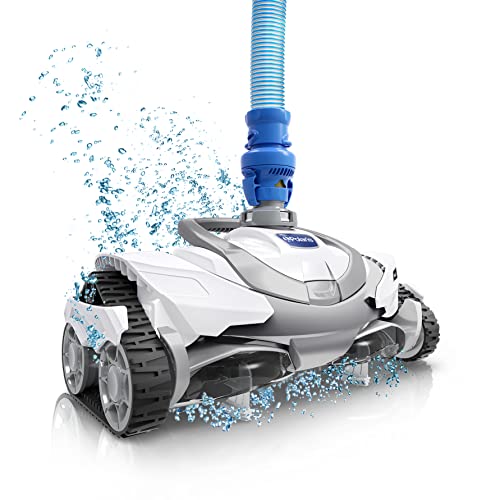
Premium in the suction-side category lands at the Polaris MAXX, which adds HALO technology for advanced debris removal alongside active scrubbing. It works the floor right up to the waterline, with a flow path designed to keep fine and larger debris moving without clogging. Compatibility across vinyl, fiberglass, gunite, pebble, and tile keeps the fit flexible.
It closes this list the way it opens its cleaning cycle, with broad coverage and steady suction-side performance. Compared with the Polaris Lynx, the MAXX adds more aggressive active scrubbing and refined debris handling. Pool owners with all-surface in-ground setups who already have a strong filtration pump see the most payoff.
The Case For It
- HALO technology handles both fine and larger debris without clogging the flow path
- Floor-to-waterline cleaning path covers the full pool envelope
- Active scrubbing brushes agitate surfaces the basic suction units miss
- Compatible with vinyl, fiberglass, gunite, pebble, and tile pool surfaces
Factors To Consider
- Suction-side operation ties performance to your pool pump’s flow rate
Quick Technical Notes
Perfect Match For
All-surface in-ground pool owners with a strong filtration pump who want floor-to-waterline coverage without going cordless.
Not Your Match When
You want cordless convenience and small-pool sizing, where the EZIOOV Y20 or Poolease X1A fits more naturally.
Picking The Right Match For Your Pool
Battery or pump power shapes the entire experience. Cordless robotic units like the Zebary C1, EZIOOV Y20, Polaris Freedom, and Poolease X1A bring drop-in convenience and skip the booster pump, though you trade away unlimited runtime for a charge cycle. Suction-side cleaners like the Polaris Lynx and Polaris MAXX tie directly into the pool’s existing filtration pump, so performance tracks pump health, but you never wait for a battery to top up. Pressure-side picks like the Vac-Sweep 280 sit at the other end of the spectrum, demanding dedicated booster plumbing in exchange for high-power venturi scrubbing.
Pool shape and surface matter just as much as power source. Flat-floored above ground pools under 1,000 square feet get a clean fit with compact cordless units, while sloped bottoms and walls call for climb-capable models like the Polaris Freedom, PCX 868 iQ, or MAXX. The slope tolerance figures in this category are usually listed in degrees, which describes how steep a floor incline the cleaner can climb without losing traction.
Debris type is the silent decision-maker. Pine needles, fine sand, and silt lean toward HALO-equipped suction units that route debris straight to the filter, while leaf-heavy yards near trees often favor cordless cleaners with wide dual-suction inlets and easy-to-rinse canisters. Matching the debris profile to the cleaner’s intake design saves you from mid-cycle clogs and second-pass frustration.
For homeowners who split their time between pool care and everything else, app-connected units like the Polaris Freedom and PCX 868 iQ add remote start, stop, and cycle notifications. The trade-off is dependence on home WiFi at the equipment pad, which can be a real constraint in some yards. Shoppers who keep things analog get a more predictable experience with the button-driven cordless picks higher in this list.
Key Considerations Across These Picks
Traps First Timers Fall Into
Choosing a cleaner based on peak runtime alone leaves slope and wall-climb behavior on the table, which is where many first-timers end up with a unit that stalls halfway up a wall. The honest read is that runtime matters, but only when paired with a cleaning path that matches the pool’s actual surfaces. A 200-minute floor specialist will underperform a 90-minute climber in a pool with significant vertical surfaces.
Another common miss is assuming every pool plays nicely with every cleaner. Above ground pools under 1,000 square feet rarely need a 50-foot in-ground unit, and a large in-ground pool will outpace a compact cordless robot in a single afternoon. Matching the cleaner’s coverage footprint to the actual pool size keeps you from running multiple cycles back to back.
When Paying More Pays Off
The jump from entry-level cordless to app-driven models like the Polaris Freedom or PCX 868 iQ mostly buys you three things: waterline coverage, app-based cycle control, and larger filter canisters that handle full sessions between rinses. For pool owners who clean weekly and want a phone-first experience, the premium tier earns its keep through convenience and fewer manual interventions.
On the suction-side, the MAXX earns its premium over the Lynx through more aggressive active scrubbing and refined debris handling with HALO technology. If your pool collects a steady mix of fine and larger debris, the upgrade typically shows up in fewer re-cleans and less time spent brushing the waterline by hand. For smaller, simpler pools, the lower tier still gets the job done without the extra spend.
Frequently Asked Questions
How long do cordless pool cleaners run on a single charge?
Most residential cordless units in this category run between 90 and 200 minutes per charge, depending on motor load and pool surface. Larger flat pools need longer runtime windows, while smaller above ground pools finish well under 90 minutes.
Can robotic pool cleaners handle stairs and tight corners?
Robotic cleaners vary widely in tight-corner agility, and most in this roundup focus on floor and broad wall coverage. Stairs and sharp inside corners often need a manual brush pass even with a wall-climbing unit on the job.
Do suction-side cleaners work with variable-speed pumps?
Suction-side cleaners rely on consistent flow to drive the turbines, and very low pump speeds can starve the cleaner of movement. Many owners run the pump at a mid-tier speed during cleaning cycles to keep performance steady.
How often should the filter canister be rinsed?
For cordless robotic units, rinsing the canister after every cycle keeps suction strong and prevents fine debris from hardening inside. Suction-side units route debris to the pool’s main filter, so backwashing the pool filter on a normal schedule handles the load.
Is a booster pump required for every pressure-side cleaner?
Pressure-side cleaners like the Polaris Vac-Sweep 280 rely on a dedicated booster pump for their venturi jets. That extra equipment adds plumbing and energy draw, which is part of why cordless and suction-side options have grown more popular for smaller residential pools.
Closing Remarks
Cordless convenience keeps gaining ground, and the Zebary C1 stands out for long runtime on larger flat pools, while the Polaris MAXX delivers full-coverage scrubbing for all-surface in-ground setups. Match the cleaner to your pool’s footprint, slope, and debris type first, and let app features and premium tiers follow from there. Whichever path you choose, a well-matched above ground automatic pool cleaner turns weekend maintenance into background noise.