

A 5 ton heat pump package unit sits outside your home in a single cabinet, handles both heating and cooling, and quietly does the work that keeps a 2,000 to 2,500 square foot home comfortable through every season. Choosing the right one matters more than most people realize. The wrong match runs constantly, struggles on the coldest nights, and shortens the life of the compressor. The right one hums along, keeps utility bills reasonable, and lasts well over a decade. This roundup walks through seven solid options across packaged units, split systems, and dual-fuel configurations so you can match capacity, efficiency, and refrigerant type to your actual home and climate.
The Shortlist At A Glance

5 Ton 13.4 SEER2 Packaged Heat Pump Unit – R-454B Oxbox by Trane

Senville 5 Ton Central Air Conditioner Heat Pump with 10kW Aux

TOSOT 5 Ton 18.5 SEER2 Inverter Heat Pump Split System
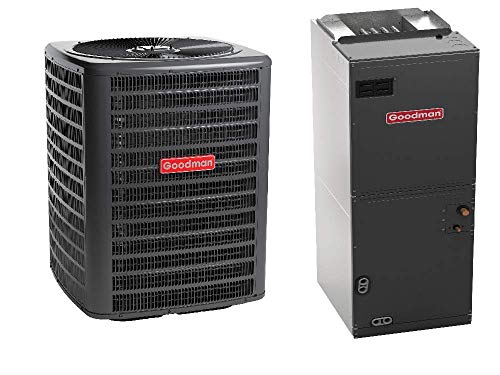
Goodman 5 Ton 14.5 SEER2 R-32 Heat Pump & Air Handler System

Goodman 5 Ton R-32 Heat Pump with 10 kW Heat Kit

Goodman 5 Ton 14 SEER Dual Fuel Package Unit GPG1461120M41

COSTWAY 5 Ton 17 SEER2 Inverter Heat Pump Split System
A Closer Look At Each Pick
The Oxbox by Trane 5 ton packaged heat pump crams the evaporator, condenser, compressor, and blower into a single outdoor-rated cabinet. That design suits homes without a basement furnace closet or attic air handler, where running new ductwork into interior spaces just isn’t realistic. You mount it on a slab or pad, tie it into existing supply and return ducts, and the whole system lives outside.
It uses R-454B refrigerant, a newer low-global-warming-potential formulation replacing older R-410A systems. SEER2 (Seasonal Energy Efficiency Ratio 2) of 13.4 is entry-level by today’s standards, so this one targets homeowners who want dependable year-round comfort without paying extra for premium efficiency ratings.
A Favorable Mix
- Single-cabinet install frees up interior space and simplifies retrofits where no indoor air handler exists.
- R-454B refrigerant future-proofs the system as older R-410A units phase out across the industry.
- 5 ton capacity handles 2,000 to roughly 2,500 square foot homes with reasonable insulation and ductwork.
- Trane-built components inside an Oxbox cabinet bring familiar brand engineering at a friendlier entry cost.
Points To Note
- 13.4 SEER2 is on the modest side, so monthly cooling bills run higher than 16+ SEER2 alternatives in hot regions.
- Packaged units sit exposed to weather year-round, which can shorten metal cabinet life if you skip the recommended annual rinse and coil cleaning.
Key Specs
Right Fit For
Homeowners replacing an aging rooftop or slab-mounted packaged unit who want a single-cabinet solution and a Trane-built drivetrain without stepping into premium SEER2 territory.
Reach For A Different Pick When
You live in a region with long, brutal summers and want stronger efficiency, where the COSTWAY 5 Ton 17 SEER2 Inverter Heat Pump Split System will noticeably lower your cooling draw.
Senville ships this 5 ton system as a complete bundle: an outdoor condenser plus an indoor air handler with a 10 kW auxiliary heat strip already integrated. The auxiliary heat kicks in when outdoor temperatures drop low enough that the heat pump alone can’t keep up, which keeps the system from running constantly in shoulder seasons. For homeowners in zones with occasional cold snaps but mostly moderate winters, that backup strip avoids the cost of a separate furnace install.
Compared to the Oxbox packaged unit in slot one, this is a traditional split system, so the air handler lives indoors while only the condenser sits outside. The 208/230V electrical requirement is standard for whole-home systems this size, and you’ll want a licensed HVAC installer to handle the line set, electrical whip, and condensate routing.
What Stands Out
- 10 kW auxiliary heat strip handles cold mornings without forcing the compressor to labor at low output.
- Air handler and condenser ship as a matched pair, which simplifies sourcing and helps the system meet its listed ratings.
- 55,000 BTU output covers medium-to-large homes where a 4 ton system would run constantly.
Some Limits To Know
- The 10 kW aux heat strip draws serious amperage, so you may need your electrician to verify panel capacity before install.
- This is a fixed-output system rather than inverter-driven, so capacity steps up and down in chunks rather than modulating smoothly.
Who Should Grab It
Homeowners in mild-to-mixed climates who want a complete heat pump and air handler bundle in one purchase and prefer a familiar non-inverter drivetrain that local HVAC techs already know how to service.
Look Elsewhere When
You experience sustained sub-freezing temperatures and need a system that holds capacity down to negative digits, where the TOSOT 5 Ton 18.5 SEER2 Inverter Heat Pump Split System is engineered for exactly that workload.
The TOSOT 5 ton inverter split system is built for homeowners who push heat pumps past where most quit. Rated to operate from -22°F to 130°F, it uses a two-stage rotary compressor with enhanced vapor injection, which is the engineering that lets it keep pushing heat into a home when winter gets serious. The 18.5 SEER2 cooling rating puts it near the top of this roundup for efficiency, and Energy Star certification confirms it clears federal efficiency thresholds.
A 25-foot copper line set ships in the box, which is a nice touch because most split systems expect you to source that separately. If your condenser and air handler are within standard placement distance, the install cost stays reasonable.
Everyday Wins
- Inverter-driven compressor modulates output in fine steps rather than slamming on and off, which holds your set temperature steady and quiets operation.
- -22°F heating capability removes the need for a separate furnace in most North American climates.
- 18.5 SEER2 efficiency trims summer cooling costs noticeably compared to the Oxbox 13.4 SEER2 unit.
Worth Bearing In Mind
- Cold-climate inverter compressors are sophisticated, and finding a technician comfortable servicing this specific drivetrain may take extra effort in some markets.
- Higher upfront cost than fixed-output systems, though monthly operating savings can offset that over time depending on your local rates.
Feature Snapshot
Made For
Homeowners in cold-winter regions (upper Midwest, mountain states, New England) who want a single heat pump system that handles both January nights and August afternoons without auxiliary heat strips doing the heavy lifting.
Swap It Out When
You already have a natural gas line and want a dual-fuel system that lets the gas furnace carry the deepest cold days, where the Goodman 5 Ton 14 SEER Dual Fuel Package Unit GPG1461120M41 is purpose-built for that setup.
Goodman built its reputation on solid mid-tier HVAC equipment, and the GLZS4BA6010 condenser paired with the AMST60DU1300 multi-position air handler continues that tradition. R-32 refrigerant runs through the lines, which is a single-component formulation with lower global warming potential than R-410A and slightly better thermodynamic performance per pound. 14.5 SEER2 cooling efficiency lands in the middle of the modern efficiency range: not flashy, not embarrassing.
Compared to the Senville system above, this is a comparable split-system layout but without the integrated 10 kW heat strip. You can add a separate heat kit or pair it with a gas furnace for dual-fuel operation, which gives installers more flexibility for unusual configurations.
A Strong Showing
- R-32 refrigerant is the same direction the industry is heading, so parts and technician familiarity should remain strong for years.
- Multi-position air handler installs in upflow, downflow, or horizontal orientation, which adapts to tight attic or basement spaces.
- Goodman’s widespread service network makes finding qualified installers and replacement parts easier than niche brands.
A Few Limitations
- 14.5 SEER2 is mid-pack, so homes in hot southern climates will see higher summer bills than with the TOSOT 18.5 SEER2 system.
- No built-in auxiliary heat means you need a separate heat kit or furnace to handle cold snaps, which adds cost on install day.
Quick Facts
Best Suited To
Homeowners who want a Goodman-built split system with modern refrigerant and flexible air handler placement, especially those planning a future dual-fuel upgrade once the existing furnace retires.
Skip It When
You want a turnkey package with the auxiliary heat already integrated, where the Goodman 5 Ton R-32 Heat Pump with 10 kW Heat Kit bundles that heating backup in one matched system.
This Goodman bundle addresses the gap left by slot four’s system: a 10 kW electric heat kit with a built-in breaker ships as a matched component, so the installer drops it into the air handler and the system has documented heat backup from day one. The 8.2 HSPF2 (Heating Seasonal Performance Factor 2) rating tells you how efficiently this heat pump heats across a typical winter, and 8.2 lands in respectable territory for a non-inverter unit.
The matched package is AHRI certified under a single certificate, which means the listed efficiency ratings apply to the system as built, not just the individual components. That matters because some listings publish ratings for the condenser alone, which makes the full system look better than it actually performs once installed.
Noteworthy Benefits
- Heat kit ships matched and AHRI-certified, so the published efficiency numbers reflect real installed performance rather than optimistic single-component ratings.
- 10 kW backup handles most cold snaps in temperate zones without forcing the heat pump to labor at low output.
- Goodman’s installer network and parts availability keep long-term service straightforward.
Trade Offs
- Running the 10 kW aux heat strip spikes electric consumption, so monthly winter bills can climb during extended cold spells.
- 14.5 SEER2 cooling is mid-pack, so southern homeowners will see higher summer bills than 17+ SEER2 alternatives like the COSTWAY unit below.
Whose Shelf It Belongs On
Homeowners in regions with moderate winters and occasional deep freezes who want a single matched package, documented ratings, and the security of a built-in heat kit without sourcing parts separately.
Consider Something Else When
Your winters are consistently brutal and you want the heat pump itself to carry more of the load, where the TOSOT 5 Ton 18.5 SEER2 Inverter Heat Pump Split System is built to keep heating at far lower outdoor temperatures.
The GPG1461120M41 flips the script: this is a packaged unit, like the Oxbox in slot one, but instead of an all-electric heat pump, it combines a heat pump with a gas furnace in a single cabinet. 120,000 BTU of heating capacity from the gas side plus 57,500 BTU of cooling means a control board decides which system runs based on outdoor temperature and which fuel is cheaper at the moment.
That dual-fuel approach is the quiet win in regions where natural gas is inexpensive but electricity is not. The heat pump handles the shoulder seasons when it operates efficiently, and the gas furnace takes over once outdoor temps drop low enough that the heat pump’s COP (coefficient of performance, basically heat output per unit of electricity) falls off a cliff.
Useful Highlights
- Single cabinet holds both heat pump and gas furnace, which simplifies install compared to running two separate systems.
- Multi-speed ECM blower adjusts airflow in steps, which improves comfort and lowers noise versus single-speed designs.
- Multi-position design installs on a slab, rooftop, or frame-mounted platform, depending on your home’s layout.
Potential Compromises
- 14 SEER and 81% AFUE are not premium ratings, so efficiency sits below the 17+ SEER2 split systems higher in this roundup.
- Dual-fuel systems require a natural gas line, so homes without existing gas service would face significant utility-side install costs.
Feature Card
Who Will Love This
Homeowners with natural gas service in regions where winter temperatures stay cold for long stretches, who want the heat pump to handle efficient shoulder-season work and the gas furnace to carry the deepest cold.
A Better Fit Elsewhere
You live off the gas grid and want an all-electric system, where the Goodman 5 Ton 14.5 SEER2 R-32 Heat Pump and Air Handler System (slot four) keeps the install all-electric.
The COSTWAY 5 ton inverter split system targets the homeowner who watches the monthly utility bill as carefully as the install quote. 17 SEER2 cooling efficiency sits near the top of this roundup, and the inverter-driven compressor modulates output smoothly rather than cycling hard. That combination typically means noticeable savings in regions with long cooling seasons and high electricity rates.
Rated for 5°F to 125°F operating range, it covers most U.S. climates but won’t push as deep into negative-digit cold as the TOSOT system in slot three. The multi-position air handler adapts to upflow, downflow, or horizontal installs, and the unit supports both RS485 and 24V communication modes for thermostat compatibility.
Features That Help
- 17 SEER2 efficiency meaningfully trims summer cooling costs compared to the 13 to 14.5 SEER2 units higher in this list.
- Inverter compressor holds temperature steady and runs quieter than fixed-output systems that cycle on and off.
- Multi-position air handler fits tight attic, basement, or closet installations.
Trade-Offs To Consider
- 5°F low-temperature cutoff means northern climates may still want a backup heat source for the deepest cold snaps.
- COSTWAY is a less familiar HVAC brand than Goodman or Trane, so technician familiarity and long-term parts availability warrant a local check before install.
Built With In Mind
Homeowners in moderate-to-warm climates with high cooling loads who want the highest SEER2 in this roundup and are comfortable with an inverter drivetrain that runs smoothly at partial capacity most of the day.
Where A Sibling Pick Shines
Your winters routinely drop well below zero and you want heating capacity without an electric heat strip carrying the load, where the TOSOT 5 Ton 18.5 SEER2 Inverter Heat Pump Split System keeps producing heat down to -22°F.
What Matters Most When Choosing A 5 Ton Heat Pump Package Unit
Sizing, Capacity, And Square Footage
A 5 ton unit is rated for roughly 2,000 to 2,500 square feet under standard conditions, though insulation quality, ceiling height, window count, and duct condition all swing that number. An oversized system short-cycles, fails to dehumidify, and wears the compressor out faster. An undersized system runs nonstop on the hottest days and never quite catches up. A proper Manual J load calculation from a qualified HVAC contractor tells you what your home actually needs.
Efficiency Ratings And Real-World Cost
SEER2 measures cooling efficiency across a typical season, while HSPF2 measures heating efficiency. A higher SEER2 rating generally means lower summer bills, but the gap between 14 and 18 SEER2 narrows considerably in mild climates. Look at your local electricity rate and average cooling degree days (a measure of how often and how hard your AC needs to run) before paying extra for top-tier efficiency. In regions with long cooling seasons and high rates, the upgrade pays back faster.
Refrigerant Type And Long-Term Service
R-454B and R-32 are the modern formulations replacing R-410A as older systems phase out. Both have lower global warming potential, and new systems must use them. R-410A equipment is still serviceable today, but long-term refrigerant availability is shifting toward the newer options. Choosing a current-refrigerant system now avoids the awkward middle ground ten years from now.
Climate, Backup Heat, And Dual-Fuel Options
Heat pumps lose capacity as outdoor temperatures drop, which is the core reason backup heating exists. Electric heat strips handle the gap in mild climates. Gas furnace dual-fuel systems make more sense where natural gas is cheap and winters are severe. Match the backup heat strategy to your local climate and fuel costs rather than just picking the most convenient install.
Key Considerations Across These Picks
Where Shoppers Go Wrong
The most common slip is sizing by square footage alone without a proper load calculation. Homes with poor insulation, single-pane windows, or high ceilings need more capacity per square foot than the standard rule suggests. The opposite mistake is buying the biggest unit available on the assumption that bigger means better; an oversized system short-cycles, leaves humidity in the air, and wears out prematurely. The honest read is that the right-sized, properly installed mid-tier system usually outperforms an oversized premium unit.
Where The Extra Money Goes
Higher-tier 5 ton systems buy inverter-driven compressors that modulate output smoothly, which improves comfort and lowers noise. They also buy stronger cold-climate performance, where the heat pump keeps producing useful heat at lower outdoor temperatures rather than relying on backup strips. Premium SEER2 ratings above 17 reduce summer bills, but the payback period depends on local electricity rates and how often the system actually runs. For homeowners in mild climates, a solid mid-tier unit often makes more financial sense than a top-tier efficiency model.