

A 400 square foot room sits in an awkward middle ground. Central heat underperforms, and a tiny desk unit barely takes the chill off the corners. The right electric space heater for a space this size needs enough output to actually warm the air, enough smarts to avoid running nonstop, and enough build quality to live quietly in a bedroom or home office. This lineup covers seven solid options across tower heaters, infrared panels, garage-style units, and smart-connected picks, so you can match the heater to the room and not the other way around.
A Snapshot Of The Selections

Air Choice Infrared Space Heater, 1500W Portable Tower with Remote and Thermostat (Walnut)
Dura Heat EUH1465 Electric Forced Air Heater with Pivoting Base (Yellow)
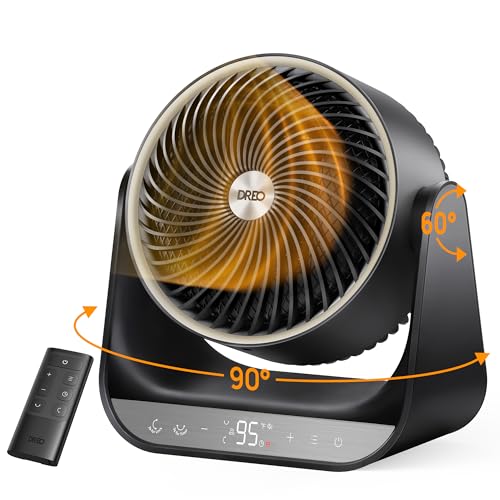
DREO Whole Room Heater, 3D Oscillating Ceramic Space Heater (Black)
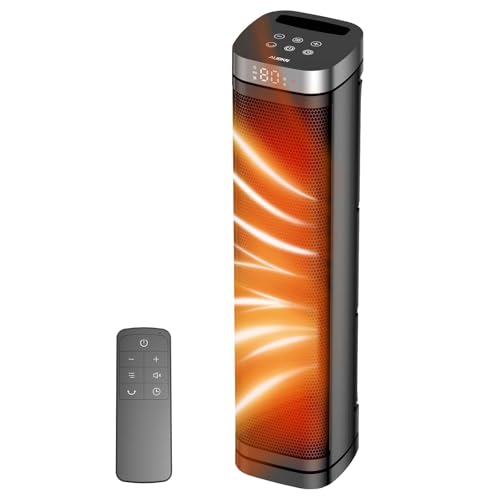
AUBKN 1500W X-Large Electric Space Heater, 24-Inch Tower

Heat Storm Wave Infrared Floor-to-Wall Space Heater with Feet

FLANUR Smart Portable Electric Space Heater, WiFi and Voice (Black)

FLANUR 1500W Smart Space Heater for Large Room (Black)
A Deeper Look At The Lineup
The Air Choice tower earns its spot for one simple reason: it pairs genuine infrared heat with the kind of wood-tone finish that doesn’t look out of place next to a nightstand or bookshelf. The 1500W rating covers a 400 sq ft living room on a standard 15-amp circuit, and the unit stays narrow enough to slide into a corner without dominating the floor plan.
Three operating modes give you honest flexibility. ECO mode is the everyday choice for most bedrooms and offices, Low (1000W) handles shoulder-season mornings, and High (1500W) is the option for genuinely cold rooms. The included remote and built-in thermostat mean you can set it once and mostly forget it, which is the whole point of a room heater this size.
Positive Takeaways
- Infrared quartz tubes deliver warmth almost immediately, so the room feels comfortable within a minute of power-on.
- Walnut cabinet blends with wood furniture, unlike most plastic tower heaters.
- ECO mode trims power use once the room reaches your target temperature.
- Remote, thermostat, and a 12-hour timer let you tune a full day’s schedule from the couch.
- Tower footprint keeps the heater out of foot-traffic zones in smaller rooms.
Things To Consider
- Plastic base and grill mean careful dusting around the intake vents keeps airflow steady over time.
- Some users in poorly insulated older homes may find the 1500W output strained at the edges of a 400 sq ft space.
Key Specs
Who It Suits Best
Anyone heating a primary living space, bedroom, or finished basement who values a furniture-friendly finish and quick warm-up time.
Where Another Pick Suits Better
For an uninsulated garage or workshop, the Dura Heat EUH1465 Electric Forced Air Heater with Pivoting Base handles draftier, harder-working spaces with a tougher steel body.
Most room heaters on this list live happily in a living room. The Dura Heat EUH1465 lives happily in a place where the other ones would not survive the first month. A steel body, ceramic heating element, and high-velocity fan make this the right pick for a detached garage, basement workshop, or greenhouse where the air is cold and the floor is concrete.
The pivoting base gives you directional control, which matters when you only need to warm a workbench, not the whole room. A 6 ft power cord gives placement flexibility, and a built-in thermostat cycles the unit off once the area hits temperature, saving you from leaving it running during a long Saturday project.
A Strong Showing
- 5,120 BTU output moves real heat into cold, drafty spaces up to 250 sq ft.
- Steel cabinet tolerates bumps and tool-room conditions that would destroy a plastic tower.
- Pivoting base aims the airflow where you actually need it.
- Safety shut-off cuts power if the unit overheats or tips.
Worth Noting
- Yellow industrial finish looks out of place in a finished living area.
- High-velocity fan is loud enough to be noticeable in a quiet home office.
- No remote or timer, so all adjustments happen at the unit itself.
Made For
Homeowners and hobbyists heating a 250 to 400 sq ft garage, basement workshop, or three-season greenhouse where durability matters more than aesthetics.
Skip It When
If the goal is quiet bedroom warmth and a furniture-friendly look, the Air Choice Infrared Space Heater is a much better daily companion.
Most tower heaters pivot left to right, then leave the ceiling and the floor to fend for themselves. The DREO Whole Room Heater adds a second axis of motion: 60° vertical and 90° horizontal oscillation working together to push air into corners a single-axis unit never reaches. For an open-concept living area around 400 sq ft, that 3D movement makes a real difference in how evenly the room warms up.
Three heat settings and three fan-only settings give you genuine year-round value, since the fan portion of the unit pulls duty in summer too. PTC ceramic heating is a self-regulating element that cools slightly as airflow increases, which is one reason this category of heater tends to feel more stable in long sessions than older wire-coil designs.
A Few Strong Suits
- Combined vertical and horizontal oscillation reduces the cold-spot problem common in taller rooms.
- 12 ft/s airflow reaches across open layouts without needing a second heater.
- Three heat plus three fan settings cover both winter and shoulder-season use.
- PTC ceramic element feels more stable in continuous operation than older coil designs.
Trade Offs
- Tower height requires a stable spot away from kids and curious pets.
- Higher output setting is audible during phone calls in a small home office.
Feature Snapshot
Right Fit For
Households with open-plan living areas where a single-direction tower leaves the far couch cold, and anyone who wants the same unit to double as a summer fan.
Consider Something Else When
If you want full app and voice integration, the FLANUR Smart Portable Electric Space Heater handles the same room with better smart-home connectivity.
The 24-inch tower format matters more than it sounds. Extra height lets the heating element sit higher off the floor, where warm air actually belongs, and gives the AUBKN space to spread controls across a clean front panel. The result is a heater that fills a 400 sq ft bedroom or home office without crowding the nightstand.
70° oscillation covers a wider sweep than basic 45° towers, and the 12-hour timer is genuinely useful for falling asleep in a warm room and waking up in a cooler one. ECO mode handles day-to-day cycling, and the included remote is the kind of detail you stop noticing, which is the highest praise for any heater remote.
Why It Works Well
- 24-inch height pushes heat into the upper part of the room where it circulates naturally.
- 1 to 12 hour programmable timer handles overnight comfort without leaving the unit running all night.
- ECO thermostat mode balances warmth and energy use across long workdays.
- PTC ceramic technology heats up in seconds for fast morning warm-up.
Room For Improvement
- Taller footprint needs a stable spot away from doorways to avoid bumps.
- Lightweight plastic body, so wall or shelf mounting is not practical.
Quick Facts
Who Will Love This
Anyone heating a 400 sq ft bedroom or home office who wants more scheduling control than a basic on-and-off tower provides.
A Better Fit Elsewhere
For a wall-mounted, low-draw option in a smaller room, the Heat Storm Wave Infrared Floor-to-Wall Space Heater with Feet uses less juice and clears the floor entirely.
Small rooms have a way of being dominated by the very appliance meant to make them comfortable. The Heat Storm Wave solves that problem with a 13-inch-wide profile that either sits on attachable feet on the floor or mounts flat against a wall, turning wasted wall space into usable warmth.
500 to 1000W output is a real feature, not a compromise. In a smaller bedroom, the lower setting keeps the room comfortable without tripping breakers when you run a hair dryer or space heater on the same circuit. The exterior stays safe to the touch, which is one of those details parents and pet owners genuinely care about.
Practical Pluses
- Wall-mount or freestanding setup keeps floor space clear.
- 1000W draw plays nicely with older 15-amp circuits running other devices.
- Cool-touch exterior is safer around children and pets.
- Two power modes let you choose between background warmth and full heating.
Minor Gripes
- Lower wattage means longer warm-up times in cold, drafty spaces.
- Remote sensor line-of-sight required for reliable control from across the room.
At A Glance
Perfect Match For
Apartment dwellers and nursery owners who need reliable warmth in a smaller bedroom without giving up floor space or overloading a shared circuit.
Not Your Match When
For a larger living area that needs full 1500W output, the DREO Whole Room Heater, 3D Oscillating Ceramic Space Heater (Black) is the stronger choice.
Smart-home households expect a heater to fit the same routines as the lights, the locks, and the thermostat. The FLANUR smart portable heater leans into that expectation. App control via the Havaworks app, voice compatibility with Alexa and Google Home, and a 12-hour timer let you build a heating schedule that runs whether you remember to turn the unit on or not.
Four operating modes cover the realistic range: a quiet sleep mode, ECO thermostat cycling, and two higher output steps for full-room heating. The 36 dB rating on the lowest setting is genuinely quiet, which puts this unit in the running for nurseries and bedroom use where a loud fan is a deal-breaker.
Where It Delivers
- Voice and app control integrate with existing smart-home routines.
- 36 dB lowest-setting operation stays quiet enough for light sleepers.
- LED display shows the current room temperature at a glance.
- PTC ceramic element responds fast and self-regulates for long sessions.
Points To Keep In Mind
- Smart features add setup time and require a 2.4 GHz Wi-Fi network.
- Companion app is the only path to advanced scheduling, with limited on-unit controls.
Built With In Mind
Anyone already running Alexa or Google Home routines who wants a heater that joins the existing smart ecosystem instead of standing apart from it.
Another Choice May Suit
For a more powerful smart option in a larger living room, the FLANUR 1500W Smart Space Heater for Large Room delivers stronger output with the same connected feature set.
The bigger sibling to FLANUR’s smart portable, this 1500W tower pushes heat into rooms up to 300 sq ft with the same connected controls that make the smaller version so useful. PTC ceramic technology generates that warm-air blast within seconds, which is the difference between a heater you actually use in the morning and one that sits unplugged until February.
Five operating modes feel generous until you start using them, then they feel necessary. ECO thermostat cycling handles day-to-day comfort, while the higher output steps cover quick warm-ups, larger rooms, and drafty old-house mornings. The 12-hour timer is the unsung feature here, since you can preheat a den before you walk in the door.
Well-Handled Touches
- 1500W output covers a 300 sq ft living room or den with comfortable margin.
- Five operating modes cover realistic day-to-day scenarios, not just marketing bullet points.
- Wi-Fi and voice integration match the rest of a smart-home setup.
- Quiet operation on lower settings keeps it usable in open-plan homes.
Honest Caveats
- Higher-output setting draws full 1500W, so pairing with another high-draw appliance on the same circuit may trip a breaker.
- Smart features add little value to households without an existing connected ecosystem.
Feature Overview
Whose Shelf It Belongs On
Smart-home households heating a 300 to 400 sq ft living room who want richer mode options than a basic tower can provide.
Look Elsewhere When
For a quieter, lower-draw option in a smaller bedroom, the Heat Storm Wave Infrared Floor-to-Wall Space Heater with Feet is a smarter fit.
What To Weigh Before Choosing A 400 Sq Ft Space Heater
Sizing And Output In Real Terms
A 400 sq ft room is bigger than most bedrooms and smaller than most living rooms, which puts it right in the sweet spot for a standard 1500W unit on a 120V circuit. Anything lower than 1500W will keep working harder and may not catch up on a cold morning, especially in older homes with thinner insulation. Higher output usually means a 240V garage-style unit, which trades plug-and-play convenience for raw power.
Heating Element Type
Infrared and PTC ceramic are the two main types in this category. Infrared heaters warm objects and people directly, so they feel warm almost instantly and work well in rooms with high ceilings. PTC ceramic elements warm the air through a self-regulating resistor that cools slightly as airflow increases, which makes them a more comfortable pick for long sessions in a closed room.
Noise, Controls, And Smart Features
Noise matters more than most spec sheets admit. A high-velocity fan is fine in a workshop and miserable in a nursery, while a low-draw ceramic tower can disappear into a bedroom. Remote control, timers, and thermostat cycling are the features that separate a heater you actually use from one that ends up in a closet. For smart-home households, app and voice integration are worth the small setup cost.
Where The Heater Will Actually Live
Floor space, wall access, and proximity to children or pets all shape the right form factor. A wall-mounted infrared unit clears the floor entirely, while a tall tower distributes heat better in a high-ceiling room. For an uninsulated garage, durability matters more than appearance, which is why the right pick there is rarely the right pick in a finished living room.
Common Shopping Slip Ups And Upgrade Payoff
Where Shoppers Go Wrong
The most common mistake is choosing a heater based on peak wattage without checking the actual room size and insulation. A 1500W unit in a drafty 400 sq ft sunroom will run nonstop and still leave you cold, while the same unit in a well-insulated bedroom will cycle off and save energy. Always cross-check the manufacturer’s recommended coverage area against your own room, and remember that open floor plans count as larger rooms for heating purposes.
What The Higher Tier Buys
Stepping up to a more expensive unit usually pays off in three places: better thermostats, more accurate temperature cycling, and quieter fans. Premium models also tend to include better safety features like tip-over shutoff and cool-touch cabinets, which matter most in homes with kids or pets. The honest case for paying more is that a well-built heater will still be running five winters from now, while a bargain unit often lasts one.