

Inline duct fans rarely get the spotlight, yet a 4 inch model can quietly fix a stuffy bathroom, a steamy basement workshop, or a grow tent that runs too warm. Choosing the wrong one leaves you with a noisy box that doesn’t move enough air, or a strong performer that overpowers a small space. This roundup walks through seven solid options so you can match airflow, noise, and control to your specific setup without overpaying or undersizing.
How The Shortlist Stacks Up

Tjernlund M-4 Metal Inline Duct Booster Fan 4 in

VEVOR Inline Duct Fan 4-Inch 205 CFM with Controller

Lwoxvzjk 4 Inch Inline Duct Fan 280 CFM

VIVOSUN G4 Air Filtration Kit with AeroZesh Fan

iPower 4 Inch Inline Booster Duct Fan 100 CFM
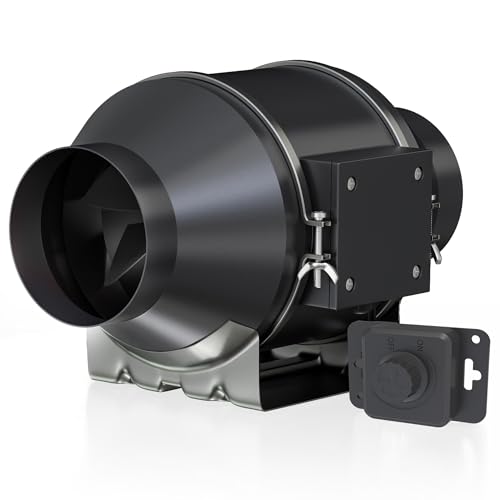
Toolazy 4 Inch Inline Duct Fan 214 CFM Variable Speed

Voltset 4 Inch Duct Fan 280 CFM Inline Exhaust
Inside Each Recommended Option
The Tjernlund M-4 sits at the top of the list because it tackles one of the trickiest problems in small-scale ventilation: pushing air through a long stretch of ductwork without sounding like a jet engine. The 200 CFM rating is meaningful, but the real story is static pressure, which is the fan’s ability to keep air moving when the duct is narrow, bent, or runs further than a few feet. In a basement bathroom venting up through a long horizontal run, that pressure matters more than raw airflow on paper.
The metal housing feels closer to a commercial-grade unit than most residential boosters, and it ships with a mounting bracket and a plug-in cord. Pairing it with a Tjernlund wireless speed control gives you variable output without hardwiring, which most homeowners will appreciate. The trade-off is a higher price tag than plastic-bodied options like the iPower or Toolazy models, and a heavier body that wants solid mounting.
A Few Strong Suits
- 200 CFM output with strong static pressure for longer duct runs
- All-metal housing holds up to heat and vibration in attic or basement installs
- Plug-in cord pairs cleanly with a wireless speed controller for variable output
- 4 inch inlet and outlet fits standard rigid and flexible ducting
- Low-noise operation makes it viable near living spaces
Worth Noting
- Heavier than plastic-bodied boosters, so you want secure mounting hardware
- Costs noticeably more than entry-level options for similar airflow numbers
- Speed controller is sold separately in most bundles
Key Specs
Who It Suits Best
Homeowners running a bathroom, kitchen, or workshop vent through a long or twisty duct who want quiet operation and don’t mind paying for a metal body.
Consider Something Else When
The VIVOSUN G4 Air Filtration Kit is a better starting point if you’re setting up a grow tent from scratch and need the fan, filter, ducting, and controller as one bundle.
The VEVOR 4 inch inline duct fan is the pick for anyone who wants a fan that thinks for itself. A built-in temperature and humidity controller lets the unit ramp up or throttle back based on conditions in the room, so you don’t have to babysit a dial. In a hydroponic tent or a basement workshop where heat and moisture climb fast, that automation removes one more thing from your mental load.
The 205 CFM output sits comfortably in the middle of the pack, and the EC motor (a brushless design that runs cooler and uses less electricity than traditional AC motors) keeps noise down to around 28 dB at lower speeds. Owners commonly find the controller cable on the shorter side, so plan for placement close to your intake or exhaust port. Compared to the Tjernlund M-4, this is a more automated option but with a plastic-bodied construction.
Key Advantages
- Built-in temperature and humidity sensor for hands-free fan response
- EC motor delivers strong airflow while drawing less power than AC alternatives
- Low 28 dB operation keeps it livable in bedrooms and offices
- 205 CFM handles grow tents, kitchens, and basement rooms up to mid-size
- Programmable settings reduce the need for a separate controller unit
Trade Offs
- Sensor cable runs short, so placement near the duct is almost required
- Plastic housing won’t dissipate heat as well as the Tjernlund’s metal body
- Programming interface is functional rather than intuitive
Feature Snapshot
Built With In Mind
Growers and basement tinkerers who want set-and-forget climate control without buying a separate thermostat or fan speed module.
A Better Fit Elsewhere
The Toolazy 4 Inch Inline Duct Fan with its 0–100% manual speed controller works better if you want direct tactile control rather than automated sensor-based ramping.
The Lwoxvzjk fan is a brute. With a 2,200 RPM motor pushing 280 CFM, it claims a room-air exchange for a 100 square foot space in about three minutes, which makes it a serious contender when you need air moving and you need it now. The aerodynamic blade design is the spec worth noting: a faster-spinning fan is useless if it just whines, so the engineering on the impeller directly affects how tolerable the unit is to live with.
This one feels aimed at people who already know their airflow math. If you’re running a sealed grow room or venting a workshop with soldering fumes, you want a fan that won’t bog down when the duct adds resistance. For most bathrooms, the airflow will be overkill. Compared to the Tjernlund M-4, the Lwoxvzjk trades quiet metal construction for raw power, and that trade-off is worth understanding before you buy.
Positive Points
- 280 CFM output is the highest in this roundup for 4 inch ducting
- 2,200 RPM motor handles restrictive ductwork and carbon filter loads
- Exchanges a 100 sq ft room’s air roughly every three minutes
- Compact housing fits into ceiling joist cavities
Points To Keep In Mind
- Higher airflow comes with more audible noise at full speed
- No integrated speed controller in the base package
- Brand is less established than Tjernlund, iPower, or VEVOR
Right Fit For
Experienced growers and DIYers running sealed environments where maximum air exchange matters more than whisper-quiet operation.
Skip It When
The iPower 4 Inch Inline Booster Duct Fan is a more reasonable match for a small bathroom or closet where 100 CFM is plenty and noise matters more than muscle.
The VIVOSUN G4 kit is a different kind of product from the rest of this list. Instead of just a fan, you get the AeroZesh 4 inch inline duct fan, an E12 speed controller, a 4 inch black carbon filter, and 8 feet of ducting in one box. For someone starting a grow tent from absolute zero, the convenience of knowing every component is sized to work with the others is genuinely valuable.
The carbon filter is the unsung hero here. It scrubs odor before air exits the tent, which matters in apartments or attached homes where smell is a real concern. The included speed controller gives you variable output without buying a separate module. The honest read is that any single component in the kit could be outclassed by a standalone purchase, but you’d spend more time sourcing parts and confirming compatibility. Compared to the VEVOR unit, this is a more complete starter package but with less automation built into the fan itself.
Real Benefits
- All-in-one bundle removes compatibility guesswork for first-time growers
- Carbon filter handles odor before air leaves the tent
- Included speed controller adds variable output at no extra cost
- 8 feet of ducting covers most small tent layouts
- AeroZesh fan runs quietly enough for indoor use
A Few Limitations
- Individual components may underperform standalone premium options
- Carbon filter needs replacement every 12 to 18 months with regular use
- Bulkier shipping due to multi-piece packaging
Quick Facts
Best Suited To
First-time growers setting up a 2×2 or 4×4 tent who want one box that covers the core ventilation pieces without piecing parts together.
Reach For A Different Pick When
The Tjernlund M-4 is the stronger standalone fan choice for whole-house ventilation projects like bathroom or kitchen exhaust retrofits.
The iPower 4 inch inline booster is the entry-level option that handles modest jobs without making you feel like you overpaid. At 100 CFM, it isn’t going to ventilate a sealed grow room, but for boosting airflow through a long bathroom duct run, clearing kitchen steam, or moving air in a small closet, it gets the job done. The permanently lubricated bearing means you won’t be greasing motor shafts every few months.
The balanced centrifugal impeller is a spec worth understanding: it means the fan blades are weighted to reduce vibration, which directly affects noise and bearing life. In a quiet home, that balance shows up as a less annoying hum compared to cheaper unbalanced units. For most people, this is a sensible pick for light-duty boosting rather than primary ventilation, and that’s an honest distinction to make before buying.
Notable Gains
- 100 CFM is plenty for small bathrooms, closets, and duct boosting
- Permanently lubricated bearing means no scheduled motor maintenance
- Balanced impeller reduces vibration and operational noise
- Lightweight housing installs easily in tight ceiling cavities
Honest Caveats
- 100 CFM falls short for sealed grow tents or large rooms
- Plastic housing feels less durable than the Tjernlund metal body
- No variable speed control included in the base package
Whose Shelf It Belongs On
Homeowners who need to boost airflow through an existing duct run, or renters wanting a quiet, low-impact install they can take with them.
Not Your Match When
The Voltset 4 Inch Duct Fan delivers nearly three times the airflow at 280 CFM if you need real ventilation muscle for a workshop or large grow space.
The Toolazy fan is the middle-of-the-road choice that does a lot of things well without excelling in any one area. The standout feature is the included 0–100% variable speed controller, which gives you full manual control over output. In a home office or bedroom where you want ventilation during the day but near-silence at night, that range is genuinely useful.
The EC motor at 27 dBA is among the quietest in this roundup, which is a meaningful spec for noise-sensitive installs. The 214 CFM output handles small to medium spaces up to about 100 square feet. Where the Lwoxvzjk offers more raw power and the iPower offers a lower cost, the Toolazy strikes a balance that suits most common installations. You may find the speed controller takes some trial and error to dial in for specific rooms.
Notable Upsides
- 0–100% variable speed controller included in the box
- EC motor runs at a quiet 27 dBA, ideal for living spaces
- 214 CFM suits rooms up to 100 square feet
- Versatile across grow tents, bathrooms, basements, and HVAC boosting
Things To Consider
- Speed controller requires manual adjustment, no sensor automation
- Mid-tier airflow won’t match the 280 CFM units in this list
- Plastic body may discolor over time in high-heat installs
Spec Overview
Who Will Love This
Homeowners and hobbyists who want one fan that flexes from quiet nighttime operation to full daytime airflow without buying extra parts.
Where Another Pick Suits Better
The VEVOR 4 inch inline duct fan with its temperature and humidity sensor is a smarter pick if you want automated, set-and-forget operation.
The Voltset 4 inch duct fan shares the 280 CFM top spot in this roundup with the Lwoxvzjk, but it leans into noise reduction differently. The 30 dB rating is achieved through what the manufacturer calls advanced noise reduction technology, though in practice that means a balanced impeller and housing dampeners. For a garage or workshop where you want strong exhaust without screaming levels of fan noise, this is a reasonable balance.
The 2,200 RPM motor delivers the kind of airflow that handles a grow tent, a workshop with multiple heat sources, or a basement with persistent moisture. This fan is overkill for a typical bathroom, and you may find it louder than the EC-motor options in quieter rooms. Compared to the Lwoxvzjk, the Voltset offers a slightly more refined noise profile but otherwise plays in the same high-airflow category.
The Upside
- 280 CFM handles grow tents, garages, and demanding venting jobs
- 2,200 RPM motor pushes through restrictive ductwork and filters
- 30 dB operation is competitive for a fan at this airflow level
- Inline form factor fits standard 4 inch ducting for retrofit installs
Less Ideal Details
- More noise than EC-motor options like the Toolazy at low speeds
- Lacks integrated speed control in the base unit
- Plastic components may not hold up as long as metal alternatives
Perfect Match For
Workshop owners and serious growers who need serious airflow and can tolerate moderate fan noise in exchange for strong exhaust performance.
Swap It Out When
The iPower 4 inch inline booster is a more proportionate choice for a small bathroom or closet where 100 CFM covers the load without excess.
Picking the Right 4 Inch Inline Duct Fan for Your Space
Before comparing models, it helps to know what “inline duct fan” actually means. An inline fan installs inside your ductwork, between the room and the outside vent, rather than sitting on a wall or window. The advantage is that it pushes or pulls air through the duct more effectively than a passive vent or a weaker wall-mounted exhaust, and it does so without taking up living space.
Airflow and CFM
CFM stands for cubic feet per minute, and it measures how much air the fan moves in sixty seconds. A 100 CFM fan works for a small bathroom or closet, while a 280 CFM unit is the right scale for a grow tent or workshop. Match the CFM to your room size, but also account for duct length and bends, which reduce effective airflow.
Noise and Motor Type
AC motors (alternating current, the traditional fan design) tend to be louder and run hotter than EC motors (electronically commutated, a brushless design). If you want quiet operation, look for sub-30 dB ratings and EC motor construction. The Toolazy and VEVOR models both lean into that quiet EC approach.
Speed Control and Automation
A variable speed controller gives you manual control over output, which is useful when you want different airflow levels at different times of day. An automated temperature and humidity controller, like the one built into the VEVOR, adjusts the fan based on real conditions. Manual controls cost less; automated ones cost more but reduce hands-on management.
Build Quality and Installation
Metal housings, like the Tjernlund M-4, dissipate heat better and last longer in demanding installs. Plastic bodies, like the iPower and Toolazy, are lighter and easier to mount but won’t take the same punishment. For long duct runs or high-heat environments, the heavier build pays off.
What to Watch Before You Hit Buy
A few patterns come up often when shoppers pick the wrong 4 inch inline duct fan for their setup, and most of them are avoidable with a little planning.
Pitfalls Shoppers Hit
The most common mistake is over-buying on CFM. A 280 CFM fan in a 50 square foot bathroom will be louder than necessary and may pull conditioned air out faster than you’d like. The opposite mistake is under-sizing: a 100 CFM booster can’t keep up with a sealed grow tent in summer. The middle path is calculating your room volume in cubic feet and dividing by the minutes you want a full air exchange, which gives you a target CFM.
Another slip-up is ignoring duct length. Every bend and every foot of flexible ducting reduces airflow. A fan rated at 280 CFM might deliver closer to 180 CFM after a 10 foot run with two 90-degree bends. Static pressure ratings, which the Tjernlund M-4 excels at, matter more than headline CFM in those situations.
When Paying More Pays Off
Higher-tier fans like the Tjernlund M-4 command a premium for a few specific reasons. Metal housings handle heat and vibration better, which extends service life in attic and basement installs. Quieter motors (EC designs) cost more to manufacture but reduce fatigue in living spaces. Integrated controllers, like the VEVOR’s sensor, add convenience for growers who don’t want to tune a fan manually. The upgrade pays off most when the fan runs for hours daily or lives in a noise-sensitive room.
Frequently Asked Questions
What size room does a 4 inch inline duct fan work for?
A 4 inch fan with 100 to 214 CFM covers bathrooms, small bedrooms, and closets up to about 100 square feet. Larger spaces or sealed grow tents benefit from 280 CFM models like the Lwoxvzjk or Voltset.
How loud are 4 inch inline duct fans?
Noise varies widely. EC-motor models like the Toolazy at 27 dBA and the VEVOR at 28 dB are among the quietest. Higher-CFM units with traditional AC motors tend to run louder, especially at full speed.
Can I install an inline duct fan myself?
Most 4 inch inline fans are designed for straightforward DIY installation with basic tools. You’ll need to mount the fan inside or near your duct run, secure it with the included bracket, and connect power. For hardwired installs, consult an electrician.
Do I need a speed controller for my inline duct fan?
A speed controller helps when you want variable output, such as quiet operation at night and full power during the day. Some fans like the VEVOR include built-in automation, while others like the Lwoxvzjk require a separate controller.
How often do carbon filters need replacing in a grow tent setup?
Carbon filters in a 4 inch duct line typically last 12 to 18 months with regular use, depending on humidity and odor load. The VIVOSUN G4 kit includes a filter rated for that range, and replacement filters are widely available for the same duct size.