
Ductwork is expensive, and sometimes impossible in older homes, garages, and additions. A 3 ton mini-split handles the kind of square footage a typical central air system would, yet it only needs a small wall opening, a refrigerant line, and electrical. You get room-by-room control, real winter heating from a heat pump, and noticeably lower energy waste from duct losses.
The seven systems below cover the main shapes this category takes: single-zone workhorses, ultra-efficient inverter picks, multi-room setups, and design-conscious finishes. Your climate, square footage, and whether you want one room or four will point you to the right match.
A Closer Look At The Lineup

DELLA Econo Series 35000 BTU Mini Split Air Conditioner 17 SEER2, 230V, Alexa & WiFi

TOSOT 33,600 BTU Mini-Split Air Conditioner and Heating System, 21 SEER2, Cosmo Series
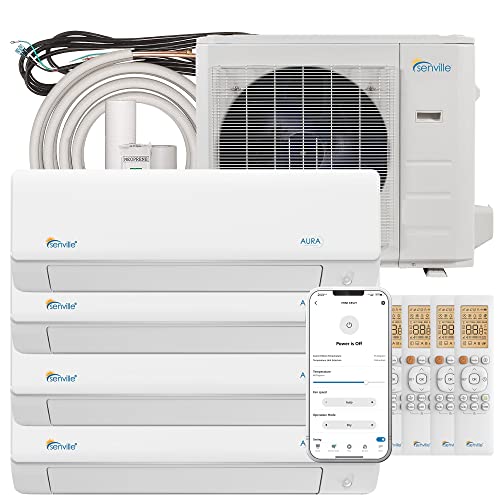
Senville Mini Split AC/Heating System, 4 Zone, White, 36000 BTU
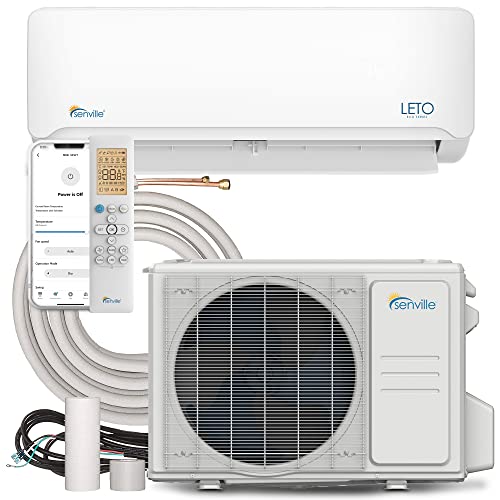
Senville LETO Mini Split Air Conditioner, Heat Pump, White, 36000 BTU

Senville AURA Mini Split Air Conditioner, Heat Pump, White, 33000 BTU

ACiQ Essentials 36000 BTU 230V 20 SEER2 Mini Split AC/Heating System, White

ACiQ Essentials 36000 BTU 230V 20 SEER2 Mini Split AC/Heating System, Black
More Details On Our Top Picks
The DELLA Econo Series is aimed at large open spaces where a single head needs to throw air a long way. Rated at 35,000 BTU and 17 SEER2, it cools up to 2,500 square feet on a 208-230V circuit, which is more than most central air handlers manage without the duct losses. For households that want one indoor head covering a great room, finished basement, or open loft, this is the kind of capacity that ends the “some rooms never get cold” complaint.
The included 16.4-foot installation kit covers most single-story layouts. WiFi and Alexa support let you nudge the temperature from bed or a return flight, and the DC inverter compressor ramps output up and down instead of hard-cycling. Compared with the TOSOT pick below, you trade a bit of efficiency for raw square footage, which matters more in hot climates with long cooling seasons.
Real-World Strengths
- 2,500 square feet of coverage handles open floor plans, finished basements, and additions that a smaller head cannot reach.
- Heat pump operation down to 5°F keeps the same unit working through shoulder seasons in most of the country.
- DC inverter compressor adjusts output smoothly, so the room holds a steady temperature without the on-off gusts older units produce.
- WiFi and Alexa integration mean you can pre-cool the great room from the car on a July afternoon.
- 16.4-foot line set in the box removes a sourcing step most homeowners forget about until installation day.
Things To Consider
- 17 SEER2 sits below the TOSOT and ACiQ models here, so the energy bill will read a little higher for the same runtime.
- 2,500 square feet assumes ideal conditions; in kitchens, sunrooms, or rooms with high ceilings, expect closer to 1,800-2,000 effective square feet.
- 208-230V power requires a dedicated circuit, and older homes without that wiring will need an electrician visit.
Key Specs
Made For
Homeowners with a single large open area, finished basement, or addition where one head needs to reach 2,000+ square feet of conditioned space.
Skip It When
The TOSOT 33,600 BTU Cosmo Series suits you better when efficiency ratings matter more than maximum square footage and you live in a milder climate.
SEER2 is the modern efficiency standard that replaced SEER, and a 21 rating puts this TOSOT comfortably above the rest of the field on this list. A higher SEER2 means the system produces more cooling for each unit of electricity, which matters most in hot climates with long cooling seasons or in homes where the mini-split will run all day.
You also get a 16-foot copper line set, app and voice control through the Gree+ ecosystem, and heating rated down to -13°F. For older homes, additions, or primary living spaces, this is the kind of efficiency that pays back the price difference in a few summers if you run the system hard.
What Stands Out
- 21 SEER2 efficiency lowers annual operating costs versus mid-rated models, especially during long cooling seasons.
- Heat output down to -13°F keeps the unit useful in cold-winter regions where cheaper heat pumps lock out.
- Gree+ app plus voice control support make scheduling and routines simple, even from outside the home.
- 16-foot copper line set arrives with the unit, simplifying installation for standard layouts.
Worth Noting
- 33,600 BTU covers around 1,500-1,800 square feet in real-world conditions, smaller than the DELLA pick above.
- Gree+ app experience depends on a stable home network and, in some homes, a separate hub.
- Higher upfront cost versus 17 SEER2 units is real, and payback depends on how often you run the system.
Who It Suits Best
Owners in hot or extreme climates who run their mini-split heavily and want the lowest possible electricity bill per cooling hour.
Look Elsewhere When
The Senville 4-Zone 36000 BTU fits better if you need independent temperature control in four separate rooms rather than one large zone.
Most 3 ton mini-splits are single-zone units, but this Senville pairs a single 36,000 BTU outdoor condenser with four 9,000 BTU indoor air handlers. Each head runs on its own thermostat, so a third-floor bedroom can stay cool while the home office stays warmer. For households that want whole-home ductless without four separate outdoor units, this layout cuts the exterior hardware to one box.
Energy Star certification and Alexa voice control are both in the package, and the AHRI certification gives the spec sheet some third-party backing. Compared to the Senville LETO pick below, you trade a single-zone efficiency focus for the ability to set four different temperatures at once.
Benefits That Matter
- Four independently controlled indoor heads let each room set its own temperature, with only one outdoor unit to mount.
- Energy Star and AHRI certification provide a third-party efficiency check rather than manufacturer claims alone.
- Alexa voice control integrates with most existing smart-home routines people already use.
Trade Offs
- Multi-zone installations take longer and need more refrigerant line work, which raises installer labor costs.
- Each head runs at 9,000 BTU, so very large rooms (over 350 square feet) may feel under-served.
- Outdoor unit size is larger than single-zone condensers, and placement on a small lot can be a real constraint.
Key Specs
Best Suited To
Households that need four separately controlled rooms, especially in homes without existing ductwork or with one-room additions that need their own thermostat.
Consider Something Else When
The DELLA Econo Series fits better if you only need to condition one large open area rather than split comfort across four rooms.
The LETO bundles four operating modes (cooling, heat pump, dehumidifier, fan, plus turbo) into a single 36,000 BTU head. The 4-in-1 setup is genuinely useful in shoulder seasons when you want to pull moisture out of a basement or push air around a sunroom without actually heating or cooling. Heat pump function holds down to 5°F, which covers most of the country except the northern Plains and upper Midwest.
The DC inverter is UL Listed and AHRI Certified, and the wall-mounted indoor unit stays quiet enough for bedrooms and offices. Where this differs from the Senville AURA below is the mode set: the LETO leans into dehumidification and fan versatility, while the AURA leans into smart-home scheduling.
Features That Help
- Four operating modes plus a turbo function cover cooling, mild heating, basement dampness, and air circulation in one head.
- Heat pump operation down to 5°F keeps the unit useful through most of the U.S. winter.
- DC inverter compressor ramps smoothly, so the room holds a steady temperature instead of cycling on and off loudly.
- UL Listed and AHRI Certified components add a layer of safety and performance verification.
Honest Caveats
- 36,000 BTU on a 110/120V circuit draws significant current, so older homes may need a circuit upgrade before installation.
- Dehumidification mode is a comfort bonus, not a whole-home dehumidifier replacement for very damp basements.
- Quieter than central air, but the outdoor condenser still produces fan noise you can hear in a quiet yard.
Key Specs
Who Should Grab It
Homeowners in mixed-humidity climates who want one head to handle summer cooling, mild winter heating, and basement moisture control.
Not Your Match When
The Senville AURA 33000 BTU suits you better if you want deeper smart-home scheduling and routines rather than dehumidification modes.
The AURA is the Senville that leans into app and voice routines, with Energy Star certification on a 208-230V DC inverter compressor. If you already run Alexa routines for lights, locks, and blinds, adding the AURA means a “bedtime” routine can drop the bedroom three degrees and the “leaving home” routine can bump the empty rooms up to save power.
At 33,000 BTU it covers a slightly smaller footprint than the LETO above, and the focus here is on the smart-home plumbing rather than dehumidification modes. UL Listed and AHRI Certified components round out a system aimed at people who want comfort control from a phone, not just a wall remote.
A Favorable Mix
- Energy Star certification on a 208-230V DC inverter means the system qualifies for utility rebates in many regions.
- Alexa and app control let you build real routines, not just one-off temperature changes from the couch.
- 33,000 BTU suits bedrooms, home offices, and primary living rooms in most mid-size homes.
Points To Keep In Mind
- Smart features depend on your home network staying up; in a power outage, the wall remote still works but routines pause.
- 33,000 BTU tops out around 1,500 square feet in real conditions, smaller than the LETO or DELLA picks.
Key Specs
Perfect Match For
Smart-home households that already use Alexa routines and want their mini-split to participate in schedules rather than just respond to a wall remote.
Swap It Out When
The Senville LETO 36000 BTU fits better when dehumidification and a larger cooling footprint matter more than voice-routine depth.
The ACiQ Essentials line is built for spaces that take a real beating: garages, workshops, converted studios, and accessory dwelling units. The 36,000 BTU head runs on 230V at 20 SEER2, with a heating range that goes well below freezing. Cooling operates from 5°F to 127°F outdoor temps, which means a non-climate-controlled shop stays workable in summer and a drafty garage stays usable in winter.
The wider operating range is the differentiator here. Most mini-splits throttle or shut off at extreme outdoor temperatures, but this one keeps going. Compared with the ACiQ black version below, you give up the dark finish for the same core cooling and heating hardware.
Real Benefits
- Heating range down to -4°F outdoor keeps the unit useful in uninsulated garages and northern workshops.
- Cooling range up to 127°F outdoor means it keeps going during heat waves when cheaper units throttle back.
- 20 SEER2 efficiency is high enough to qualify for many utility rebates in the U.S.
Practical Considerations
- 1,500-2,000 square feet of coverage assumes standard 8-foot ceilings; high-ceiling shops need more headroom in the BTU estimate.
- 230V power means older garage subpanels may need a circuit upgrade before install.
- Wall-mount head is white only in this SKU, which can look out of place in a darker studio aesthetic.
Whose Shelf It Belongs On
Garage owners, woodworkers, and home studio users who need a mini-split that does not quit when the outdoor temperature drops below zero.
Reach For A Different Pick When
The ACiQ Essentials Black version fits better if your shop or studio interior calls for a darker indoor head and you can accept the same core specs.
Most ductless heads ship in white, which can clash with darker accent walls, finished basements, and modern interiors. The black ACiQ Essentials runs the same 36,000 BTU, 20 SEER2, 230V core as the white version above but in a finish that disappears into a black feature wall or stands out cleanly in an industrial-style shop.
The R32 pre-charged line set and 16-foot kit keep installation in the same ballpark as the white SKU. Owners commonly report that the dark housing shows dust more than a white one, so wiping the grille during seasonal filter changes is worth budgeting for. For anyone who has stared at a clashing bright white head on a charcoal wall, the finish is the whole point.
Why It Works Well
- Black finish solves the “white head on a dark wall” problem in modern interiors, basements, and media rooms.
- 20 SEER2 efficiency on 36,000 BTU covers up to 2,000 square feet in standard residential conditions.
- R32 pre-charged refrigerant arrives ready to install, simplifying the line-set portion of setup.
- 16-foot installation kit covers most standard residential layouts without extra parts runs.
- WiFi support lets you adjust settings from a phone, not just the wall remote.
Small Caveats
- Black housing shows dust and fingerprints more than a white head, so seasonal wiping becomes more visible.
- 230V circuit is required, which means older homes may need a panel upgrade before installation.
Key Specs
Right Fit For
Style-conscious homeowners, media rooms, and finished basements where a white indoor head would clash with the design intent.
A Better Fit Elsewhere
The ACiQ Essentials 36000 BTU white version suits you better if you would rather have a head that hides dust and you are not designing around a specific wall color.
What To Weigh Before Choosing A 3 Ton Mini-Split
Square Footage And Climate Zone
A 3 ton unit is rated around 36,000 BTU, which fits roughly 1,500-2,000 square feet in most homes. In Phoenix or Houston, that same area can demand 20-30% more cooling capacity, so the upper end of coverage applies. In Minneapolis, the heating rating matters more than the cooling number, and you want a heat pump that holds output well below freezing, like the ACiQ Essentials pair.
Single Zone Versus Multi-Zone
A single-zone system uses one indoor head and one outdoor unit, which is simpler to install and easier on the budget. A multi-zone system like the Senville 4-Zone pairs one outdoor condenser with several indoor heads, each with its own thermostat. The trade-off is installation labor: more heads mean more refrigerant line work, more electrical, and more wall openings.
Efficiency Ratings And Operating Cost
SEER2 replaced the older SEER standard and measures cooling efficiency. A 17 SEER2 unit uses noticeably more electricity than a 21 SEER2 unit for the same cooling. Over a long cooling season, the difference shows up in the monthly bill. Energy Star certification is a quick way to confirm the unit meets stricter efficiency thresholds and may qualify for local utility rebates.
Smart Controls And Installation Realities
App and voice control are common now, but the experience depends on your home network and whether you already use Alexa or Google Home. On the installation side, confirm the electrical service at the planned location: 208-230V is standard, but some homes need a circuit upgrade. Line set length, mounting clearance for the outdoor unit, and condensate drain routing are the items most often missed before install day.
Key Considerations Across These Picks
Common Shopping Slip Ups
Sizing by maximum advertised square footage is the biggest trap. A unit rated for 2,500 square feet only hits that number with ideal ceiling height, insulation, and window orientation. Real-world coverage lands closer to 1,800 square feet. Pulling the electrical permit yourself to save cost is another common miss, since most jurisdictions require a licensed HVAC installer for the line set, and skipping that step can void the unit’s certification coverage.
What The Higher Tier Buys
Higher-tier 3 ton mini-splits cost more because of two things: better inverter compressors and wider operating ranges. A 21 SEER2 unit uses a more sophisticated compressor that ramps smoothly, holds temperature tighter, and draws less power at partial load. Wider heating range down to -13°F on the TOSOT, for example, costs more in compressor and refrigerant design than a unit that locks out at 5°F. The upgrade pays off in homes where the unit runs many hours a day or sits in a climate that punishes the lower end of the spec sheet.
Frequently Asked Questions
How many square feet does a 3 ton mini-split actually cool?
A 3 ton unit is rated for roughly 1,500-2,000 square feet in most homes, with the higher end of that range assuming 8-foot ceilings, average insulation, and standard window orientation. Sun-exposed rooms and high-ceiling spaces can drop the effective coverage by 20% or more.
Can a 3 ton mini-split heat a home in cold winters?
Heat pump models on this list heat down to 5°F (DELLA, Senville LETO), -4°F (ACiQ Essentials pair), and -13°F (TOSOT). In northern Plains or upper Midwest winters, the TOSOT or ACiQ hold capacity longer. For most of the country, any of these heat pumps covers winter without a backup heat source.
Do 3 ton mini-splits need a 220V outlet?
Most units in this category run on 208-230V power, which is a dedicated high-draw circuit similar to an electric oven or dryer. Some smaller or specific models run on 110/120V, but a true 3 ton system almost always needs the higher-voltage circuit and may require a panel upgrade in older homes.
How loud is a 3 ton mini-split indoor head?
Wall-mounted indoor heads at this capacity typically run in the 25-40 dB range on low and medium settings, which is quieter than a refrigerator hum. The outdoor condenser is louder and produces fan noise that neighbors can hear in a quiet yard, so placement on a side or back wall away from bedroom windows helps.
Is professional installation required for a 3 ton mini-split?
In most U.S. jurisdictions, a licensed HVAC installer is required for the refrigerant line work and electrical tie-in. DIY kits exist, but the certification coverage on the unit typically depends on a licensed install, and the refrigerant handling itself is regulated.