
Cooling a real home isn’t a one-size decision, and the 2.5-to-5-ton range covers a lot of ground, from a compact single-zone retrofit to a multi-position heat pump system built for a full two-story layout. This list pulls together both packaged and split-system options, plus a couple of portable units that handle apartments, bonus rooms, and rentals where a permanent install isn’t an option. Each pick solves a different problem, and reading the differences side by side makes the buying call much easier.
A Closer Look At The Lineup
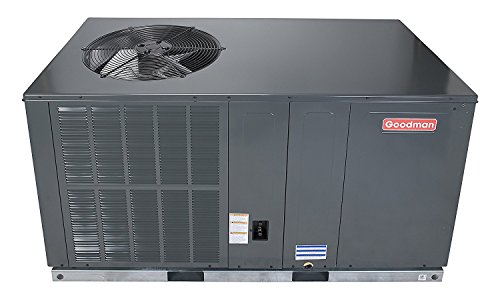
Goodman 3 TON 13.4 SEER2 Horizontal AC Only Packaged Unit (GPCH33631)

Garvee 14,000 BTU Inverter Portable Air Conditioner with Heat Pump
Mountman 10,000 BTU 4-In-1 Portable Air Conditioner
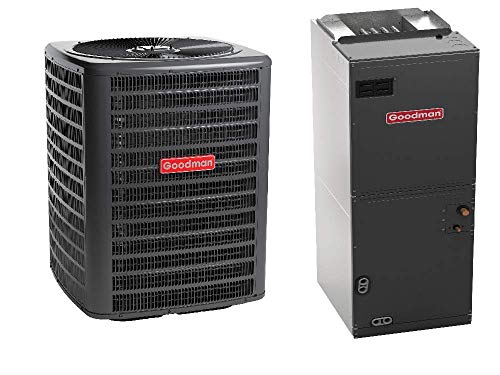
Goodman 5 TON 14.5 SEER2 Multi-Position R-32 Heat Pump System

Goodman 3.5 Ton 14.3 SEER2 R-32 Air Conditioner & Coil System

Goodman 2.5 Ton 14.3 SEER2 Air Conditioner Condenser
Goodman 3 Ton 14 Seer Air Conditioning System with Air Handler
A Deeper Look At The Lineup
The Goodman GPCH33631 takes a different approach from the split systems later in this list: every working component lives inside a single horizontal cabinet, so the whole thing tucks into a crawlspace, attic, or slab closet without the refrigerant line set that a traditional condenser needs. For a 1,500-to-1,800-square-foot single-story home without a basement, that single-cabinet design sidesteps a lot of the install headaches that go with an outdoor unit.
At 3 tons with a 13.4 SEER2 rating, the performance lands in the middle of the residential efficiency pack, and the cooling-only configuration means there’s no furnace to think about. Homeowners pairing it with a separate gas or electric heat source end up with a clean cooling system that doesn’t try to do two jobs at once.
Useful Strengths
- Single-cabinet layout removes the need for line-set routing through exterior walls
- Horizontal airflow path fits low-clearance attic and crawlspace installs
- Cooling-only design pairs cleanly with existing furnace or boiler setups
- Goodman brand parts and service networks are widely available across the U.S.
Points To Keep In Mind
- 13.4 SEER2 is on the modest side versus split-system options later in this list
- Access for filter changes and service tends to be tighter than vertical configurations
- Condensate management in a horizontal install often needs a dedicated float switch in humid climates
Whose Home It Belongs In
Homes with a tight attic or crawlspace that need a 3-ton cooling unit without splitting the system across indoor and outdoor hardware.
Swap It Out When
Homeowners with room for an outdoor pad and a separate air handler will get better long-term serviceability from the Goodman 3 Ton 14 Seer system reviewed later.
Unlike the Goodman packaged and split systems above, the Garvee sits in a different category entirely: a 14,000 BTU portable with a built-in heat pump and an inverter compressor. Dual-hose design pulls intake air from outside rather than conditioned indoor air, which usually translates to stronger cooling and slightly less negative pressure in the room.
The inverter technology ramps the compressor up and down to hold a set temperature rather than cycling on and off, so the unit often feels steadier and quieter than a fixed-speed portable. Coverage extends up to 700 square feet, which puts it in the “large room or open studio” bracket rather than whole-home territory.
Everyday Wins
- Variable-speed compressor keeps room temperature more stable through the day
- Dual-hose design reduces the hot-air leak problem common to single-hose portables
- Built-in heat pump adds a layer of supplemental heat during shoulder seasons
- Remote control and dehumidifier mode round out the year-round usefulness
Honest Caveats
- Portables still vent through a window, so a long run to the nearest window may need a custom hose kit
- You may find the rolling-cart footprint a tight fit in smaller bedrooms
- Window kit installation is a common sticking point for first-time portable AC owners
Feature Snapshot
Best Suited To
Renters and homeowners without existing ductwork who want a flexible cooling and heating option in a single floor-standing unit.
Look Elsewhere When
Anyone with a permanent outdoor pad and ductwork will see stronger whole-home performance from the Goodman 5 TON 14.5 SEER2 Heat Pump reviewed in slot four.
The Mountman steps down from the Garvee’s 14,000 BTU to a more bedroom-friendly 10,000 BTU, and the four-in-one mode lineup (cool, fan, dehumidifier, sleep) covers the full annual cycle without extra accessories. Coverage tops out around 450 square feet, which lines up well with a primary bedroom, a small home office, or a finished bonus room.
The LED display and 24-hour timer live on the unit and remote, so dialing in a quiet overnight schedule usually takes a couple of button presses. For apartment dwellers who can’t run refrigerant lines or install window units, that kind of plug-and-go operation is often the deciding factor.
Advantages To Know
- Sleep mode gently raises the setpoint overnight for quieter operation
- 24-hour timer supports whole-day scheduling without a smart plug
- Dehumidifier mode helps in coastal or basement-level climates
- Window kit and remote included, no extra accessories needed to start
Less Ideal Details
- Single-hose exhaust design won’t match the cooling efficiency of the Garvee above
- 10,000 BTU is a stretch for open-plan layouts above 450 square feet
- Drain port access is a common concern during long stretches of high humidity
Made For
Bedroom-first cooling for renters and small-space dwellers who want a single unit that handles summer heat, muggy nights, and shoulder-season air circulation.
Not Your Match When
Shoppers needing a permanent whole-home solution will find a better match in the Goodman 3.5 Ton 14.3 SEER2 split system reviewed in slot five.
Where the Garvee and Mountman handle single rooms, this Goodman system handles the entire house. The 5-ton GLZS4BA6010 condenser pairs with the AMST60DU1300 air handler, and the heat pump cycle means a single piece of equipment handles cooling in summer and supplemental heat in winter. The R-32 refrigerant is the newer formulation, which most modern installers are set up to handle.
Multi-position air handler installation means upflow, downflow, or horizontal orientation, so the same kit can drop into a basement, attic, or utility closet. For homes above 2,500 square feet, a properly matched 5-ton system tends to outperform two smaller units running constantly.
The Good Stuff
- 5-ton capacity is right-sized for larger single-family and multi-zone homes
- Heat pump design removes the need for a separate furnace in mild climates
- Multi-position air handler adapts to basement, attic, or closet installs
- R-32 refrigerant aligns with the direction the industry is moving
Trade-Offs
- 5 tons is oversized for homes under about 2,000 square feet and short-cycles in smaller spaces
- Heat pump heating output drops sharply below about 30°F in most regions
- Two-piece split install means more refrigerant line work than the packaged GPCH33631 reviewed first
Right Fit For
Larger homes with existing ductwork that need a single year-round system for cooling, mild-winter heat, and everything in between.
Reach For A Different Pick When
A smaller home will get better temperature stability and humidity control from the Goodman 3 Ton 14 Seer Air Conditioning System reviewed in slot seven.
This Goodman kit lands in the middle of the tonnage range, and the matched-pair design is its biggest practical advantage. The GLXS4BA4210 condenser ships with the CAPTA4230C3 cased evaporator coil, so the components are AHRI-matched for the stated 14.3 SEER2 rating, which is the kind of detail that quietly affects both efficiency claims and warranty registration.
At 3.5 tons, the system covers a mid-size single-family home in the 1,800-to-2,400-square-foot range without the short-cycling that a 5-ton unit would show in that footprint. R-32 refrigerant lines keep the install current with current regulatory direction.
Everyday Perks
- Factory-matched coil and condenser simplify registration and warranty steps
- 3.5-ton capacity is a strong fit for the most common mid-size home footprint
- 14.3 SEER2 lands above the basic 14 SEER baseline without stepping into premium pricing
- Cased evaporator coil shortens install time versus field-assembled alternatives
Small Caveats
- Single-stage cooling, so temperature swings may be more noticeable than inverter-driven units
- Cooling-only operation still requires a separate heating source for winter
- Coil cabinet dimensions should be confirmed against the return plenum opening before ordering
Feature Card
Who Should Grab It
Homeowners with a mid-size single-family layout who want a matched cooling system at a comfortable efficiency tier without stepping into the 5-ton bracket.
Another Choice May Suit
Smaller homes and additions around 1,200 square feet will be more efficiently served by the Goodman 2.5 Ton 14.3 SEER2 Condenser in slot six.
The 2.5-ton GLXS4BA3010 condenser is the smallest Goodman split-system option in this lineup, and the included thermostat removes a small but easy-to-forget line item from the install. At 2.5 tons, the unit targets compact homes, condo-style layouts, additions, and converted spaces in the 900-to-1,300-square-foot range.
Because the 14.3 SEER2 efficiency matches the 3.5-ton kit above, the difference between these two picks comes down to right-sizing, not performance class. In a small home, oversized equipment short-cycles, runs inefficiently, and dehumidifies poorly, so the smaller condenser often wins on comfort, not just on equipment cost.
The Practical Payoff
- 2.5-ton capacity is correctly scaled for small homes and tight footprints
- Matching 14.3 SEER2 efficiency simplifies comparison against larger Goodman siblings
- Included thermostat removes a separate purchase from the install checklist
- Smaller condenser footprint suits narrow side-yard equipment pads
Where It May Fall Short
- 2.5 tons is undersized for open floor plans above about 1,400 square feet
- Cooling-only design still requires a paired heat source for winter
- Coil and air handler selection is a separate purchase that the listing does not include
Built With In Mind
Condo owners, small-home residents, and addition builders who want a properly sized Goodman split system without paying for capacity they can’t use.
A Better Fit Elsewhere
Mid-size homes in the 1,800-to-2,400-square-foot band will be more comfortably served by the Goodman 3.5 Ton 14.3 SEER2 matched kit reviewed in slot five.
The 3-ton, 14 SEER Goodman system rounds out this list as the conservative full-install option. The kit arrives with a multi-position air handler that adapts to upflow, downflow, or horizontal orientation, and the time-tested 14 SEER efficiency sits at the baseline of what most U.S. regions still allow for new installs in 2026.
For homeowners who care more about proven reliability and a lower entry cost than about squeezing the highest possible efficiency from their equipment, this is a comfortable middle-of-the-road choice. R-410A refrigerant, single-speed operation, and a rigid SmartFrame cabinet keep the design straightforward for any installer.
A Few Strong Suits
- 3-ton capacity covers most 1,500-to-1,800-square-foot single-family homes
- Multi-position air handler adapts to attic, basement, or utility-closet layouts
- Single-speed components are simple to service and widely supported
- 10-year parts warranty applies when installed by a qualified technician and registered online
Things To Weigh Up
- 14 SEER is the federal baseline, so efficiency gains will be modest versus premium options
- R-410A is the legacy refrigerant rather than the newer R-32 used in slots four and five
- Single-speed operation may show wider temperature swings than inverter-driven systems
Feature Rundown
Perfect Match For
Homeowners who want a proven, easy-to-service Goodman full system at a comfortable efficiency tier without the premium price of higher SEER2 models.
Where Another Pick Suits Better
Buyers who want to step up to R-32 refrigerant and matched-component efficiency will find a stronger fit in the Goodman 3.5 Ton 14.3 SEER2 kit reviewed in slot five.
Picking the Right Capacity and Configuration for Your Home
Tonnage drives more of the experience than efficiency ratings do. A 2.5-ton system in a 1,000-square-foot home dehumidifies better and runs longer cycles than a 5-ton system short-cycling in the same space, even if the 5-ton unit pulls a better SEER2 number on paper. Most homes in the 1,200-to-1,800-square-foot range live comfortably in the 2.5-to-3-ton band, while layouts above 2,500 square feet usually need 4 or 5 tons of capacity, with the 3.5-ton kit landing as the popular middle ground.
Configuration matters just as much. Packaged units like the GPCH33631 collapse everything into a single cabinet, which suits tight attics and crawlspaces. Split systems pair a condenser outside with an air handler indoors, and they dominate in homes with existing ductwork because service access and airflow tuning are easier. Portable units like the Garvee and Mountman belong in their own category, since they’re a flexible workaround for renters, bonus rooms, and spaces where a permanent install isn’t an option.
Efficiency ratings tell a quieter story. SEER2 measures seasonal cooling efficiency, and the jump from a 14 SEER baseline to a 15 or 16 SEER2 system usually takes years to pay back in energy savings, depending on local utility rates and how often the system runs. R-32 refrigerant is the direction the industry is heading, and choosing it now keeps future service and parts availability on the easier side.
Mistakes Worth Dodging and Where the Upgrade Pays Off
Pitfalls Shoppers Hit
Oversizing is the most common call, and it shows up as a system that cycles on and off, leaves the air feeling clammy, and quietly inflates the equipment cost. Undersizing is the other side of the same coin, and the symptom is a unit that runs constantly without ever quite catching up on the hottest afternoons. Buying a condenser without planning for the coil and air handler match is the third pitfall, and it tends to surface as a denied warranty claim or a stated efficiency rating that the real install never reaches.
Where The Extra Money Goes
Higher-tier 3 to 5 ton AC units earn their premium through better components rather than magic. A 15-to-16 SEER2 split system typically pairs a multi-speed compressor with a variable-speed blower, and the result is steadier temperatures, better dehumidification, and quieter operation. The upgrade pays off most in homes where the system runs heavily through the summer, while part-time residences often see diminishing returns once the basics of right-sizing and matched components are covered.
Frequently Asked Questions
How do I know what tonnage my home needs?
A Manual J load calculation from a qualified HVAC installer is the most reliable approach, and it factors in square footage, insulation, window orientation, and local climate. As a rough starting point, 2.5 tons covers most 900-to-1,300-square-foot homes, 3 tons fits 1,400 to 1,800 square feet, 3.5 tons suits 1,800 to 2,400, and 4 to 5 tons is the right band for layouts above 2,500 square feet.
What is the difference between SEER and SEER2?
SEER2 is the updated testing standard that replaced the older SEER rating, and SEER2 numbers run a bit lower than equivalent SEER ratings on the same equipment. When comparing models, stay within the same rating system so the comparison stays accurate, and look for the AHRI certificate when you want to confirm matched-system performance.
Can a portable AC cool a whole house?
A portable unit like the Garvee or Mountman cools a single room or open area effectively, but it isn’t designed to push air through a home’s ductwork or replace a central system. For whole-home comfort in a multi-room layout, a split or packaged system in the 3 to 5 ton range will perform much more consistently.
Do I need a heat pump or just an air conditioner?
In mild climates where winter temperatures rarely drop below freezing for long stretches, a heat pump handles both cooling and heating in a single system. In regions with sustained sub-freezing weather, a cooling-only system paired with a furnace or boiler usually keeps operating costs lower and avoids relying on supplemental electric heat.
Is R-32 refrigerant worth choosing over R-410A?
R-32 has a lower global warming potential than R-410A and is the direction new residential equipment is moving, which helps with long-term service and parts availability. For a 2026 install, R-32 is a sensible default unless a specific reason points to a legacy R-410A system.