
A tired pump turns pool ownership into a chore. Cloudy water, sluggish circulation, and rising power bills all trace back to undersized or outdated equipment. Upgrading to a properly matched 2hp pump changes the daily rhythm: clearer water, faster turnover, and smarter energy use across a long swim season.
The five picks below cover a real spread of needs, from compact above-ground setups to dual-speed workhorses and a precision replacement part for existing systems. Each one earns its spot for a specific pool owner.
How The Shortlist Stacks Up

VIVOHOME 1.0 HP 5280 GPH Above Ground Pool Pump 115V

VIVOHOME Self-Priming In/Above Ground Pool Pump 6360 GPH

VIVOHOME 1.5HP Dual Speed Pool Pump 115V
VIVOHOME 2.0HP Dual Speed Pool Pump 230V

Zodiac R0479604 2-HP Impeller Kit for FloPro FHPM
A Closer Look At Each Pick
The first VIVOHOME on this list targets the smaller end of the pool world. Its 1.0 HP motor pushes 5,280 gallons per hour, which is more than enough to cycle a typical above-ground pool in a reasonable window. The 115V plug-in design means no special wiring, which keeps installation approachable for first-time owners.
For a backyard with a 15-foot round or oval above-ground setup, this unit handles the daily workload without overworking. The thermoplastic body tolerates heat and pool chemicals, and the built-in strainer basket catches debris before it reaches the impeller, the spinning component that drives water through the pump. Most shoppers set it up within the recommended 10 feet of the pool and run it on a basic outlet timer.
What Helps Most
- 5,280 GPH flow rate suits small to mid-size above-ground pools
- 115V outlet-friendly setup avoids hardwiring for most owners
- Chemical-resistant thermoplastic housing extends service life
- Transparent strainer basket makes debris checks quick
Points To Keep In Mind
- Not designed for in-ground pools or setups needing higher pressure
- Strainer basket needs routine clearing during heavy leaf seasons
Feature Snapshot
Best Suited To
First-time above-ground pool owners running smaller setups on a standard 115V circuit.
Skip It When
You own a Jandy FloPro pump needing an impeller refresh, since the Zodiac R0479604 2-HP Impeller Kit is the targeted match.
Stepping up from the entry-level option, this 1.5 HP self-priming pump adds genuine flexibility. Self-priming means the pump can evacuate air from its housing and pull water on its own after being filled initially, removing the manual priming step that frustrates many first-time owners. The included 1.25-inch, 1.5-inch, and 2.0-inch union fittings cover most residential plumbing configurations.
With 6,360 GPH and a 52.5 ft max head (the maximum vertical lift the pump can push water), this unit moves comfortably between in-ground and larger above-ground installations. The integrated timer offers nine scheduling windows, from two hours up to 24, which makes off-peak operation realistic. Compared to the smaller 1.0 HP sibling above, the upgrade here is real headroom and automation, not just a price bump.
Reasons It Performs
- Self-priming design removes the manual priming step after initial fill
- Three union sizes cover common residential plumbing setups
- Built-in timer supports off-peak energy use
- 52.5 ft max head handles elevated or distant equipment pads
Honest Caveats
- More wiring considerations than a basic 115V model
- Larger footprint may not suit tight utility closets
Feature Snapshot
Whose Pool It Belongs In
Owners juggling between in-ground and large above-ground installations who want a single pump that adapts.
Reach For A Different Pick When
You want remote-controlled dual-speed efficiency, in which case the VIVOHOME 1.5HP Dual Speed Pool Pump 115V adds that convenience.
Dual-speed pumps are where meaningful energy savings start to show up. This 1.5 HP model runs high speed at 6,024 GPH for vacuuming and water-feature demand, then drops to a low-speed 3,648 GPH mode that handles daily filtration at a fraction of the power. The 197 ft RF (radio frequency) remote control reaches across most yards, so you can adjust speed or timer from the patio without walking to the equipment pad.
Up to four time segments can be programmed, mixing high and low speeds across the day. For most pools that run 8 to 12 hours daily, the low-speed mode covers the bulk of that window. The trade-off shows up when comparing it to the non-remote VIVOHOME above: you pay a little more for the wireless control, but you get scheduling precision that older single-speed pumps cannot match.
What Stands Out
- Dual-speed operation trims long-term energy costs
- 197 ft RF remote avoids trips to the equipment pad
- Four programmable time segments per day
- Self-priming design simplifies startup after off-season
Trade-Offs To Consider
- Low-speed 13.1 ft max head limits some vertical plumbing
- Remote pairing may need a reset after extended power loss
Right Fit For
Energy-conscious owners who want finer scheduling control without stepping up to 230V wiring.
Look Elsewhere When
You need the strongest flow and head for a large in-ground pool, where the VIVOHOME 2.0HP Dual Speed Pool Pump 230V delivers more lift.
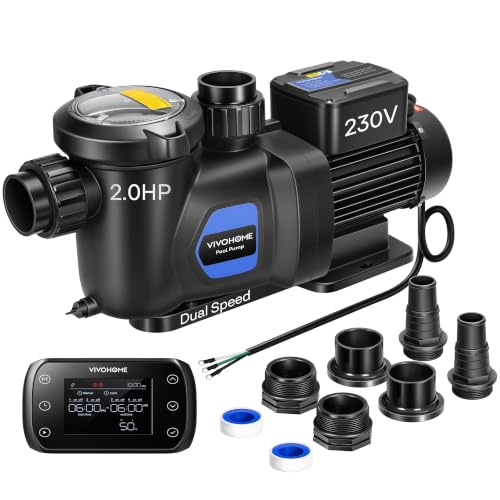
At the top of the lineup sits a true workhorse. The 2.0 HP motor pushes 6,810 GPH on high speed and lifts water up to 65.6 ft, which is meaningful headroom for pools with elevated spas, long plumbing runs, or solar heating arrays. The 230V requirement means a dedicated circuit and proper breaker sizing, so this is not a drop-in replacement for a basic 115V outlet.
The dual-speed design mirrors the smaller sibling: high for vacuuming and water features, low for daily filtration at 3,648 GPH. The same 197 ft RF remote and four-segment timer carry over. Compared to the 1.5 HP dual-speed unit, the real gain is pressure and flow, which matters most in larger in-ground installations. For most above-ground setups, the additional power is more than the plumbing can usefully absorb.
What Earns Its Place
- 65.6 ft max head supports elevated equipment and long pipe runs
- 6,810 GPH high-speed flow handles large in-ground volumes
- Dual-speed logic balances power with efficiency
- RF remote simplifies day-to-day control
Things To Weigh Up
- 230V wiring needs a qualified electrician for most homes
- High-speed draw can be more than smaller pools need
Made For
Large in-ground pool owners with elevated equipment pads, attached spas, or extended plumbing to manage.
A Better Fit Elsewhere
Smaller above-ground pools do not need this much lift, and the 1.0 HP VIVOHOME above is a more proportionate match.
Not every pool owner needs a new pump. Some need a precise replacement part to bring an existing unit back to spec. The Zodiac R0479604 kit is a factory-matched 2 HP impeller, screw, and backplate O-ring bundle built specifically for the Jandy FloPro FHPM series. Using the correct impeller matters because mismatched components can drop flow, starve the motor, or trigger repeated priming failures.
The kit includes the impeller, mounting screw, and backplate O-ring, which covers the three wear points most commonly responsible for declining performance. For owners already running a FloPro FHPM, this is often a smarter move than replacing the entire pump. If you are choosing a brand-new system from scratch, none of the VIVOHOME models above integrate with this specific replacement kit.
Real-World Strengths
- Factory-matched to Jandy FloPro FHPM specifications
- Bundle covers the three most common wear components
- Restores original flow without replacing the whole pump
Practical Considerations
- Only fits the Jandy FloPro FHPM series, nothing else
- Replacement requires basic mechanical comfort and gasket prep
Perfect Match For
Existing Jandy FloPro FHPM owners experiencing reduced flow, priming trouble, or unusual noise from a worn impeller.
Swap It Out When
You are installing a brand-new system, since the VIVOHOME 2.0HP Dual Speed Pool Pump 230V is the right fresh-start option.
What Matters Before Choosing Your Next Pool Pump
Pool pumps look similar on the surface, but the details under the housing decide whether your daily routine stays simple or turns into a maintenance headache. A few attributes deserve your attention before any purchase.
Horsepower versus flow rate. Horsepower tells you how much muscle the motor has, but flow rate (measured in GPH) tells you how much water actually moves. A higher HP pump with a poorly matched impeller can deliver less useful flow than a lower HP unit tuned for your plumbing. Match both numbers to your pool’s volume and the length of its pipe runs.
Voltage and wiring. 115V pumps plug into a standard outdoor outlet. 230V models need a dedicated breaker and proper gauge wire. Choosing 230V for power you do not need creates an installation bill that outweighs any performance gain.
Single-speed versus dual-speed. Single-speed pumps run flat-out whenever they are on. Dual-speed models like the VIVOHOME 1.5HP and 2.0HP dual-speed units let you run low speed for daily filtration and reserve high speed for vacuuming or features, which lowers long-term energy use substantially.
Head rating and plumbing layout. Max head (the vertical lift the pump can sustain) matters most when your equipment pad sits above the pool or features long horizontal runs. A pump with insufficient head will struggle to prime or deliver weak flow at the returns.
Compatibility with existing systems. Replacement parts like the Zodiac R0479604 kit only fit specific pump models. Confirm model numbers before ordering, since “close enough” rarely works with impellers and seals.
Key Considerations Across These Picks
Pitfalls Shoppers Hit
A common misstep is buying a pump that is too large for the pool. Oversized motors cycle water too quickly, which shortens filtration contact time and can leave water looking clean but chemically off. A second trap involves ignoring voltage requirements: a 230V pump on a 15-amp 115V circuit will trip immediately or underperform dramatically. Always confirm wiring and breaker capacity before ordering.
When Paying More Pays Off
The jump from a basic 1.0 HP unit to a dual-speed 2.0 HP model costs more up front but pays back through lower energy bills over several seasons. Remote scheduling and dual-speed logic matter most for owners running pumps 8 or more hours per day. For smaller above-ground pools that run shorter cycles, the simpler 1.0 HP unit remains the proportionate choice.
Frequently Asked Questions
How many hours per day should a pool pump run?
Most residential pools run 8 to 12 hours daily, depending on pool size, bather load, and water temperature. Dual-speed pumps often run longer on low speed to compensate for reduced flow.
What does “self-priming” actually mean?
A self-priming pump can evacuate air from its housing and draw water into the suction line on its own, after the initial fill. Non-self-priming models require manual water addition before each start.
Can a 2hp pump work for an above-ground pool?
Yes, though it may be more pump than necessary. Above-ground pools under 20,000 gallons typically pair well with 1.0 to 1.5 HP units, while larger or elevated setups benefit from the extra head.
Is 115V or 230V better for a pool pump?
Neither is universally better. 115V is easier to install on existing outdoor circuits. 230V pumps often run more efficiently and are required for higher horsepower models, but they need dedicated wiring.
How long does a pool pump typically last?
Residential pool pumps commonly last 8 to 12 years with routine maintenance. Strainer cleaning, seal inspection, and proper winter storage extend service life meaningfully.
Bottom Line
The right pool pump depends less on raw horsepower and more on matching flow, head, and voltage to your specific setup. Smaller above-ground pools thrive with the straightforward 1.0 HP VIVOHOME, while larger in-ground installations benefit from the dual-speed 2.0 HP model’s headroom and scheduling. For Jandy FloPro owners, the Zodiac impeller kit restores performance without a full replacement. Match the pump to the pool, and the rest of the season gets noticeably easier.