

When the temperature drops and your garage or workshop turns into a no-go zone, a dedicated 240v garage heater can change how you use the space all winter. These hardwired units deliver serious warmth for areas a household space heater just can’t handle, from two-car garages and detached shops to greenhouses and barns. The trick is matching voltage, wattage, and mounting style to your actual floor plan, since not every 240v unit is built the same way. The seven picks below cover a wide range of needs, from infrared to forced-air propane, so you can find one that fits both your space and the way you work.
The Leading Options At A Glance

DR. INFRARED HEATER DR218-3000W Greenhouse Garage Workshop Infrared Heater
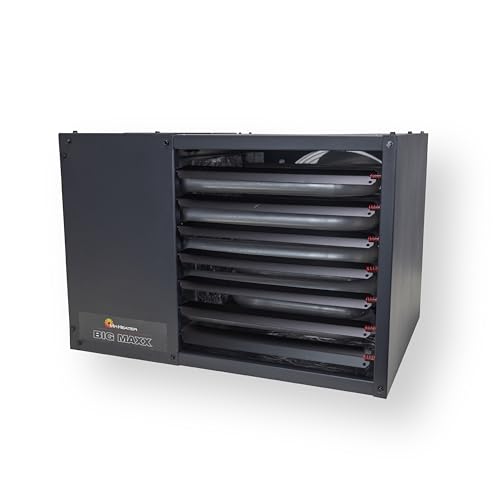
Mr. Heater 80,000 BTU Forced-Air Unit Heater

NewAir Electric Space Heater for Garage

TEMPWARE 7500W Electric Garage Heater 240V
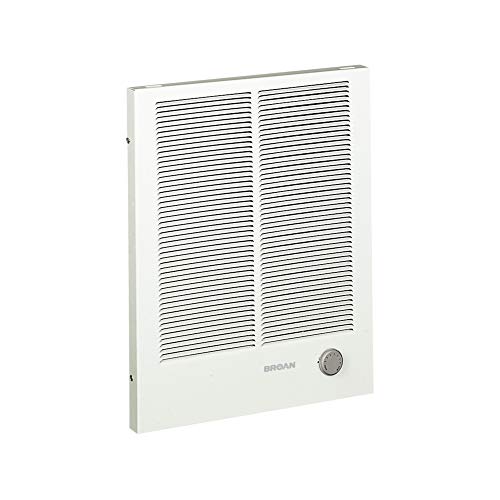
Broan-NuTone White 198 High Capacity Wall Heater

Dura Heat 240V Electric Space Heater for Garage

InoKraft 7,500W Electric Garage Heater
A Breakdown Of The Leading Choices
The DR218 leans on infrared technology, which warms objects and people directly rather than just heating the air around them. For a greenhouse full of tender plants or a workshop where you’re standing still for long stretches, that difference matters: you feel warm almost immediately, even if the surrounding air is still cool.
A built-in fan circulates that radiant heat across the room, and the permanently lubricated motor is designed to run for years without scheduled maintenance. Compared to the Mr. Heater unit covered later, this one runs on standard electricity, so there’s no gas line to install. For hobby growers and home woodworkers, it’s a low-fuss way to push a working temperature into a space that would otherwise sit empty through winter.
Strong Points
- Infrared heating warms people and surfaces directly, which feels comfortable in drafty buildings
- 3000 watts of output handles medium-sized workshops and greenhouses without strain
- No gas line required, so installation is simpler than a propane or natural gas alternative
- Permanently lubricated motor cuts down on long-term upkeep
- Fan-forced design spreads heat more evenly than a pure radiant panel
Trade Offs
- Needs a 240v circuit, which may require an electrician if your shop isn’t already wired for it
- Not ideal for very large or open commercial spaces where you’d want more raw BTU output
At A Glance
Who It Suits Best
Greenhouse growers and home workshop owners who want quick, steady warmth without running a gas line.
Consider Something Else When
You’re heating a large detached barn and would benefit from the higher BTU output of the Mr. Heater 80,000 BTU Forced-Air Unit Heater instead.
When your goal is turning a drafty barn or oversized garage into usable workspace year-round, 80,000 BTU puts this Mr. Heater in a different weight class than the typical 240v electric. The unit pulls cool air in from the rear, runs it across a heat exchanger, and pushes warm air out into the space, which works well in high-ceiling structures where heat tends to pool up top.
It runs on either propane or natural gas, so you can tie it into an existing fuel line if you have one. Compared to the NewAir covered below, this is a permanent install, not a portable unit. For property owners with big outbuildings, that trade-off is usually worth it: the heat output is significant, and the high-velocity fan moves air effectively even across wide floor plans.
Strengths Worth Knowing
- 80,000 BTU output covers large, open structures that overwhelm smaller electric units
- Compatible with both propane and natural gas for installation flexibility
- High-velocity fan distributes warm air across wide floor plans
- Built for permanent installation in serious work environments
Points To Keep In Mind
- Requires a gas line and proper venting, which adds installation cost and complexity
- Not a plug-and-play option for someone new to gas appliance work
- Combustion byproducts mean you need adequate ventilation in the space
Technical Sheet
Right Fit For
Owners of large detached workshops or barns with an existing gas line and a need for serious heat output.
Look Elsewhere When
You want a simpler electric-only setup; the Broan-NuTone White 198 High Capacity Wall Heater is far easier to wire in a standard home.
Most garage heaters lock you into a wall or ceiling location, but the NewAir stays portable while still running on a proper 240v circuit. That makes it a strong fit for people who need flexibility, whether you’re moving it between the garage and the shed or just rotating it as projects change around the workspace.
With 5600 watts of fan-forced output, it warms large spaces quickly, and the rugged housing is built to handle the bumps of a real working environment. Compared to the ceiling-mounted TEMPWARE covered next, this one trades a more permanent installation for the freedom to reposition. For a single-car or two-car garage where the layout shifts, that’s often the smarter pick.
Practical Pluses
- Portable 240v design lets you reposition heat where projects are happening
- 5600 watts fills medium garages and sheds in minutes
- Fan-forced airflow distributes warmth evenly across open areas
- Rugged exterior stands up to shop dust and occasional contact
Small Caveats
- Floor placement takes up workspace that a ceiling-mounted unit would free up
- Needs a 240v outlet nearby, which may require a dedicated circuit install
Whose Shelf It Belongs On
Shop owners and weekend tinkerers who want strong heat without committing to a permanent mounting location.
A Better Fit Elsewhere
You’d rather free up the floor entirely; the InoKraft 7,500W Electric Garage Heater mounts to the ceiling and ships with a remote.
The TEMPWARE sits in the high-output tier of 240v electric garage heaters, with a hardwired ceiling-mount design that keeps the unit completely out of the way. That makes it especially well suited to large multi-car garages where floor and wall space is at a premium. Adjustable louvers and a multi-angle mounting bracket let you direct warmth exactly where you’re working.
Two power stages (6250W low and 7500W high) give you control beyond a simple on-off switch, and an ECO mode reads the room temperature to cycle the heater efficiently. Compared to the Dura Heat EUH4000 below, this one pushes more heat across a larger coverage area. You trade portability for a serious, semi-permanent install that handles cold mornings without breaking a sweat.
Positive Points
- 7500W on high covers large garages and workshops without long warm-up times
- Ceiling mount frees up floor and wall space entirely
- Adjustable louvers aim heat at specific work zones
- ECO mode reduces wasted energy once the room reaches temperature
Honest Caveats
- Hardwired installation means professional help is often needed
- Ceiling placement makes the controls harder to access without a step ladder
Made For
Owners of large multi-car garages who want serious heat output and don’t mind a hardwired install.
Reach For A Different Pick When
You’d prefer a plug-in unit and don’t need 7500W; the Dura Heat 240V Electric Space Heater for Garage offers similar build quality in a 3750W package.
The Broan-NuTone 198 is the most “house-shaped” heater on this list, designed to recess into a wall and blend in rather than dominate the room. For a home workshop, mudroom, or finished garage that doubles as a hobby space, that clean look is genuinely useful. You get serious heat without a bulky industrial unit on the wall.
It runs at 4000W on 240V by default but converts to 2000W on 120V if your wiring situation calls for it, which makes it unusually flexible. The heavy-gauge steel grille and baked enamel finish hold up to years of use. Compared to the Dura Heat covered next, the Broan is built more for residential integration than for rugged shop duty.
Real Benefits
- Recessed wall design keeps the footprint compact and unobtrusive
- Dual-voltage setup (240V/120V) adapts to existing wiring
- Heavy-duty steel grille and enamel finish resist dents and scuffs
- Downflow louvers push warmth toward the floor where it counts
Potential Drawbacks
- Lower BTU output than ceiling-mounted 7500W units for very large spaces
- Wall recessing requires planning before drywall or paneling goes in
Feature Snapshot
Best Suited To
Homeowners finishing a garage or workshop who want a clean wall-mounted look and modest heat output.
Skip It When
You need to heat a large detached shop; the TEMPWARE 7500W Electric Garage Heater 240V is built for that scale.
The EUH4000 feels like a shop tool first and a heater second, and that’s exactly the point. The steel body holds up to the kind of contact that’s inevitable in a busy garage, and the tubular cabinet design has been a familiar sight in working shops for years. For people who care more about durability than aesthetics, it’s an easy recommendation.
At 3750W and 12,800 BTU, it’s a strong mid-range option, big enough for a two-car garage, modest enough to run on a standard 240v 20-amp circuit. The included ceiling or wall mounting kit and adjustable stand give you options for placement. Compared to the InoKraft covered below, this one skips digital controls in favor of a simple analog thermostat, which many long-time shop owners actually prefer.
Well-Handled Touches
- Steel body tolerates the rough environment of an active workshop
- Overheat shut-off adds a useful safety layer in dusty or enclosed spaces
- Adjustable stand and mounting kit support both floor and ceiling placement
- Fan-only mode provides air circulation in warmer months
- Analog thermostat stays simple and reliable over years of use
Less Ideal Details
- No remote or digital readout for fine-tuning temperature
- Coverage is smaller than 7500W ceiling units, so it’s not ideal for very large spaces
Feature Snapshot
Who Should Grab It
Shop owners who want a tough, no-frills heater that can take a few bumps and keep working for years.
Where A Sibling Pick Shines
You want modern digital controls and a remote; the InoKraft 7,500W Electric Garage Heater is built for that kind of convenience.
The InoKraft Max Heat is the most tech-forward 240v garage heater on this list, pairing serious wattage with the kind of digital controls you’d expect on a modern home thermostat. A ceiling-mounted design keeps the floor clear, and the included remote means you’re not climbing up to adjust settings every time the room cools off.
At 7500W, it covers spaces up to 750 square feet comfortably, and the ECO mode balances output against actual room temperature to avoid waste. The NEMA 14-50P plug is the same style used for some EV chargers and ranges, so the wiring may already be in place. Compared to the Dura Heat covered above, this one trades analog simplicity for a more polished, app-aware experience.
Key Advantages
- Digital thermostat and remote make adjustments easy from across the room
- 7500W output handles larger garages up to 750 square feet
- ECO mode cycles output based on real-time room temperature
- 24-hour timer supports scheduled heating for predictable routines
- Overheat protection adds a layer of safety in long heating cycles
Where It Is Less Suited
- Digital interface has a learning curve for those used to simple analog dials
- Requires a NEMA 14-50 outlet, which may need professional installation
Who Will Love This
Tech-forward homeowners who want precise control, scheduled heating, and minimal manual adjustment during long winter projects.
Swap It Out When
You want a more traditional, no-frills shop heater; the Dura Heat 240V Electric Space Heater for Garage is built for hands-on owners who value simplicity.
Picking The Right 240v Heater For Your Space
A 240v garage heater is a meaningful electrical commitment, so the first step is confirming your panel can handle it. Most 5000W to 7500W units pull around 20 to 30 amps on a dedicated double-pole breaker, and a shared circuit will trip the moment you fire up a tool or another appliance. If your garage is still running on a couple of 15-amp household circuits, an electrician visit belongs in the budget before you pick a unit.
Wattage and coverage go hand in hand. A 3000W to 4000W unit usually covers a single-car garage or small workshop up to around 500 square feet. Larger two-car or multi-bay spaces typically need 5000W to 7500W to feel truly comfortable. Ceiling height matters too, since heat rises; high ceilings benefit from a fan-forced model or a ceiling-mounted unit with directional louvers that push warmth down where you’re working.
Mounting style comes down to how you actually use the space. Ceiling-mounted heaters keep the floor clear and work well in shops with cars, equipment, or rolling toolboxes. Wall-mounted and recessed units look cleaner in finished garages. Portable 240v heaters give you flexibility to move heat around as projects change, but they do take up floor space.
Control features are worth weighing carefully. Basic analog thermostats are reliable and easy to repair, while digital thermostats, ECO modes, and remotes add convenience and can trim long-term energy use. For a space you heat frequently, those features earn their keep. For occasional weekend projects, a simple unit may serve you just as well.
Key Considerations Across These Picks
Pitfalls Shoppers Hit
A common mistake is buying a heater that exceeds what your existing wiring can deliver. Higher-wattage 240v units need thick-gauge wire and the right breaker, and undersized circuits cause nuisance trips or overheating wire insulation. Another trap is choosing a 120v household heater for a true garage, since most of those struggle once the temperature drops below freezing or the space stretches past a few hundred square feet.
Where The Extra Money Goes
The jump from a basic 3750W unit to a feature-rich 7500W model often buys you digital controls, remotes, ECO modes, and more durable construction. In a workshop you heat every day, those upgrades pay off through better comfort and lower wasted energy. For occasional weekend use, a simpler mid-range heater may be all you actually need.