
Above-ground pools earn a beating every summer, and the liner takes the worst of it. The right setup underneath that liner decides whether you get a smooth, clean swim or a slow leak that wrecks the whole season. This roundup walks through the protective layers, padding, and coping strips that quietly do the heavy lifting, so the rest of your pool stays out of trouble.
A Closer Look At The Lineup

Svepndic 72 Pcs Pool Coping Strips for Overlap Liners

NEEFOO 12x24Ft Rectangle Pool Liner Pad

Blue Wave Pool Wall Foam 48-in x 100-ft
codree 24x12Ft Rectangular Pool Ground Cloth
Abimars 15 FT Extra-Thick Seamless Pool Pad

Zeonly 18 FT Square Pool Liner Pad
Taking A Closer Look At The Options
Coping strips sit in an unglamorous spot, right at the lip where the liner folds over the pool wall, yet they decide whether the liner stays tucked or slowly slips. The Svepndic set ships 72 individual strips, each roughly 15.7 inches long, and the combined length works out to around 95 feet. That gives enough material to handle a full round above-ground pool with pieces to spare.
Because the strips are flexible and lightweight, installation feels closer to a snap-on trim job than a remodel. The material grips the overlap liner without aggressive clips, so you can swap individual worn sections without pulling the whole liner. For anyone running an overlap-style pool, the strips tend to be the first thing to age out, and replacing them in bulk keeps the edge looking tidy all season.
Why It Works Well
- 72-piece bulk pack covers a full pool circumference with room to spare for future repairs
- Flexible material bends easily around curved pool walls without cracking
- Snap-on design lets you replace a single damaged strip without disturbing the rest of the liner
- Lightweight enough to install solo, no extra hands or specialty tools required
Things To Consider
- Built specifically for overlap-style liners, so beaded or unibead pools need a different solution
- Plastic can stiffen in extended cold storage, so warming the strips slightly before install helps them seat cleanly
Who It Suits Best
Owners of round above-ground pools running overlap-style liners who want a budget refresh of worn coping without replacing the whole liner.
Where Another Pick Suits Better
Anyone with a beaded or unibead pool setup should look at the Blue Wave Pool Wall Foam instead, since that product targets the wall interface rather than the overlap edge.
A pool pad lives in the dirt, so it has to take punishment from rocks, roots, and shifting soil without giving up. The NEEFOO rectangle pad covers a 12-by-24-foot footprint, which lines up with many 24-foot pool liners, and the 200GSM PET geotextile fabric, a tough non-woven industrial textile, gives it real backbone. The dense weave blocks light, which keeps weeds from sprouting up through the pool floor and telegraphing green stains into your liner.
Compared with the Svepndic coping strips from the first review, this product works at the opposite end of the pool, guarding the bottom rather than the top edge. Tensile strength, meaning the fabric’s resistance to tearing under tension, is the headline feature here, and the material is engineered to take abuse from sharp debris that would normally slice a liner on day one.
Notable Gains
- 200GSM PET geotextile fabric resists punctures from sharp rocks and stray roots
- Full lightproof design blocks weed growth that can stain or distort the liner above
- Adds a measurable buffer that extends the working life of an expensive vinyl liner
- Rectangle footprint matches 24-foot pool liners without awkward trimming
Worth Noting
- Fabric is heavy once unfolded, so laying it flat usually takes two people
- Geotextile holds moisture longer than closed-cell options, so drying before storage matters if you swap seasonal pools
Feature Snapshot
Made For
Homeowners installing 24-foot pool liners over rocky, root-heavy, or uneven ground who want a tough defensive layer underneath.
Consider Something Else When
Pool owners set on a square pool layout should check the Zeonly 18 FT Square Pool Liner Pad for a better geometric match.
Wall foam solves a different problem than floor pads. It slides between the metal wall and the vinyl liner, smoothing out the corrugated ridges that would otherwise press into the liner and eventually wear through. The Blue Wave roll runs 48 inches tall by 100 feet long at 1/8 inch thick, so a single roll handles most residential above-ground pools with extra material left for the second season or a neighbor’s install.
The closed-cell polyethylene construction, a foam with sealed air pockets that keep water from soaking in, is the real story. Open-cell foam absorbs water and slowly deteriorates; closed-cell foam resists moisture, which is exactly what you want tucked against a steel wall all summer. The trade-off is a slightly higher material cost, but the longevity tends to justify it.
The Case For It
- Closed-cell polyethylene resists water absorption, so the foam keeps its shape and cushioning year after year
- 100-foot length covers a standard above-ground pool circumference without needing to splice pieces
- Smooths the metal-to-liner interface that is the most common source of pinhole leaks
- 1/8-inch thickness adds meaningful cushioning without pushing the liner outward
Trade Offs
- Only addresses the wall side, so a floor pad underneath is still recommended for full coverage
- Adhesive requirement adds a step to installation that some DIY setups try to skip
Right Fit For
Above-ground pool owners whose metal walls have visible ridges or prior wear marks that risk puncturing a fresh liner.
Skip It When
Anyone focused purely on ground-level protection should turn to the NEEFOO 12x24Ft Rectangle Pool Liner Pad, since it targets the floor rather than the walls.
Not every yard needs industrial-grade geotextile. The codree ground cloth uses thickened PE woven fabric, a polyethylene material that is light, soft to handle, and still tough enough to block the usual sharp debris. The 24-by-12-foot rectangle covers a standard 24-foot pool liner footprint, and the included stakes help the cloth stay put during the lining-up process.
Versus the NEEFOO pad reviewed earlier, the codree reads as the more approachable, lighter-weight option. It is easier to fold, easier to reposition, and the woven PE construction resists tearing under normal use, even though it is not quite as heavy-duty as a 200GSM geotextile. For yards with decent topsoil and minimal rocky intrusion, that balance is often the right call.
What Makes Sense
- Thickened PE woven fabric offers solid wear resistance without the weight of geotextile pads
- Soft, pliable material lays flat easily and folds down for off-season storage
- Included stakes hold the cloth in place during liner installation
- Rectangle dimensions match common 24-foot pool footprints
Points To Keep In Mind
- Less puncture-resistant than heavier geotextile options, so rocky yards may need a thicker pad
- Woven PE can occasionally let fine debris migrate through over multiple seasons
Best Suited To
Seasonal pool owners on relatively clean, level ground who want a manageable ground cloth that deploys and stores easily.
Not Your Match When
Yards with persistent rock or root issues deserve the heavier NEEFOO 12x24Ft Rectangle Pool Liner Pad instead.
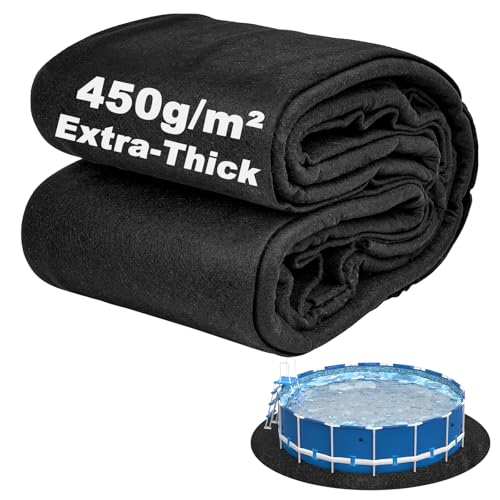
Most pool pads come in pieces you have to seam together, and those seams tend to print through to the liner over time. The Abimars pad takes a different approach with a one-piece seamless design, blending industrial-grade geotextile with polyester, acrylic, and cotton fibers. The 12-by-20-foot rectangle is denser than standard pads, so it offers extra cushion underfoot.
For families with kids who spend the afternoon cannonballing into the shallow end, that extra cushion adds real comfort. The composite material also blocks light fully, so weed growth underneath stays suppressed. Compared to the codree cloth, this pad feels like a step up in both density and longevity, though it costs more to ship and handle.
What Stands Out
- Seamless one-piece construction eliminates ridge lines that can show through the liner
- Composite blend of geotextile and natural fibers delivers a noticeably softer feel
- Twice the density of standard pads for stronger puncture resistance
- Full light blocking keeps the floor clear of weed intrusion
Room For Improvement
- Heavier and bulkier than simpler PE tarps, so storage takes more space
- Premium composite build sits at the higher end of the price range
Quick Facts
Perfect Match For
Families who want a softer pool floor under bare feet and prefer a seamless pad that stays invisible through the liner.
Look Elsewhere When
Shoppers on a tighter budget should consider the codree 24x12Ft Rectangular Pool Ground Cloth, which covers a 24-foot liner footprint at a lower cost.
Square pools are a smaller slice of the above-ground market, but they exist, and a rectangular pad wastes material on the corners. The Zeonly pad solves that with an 18-by-18-foot square footprint, sized for round-to-square pool conversions or dedicated square pool installations. The blue-and-black color scheme is a small touch, yet it helps with alignment during install since you can see the orientation clearly.
Like the NEEFOO and codree pads already covered, this one focuses on puncture protection from rocks, roots, and stray debris. The square shape is the differentiator, and for anyone running a square pool shell, it removes the trimming step that rectangular pads always require.
A Favorable Mix
- Square footprint fits dedicated square pools without trimming rectangular pads
- Cushioned surface smooths the area between ground and liner
- Two-tone color scheme helps with orientation during setup
- Puncture-resistant build handles the standard rocks-and-roots threat
Honest Caveats
- Limited to square pool layouts, so rectangular pool owners need a different shape
- Less common size, so double-check your pool dimensions before ordering
Feature Rundown
Who Should Grab It
Owners of square above-ground pools who want a pad shaped to match without dealing with awkward corners.
A Better Fit Elsewhere
Rectangular pool owners are better served by the NEEFOO 12x24Ft Rectangle Pool Liner Pad, which matches a 24-foot rectangular footprint out of the box.
What To Weigh Before Choosing Your 24 Foot Pool Liner Setup
Match The Pad To The Ground, Not The Pool
The biggest mistake is shopping for a pad based only on pool size. Soil type matters more than most shoppers realize. A 24-foot pool liner installed over rocky fill, tree roots, or shifting clay will punish any pad that is not rated for puncture resistance. In that scenario, the NEEFOO 12x24Ft Rectangle Pool Liner Pad with its 200GSM PET construction is a better fit than a thinner woven tarp. Cleaner, sandier yards with little debris can get away with the codree 24x12Ft Rectangular Pool Ground Cloth and its lighter handling.
Combine Wall And Floor Protection For A Full System
A pad underneath the liner only solves half the problem. The metal walls of an above-ground pool create ridges and screw heads that press against the vinyl from the side, and those contact points cause the slow leaks that show up mid-season. Adding the Blue Wave Pool Wall Foam behind the liner turns that rough surface into a smooth cushion and dramatically extends liner life. Combining a floor pad with wall foam is the closest thing to a complete protective system without a full pool rebuild.
Mind The Shape And Size Before Clicking
Square pools, round pools, and rectangular pools all need different pad footprints. The Zeonly 18 FT Square Pool Liner Pad is built for square shells, while the NEEFOO and codree pads are sized for the rectangle crowd. For overlap-style round pools, the Svepndic coping strips handle the liner edge while a separate round floor pad covers the bottom. Measure twice and match the pad shape to the pool shape, since trimming excess material is annoying at best and wasteful at worst.
Picking Through The Noise Before You Buy
Wrong Turns To Avoid
The most common slip-up is treating the pad as an optional extra. A 24-foot pool liner is a real investment, and skipping the protective layer to save a few dollars is the kind of decision that costs the entire liner a season later. Another trap is buying a pad by price alone, since the cheapest woven tarp rarely handles the puncture threat of a real backyard. Match material density and weave type to your soil conditions, not just the size on the box.
Where The Extra Money Goes
Premium pads earn their higher cost through denser geotextile, seamless construction, and composite fiber blends that block light and resist tearing. The Abimars 15 FT Extra-Thick Seamless Pool Pad sits at the top of that range, with a 2x density rating and a one-piece build that prevents seam lines from showing through the liner. The upgrade pays off for families who spend a lot of time in the pool, for rocky yards that punish standard pads, and for anyone who would rather install once and forget about it for a decade.
Frequently Asked Questions
How Thick Should A Pool Liner Pad Be?
A thickness of around 1/8 inch is a common starting point, and denser geotextile pads go thicker still. For most residential above-ground pools, that range balances cushioning with easy handling. Rocky yards benefit from denser options like the Abimars pad, while clean sand-based setups do fine with thinner cloth.
Can I Use A Pool Pad Under Any 24 Foot Pool Liner?
Most above-ground pool pads are designed to sit beneath vinyl liners in standard round, rectangular, and square pools. The key is matching the pad footprint to the pool shape, since trimming a too-large pad is more hassle than ordering the right size. Wall foam is a separate layer that sits between the metal wall and the liner.
Do I Need Both A Wall Foam And A Floor Pad?
For maximum liner protection, yes. Wall foam solves the metal-to-vinyl contact problem, while a floor pad handles rocks, roots, and soil movement. Either layer alone helps, but the combination is what most pool pros recommend for a 24-foot liner that you want to last more than a few seasons.
How Do I Keep A Pool Pad From Sliding During Install?
Lay the pad flat on leveled ground and use stakes or landscape pins at the corners and along the edges. Some pads, like the codree ground cloth, ship with stakes included. Smooth, debris-free ground also helps the pad stay put once the liner weight is on top.
What Maintenance Does A Pool Liner Pad Need?
Pads need very little mid-season attention, since the liner and water weight hold everything in place. Off-season, the main task is drying the pad before folding and storing it in a dry shed or garage, especially for geotextile and woven PE options that can hold moisture. A quick visual check each spring for tears or shifts is usually enough.
The Takeaway
A 24-foot pool liner lasts a lot longer when the layers underneath it are chosen with care. Start with a floor pad matched to your soil, add wall foam if your pool has metal sides, and refresh the coping strips if you run an overlap-style setup. Match the pad shape to the pool shape, and the rest of the season tends to take care of itself.