

Most homes cycle the same air through the ductwork a dozen times a day, and a tired filter is the silent culprit behind dusty shelves and stale rooms. A properly sized 20x25x2 filter keeps your HVAC system breathing well and your indoor air noticeably cleaner. These seven options cover everything from routine dust control to more aggressive allergen and smoke capture, so you can match a filter to the way your home actually feels.
The Leading Options At A Glance

Filter King 20x25x2 Air Filter MERV 8 (5-Pack)

Filter King 20x25x2 MERV 8 (12-Pack)

Filterbuy 20x25x2 MERV 8 (2-Pack)
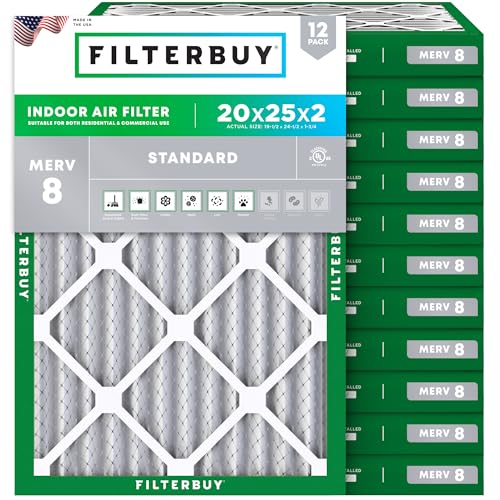
Filterbuy 20x25x2 MERV 8 (12-Pack)

Glasfloss 20x25x2 MERV 10 (12-Pack)
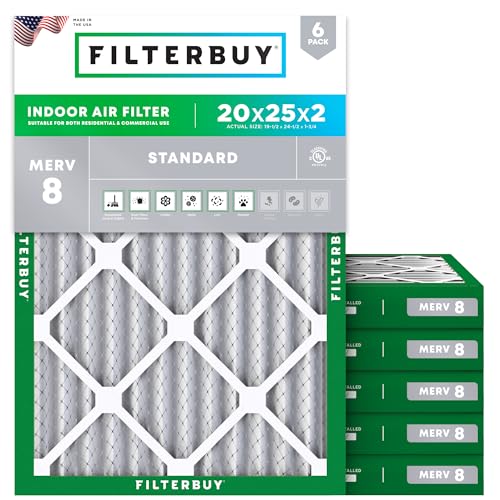
Filterbuy 20x25x2 MERV 8 (6-Pack)

Filterbuy 20x25x2 MERV 13 (4-Pack)
Meet The Standout Selections
The five-pack lands in that sweet spot for households that change filters on a normal cadence but don’t want to overcommit to a year of inventory. Each filter arrives at the standard nominal 20x25x2 with an actual fit of 19.5 by 24.5 by 1.75 inches, the slight undersizing that helps the media seat cleanly in the rack without buckling.
Rated at MERV 8 (a Minimum Efficiency Reporting Value, where higher numbers capture smaller particles), it handles the routine dust and lint that accumulates around pet hair, fabric shed, and open windows. Compared with the larger Filter King 12-pack later in the lineup, this option rewards you for trying the brand first without tying up a closet’s worth of spare filters.
Standout Benefits
- Right-sized five-count works for homes replacing on a roughly 60 to 90 day rhythm.
- Standard MERV 8 efficiency tackles visible dust and everyday airborne debris.
- Actual dimensions of 19.5″ x 24.5″ x 1.75″ drop into most 20x25x2 slots without binding.
- Lighter pack weight makes it easy to store in a utility closet or garage shelf.
Trade Offs
- Per-filter cost runs higher than the 12-pack, so long-term households may overspend.
- MERV 8 won’t trap finer smoke or allergen particles the way a MERV 13 option would.
Who It Suits Best
You live in a smaller home or apartment and prefer to test a brand before committing to a year of filters.
Look Elsewhere When
You’d rather stock up once and forget it, in which case the Filter King 20x25x2 MERV 8 (12-Pack) gives you a deeper supply at a lower per-unit pace.
This 12-count version covers a full year of replacements for most households, assuming the standard 60 to 90 day change window. The same MERV 8 media does the heavy lifting on dust and pollen without choking airflow in a residential HVAC system, and the 1.75 inch actual depth keeps everything compatible with standard return-air racks.
For anyone running multiple return vents or a larger system that chews through filters faster, the bulk packaging reduces the number of times you need to remember to reorder. Compare that to the 5-pack above, and the appeal here is the lower per-filter cost and the freedom to swap a tired filter without rationing the supply.
What Pays Off
- Twelve filters cover most households through every seasonal change of the year.
- Bulk packaging cuts down on trips to reorder, especially helpful for busy households.
- MERV 8 synthetic media suits homes with shedding pets, open windows, and light renovation dust.
Honest Caveats
- Storage space matters; the box is bulky and needs a dry corner in a closet or basement.
- If your system requires MERV 11 or higher, this filter will underperform on fine smoke.
Quick Facts
Whose Shelf It Belongs On
You run the furnace and AC on a regular schedule and would rather stock the closet once than reorder every few months.
A Better Fit Elsewhere
Smaller households or first-time testers will get more mileage out of the Filter King 20x25x2 MERV 8 (5-Pack) before committing to bulk.
Two filters is the smallest count on this list, and that is precisely the point. The Filterbuy 2-pack suits renters, small condos, and homes with a single return vent where a 12-pack would sit in the closet for years past its useful life. Each filter still carries the same MERV 8 media and the same 19.5 by 24.5 by 1.75 actual footprint.
Unlike the larger Filterbuy 12-pack later in the lineup, this format rewards you for swapping a dirty filter quickly without committing to inventory you don’t need. The trade-off is the higher per-filter cost, which is fine when you only burn through a couple per year.
Reasons It Performs
- Compact two-count keeps a low profile in tight storage closets common in apartments.
- MERV 8 synthetic media matches the 3M MPR 700 and Filtrete FPR 5 tiers, a familiar baseline.
- Universal compatibility covers furnaces, air conditioners, and heat pump returns.
Some Limits To Know
- Per-filter cost is the steepest in the lineup given the small pack size.
- Won’t catch smoke or bacteria the way a MERV 13 option would.
Made For
You live in a smaller space with one or two return vents and prefer fresh filters without the bulk of a 12-count box.
Skip It When
Your home chews through filters faster than a couple per year, in which case the Filterbuy 20x25x2 MERV 8 (6-Pack) hits a better middle ground.
Filterbuy’s 12-count shares the same nominal and actual dimensions as the brand’s smaller packs, so the swap is seamless if you’re moving from a 2-pack or 6-pack into a bulk buy. The MERV 8 synthetic media captures pollen, lint, and mold spores without forcing the blower motor to work harder than it should.
Where it differs from the Filter King 12-pack reviewed earlier is the brand and the pleat construction; the two are similar enough in performance that the choice often comes down to which fits your return vent geometry and which box your storage shelf can handle. The 12-pack is heavy, so plan for a dry corner that can hold the weight.
The Value In It
- Twelve filters cover most homes for an entire year of standard replacements.
- Comparable to MPR 700 and FPR 5 ratings, which many shoppers already trust.
- Works in furnaces, central air handlers, and heat pump systems without modification.
Points To Note
- Bulk box is heavier and bulkier than the 2-pack or 6-pack versions.
- Doesn’t address smoke, germs, or finer allergens the way a MERV 13 filter does.
Feature Snapshot
Best Suited To
You manage a family-sized home with multiple returns and want one bulk order to cover the year.
Swap It Out When
Your air quality concerns go beyond dust, in which case the Filterbuy 20x25x2 MERV 13 (4-Pack) steps up the filtration to capture smoke and finer particles.
The Glasfloss entry is the only MERV 10 option on this list, and it’s the pick for shoppers who want more than a basic MERV 8 without jumping all the way to MERV 13. MERV 10 filters catch finer particles like pet dander and mold spores, which makes a noticeable difference in homes where light allergies or shedding pets are a daily concern.
Build quality is the standout detail. The galvanized metal backing adds stiffness to the frame, which helps the filter hold its shape when you slide it into a tight return rack. Compared to the cardboard-framed Filterbuy and Filter King picks, this metal-backed construction feels sturdier during installation and removal.
Strengths Worth Knowing
- Galvanized metal frame resists warping during seasonal swaps and humid conditions.
- MERV 10 captures smaller particles than MERV 8, with airflow similar to the lower tier.
- Made in the USA, with the kind of build consistency you’d expect from a domestic manufacturer.
Factors To Consider
- Heavier than cardboard-framed MERV 8 filters, so install is a small extra effort.
- Still doesn’t reach MERV 13 levels, so smoke and bacteria require a different upgrade path.
Who Will Love This
You deal with mild seasonal allergies or multiple pets and want better filtration than a basic MERV 8 without maxing out the system.
Not Your Match When
Your home has wildfire smoke concerns or someone with respiratory sensitivity, in which case the Filterbuy 20x25x2 MERV 13 (4-Pack) is the more appropriate upgrade.
The 6-pack sits in the comfortable middle of the Filterbuy range, covering roughly half a year of replacements for a typical household. If you’ve found the 2-pack runs out too quickly but the 12-pack feels like overstock, this option is the practical compromise. Each filter uses the same MERV 8 synthetic media as the rest of the Filterbuy family.
For comparison, the Filter King 5-pack reviewed earlier is closer in count but uses a different brand and slightly different framing. The Filterbuy 6-pack often appeals to households that prefer to reorder twice a year rather than once, which keeps the filters from sitting in storage long enough to age out.
Practical Pluses
- Six filters bridge the gap between casual restocking and a year-long stockpile.
- Compatible with furnaces, air conditioners, and heat pumps without retrofitting.
- Per-filter cost lands between the 2-pack and the 12-pack versions.
Worth Bearing In Mind
- Bulkier than the 2-pack and not as economical as the 12-pack per unit.
- Still a MERV 8 filter, so it won’t catch the fine particles a MERV 13 upgrade would.
Technical Highlights
Perfect Match For
You replace filters twice a year and want a mid-size pack that doesn’t collect dust on a shelf longer than the filters themselves.
Consider Something Else When
Smaller households on a slow replacement pace will do better with the Filterbuy 20x25x2 MERV 8 (2-Pack), which keeps inventory tight.
Stepping up to MERV 13 (a tier that captures 98% of airborne dust, including fine smoke, bacteria, and smaller allergens) puts this Filterbuy pack in a different category than the MERV 8 picks earlier in the lineup. The 4-count is the smallest premium pack on the list, which makes sense given the denser media and the higher per-filter cost.
This filter earns its place in homes with wildfire smoke concerns, persistent allergies, or smokers in the household. It compares to MPR 1900 and FPR 10, so the Filtrete-trained shopper will recognize the tier. Make sure your HVAC system can handle the added static pressure, since denser media can strain weaker blowers if the ductwork is undersized.
What Earns Its Place
- MERV 13 synthetic media captures smoke, bacteria, and finer allergens that MERV 8 misses.
- Comparable to MPR 1900 and FPR 10 ratings for shoppers cross-shopping Filtrete.
- Drop-in dimensions make it an easy upgrade from any existing 20x25x2 filter.
Details To Watch
- Per-filter cost is the highest on this list, so the 4-pack adds up fast.
- Denser media can increase blower strain on older or undersized HVAC systems.
- Smaller pack count means more frequent reorders than the MERV 8 bulk options.
Spec Overview
Right Fit For
Your home deals with smoke, fine allergens, or higher sensitivity and you want noticeably cleaner indoor air year-round.
Reach For A Different Pick When
Your day-to-day concern is ordinary dust and lint, in which case the Filterbuy 20x25x2 MERV 8 (12-Pack) handles that workload at a fraction of the cost.
Key Details To Match Before You Order
The nominal 20x25x2 size is the start, not the finish. Every filter on this list ships with an actual measurement closer to 19.5 by 24.5 by 1.75 inches, and that half-inch of slop on each side is intentional. It lets the media seat against the rack gasket without bowing, which is the difference between filtered air and unfiltered bypass.
MERV rating matters more than pack size. MERV 8 handles dust, lint, and pollen for most homes. MERV 10 steps up for pet dander and finer allergens. MERV 13 pulls in smoke, bacteria, and the smallest particles, but the denser media can tax an older blower. Match the rating to your actual air quality concern rather than buying the highest tier you can find.
Pack count is a lifestyle decision, not a performance one. A 2-pack suits apartments with one return vent. A 6-pack fits homes on a twice-year replacement rhythm. A 12-pack rewards anyone who prefers to reorder annually. Buy what you’ll actually use before the media ages out in storage.
Frame material affects how the filter survives the swap. The Glasfloss option uses a galvanized metal frame that holds its shape in tight slots and humid conditions, while the cardboard frames on the Filterbuy and Filter King packs are lighter and easier to handle. For tight return racks, frame stiffness can matter more than you’d expect.
Quick Refresher Before You Commit
Wrong Turns To Avoid
Buying a higher MERV than your system can handle is the most common slip. A MERV 13 filter in an undersized duct or an older blower can drop airflow enough to cause coil freeze-ups and higher energy draw. Check the system’s specs or a service sticker before upgrading tiers.
Choosing pack count by price alone misses the bigger picture. A cheap 12-pack is only a deal if you’ll actually swap filters often enough to use them. A filter that sits in a garage for two years can absorb moisture and lose efficiency before it ever gets installed.
When Paying More Pays Off
The premium for MERV 13 buys finer filtration, which matters in homes with smoke, immunocompromised occupants, or wildfire season concerns. The denser media also tends to last longer between swaps, so a 4-pack can stretch across a year in a low-traffic system. For most homes without those concerns, a MERV 8 pack at a friendlier price is the practical choice.
Frequently Asked Questions
How often should a 20x25x2 air filter be changed? Most manufacturers recommend swapping a 1 to 2 inch filter every 60 to 90 days under normal household conditions. Homes with shedding pets, renovation dust, or allergy concerns often benefit from a 30 to 45 day rhythm.
What does MERV rating actually mean? MERV stands for Minimum Efficiency Reporting Value, a scale that rates how well a filter captures particles between 0.3 and 10 microns. Higher numbers mean finer filtration, with MERV 8 covering basic dust and MERV 13 reaching smoke and bacteria territory.
Will a 20x25x2 filter fit any furnace or AC? The 20x25x2 size is a common residential standard, but actual filter slots vary slightly. Measure the existing filter or the slot itself, since most 20x25x2 filters ship at 19.5 by 24.5 by 1.75 actual dimensions to allow a snug fit.
Can a higher MERV filter damage an HVAC system? In undersized ductwork or with an older, weaker blower, a MERV 13 filter can reduce airflow enough to cause problems. Most modern residential systems handle MERV 8 to MERV 11 without strain, while MERV 13 may require a system check first.
Is a MERV 8 filter good enough for allergies? MERV 8 handles pollen and larger dust particles, which is enough for many mild allergy sufferers. For pet dander, fine allergens, or smoke, stepping up to MERV 10 or MERV 13 makes a more noticeable difference in perceived air quality.