
A chilly home office, a drafty bedroom, a garage that never quite warms up. A 1500W space heater fills the gap when central heat falls short, and the right one does it without burning through your electric bill or drying out the air. You get targeted warmth exactly where you need it, on your schedule.
This roundup covers seven 1500W models built for different corners of your life, from compact desk units to milkhouse-style utility workhorses. Each pick balances heating speed, safety features, and everyday usability, so you can match the heater to the room, not the other way around.
The Shortlist At A Glance
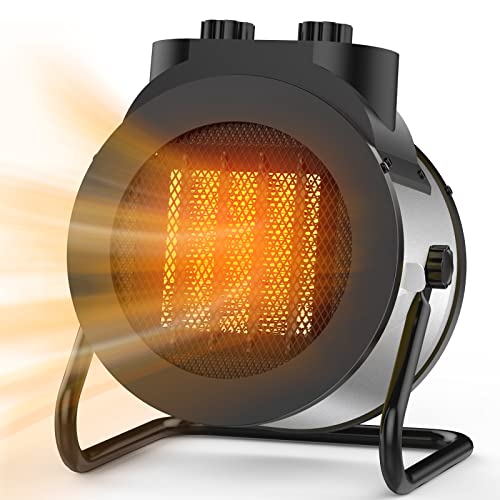
Elevoke 1500W PTC Electric Heater 90° Adjustable (Silver)

ROSEKM 1500W Portable Ceramic Heater with Thermostat (Silver)

Comfort Zone Deluxe Milkhouse Utility Space Heater with Thermostat (Black)
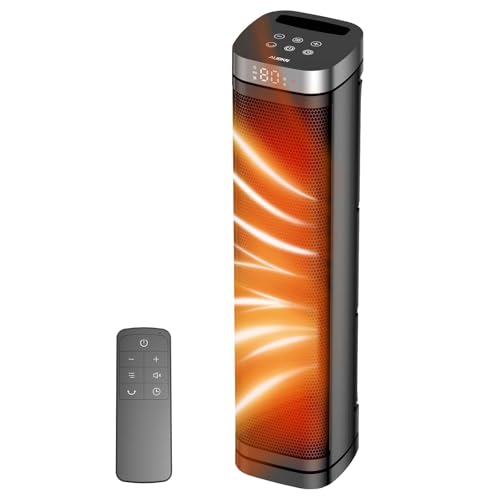
AUBKN X-Large 1500W Electric Space Heater 24″ with Oscillation

Elevoke 1500W PTC Electric Heater 90° Adjustable (Yellow)

Lutntc 1500W Portable Ceramic Heater with Digital Display

Oprunsy 1500W PTC Ceramic Heater with Remote and Child Lock
More Details On Our Top Picks
The Elevoke 1500W PTC heater earns its spot for one simple reason: the 90-degree adjustable head, which is unusual at this size. You can tilt the heat output up toward your face at a desk or down toward cold feet on the floor without moving the whole unit. PTC ceramic heating (a self-regulating element that runs cooler as air warms) paired with a high-speed fan pushes warm air out fast.
For a small bedroom or home office, this is a sensible everyday pick. The silver finish blends into most setups, and the compact footprint won’t crowd your workspace. The built-in overheat protection adds a quiet safety net, especially helpful in rooms where you might forget the unit is running.
Benefits That Matter
- 90-degree tilt lets you direct heat where you actually need it, a real upgrade over fixed-angle competitors
- PTC ceramic element warms up quickly and self-regulates, which generally extends component life
- Overheat auto-shutoff gives peace of mind during long overnight runs
- Lightweight build makes it easy to move between rooms throughout the day
Honest Caveats
- Like most compact ceramic heaters, it works best in smaller rooms; open layouts will dilute the warmth
- The fixed-position tilt is manual, so you’ll need to reach down and adjust it rather than controlling it from across the room
At A Glance
Right Fit For
Anyone working from a home office or sleeping in a small bedroom who wants a no-fuss heater that points the warmth where it counts.
Where Another Pick Suits Better
Shoppers heating a large living room should look at the AUBKN X-Large 1500W Electric Space Heater 24″ with Oscillation instead, since its tower design and oscillation spread warmth farther.
The ROSEKM 1500W portable ceramic heater leans hard into portability, with a built-in handle and a compact frame that slips under most desks. The integrated thermostat lets you set a target temperature rather than guessing between low, medium, and high, which is a meaningful upgrade for anyone who gets too warm halfway through a meeting.
Three heating levels give you quick manual control when you don’t want to fuss with the thermostat. Tip-over protection cuts power if the unit gets knocked sideways, a useful safeguard in homes with pets or curious toddlers. The silver housing is neutral enough to blend in, and the lightweight body makes it easy to move from the bedroom to the home office without thinking about it.
Notable Gains
- Integrated thermostat means the heater cycles on and off to hold a set temperature, rather than running full-blast
- Built-in handle and slim frame are genuinely useful for daily relocation
- Tip-over protection is a real safeguard in busy living spaces
Trade Offs
- Compact size means slower warm-up in rooms larger than a small bedroom
- No remote control, so you’ll need to get up to change settings
- Owners commonly report the thermostat sensor sits close to the housing, so placement near a drafty window can throw off readings
Made For
Remote workers who want a quiet, movable heater for an under-desk spot and renters who need a unit that’s easy to pack and reposition.
Not Your Match When
You need whole-room circulation, in which case the AUBKN X-Large 1500W Electric Space Heater 24″ with Oscillation is the better fit thanks to its wider sweep.
The Comfort Zone Deluxe Milkhouse-style heater is a different animal from the desk-friendly options above. Its classic rounded, cage-front design is built for utility spaces: garages, basements, workshops, and sheds where you want durability over aesthetics. The integrated thermostat lets you dial in a target temperature so the unit cycles efficiently.
This is the kind of heater you wheel into a cold garage on a Saturday morning and leave running for hours. The metal housing handles bumps and dust far better than slim plastic towers. Compared to the Elevoke and ROSEKM models, this one sacrifices compactness for raw, targeted heat output in tougher environments.
Practical Pluses
- Milkhouse-style metal construction is well-suited to garage and workshop conditions
- Thermostat-controlled operation reduces the babysitting typical of basic utility heaters
- Portable form factor is easy to reposition around a workbench or parked car
Worth Bearing In Mind
- The exposed heating element and metal cage get hot, so you’ll want clearance from fabric, paper, and curious pets
- Heavier than ceramic desktop units, so it’s not the right pick if you plan to move it between rooms daily
- Fan noise is noticeably louder than the slim tower heaters in this roundup
Quick Facts
Who Will Love This
DIYers, hobbyists, and anyone with a detached garage or basement workshop who needs rugged, no-nonsense heat.
Look Elsewhere When
You want a quiet bedroom unit; in that case the Lutntc 1500W Portable Ceramic Heater with Digital Display is a quieter fit.
The AUBKN X-Large is the tallest heater in this roundup at 24 inches, and that extra height pays off. The taller body projects warm air across a room rather than pooling it at your ankles, and the 70-degree oscillation sweeps that warmth side to side automatically. For a living room or open bedroom layout, that spread is the difference between feeling warm and feeling like you sat next to a hair dryer.
The feature list is genuinely full: thermostat, ECO mode, remote control, and a 12-hour timer for bedtime. PTC ceramic heating keeps warm-up time short. If you found the Elevoke or ROSEKM models too small for your space, this is the natural step up.
Advantages To Know
- 24-inch tower body throws warm air farther than compact units, helping it cover larger rooms
- 70-degree oscillation spreads heat across a wide arc, reducing the hot-spot effect of single-direction heaters
- Remote control and 12-hour timer make it easy to manage from bed or the couch
- ECO mode cycles output to save power once your target temperature is reached
Practical Considerations
- Taller footprint takes up more floor space than the desk-friendly Elevoke or ROSEKM options
- More features mean more buttons to learn; first-time users may need a few days to get the feel
- Wider oscillation is great for open rooms, but in a tiny bedroom it can feel like overkill
Feature Snapshot
Best Suited To
Anyone heating a large bedroom, open-plan apartment, or living room who wants set-and-forget automation with a remote.
Reach For A Different Pick When
You’re working with a small desk setup; the Elevoke 1500W PTC Electric Heater 90° Adjustable (Silver) is a tighter fit there.
This is the same Elevoke 1500W PTC heater reviewed above, just in a yellow housing. The core specs, 90-degree adjustable head, PTC ceramic element, and overheat protection, are identical to the silver version, so the heating performance is the same. What changes is the visual: a yellow finish that stands out in a kid’s room, a playroom, or anywhere you want a little personality.
For renters and shared spaces, the cheerful color is more than cosmetic. It’s easier to spot, which means fewer accidental kicks or trips over a unit hiding behind furniture. Functionally, it works exactly like the silver model: tilt it where you need warmth, and let the fan do the work.
A Strong Showing
- Same dependable PTC ceramic heating and 90-degree tilt as the silver sibling
- Yellow color is easy to spot in a cluttered room, reducing trip-and-knock-over risk
- Compact build is genuinely apartment-friendly and easy to store between seasons
Points To Keep In Mind
- Bright yellow won’t blend into a minimalist or neutral-toned room
- Same compact limits as the silver version, so it’s not built for large open spaces
Spec Overview
Who Should Grab It
Renters, parents, and shared-space dwellers who want the Elevoke performance in a more visible, kid-friendly finish.
A Better Fit Elsewhere
Shoppers wanting a thermostat-driven model should look at the ROSEKM 1500W Portable Ceramic Heater with Thermostat for finer temperature control.
The Lutntc 1500W portable ceramic heater brings a digital display and touch controls to the desktop-class category, which is a quieter, more precise alternative to the dial-style ROSEKM. The built-in handle keeps it portable, and the digital readout shows current settings at a glance, so you don’t have to guess what mode it’s in.
For a home office or a quiet bedroom, this heater strikes a sensible balance. Touch controls feel modern, and the compact ceramic core warms up in seconds. The Lutntc sits between the bare-bones Elevoke and the feature-packed AUBKN, offering more precision than the former without the tower footprint of the latter.
A Favorable Mix
- Digital display gives clear, at-a-glance readouts of mode and temperature
- Touch controls feel responsive and reduce the dust-catching nooks of physical dials
- Built-in handle keeps the unit genuinely portable between rooms
- Tip-over and overheat protection cover the two most common household risks
Soft Spots
- Touch controls can be less intuitive in the dark than a chunky dial, so you’ll want to learn the layout early
- Like other compact ceramics, it’s not designed to heat an open floor plan
- Display brightness may be noticeable in a dark bedroom for light-sensitive sleepers
Whose Shelf It Belongs On
Home-office workers and light sleepers who want precise digital control in a quiet, compact form factor.
Swap It Out When
You’re furnishing a family room where child safety locks matter; the Oprunsy 1500W PTC Ceramic Heater with Remote and Child Lock is built with that in mind.
The Oprunsy 1500W PTC ceramic heater rounds out the list with the most family-focused feature set. Child lock keeps curious hands from changing settings, tip-over and overheat protection handle the usual hazards, and a 24-hour timer offers more granular scheduling than the AUBKN’s 12-hour window. The 59 to 95-degree Fahrenheit digital thermostat range covers everything from a cool nursery to a toasty living room.
Oscillation helps spread warmth across larger rooms, so this one works as a shared family-room heater, not just a personal desk unit. Compared to the bare-bones Elevoke models, the Oprunsy trades simplicity for genuine automation. For households juggling nap times, work calls, and bedtime routines, that flexibility tends to matter.
Positive Takeaways
- Child lock is a meaningful safeguard in homes with toddlers or pets
- 24-hour timer supports longer schedules than most heaters in this class
- Wide 59 to 95°F thermostat range handles cool bedrooms and warm living areas alike
- Remote control means you can adjust settings without crossing a dark nursery
Possible Compromises
- More features mean a higher learning curve for anyone who just wants “on” and “off”
- Price tier typically sits above the simpler Elevoke and ROSEKM models
- Owners commonly report the digital readout can be dimmer than expected in well-lit rooms, depending on viewing angle
The Numbers That Matter
Perfect Match For
Families with young children or pets who want scheduling, remote access, and child lock in one package.
Consider Something Else When
You’re heating a workshop or garage; the Comfort Zone Deluxe Milkhouse Utility Space Heater with Thermostat is built for tougher environments.
What To Weigh Before Choosing 1500w Space Heaters
Match the Heater to the Room Size
A 1500W output is the standard sweet spot for small-to-medium enclosed rooms, but the spread of warmth depends heavily on the form factor. Compact ceramic units like the Elevoke or ROSEKM concentrate heat in a tight area, which is great for personal spaces but limited in open layouts. Tower heaters with oscillation, such as the AUBKN, project warmth farther and distribute it more evenly across a living room. For utility spaces like garages and basements, milkhouse-style units are the practical pick.
Prioritize the Safety Features You Actually Need
Overheat protection is now standard across the category and is genuinely worth insisting on. Tip-over protection matters more in homes with pets, kids, or uneven flooring. Child lock and a remote become valuable when you want to control the unit without crossing a room or worry about small hands changing settings. For most bedrooms, overheat and tip-over protection are the must-haves; everything else is a quality-of-life upgrade.
Decide How Much Control You Want
Simple dial or button controls work fine for a basic “on and warm” experience. Built-in thermostats take it a step further by cycling the heater to hold a target temperature, which generally saves energy. Digital displays, ECO modes, and programmable timers add another layer of precision, useful for people who run heaters on predictable schedules. Pick the control level that matches how hands-on you actually want to be.
Think About Portability and Placement
If you plan to move the heater between rooms, weight and handle design matter more than raw power. A 2 to 3 pound compact unit is easy to relocate several times a day. A 24-inch tower or a milkhouse-style unit is better treated as a semi-permanent fixture in one spot. Consider where the unit will live during off-seasons, since storage footprint is part of the ownership picture.
Key Considerations Across These Picks
Where Shoppers Go Wrong
The most common slip-up is choosing a heater that doesn’t match the room. A compact ceramic model in a large open living room will run constantly and still leave you chilly, while a tower heater in a tiny bedroom can feel like overkill. Another trap is ignoring clearance requirements, especially for milkhouse-style utility heaters with exposed elements that need space from fabric, paper, and clutter.
Where The Extra Money Goes
Higher-tier models in this category tend to add digital thermostats, oscillation, remote controls, longer timers, and child locks. None of those change the underlying 1500W output, so the upgrade is about convenience and control rather than raw heating power. The premium is worth it for households that run the heater on schedules, want set-and-forget automation, or need child-safe features. For occasional desk use, a simpler model does the same core job at a friendlier entry point.
Frequently Asked Questions
How much space can a 1500W heater effectively warm?
A 1500W heater typically covers a small-to-medium enclosed room comfortably, roughly 150 to 250 square feet depending on insulation and ceiling height. Open floor plans or rooms with high ceilings dilute the warmth quickly, so a tower or oscillating model helps in those cases.
Are 1500W space heaters expensive to run?
Operating cost depends on your local electricity rate and how long the heater runs per day. Running at full 1500W continuously uses noticeably more power than running on a thermostat, which cycles the unit on and off to hold a set temperature. Thermostat-equipped models generally use less energy over a full day than manual high-low switches.
Is it safe to leave a 1500W space heater running overnight?
Modern units with overheat and tip-over protection are widely used for overnight runs, though the safest approach is to keep the heater on a flat, hard surface away from bedding, curtains, and other flammable material. A timer or thermostat adds an extra layer of control for sleep cycles.
Can a 1500W heater run on a standard 15-amp household outlet?
Most 1500W heaters are designed for standard 15-amp circuits, but you should avoid sharing that outlet with other high-draw appliances on the same circuit, since tripped breakers are a common result. A dedicated outlet is the safest setup for prolonged use.
What’s the difference between PTC ceramic and traditional coil heaters?
PTC ceramic elements self-regulate their temperature, generally running cooler and more efficiently than traditional exposed coils. They also tend to heat up faster and pose a lower burn risk on the housing. Coil heaters in milkhouse-style units are more rugged for utility spaces but run hotter to the touch and need more clearance.