

A 120V baseboard heater is often the easiest way to take the chill off a single room without touching the main furnace, and shoppers in older homes or rental apartments reach for this category because most standard outlets can run them. The trick is matching the heater’s wattage to the room’s square footage, then choosing a model that won’t buzz, rattle, or kick dust around your bedroom at night. The lineup below covers plug-in convection units, hardwired wall units, and a thermostat accessory for those building out a full zoned system.
A Closer Look At The Lineup

Comfort Zone Baseboard Space Heater CZ650B (1,500W)

Cadet F Series Double Pole Built-In Baseboard Thermostat BTF2W

JNDRO Wall-Mounted Space Heater with Remote, 1500W
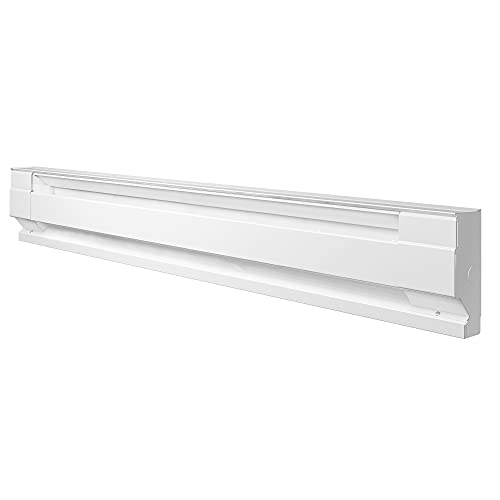
Cadet F Series 36″ Electric Baseboard Heater 3F750-1W (120V)
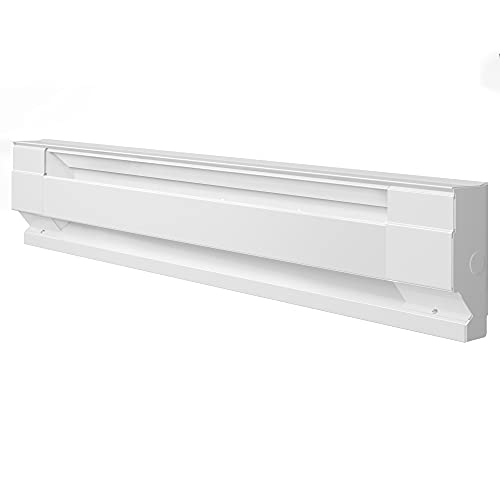
Cadet F Series 36″ Electric Baseboard Heater 3F750W (240/208V)
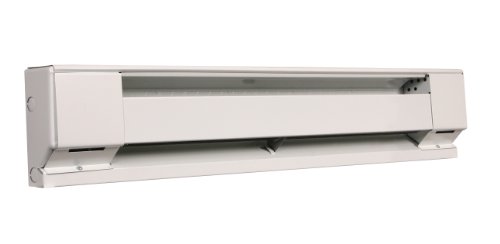
Marley 120V 2′ Baseboard Heater

Cadet F Series 24″ Electric Baseboard Heater 2F350W (240/208V)
More Details On Our Top Picks
The Comfort Zone CZ650B is the kind of unit you plug into a regular 120V outlet and forget about. The 1,500-watt convection element runs at a steady hum rather than the on-and-off fan blast that wakes you up at 3 a.m., and the digital thermostat lets you dial in a specific temperature instead of guessing with a numbered dial.
Dent-proof end panels matter more than they sound: moving a baseboard heater down a hallway or under a desk will eventually clip a doorframe, and a cracked end cap is the most common reason these units get junked early. Tip-over and overheat cutoffs round out the safety story for households with curious pets or kids.
Positive Takeaways
- Plugs into any standard 120V outlet, so renters don’t need an electrician
- Digital thermostat reads the actual room temperature, not just a vague Low/High setting
- Stay-cool body lets you mount it closer to curtains or low furniture than bare-metal units
- No fan means dust doesn’t get blown around, a real plus for allergy-prone bedrooms
Things To Consider
- 1,500W draws near a standard 15-amp circuit’s limit, so pairing it with another high-draw appliance on the same outlet can trip a breaker
- Convection heat takes a few minutes longer to warm a chilly room than a fan-forced heater
Quick Facts
Who It Suits Best
A renter or dorm dweller who wants tool-free installation and a thermostat that’s actually accurate.
Skip It When
The Cadet F Series 3F750-1W is a better match if you’re renovating and want a true hardwired 120V baseboard rather than a plug-in unit.
The Cadet BTF2W isn’t a heater on its own; it’s the control knob that makes a hardwired baseboard system feel like modern zoned heating. A double-pole thermostat (a switch that breaks both the hot and neutral wires, fully disconnecting power when off) rated for 22 amps snaps onto either end of a compatible Cadet F Series heater, so you skip the wall-mounted low-voltage thermostat and the extra low-voltage wire run that goes with it.
The twist dial covers 45 to 80 degrees Fahrenheit, which covers everything from a cool sleeping room to a toasty home office. For homeowners planning multiple rooms, buying a few BTF2W units plus several F Series baseboards can be cheaper than running each room back to a central thermostat panel.
What Earns Its Place
- End-mount design removes the need to fish low-voltage wire through the wall
- 22-amp rating handles the larger 240V Cadet heaters, not just 120V models
- Wide 45 to 80 degree setpoint range suits both bedrooms and living areas
Honest Caveats
- Only fits Cadet F Series baseboards, so it pairs with nothing else in this roundup
- Hardwired installation still requires comfort with a line-voltage circuit (the same type of circuit that powers a wall outlet, but wired directly into the heater), which most DIYers handle but some prefer to hand off
Made For
Homeowners building a multi-room Cadet system who want one thermostat per zone without extra wall wiring.
Look Elsewhere When
You just need to warm a single room with no commitment, in which case the Comfort Zone CZ650B gets you heat in five minutes flat.
Strictly speaking, the JNDRO is a wall-mounted fan heater rather than a true baseboard, but it earns a spot here because shoppers searching for 120V room heat often weigh both styles side by side. The 1,500-watt output matches a strong baseboard, while the oscillation head (60, 90, or 120 degrees) spreads warmth across a seating area instead of just along one wall.
ECO mode (an automatic setting that dials power up and down to hold a set temperature rather than running flat-out) is the headline feature for energy-conscious shoppers, and the 24-hour timer lets you wake up to a warm bathroom or come home to a pre-heated office. The remote and LED display also remove the need to get up and twist a dial in the dark.
What Works In Its Favor
- Three oscillation angles let you aim heat at a couch, a desk, or a whole room
- ECO thermostat cycles the wattage to hold your setpoint instead of full-blast cycling
- Wall-mount hardware keeps floor space clear, a nice change from a baseboard’s footprint
- Remote and 24-hour timer cover the “set it and forget it” use case
Points To Keep In Mind
- Fan operation is quieter than most space heaters but still audible, which light sleepers may notice
- Wall mounting means a more involved install than a plug-in baseboard, and you should plan your outlet location before drilling
Right Fit For
Living rooms and finished basements where oscillation and a remote make more sense than a long, low baseboard.
Swap It Out When
You need silent, dust-free bedroom heat, in which case the Comfort Zone CZ650B’s fan-free convection is a calmer choice.
The Cadet 3F750-1W is one of the few true 120V hardwired baseboards in the F Series, which makes it the right call for homes that lack a 240V branch circuit (the dedicated wiring run that feeds a high-draw appliance) or for additions where pulling new 240V wire would mean opening finished walls. At 36 inches long and 750 watts, it tucks neatly under a window or along a short wall where a longer baseboard won’t fit.
Unlike the JNDRO above, there’s no fan and no remote; the heater simply draws cool air in low, warms it across an aluminum element, and lets convection push it back into the room. A built-in overheat cut-off runs the full length of the unit, so the entire chassis is protected, not just one spot.
Where It Delivers
- True 120V hardwired design sidesteps the need for a 240V circuit
- 36-inch footprint fits under most standard windows without crowding the wall
- Front-discharge convection moves a surprising amount of air for 750 watts
- Full-length thermal cut-off covers the whole element, not just the end caps
Small Caveats
- Thermostat is sold separately, so budget for a wall unit or a compatible end-cap kit like the BTF2W
- 2,560 BTU is plenty for a bedroom but undersized for a large open living area
Feature Snapshot
Who Will Love This
Homeowners with a spare 120V circuit who want a quiet, permanent bedroom or office heater that disappears into the trim.
A Better Fit Elsewhere
The Cadet 3F750W is a stronger pick if you have 240V available and need more heat for a larger room.
The 3F750W is the same physical size as the 3F750-1W above, but it’s a 240/208V unit (wiring that uses two hot legs instead of one hot and one neutral, which lets the heater pull more power from a thinner wire), so it draws the same 750 watts while running cooler internally. That extra headroom translates to a longer element life and less strain on older household wiring.
It’s also multi-watt: at 240V it delivers 2,560 BTU, and at 208V (common in some apartment buildings and commercial spaces) it still produces 1,925 BTU, so the same heater adapts to either electrical service. Universal wiring and pre-punched knockouts (factory-removed metal discs that you pop out to run wire through) make for a clean install.
What Makes Sense
- 240/208V compatibility covers most North American household and light commercial wiring
- Pre-punched knockouts speed up the wiring step for a tidy install
- Same footprint as the 120V Cadet, so it slots into an existing 36-inch baseboard run
Where It Is Less Suited
- Requires a 240V circuit, which older homes may not have at the baseboard location
- Like the other F Series models, the thermostat is a separate purchase
- All-steel cabinet can dent if furniture is shoved against it during a move
Best Suited To
Homeowners with 240V wiring who want a long-life, low-strain primary heat source for a larger bedroom or den.
Another Choice May Suit
The Comfort Zone CZ650B is the easier path if you don’t have a 240V circuit and just want something you can plug in tonight.
The Marley 120V is the smallest hardwired baseboard in the roundup, and that compact 2-foot length is its whole reason for existing. It fits between a door frame and a window, or above a low kitchen cabinet, where a 36-inch or 48-inch heater would either stick out into the room or block a sill.
Like the Cadet F Series above, it uses convection rather than a fan, so the room warms without any blowing or noise. The low-profile housing can sit on carpet, tile, or wood without a fire-risk complaint, which makes it a common sight in older homes where the baseboard has to hug a finished floor.
A Few Highlights
- 2-foot length is the shortest hardwired 120V baseboard in this roundup
- Convection heat keeps allergens and dust out of the airstream
- Low housing sits safely on carpet or tile without extra mounting hardware
Possible Compromises
- Short length limits the BTU output, so it’s a supplemental heater at best in a cold climate
- Like most hardwired baseboards, it expects a separate thermostat purchase
- Slim profile means a longer warm-up time for a chilly room, since the element is small
Perfect Match For
Hallways, mudrooms, and small bathrooms where a full-size baseboard would dominate the wall.
Reach For A Different Pick When
You need to heat a full bedroom; the Cadet 3F750-1W’s longer element will hold a steady temperature with less cycling.
The 2F350W sits at the bottom of the F Series output range at 350 watts on a 240V circuit, and that low draw is the entire pitch. It’s a supplemental heater for a small office, a nursery, or a converted closet where a full 750-watt baseboard would overshoot the room’s heat loss and short-cycle (turn on and off rapidly) annoyingly.
The 24-inch steel cabinet matches the rest of the F Series aesthetically, so it pairs visually with the 36-inch models above if you’re stringing baseboards along one long wall. At 1,195 BTU, it’s best thought of as a finishing piece in a zoned system, not a stand-alone primary heat source.
The Good Stuff
- 350-watt draw is gentle on shared apartment circuits and 15-amp wiring
- Matches the look of the larger F Series baseboards for a consistent run along one wall
- 240/208V multi-watt field lets the same unit adapt to common apartment electrical service
Trade-Offs To Consider
- 1,195 BTU is a small amount of heat; in a cold climate this is a backup, not a primary
- Requires 240V service, which limits it to newer or renovated homes
Spec Overview
Who Should Grab It
Apartment dwellers finishing a multi-baseboard layout or adding a gentle boost to a nursery.
Where A Sibling Pick Shines
For a single-room 120V install without a 240V circuit, the Cadet 3F750-1W is the more practical one-piece answer.
Matching Wattage To The Room You Want To Heat
A 120V baseboard heater is only as good as the math behind it. The quick rule of thumb is 10 watts per square foot of room area in a moderately insulated home, so a 1,500-watt unit covers about 150 square feet, a 750-watt unit about 75, and a 350-watt unit about 35. Buying a heater that’s too small for the room means it never reaches the setpoint; buying one that’s too large means it short-cycles and wears the element early.
Circuit Capacity And Voltage Reality
Before anything else, check the electrical service at the wall. A plug-in 1,500W unit needs a dedicated 15-amp circuit, meaning no other outlets share the same breaker, while a hardwired 240V baseboard pulls the same watts across two hot legs, so it runs cooler internally. Homes built before the 1990s sometimes lack 240V branches at baseboard height, which is where a true 120V hardwired model like the Cadet 3F750-1W earns its place.
Convection Vs. Fan Output
Convection baseboards, the silent, fan-free kind like the Cadet F Series and the Marley, warm the air without moving it. They’re ideal for bedrooms and anyone bothered by dust or noise. Fan-assisted wall heaters like the JNDRO move warm air further and faster, which helps in open living rooms, at the cost of a soft hum and a small amount of airflow noise.
Zoning, Thermostats, And Long-Term Control
A baseboard without a thermostat is just an expensive on-off switch. End-cap mechanical thermostats like the Cadet BTF2W are the easiest path for a single-room install, while homeowners planning multiple rooms often run a low-voltage wall thermostat per zone. Either way, plan the thermostat purchase before the heater, not after, since most hardwired baseboards ship without one.
What Most Shoppers Get Wrong
Pitfalls Shoppers Hit
The most common slip is matching a 1,500-watt plug-in heater to an outlet that’s already serving a window air conditioner or a space heater in the next room, and then wondering why the breaker trips on the first cold night. Another is buying a 120V baseboard and expecting it to back up a large open living area; these heaters are zoned tools, not whole-home solutions, and undersizing them is the fastest way to be disappointed. Finally, shoppers sometimes forget the thermostat is sold separately on the hardwired Cadet models, so the install stalls halfway through.
What The Higher Tier Buys
Moving up from a basic plug-in unit to a multi-zone hardwired system costs more up front, but you gain per-room control, longer element life from 240V operation, and a quieter install with no fan noise. The upgrade pays off most in homes where the central furnace leaves one or two rooms cold, because you stop over-heating the rest of the house to fix the chilly corner. For renters or short-term setups, a good plug-in like the Comfort Zone CZ650B delivers most of the comfort at a fraction of the cost and zero electrical work.
Frequently Asked Questions
How many square feet will a 120V baseboard heater cover?
As a starting point, plan on about 10 watts per square foot in a normally insulated room, which puts a 1,500-watt unit at roughly 150 square feet and a 750-watt unit near 75. Drafty older homes and rooms with many windows usually need more wattage, while interior rooms with one exterior wall can get by with less.
Can a 120V baseboard heater run on a regular household outlet?
Plug-in models like the Comfort Zone CZ650B run on a standard 15-amp outlet as long as nothing else heavy shares that circuit. Hardwired baseboards like the Cadet F Series connect directly to a branch circuit, not an outlet, and should be installed on a dedicated line sized for the heater’s wattage.
Do baseboard heaters use a lot of electricity?
Because they convert nearly all of their wattage into heat, they are roughly 100 percent efficient at the point of use, but they still draw whatever their rated wattage is for as long as they run. A 1,500-watt unit running eight hours a day will use noticeably more energy than a 350-watt unit, which is why matching the heater to the room matters as much as the brand.
Is a wall-mounted fan heater a good substitute for a baseboard?
For open living areas where you want heat pushed across a seating zone quickly, yes, and the JNDRO’s oscillation makes that case well. For bedrooms, nurseries, and dust-sensitive spaces, a fan-free baseboard is usually the calmer, cleaner choice.
Where should a 120V baseboard heater be installed?
Baseboards work best along exterior walls and under windows, where cold air naturally falls and meets the heater’s intake. Keep curtains, furniture, and rugs at least a few inches away so the convection flow isn’t blocked, and never set a baseboard behind a door that can close against it.