
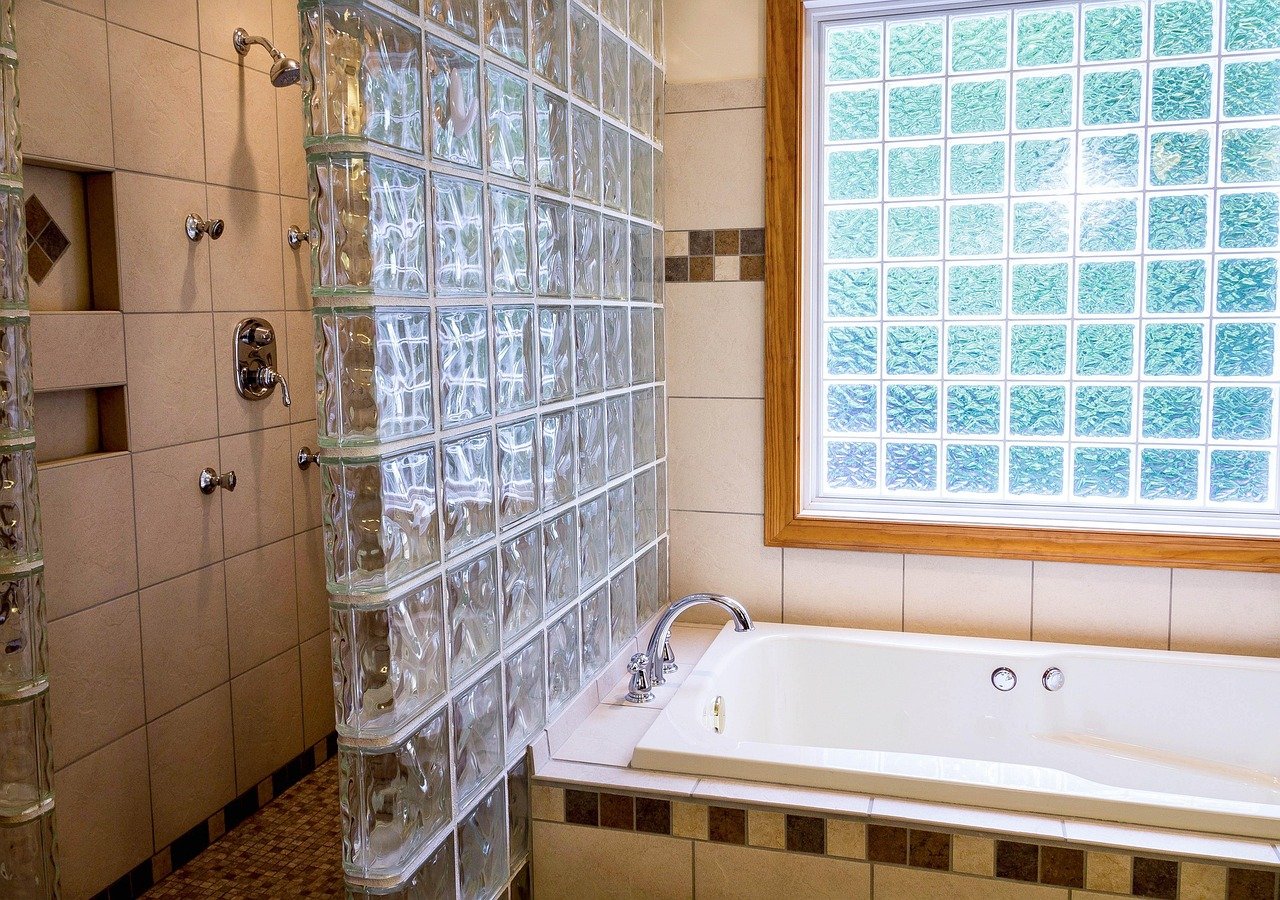
Warm water, a pH-neutral cleaner, and a soft microfiber cloth remove residue from shower glass tiles before immediate drying prevents streaks. Your cloudy glass can hold soap scum, mineral scale, grout haze, or surface damage. A rough scrubber can turn a dull patch into a scratched one.
This walkthrough helps you sort out residue, clean glass shower tile safely, protect grout and caulk, and reduce fresh spots after bathing.
Diagnose the Film Before Choosing a Cleaner
A damp microfiber cloth gives you a useful starting clue. Wet a 4-inch area, wipe it once, and feel how the cloth moves across the glass shower tile. A waxy, slippery film points to soap scum, while chalky white specks that remain after wiping point to hard-water deposits.
Surface Clues Separate Residue From Damage
| What you see | What it feels like | Likely cause | Your next move |
|---|---|---|---|
| Cloudy film that smears while wet | Slippery or waxy | Soap scum and body oil | Run the gentle routine twice before moving to a stronger method. |
| White dots or a crusty rim | Rough or raised | Hard-water deposits | Spot-clean plain glass with diluted white vinegar. |
| Dark marks in joints | Set into grout or caulk | Trapped moisture or growth | Dry the area and inspect the caulk condition. |
| Uniform pale veil after installation | Powdery or dull | Grout haze | Contact a tile professional about residue removal. |
| Smooth dull patch unchanged by washing | Flat, not crusty | Etched glass | Stop rubbing and seek professional advice. |
Dark material inside grout or silicone caulk is different from haze on the tile face. Your brush can lift loose surface soil, yet dark lines that return point to moisture remaining in the joint. Cracked or shrinking caulk gives water a path behind the finished surface.
Installation residue can create another misleading appearance. A newer shower with an even gray-white veil can carry grout haze, a cement-based residue left after grouting. The Tile Council of North America advises following tile and grout manufacturer directions because glass, grout, and stone have different chemical limits.
Etching is the stop sign. Smooth dull spots that do not change after gentle washing are surface damage rather than buildup. Your next move is identification, not harder rubbing, because abrasive polishing compounds can scar nearby glossy pieces.
That risk makes material-safe tools essential, especially where fragile caulk and porous grout meet glossy tile.
Choose Tools That Respect Glass, Grout, and Caulk
Once you know what sits on the glass, tool choice matters more than elbow grease. Glass tile has a hard face, yet fine grit and metal fibers can leave light-catching scratches. Cement grout is more porous than tile, while silicone caulk can weaken after harsh chemical contact.
Core Supplies Keep Contact Gentle
- Warm water: Loosen fresh residue before your cloth touches the glass surface.
- pH-neutral cleaner: Pick a bathroom-surface formula and follow the label’s stated dwell time.
- Microfiber cloths: Keep two cloths nearby, one for washing and one for the final dry wipe.
- Nonabrasive sponge: Use a soft cellulose or foam sponge across broad glass faces.
- Soft nylon brush: Keep its bristles inside grout channels rather than across glossy mosaics.
- Squeegee: Pull standing water downward after bathing to limit fresh spotting.
A safe cleaner for glass shower tile has a neutral pH and leaves little residue after rinsing. Method and Mrs. Meyer’s Clean Day sell household surface cleaners in several formulas, so check the label instead of assuming every bottle suits tile, stone, or sealed grout.
Abrasives Leave Marks That Washing Cannot Conceal
Steel wool, scouring powders, abrasive pads, stiff wire brushes, and harsh polishing compounds belong away from glass shower tile. Bar Keepers Friend and CLR can suit selected household surfaces, yet formulas and label directions differ. Your shower materials need a hidden-corner check before broad use.
Put a new cleaner on a hidden corner for the label’s stated dwell time, rinse it, and inspect the surface after drying. Natural-stone accents, aging caulk, grout sealer, and cement grout need that caution.
Never mix white vinegar or another acid with chlorine bleach. Dangerous chlorine gas can form from that combination. Keep products in their original containers, rinse between methods, and work with one chemistry at a time.
Wash the Tile in a Rinse-to-Dry Sequence
Fresh residue releases with water more readily than dried mineral scale. Start after the shower has cooled enough for comfortable handling, then wet the wall from top to bottom. That rinse moves loose hair, shampoo, and surface grit away before your cloth crosses the glass.
Move in Straight, Overlapping Passes
- Rinse the wall: Spray warm water across the tile for 20 to 30 seconds, with attention to ledges and corners.
- Add cleaner: Mist pH-neutral cleaner lightly and leave it for the label’s stated dwell time, often 1 to 3 minutes.
- Wipe gently: Fold a damp microfiber cloth into quarters and wipe in straight, overlapping passes without hard pressure.
- Detail joints: Use a soft nylon brush on grout lines with short strokes aimed away from glass faces.
- Rinse fully: Flush away cleaner until the surface no longer feels slick beneath clean water.
- Dry at once: Pull water down with a squeegee, then dry edges and mosaics with a microfiber cloth.
Drying is what helps you clean shower glass tiles without streaks. Residual cleaner dries into a faint film, while evaporating hard water leaves minerals behind. Your final cloth should stay dry enough to absorb water instead of spreading it into cloudy tracks.
Dawn Dish Soap can cut greasy body-oil film in a diluted wash, such as a few drops in a spray bottle of warm water. Rinse that mixture with extra care. Dish soap left on reflective tile can make a freshly washed wall look foggy by morning.
If haze returns after a thorough rinse and dry, the remaining film likely needs a more targeted approach.
Escalate Carefully for Soap Scum and Mineral Scale
Stubborn haze calls for repeated gentle passes before a stronger liquid. Soap scum is a blend of soap residue, body oils, and minerals, so it can soften in layers rather than lift in one wipe. Your aim is to remove soap scum from glass tile without replacing it with fine scratches.
Repeat Neutral Cleaning for Waxy Film
Two separate cleaning sessions often lift a waxy film more effectively than one pass. Use fresh cloth sections as residue loads the fabric, because a dirty cloth puts the same film back on the tile. A shower niche below shoulder height is a common trouble spot because conditioner and body wash collect there.
Use Diluted Vinegar on Local Mineral Spots
Hard white spotting needs a narrow response. For plain glass only, mix equal parts white vinegar and water, then dampen a cloth rather than soaking the wall. Hold the cloth on a small mineral patch for 2 to 3 minutes, wipe gently, rinse promptly, and dry the area.
You can clean hard water stains on glass tile with that white vinegar mixture after a hidden spot remains unchanged. Keep acid away from natural stone, and skip weekly acid cleaning around cement grout or silicone caulk. Repeated acid contact can erode grout and dull vulnerable finishes.
Keep Baking Soda Away From Glass Faces
A baking soda paste has mild grit, so reserve it for a grout-stained pinpoint after a hidden-corner check. Place a pea-sized amount on the grout line, brush lightly with nylon bristles, rinse, and blot dry. Broad rubbing across glossy glass tile can leave fine haze-like scratches.
Stop at the gentle method where a smooth dull mark remains unchanged. Mineral scale feels raised, while etched glass feels flat, and routine washing will not restore lost surface clarity.
Clean Small Mosaics and Grout Without Soaking the Joints
Small mosaics add more joints that can hold cleaner and water. Work on a section about the size of a bath towel, so liquid does not run down the wall and settle along lower grout lines. Your moisture control matters as much as the brush choice.
Point Bristles Into Narrow Grout Channels
Hold a soft nylon brush at a slight angle and use short back-and-forth strokes inside each joint. Avoid dragging bristle tips across several glass pieces at once. A 1-inch mosaic border around a niche responds better to a toothbrush-style nylon brush than a large scrub pad.
Use minimal cleaner around silicone edges. Excess fluid can sit where tile meets a shower pan, then dry into a white line or seep beneath weakened caulk. Rinse with a lightly wet cloth, followed by another cloth dampened only with clean water.
Dry Joints Expose Structural Trouble
Blot grout and caulk after rinsing instead of leaving narrow channels wet. Your dry towel can reveal crumbling grout, split caulk, or a dark stain returning from beneath the surface. Hard scrubbing cannot correct a failing joint or moisture behind tile.
How to clean glass tile grout depends on the grout condition. Intact grout responds to gentle brushing and prompt drying, while loose, cracked, or persistently discolored grout calls for repair work. A tile professional can identify whether moisture has moved behind the tiled wall.
Keep the Glass Clear and Recognize the Stop Point
Water left on a glass wall becomes tomorrow’s mineral ring. Pull a squeegee from top to bottom after each shower, then towel-dry the lower 12 inches, niche shelf, and faucet wall. Your effort takes less than a minute and reduces soap scum and hard-water deposits.
Match Your Routine to Water Hardness
- After each shower: Squeegee standing water and wipe splash-prone edges where droplets collect.
- Once weekly: Run the gentle routine in homes with soft or moderately hard water.
- Twice weekly: Wash more frequently where white spots return within several days.
- After heavy use: Dry niche shelves after hair products or shaving cream leave visible residue.
- Run ventilation: Keep the bathroom fan running during bathing and for 20 minutes afterward to move humid air out.
Ventilation helps surfaces dry before water minerals settle. Your fan should exhaust outdoors rather than into an attic, where moisture can create a separate building problem. A water softener can reduce mineral load in hard-water homes, though it does not replace wiping and rinsing habits.
Surface Damage and Installation Faults Need Repair
Stop escalating cleaners once gentle methods leave the same haze untouched. Etched glass cannot regain clarity through routine washing, and harsh attempts can widen the dull area. Suspected grout haze, failing caulk, chipped tile edges, or recurring dark grout lines call for a tile professional.
For your regular how to clean glass tile shower routine, stay with warm water, neutral cleaner, microfiber, a careful rinse, and immediate drying. That sequence protects the grout, silicone caulk, and shine surrounding each glass piece.
Key Points for Ongoing Care
Clear glass starts with diagnosis rather than a stronger bottle or rougher pad. Your cloth check separates slippery soap scum from crusty mineral scale, while flat dullness signals a point where washing should stop. Rinse away every cleaner and dry the wall before spots form.
Grout and caulk need gentler contact than the glass face. A soft nylon brush reaches narrow joints without scouring mosaics, while a microfiber cloth removes rinse water from silicone edges. Your routine stays simpler when residue never gets time to harden.
FAQ
What is the safest way to clean glass tiles in a shower?
The safest method uses warm water, a pH-neutral cleaner, a soft microfiber cloth or nonabrasive sponge, a full rinse, and immediate drying. Your glass stays clearer because you remove residue without steel wool, scouring powder, wire brushes, or harsh polishing compounds that can scratch tile and harm grout.
Can you use vinegar on glass shower tile?
Diluted white vinegar can treat a small hard-water spot on plain glass after a hidden-area check. Keep it away from natural stone, rinse it promptly, and avoid repeated acid use around cement grout and silicone caulk. Never mix vinegar with chlorine bleach.
How do you remove hard water spots from glass tile?
Start with warm water and a pH-neutral cleaner, then use a 1-to-1 vinegar and water mixture on localized plain-glass deposits that remain rough after cleaning. Your cloth should stay damp, not dripping. Rinse after 2 to 3 minutes and dry the spot fully.
What removes soap scum from glass tile without scratching it?
That water, a pH-neutral cleaner, and a damp microfiber cloth. Run two gentle cleaning sessions for waxy residue before moving to a stronger method. Your cloth should be changed as it loads with body oil and soap film, because dirty fabric can smear the same residue back across the glass.
Can baking soda be used on glass shower tile?
Baking soda paste belongs on a tiny grout-stained area rather than on glossy glass faces. Use a pea-sized amount after a hidden-corner check, brush the grout lightly with nylon bristles, rinse, and blot dry. Your glass can pick up fine scratches from broad rubbing with gritty paste.
What cleaning products should you avoid on glass mosaic tiles?
Keep steel wool, powdered cleansers, abrasive pads, wire brushes, and harsh polishing compounds away from glass mosaic tile. Acid products also need care near cement grout, natural-stone accents, and silicone caulk. Your safest starting point is a pH-neutral cleaner, microfiber cloth, and nonabrasive sponge.