
A HEPA vacuum or electrostatic mop lifts loose grit first; once the powder is gone, follow with a barely damp microfiber cloth. Fine clumping clay litter or silica gel litter can turn into gray, cement-like residue with water and dull a finish through rubbing.
This floor-care routine suits homes with litter boxes near hardwood, laminate, vinyl, tile, or stone. You’ll see how dry pickup, light wiping, cleaner choices, and tracking control work together around your cat’s box.
Dry Pickup Stops Grit From Becoming Floor Film
Fine cat litter dust settles under the box, inside the litter mat, and along nearby baseboards. Clumping clay litter leaves mineral powder, while silica gel litter can leave hard granules that scratch as paws, socks, and shoes cross the area.
Your cleaning order changes the result. Dry collection keeps powder from settling into seams; water added too soon turns clay dust into a paste that sticks to textured tile, laminate joints, and worn hardwood floors.
Contain loose litter before moving it
Move the litter box and litter mat aside for a few minutes where space permits. Keep your cat out of the area until the floor feels dry, because wet paws can carry residue onto fur and into nearby rooms.
A fan, leaf blower, or forceful broom stroke sends fine dust upward instead of into a tool. That pale haze can settle on shelving, vents, furniture legs, and window sills far beyond the litter-box corner.
Collect dry particles before reaching for a mop. Water turns clay dust into a thin, cement-like film that needs more rubbing to lift.
Start with visible pellets, then work toward the powder at the edges of the area. Your goal is simple: lift grit away without dragging it across the floor’s finish.
- Move the box so trapped granules beneath the pan do not stay pressed into the floor.
- Lift the mat rather than shaking it indoors, since shaking releases dust back into the room.
- Collect large pellets with a dustpan before vacuuming so hard pieces do not roll under furniture.
- Work toward open space from walls and baseboards, where dust gathers in thin lines.
Vacuuming and Microfiber Capture Fine Dust
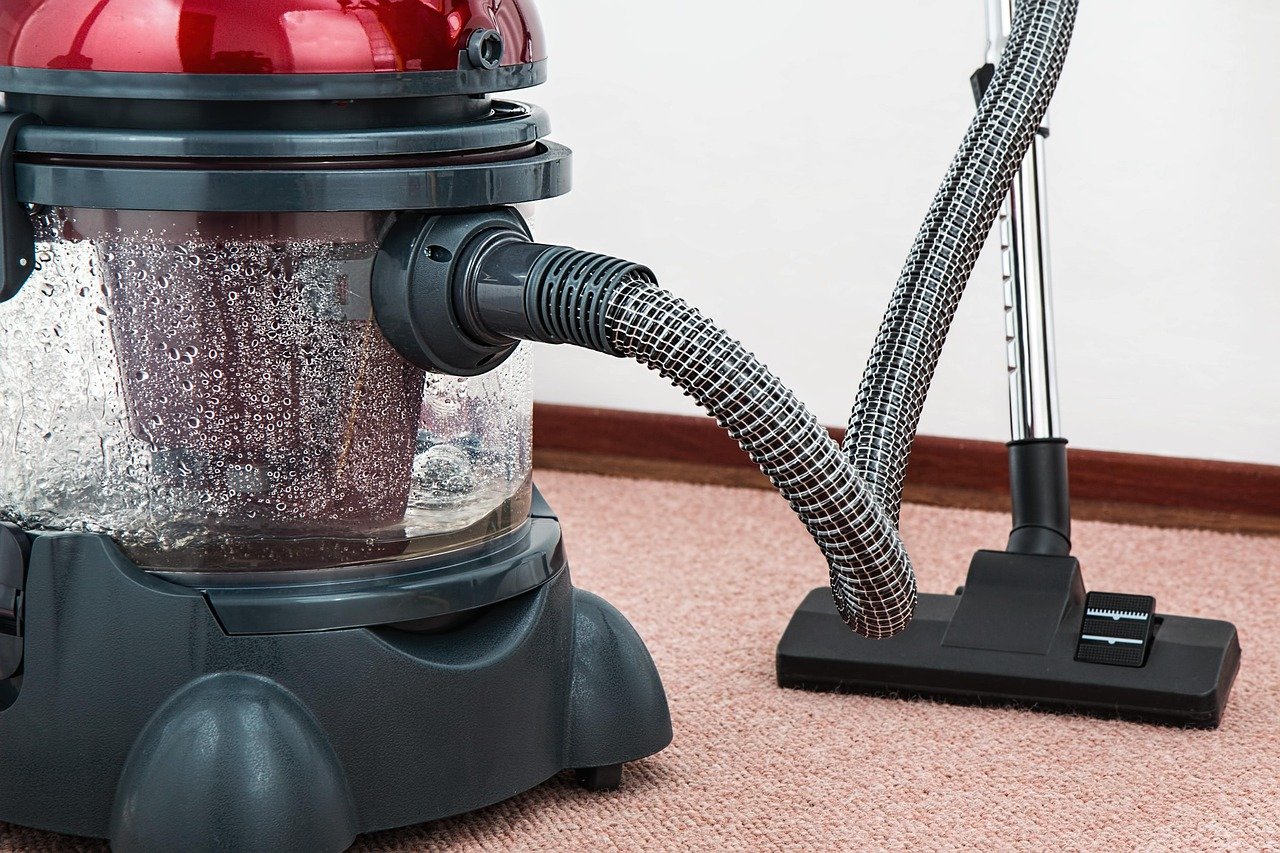
A HEPA vacuum catches fine powder before it becomes damp sludge. A sealed HEPA filter holds small debris inside the machine rather than sending dusty exhaust back into your room.
You can vacuum cat litter dust safely with a hard-floor attachment and no rotating brush bar. A Dyson or Bissell hard-floor tool can work well, provided its wheels and attachment are clean enough not to drag grit across the finish.
Slow passes reach the litter traps
Run the attachment in overlapping passes from the wall toward open floor. Spend extra time under the box, at the edge of the litter mat, beside furniture legs, and near baseboards where granules gather.
Empty a bagless canister outdoors or into a lined trash bin, then wipe the rim with a damp paper towel. Your vacuum performs better after the collection chamber and filter are clear of pale litter powder.
Dry microfiber collects leftover haze
Follow vacuuming with an electrostatic mop or dry microfiber cloth. Swiffer dry cloths pick up light surface dust, while a washable microfiber mop head gives your hand more control along baseboards and behind the box.
A soft broom still has a role for pellets too large for a narrow vacuum tool. Use short pulls toward the dustpan rather than long strokes that push hard grit across hardwood sealant or a laminate top layer.
| Tool | What it collects | Floor concern |
|---|---|---|
| HEPA vacuum | Fine powder and loose granules | Keep brush rollers off scratch-prone finishes |
| Electrostatic dry mop | Static dust near walls and mat edges | Change a loaded pad before it sheds debris |
| Soft broom and dustpan | Large pellets after scooping | Short strokes limit grit pushed across flooring |
Dry sweeping can redistribute fine clay or silica dust, especially across smooth flooring. Your HEPA vacuum, electrostatic mop, or dry microfiber cloth keeps more of that powder inside the cleaning tool instead of floating through the room.
With loose powder contained, a lightly damp method can remove the film that dry tools leave behind.
Light Moisture Lifts Film From Each Floor Type
After the dry pass, a light haze can remain on the surface. Use only enough moisture to lift mineral film, because excess water can enter plank joints, laminate seams, cracked grout, and worn floor edges.
How to remove cat litter dust from hardwood floors depends on the condition of the finish. Sealed wood tolerates a barely damp microfiber cloth, while unsealed or damaged boards need a drier method and flooring-maker care directions.
Sealed hardwood and laminate need near-dry wiping
Work in a two-foot patch with a well-wrung microfiber mop. Buff that patch dry with a clean towel before moving onward, especially near worn wood, laminate seams, and the box perimeter.
Your mop should feel damp, not wet enough to leave beads behind. Skip steam mops on hardwood and laminate flooring because heat and moisture can stress adhesive layers, seams, and surface coatings.
Tile and vinyl handle a light wash
Ceramic floors and resilient sheet flooring tolerate a lightly damp microfiber mop with diluted, low-residue cleaner. To clean litter dust from tile floor, wipe grout lines and textured tile with a folded microfiber cloth rather than soaking them.
Choose a pet-safe floor cleaner labeled for your flooring material and follow its dilution directions. A safe floor cleaner for cat litter dust leaves less residue than an overmixed solution, which can leave a sticky layer that catches new powder.
Stone and damaged finishes need less water
Natural stone, unsealed wood, cracked grout, and damaged laminate need restraint. Acidic products can etch stone, while moisture can enter exposed wood fibers or lifted laminate edges.
For those surfaces, follow the flooring maker’s care directions or contact a flooring professional for stubborn buildup. Your caution protects the floor from a larger problem than a dusty patch near the box.
| Floor surface | Preferred method | Moisture limit |
|---|---|---|
| Sealed hardwood | Dry pickup, then barely damp microfiber | Dry each two-foot patch promptly |
| Laminate flooring | Dry pickup, then near-dry microfiber | Keep water out of seams |
| Vinyl flooring | Dry pickup, then light damp wipe | Keep liquid away from lifted edges |
| Ceramic tile | Dry pickup, then light damp wipe | Wipe grout rather than soaking it |
| Natural stone | Dry pickup and stone-suitable care | Avoid acidic products and standing water |
Residue and Biological Messes Need Separate Cleanup
Damp clay clumps need lifting instead of scrubbing. Slide a plastic scraper under the material, lift it away, and wipe the spot with a barely damp cloth so grit does not act like sandpaper.
How to get cat litter residue off the floor becomes harder after clumping litter dries into a crust. Hold a damp cloth against the residue for one minute, loosen it with the scraper, then dry the area after wiping.
Urine and feces residue need enzyme action
Visible urine or feces residue comes before routine floor wiping. Blot moisture, lift solids with disposable material, then use an enzyme cleaner suited to your floor and follow the label’s dwell-time and wipe-up directions.
Nature’s Miracle is a familiar enzyme-cleaner brand, though its label still needs to match your floor type. Enzymes target odor-causing organic residue, while a routine floor product can leave urine odor behind.
Strong fragrance is not a cat-safety signal
Avoid phenols, ammonia-heavy products, strongly fragranced sprays, and mixed chemical products. Bleach mixed with ammonia-containing products can release hazardous fumes, so keep bottles apart and rinse tools before changing cleaners.
Floors should be dry before your cat walks or licks paws near the box. Your cat spends time close to the surface, which makes leftover cleaner film and wet paw traffic more relevant than a fresh scent.
- Read the label for flooring limits, dilution directions, dwell time, and wipe-up instructions.
- Ventilate gently with an open door or window that does not blow dust around.
- Block paw traffic until the surface feels dry under your fingertips.
- Rinse reusable tools before moving from enzyme cleaner to routine floor cleaner.
- Skip heavy perfume because lingering scent can bother a cat near the box.
A Daily and Weekly Rhythm Limits Dust Migration
Dust left for one day can travel beyond the litter box. Paw pads carry it toward hallways, while a sock can spread a pale film across several rooms before the source becomes obvious.
Your daily reset takes about three minutes in a small box area. Scoop waste, vacuum or dry-mop the immediate perimeter, and shake debris into a trash bin rather than sending it into the next room.
Each task handles a different buildup
- Daily reset Scoop waste, clear loose pellets, and dry-mop the box perimeter.
- Weekly wipe Damp-clean the floor, box exterior, baseboards, and nearby lower wall.
- Mat care Vacuum mat grooves twice weekly and wash reusable mats according to their care label.
- Four-week check Pull the box forward and inspect seams, corners, and furniture legs.
- Odor review Investigate recurring urine odor before it reaches padding, joints, or wall trim.
| Schedule | Area | What your routine catches |
|---|---|---|
| Daily | Mat and box perimeter | Fresh dust and tracked pellets |
| Weekly | Floor, box exterior, and baseboards | Gritty film and splash marks |
| Every 4 weeks | Behind the box and floor seams | Haze, moisture damage, and buildup |
That four-week check catches small floor problems before they spread. A cloudy patch, soft laminate edge, or darkened wood seam points to moisture exposure beyond routine litter dust.
Preventing that exposure at the box is easier than repeatedly correcting its effects across the room.
Box Setup Reduces Tracking at the Source
The cleanest floor starts with less litter leaving the pan. Lower-dust formulas can reduce airborne powder, though particle texture, fill depth, digging habits, and your cat’s comfort still shape the mess outside the box.
Arm & Hammer and World’s Best Cat Litter sell formulas with different particle sizes and dust claims. Your litter mat after seven days gives a clearer household measure than a package claim alone.
Mat size and box style change the exit path
A well-sized litter mat catches material between the box and the room. Choose a non-slip mat wide enough for two or three steps, then point its outer edge away from a busy walkway.
Your box style matters as much as the mat. High-sided boxes contain energetic digging, while top-entry styles can reduce scatter for some cats but frustrate cats with mobility limits or strong box habits.
Small setup changes reveal the source of dust
Pour litter slowly from close to the pan instead of dropping it from shoulder height. That shorter drop cuts the powder cloud that settles on the floor before your cat enters the box.
Change one element at a time across seven to 14 days. Your cat gets time to accept a new litter or box style, and you can see whether cleaner flooring came from the formula, mat, placement, or fill depth.
Place the box on a stable, low-traffic surface away from door swings and heating vents. A box that rocks or sits beside moving air sends granules outward with each exit and stirs settled dust into the room.
- Choose lower-dust litter after checking how much powder reaches your mat during seven days.
- Keep litter shallow enough for comfortable digging without giving paws extra material to scatter.
- Use a broad mat that catches two or three steps before your cat reaches open flooring.
- Stabilize the box so rocking does not push pellets and powder over the sides.
- Move air sources away from the box area, including heating vents and door drafts.
Closing Floor-Care Take
Your strongest defense is a dry-before-damp habit matched to the floor beneath the box. Capture dust before it becomes paste, keep urine residue separate with an enzyme cleaner, and check the litter mat for evidence that your setup is holding material near the pan.
That routine helps you clean cat litter dust from floor without trading a dusty corner for scratches, haze, or wet seams. A few careful minutes each day protect hardwood floors, tile floors, vinyl, and laminate flooring from repeated grit exposure.
FAQ
What is the safest way to clean cat litter dust off hardwood floors?
Start with a HEPA vacuum or electrostatic dry mop so loose grit cannot scratch the finish. Follow with a barely damp microfiber cloth on sealed hardwood, working in small patches and drying each patch promptly to protect joints and hardwood sealant.
Can I vacuum cat litter dust safely?
A hard-floor attachment and HEPA-filtered machine safely capture fine litter dust. Keep rotating brush bars off wood and laminate, move slowly over granules, and empty the canister carefully so collected powder does not return to your room.
How do I stop cat litter dust from spreading around the house?
Place a broad litter mat outside the box, scoop daily, and dry-clean the mat and nearby floor before dust reaches hallways. Pour litter slowly, choose a lower-dust formula, and keep the box away from air vents to reduce spread.
Does cat litter dust damage laminate or wood flooring?
Fine mineral grit can dull laminate and wood finishes through repeated foot and paw traffic. Wet clay residue creates a separate risk because water can enter laminate seams or stressed wood joints, so dry pickup belongs before damp cleaning.
What cleaner removes litter residue without harming cats?
A pet-safe floor cleaner matched to your flooring can lift mineral film after dry pickup. For urine or feces residue, use a floor-suitable enzyme cleaner, avoid strong fragrance and phenols, and keep your cat away until the surface dries.
How often should I clean the floor around a litter box?
Clear loose particles daily, damp-wipe the floor and box exterior each week, and pull the box away from the wall about once a month. Your schedule can need more dry cleanup with multiple cats, fine clay litter, or a small enclosed litter area.