

Finding the right 16x24x1 filter feels small until your furnace starts wheezing through allergy season. The wrong size strangles airflow, the wrong MERV rating (Minimum Efficiency Reporting Value, a 1 to 16 scale that rates how well a filter traps particles) lets pollen sail right through, and suddenly the whole HVAC system is working harder for less comfort. A correctly sized, well-matched pleated filter keeps dust down, protects the blower, and runs quieter month after month. The seven picks below cover the everyday baseline, the allergy-fighting upgrade, and the bulk packs that keep you stocked for most of the year.
The Choices Worth Comparing

Nordic Pure 16x24x1 Pleated MERV 8 Air Filters 6 Pack
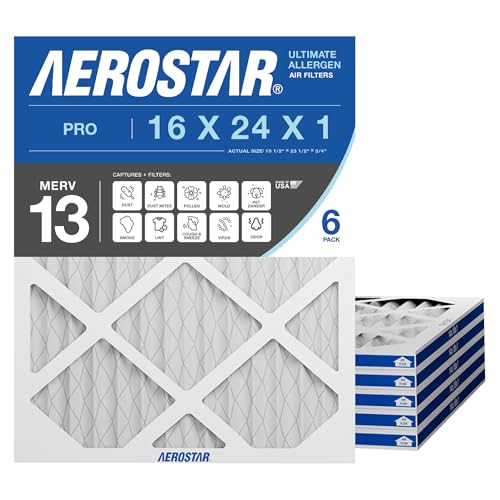
Aerostar 16x24x1 MERV 13 AC Furnace Filter 6 Pack

Filtrete 16x24x1 MERV 8 Electrostatic Air Filter 6 Pack

Filterbuy 16x24x1 MERV 8 Dust & Allergy Defense 6-Pack

Filter King 16x24x1 MERV 8 AC Furnace Filter 12-Pack

Filterbuy 16x24x1 MERV 8 Dust & Allergy Defense 2-Pack
Honeywell 16x24x1 MERV 11 Allergen Reducer 4-Pack
Inside Each Recommended Option
Most homes with a standard 1-inch slot just need a steady MERV 8 pleated filter, and this Nordic Pure pack fits that brief without ceremony. The actual dimensions land at 15.5 by 23.5 by 0.75 inches, which is the slightly undersized standard for 16x24x1 nominal frames and usually slides in without binding. Inside, a synthetic poly blend media (a non-woven fiber mat that traps particles as air passes through) catches the everyday stuff: lint, dust, and pollen that would otherwise coat your supply registers.
Six filters cover about six months at the standard 90-day swap interval (assuming a single-filter home, which is most apartments and small houses). If you live with shedding pets or a dusty workshop nearby, you will likely swap sooner and burn through the pack faster. For most households this is the dependable middle of the road.
The Practical Payoff
- Six-month supply at the typical 60 to 90 day change interval.
- MERV 8 rating balances filtration with steady HVAC airflow.
- Slightly undersized actual frame drops into most 16x24x1 slots without forcing.
- Synthetic pleated media handles routine dust, lint, and pollen well.
Things To Consider
- MERV 8 is the baseline, so fine allergens and smoke pass through more easily than with higher-rated options.
- Pet-heavy homes typically shorten the change interval noticeably.
Who It Suits Best
Singletons, couples, and small families who want fuss-free seasonal swaps without chasing the highest MERV tier.
Look Elsewhere When
The Honeywell MERV 11 Allergen Reducer 4-Pack is the smarter fit for a multi-pet household that needs stronger allergen capture than MERV 8 offers.
Step up from MERV 8 and the air feels different on day one, especially in spring. This Aerostar pack runs at MERV 13, the rating that starts to catch the smaller particles between roughly 0.3 and 1.0 microns, including fine dust, pet dander, mold spores, and many smoke particles. The media uses an electrostatic charge, meaning the fibers carry a static field that actively pulls particles out of passing air, rather than relying on the mesh alone.
That extra density has a real cost in airflow, so older HVAC systems with weaker blowers may notice slightly reduced output. You will also swap the filter more often, since finer filtration loads up faster, which is why a six-pack still represents a shorter ownership window than the same count of MERV 8 filters. The trade-off is genuinely cleaner indoor air for sensitive households.
What Earns Its Place
- MERV 13 capture for fine dust, dander, mold spores, and smoke.
- Electrostatically charged synthetic media pulls particles actively.
- Comparable in performance to MPR 1500 to 1900 and FPR 10 ratings.
- Actual frame of 15.75 by 23.75 by 0.75 inches fits standard 16x24x1 racks.
Worth Noting
- Higher density restricts airflow more than MERV 8, so older or weaker blowers may feel underpowered.
- Filters load up faster and need more frequent changes than baseline pleats.
Made For
Households with allergy, asthma, or smoke concerns who want meaningful filtration gains and a modern blower that can handle the extra resistance.
Consider Something Else When
The Nordic Pure MERV 8 6-Pack is the better match for older HVAC systems where airflow matters more than fine particle capture.
Filtrete is the name that shows up on HVAC supply shelves everywhere, and for good reason. This MERV 8 pleated filter uses electrostatic media, so it captures more of the airborne pollen and dust that drifts through open windows than a basic fiberglass mat. The actual size is 15.81 by 23.81 by 0.81 inches, which is a hair larger than the Nordic Pure cut, and that extra fraction can matter in tight filter racks.
The MPR 700 (Microparticle Performance Rating, Filtrete’s own 1 to 2800 scale) rating keeps the pressure drop low, so the blower does not strain. For most suburban homes dealing with spring and fall pollen, this is the filter you forget about until the next swap reminder fires. Compared to the MERV 13 Aerostar above, it lets a lot more fine particles through, but it also keeps your system breathing easy.
Advantages To Know
- Electrostatic pleated media handles pollen and household dust well.
- MPR 700 rating keeps airflow steady compared to denser filters.
- Actual size of 15.81 by 23.81 inches fits snug in standard 16x24x1 racks.
Trade Offs
- The slightly thicker actual depth can rub tight slots, so measure the rack first.
- MERV 8 still misses the smallest allergens that MERV 11 and 13 capture.
Best Suited To
Suburban households and pollen-heavy regions where MERV 8 with electrostatic help is enough to keep symptoms in check.
Skip It When
The Aerostar MERV 13 6-Pack makes more sense for allergy sufferers who want finer particle capture than MPR 700 provides.
Filterbuy targets the same MERV 8 sweet spot as Nordic Pure and Filtrete, but with a notably slimmer actual cut. The 15.38 by 23.38 by 0.75 inch frame drops into racks that reject thicker filters, and the synthetic media is built to capture pollen, lint, and mold without choking the blower. The brand pitches broad HVAC compatibility, and the universal framing does seem to slot into older return-air grilles that other 16x24x1 filters fight against.
This is the kind of filter you install and barely think about. Owners commonly report solid construction with a sturdy frame that does not bow under suction, which matters if your return is on a long duct run with strong static pressure. Compared to the Filtrete above, it skips the electrostatic charge in favor of plain pleat depth, trading a bit of fine-particle pull for easier breathing through the system.
Where It Excels
- Universal compatibility fits a wider range of return-air racks than typical pleats.
- MERV 8 synthetic media targets pollen, lint, and mold at everyday airflow levels.
- Comparable with MPR 700 and FPR 5 (Filter Performance Rating, a 1 to 10 Home Depot scale) ratings.
- Sturdy frame resists bowing under high static pressure.
Room For Improvement
- Non-electrostatic media catches fewer fine particles than electrostatic MERV 8 options.
- Smaller actual dimensions can feel loose in racks designed for tighter tolerances.
Who Should Grab It
Homeowners juggling multiple HVAC systems or older return-air grilles where universal fit matters more than maximum filtration.
Reach For A Different Pick When
The Filter King 12-Pack is the smarter move for households that want to stock up once a year and forget about reorders for a while.
Twelve filters in a single box means most households can ignore filter shopping for the better part of a year. Filter King packs MERV 8 performance into a 12-count bundle aimed squarely at the cost-per-filter crowd, and the actual dimensions of 15.5 by 23.5 by 0.75 inches match the Nordic Pure cut above. The brand recommends swapping every 30 to 90 days for 1-inch filters, and at a 90-day cadence this 12-pack covers a full year of single-filter homes.
The construction focuses on straightforward pleated media rather than electrostatic charging, so airflow stays generous. If you run a small business with multiple rooftop units or a household with two return-air grilles, this is the kind of bulk pack that simplifies maintenance. Pet-heavy homes will still chew through the supply faster, but for a quiet single-filter setup, the math works out nicely.
A Few Highlights
- 12 filters cover most of a year at standard 90-day swaps.
- MERV 8 synthetic media handles pollen, lint, and dust without choking the blower.
- Actual frame of 15.5 by 23.5 by 0.75 inches fits the common 16x24x1 slot.
- Cost-per-filter math favors households that run multiple returns or small offices.
Points To Note
- Larger pack size demands storage space and may go stale if you forget to swap.
- Plain pleated media captures less fine particulate than electrostatic MERV 8 filters.
Who Will Love This
Stock-up shoppers, property managers, and small offices that prefer to swap filters in batches and reorder once or twice a year.
Where Another Pick Suits Better
The Filterbuy 2-Pack is a better match for renters or anyone testing a brand before committing to a dozen filters at once.
Two filters in a box is a small commitment, and that is the point. The Filterbuy 2-Pack targets renters, short-term owners, and anyone who wants to test the brand before scaling up to the 6-pack. The actual frame measures 15.38 by 23.38 by 0.75 inches, the same universal cut as the larger 6-Pack, and the MERV 8 synthetic media targets pollen, lint, and mold without putting heavy pressure on older blowers.
This is a low-risk entry point, especially in apartments where the return-air grille is older and filters tend to bind or stick. If the size and airflow work out, upgrading to the 6-Pack is an easy next step. If the fit is wrong, you are only out a small batch. Storage is also a non-issue, since two pleats tuck into a closet shelf without ceremony.
Noteworthy Benefits
- Small 2-pack lowers the cost of trying a new brand or size.
- MERV 8 synthetic media balances filtration and airflow for most HVAC systems.
- Same universal cut as the larger Filterbuy 6-Pack for easy upgrade later.
- Compact storage in closets, utility rooms, or under-sink cabinets.
Honest Caveats
- Two filters only cover about four to six months at standard swap intervals.
- Per-filter cost runs higher than the bulk 6-pack from the same brand.
The Right Fit
Renters, first-time homeowners, and anyone sampling the size before committing to a longer-term supply.
A Better Fit Elsewhere
The Filter King 12-Pack is the smarter long-term choice for settled homeowners who want a full year of filters in one order.
MERV 11 is the sweet spot for most pet households and mild allergy sufferers, and this Honeywell 4-Pack lands right in it. The electrostatic pleated media (charged fibers that attract and hold particles) pulls in larger particles plus many of the smaller ones, like pet dander, fine dust, and some mold spores, that MERV 8 filters miss. The “11000” in the model line refers to Honeywell’s FPR 10-class performance tier, which sits between the MERV 8 baseline and the dense MERV 13 ceiling.
You will pay more per filter than the MERV 8 options, and the 4-pack covers roughly a year only if you stretch to 90-day swaps. Most homes will want to swap closer to 60 days, especially with shedding pets, which trims the supply window. For households that need real allergen defense without crossing into the airflow-restricted MERV 13 range, this is the practical middle ground.
Benefits That Matter
- MERV 11 capture reaches pet dander, fine dust, and many small allergens that MERV 8 misses.
- Electrostatic pleated media improves capture without reaching MERV 13 density.
- Honeywell build targets residential HVAC reliability.
- Mid-tier rating keeps airflow more usable than MERV 13 filters.
Factors To Consider
- Higher MERV rating shortens the change interval in pet-heavy homes.
- 4-pack covers a shorter ownership window than the 6 or 12-pack MERV 8 options.
Built With In Mind
Pet owners and sensitive noses that want stronger allergen capture than MERV 8 without the airflow hit of MERV 13.
Swap It Out When
The Aerostar MERV 13 6-Pack is the better upgrade for households that need maximum fine-particle capture and have a modern blower that can handle the pressure drop.
What Matters Most Before Choosing Air Filter 16x24x1
MERV Rating And Real Household Air
MERV ratings are the single biggest decision when picking a 16x24x1 filter. MERV 8 covers routine household dust, pollen, and lint without choking the blower, which is why it dominates the bulk of residential HVAC use. MERV 11 adds finer allergen capture that matters for pet dander and mild allergies, and MERV 13 reaches smoke and microscopic particles but at a real cost in airflow. Most homes with a modern blower will be happy at MERV 8 or 11, and only specific needs justify stepping up to MERV 13.
Actual Size Versus Nominal Size
The “16x24x1” label is a nominal size (a rounded label for the filter slot, not a true measurement). The actual filter is almost always a fraction smaller, typically around 15.5 by 23.5 inches, so it slides into the rack without binding. Some brands cut tighter or looser than others, and the difference between 15.38 and 15.81 inches can determine whether a filter seats properly in an older return-air grille. Measuring the slot before you order saves a return-trip headache.
Pack Count And Change Cadence
One-inch filters generally need swapping every 30 to 90 days, depending on pets, dust, and HVAC runtime. A 6-pack covers most single-filter homes for about six months, while a 12-pack stretches to a year for the same setup. Multi-return homes and small offices chew through filters faster, which is where the larger packs start to make economic sense. Buying in bulk only pays off if you actually use the filters before they sit in storage too long.
Media Type And Airflow Trade Off
Pleated synthetic media offers a meaningful upgrade over flat fiberglass panels (thin mats with minimal pleating) and is now the standard in this category. Electrostatic charging adds another layer of particle pull, especially for pollen, without reaching the airflow resistance of MERV 13. For older HVAC systems, sticking with standard MERV 8 pleats keeps the blower happy, while newer variable-speed systems (blowers that ramp up and down to match demand) can handle denser media without complaint.
Key Considerations Across These Picks
Wrong Turns To Avoid
A common slip is buying a MERV 13 filter for an older HVAC system, then wondering why the airflow feels weak and the energy bill creeps up. Higher MERV ratings restrict airflow, and not every blower can compensate. Another easy mistake is grabbing the wrong actual size and ending up with a filter that bows or leaves gaps around the frame. Measure the existing filter before you reorder, even if the label says 16x24x1, since actual cuts vary by brand.
The Upgrade Payoff
Stepping from MERV 8 to MERV 11 or 13 brings meaningful allergen and fine-particle capture, especially for pet owners, asthma households, and homes near wildfire-prone regions. The upgrade costs more per filter, shortens the change interval, and may require a stronger blower to avoid pressure-drop issues. For households with sensitive noses, shedding pets, or visible dust buildup, that extra spend usually pays off in noticeably cleaner air and fewer symptom flare-ups. For quiet, low-allergy homes, MERV 8 remains the practical choice.
Frequently Asked Questions
How Often Should I Replace A 16x24x1 Air Filter?
Most 1-inch filters should be swapped every 30 to 90 days, with 60 days as a common middle ground for average households. Pet-heavy homes, dusty workshops, and high HVAC runtime usually need changes closer to the 30-day mark.
What Is The Difference Between MERV 8 And MERV 11?
MERV 8 catches routine dust, lint, and pollen at a low airflow cost, while MERV 11 adds finer particles like pet dander and many small allergens. The trade-off is a slightly higher pressure drop (resistance to airflow that forces the blower to work harder) on the system, which older HVAC units may notice.
Can I Use A MERV 13 Filter In Any HVAC System?
MERV 13 filters work best with modern, variable-speed blowers that can handle the extra airflow resistance. Older single-speed systems may struggle, showing reduced output at the registers and higher energy use, so MERV 8 or 11 is often the safer ceiling for legacy equipment.
Why Are Actual Filter Sizes Smaller Than The Nominal Label?
Filters are cut slightly undersized on purpose so they slide into the return-air rack without binding. A 16x24x1 nominal filter is usually closer to 15.5 by 23.5 inches in actual dimensions, though the exact cut varies by brand.
Are Electrostatic Filters Worth The Extra Cost?
Electrostatic media pulls finer particles from passing air without reaching the airflow resistance of MERV 13 filters, which is a useful middle ground for many homes. Households with pollen allergies or shedding pets often notice the difference within a few weeks of swapping.