

A proper vacuum pull sits between a working AC system and a quiet, efficient one. Moisture and air left in the lines react with refrigerant and oil, and that’s where most long-term headaches start. The right pump moves moisture out fast, holds deep vacuum reliably, and doesn’t fight you when the lineset is long or the ambient temperature is high. This list rounds up seven solid options across DIY kits, mid-range shop tools, and pro-grade two-stage units, with one condensate pump added for the install side of the job.
The Main Contenders

OMT 4.5 CFM AC Vacuum Pump and Gauge Set for R134a R22 R410a (Blue)

BACOENG 3.6 CFM AC Vacuum Pump and Gauge Set (HVAC Kit)
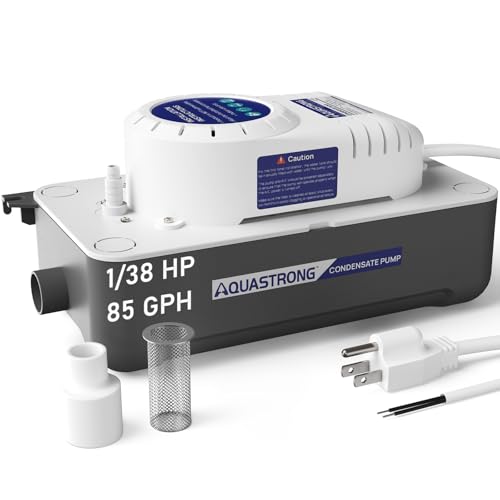
Aquastrong 1/38 HP 85 GPH HVAC Condensate Pump

OMT 3.5 CFM AC Vacuum Pump and Gauge Set (R134a R12 R22 R502)

Robinair 15800 VacuMaster Economy Vacuum Pump (2-Stage, 8 CFM)

VTG VOGTEN 4.5 CFM AC Vacuum Pump and Gauge Set (R134a R12 R22 R502)

Fieldpiece VP67 Vacuum Pump (6 CFM, RunQuick Oil Change)
More Details On Our Top Picks
The OMT 4.5 CFM kit aims to be the toolbox you grab once and forget about, bundling the pump, manifold, hoses, can taps, and even a leak detector into a single carrying case. The copper motor and aluminum housing help with heat dissipation on longer pulls, and 4.5 CFM gives you enough flow to clear a residential mini split lineset without making you wait around. For a homeowner tackling a garage AC recharge or a first mini split install, the included R134a and R410a adapters cover the bases most folks will actually touch.
Where this kit shines is in the accessories. You get a four-way manifold gauge, color-coded hoses, vacuum oil, and quick couplers, so the only thing missing is refrigerant. The leak detector is a nice bonus for tracing slow drops before you commit to a recharge.
Reasons It Performs
- 4.5 CFM flow rate handles typical mini split and home AC evacuations in a reasonable window.
- Copper motor and aluminum housing manage heat during longer pulls.
- Compatibility across R134a, R22, and R410a covers both automotive and residential refrigerants.
- Included leak detector saves a separate purchase when chasing stubborn pressure drops.
- Carrying case keeps the pump, gauge, and hoses organized between jobs.
Things To Consider
- Single-stage design, so it won’t pull quite as deep as a two-stage shop unit.
- Adding oil and checking levels before each session is part of routine ownership.
Key Specs
Who It Suits Best
Homeowners and DIYers pulling vacuum on mini splits, central AC, or auto systems who want everything in one case without shopping for adapters separately.
Consider Something Else When
Working techs running multiple commercial pulls a day will find the Fieldpiece VP67 Vacuum Pump a more efficient daily driver.
The BACOENG 3.6 CFM kit is built around the simple reality that first-time installers don’t want to chase down adapters after the pump arrives. You get the pump, a three-way manifold, three 5-foot color-coded hoses, R410a mini split adapters, oil, and a carry bag, all set up for a standard mini split evacuation from the moment you crack the box. The 1/4 HP motor pulls vacuum at a steady 3.6 CFM, which is plenty for residential linesets under about 25 feet.
Where it falls short compared to the bigger OMT kit above is flow rate and accessory count, but for a focused mini split job, that trade-off usually pays off in a simpler workflow. You spend less time sorting parts and more time actually pulling vacuum.
Useful Touches
- Includes R410a mini split adapters so the kit is genuinely plug-and-play for a standard install.
- 3.6 CFM flow handles most residential mini split evacuations without dragging on.
- Carry bag keeps the pump and manifold tidy in a truck or closet.
Honest Caveats
- Only three hoses instead of four, so the leak detector or extra line has to come from another kit.
- Lower CFM than the OMT 4.5 CFM, so longer commercial runs feel slower.
- Beginner-friendly doesn’t mean maintenance-free: oil checks and changes are still on you.
Right Fit For
First-time DIYers installing a single mini split who want a kit that walks them through the basics without extra shopping.
Skip It When
Someone running larger residential or light commercial pulls will get more headroom from the OMT 4.5 CFM AC Vacuum Pump and Gauge Set.
The Aquastrong sits in a different corner of the install: where the other picks on this list move moisture out of refrigerant lines, this one moves the condensate that drips off the evaporator coil once the system is running. Gravity drainage doesn’t always work, especially in basement or attic installs, so a small reservoir pump takes over and pushes the water up and over to a sink or drain line. Rated at 85 gallons per hour with a 20-foot vertical lift, it covers most residential layouts without complaint.
The automatic safety switch is the part owners notice. When the reservoir hits a set level, the pump kicks on, and if something blocks the discharge, the safety leads tell the air handler to shut down before water backs up into the duct or the ceiling. That’s a real-world protection layer that pays for itself the first time a drain line clogs.
Useful Strengths
- 85 GPH flow clears condensate from typical residential AC and dehumidifier setups quickly.
- 20-foot vertical lift solves drainage in basement, attic, and garage installations.
- Automatic safety switch protects the air handler from overflow if the drain clogs.
- Compatible with 115V or 230V wiring for flexible install scenarios.
Trade Offs
- Not a vacuum pump, so it doesn’t replace any of the other picks on this list.
- Reservoir and float switch need occasional cleaning to prevent algae buildup.
Feature Snapshot
Made For
Homeowners and installers dealing with AC units, furnaces, or dehumidifiers that sit below a suitable drain point and need condensate pushed uphill.
Look Elsewhere When
You actually need a vacuum pump for refrigerant line evacuation, in which case the BACOENG 3.6 CFM AC Vacuum Pump and Gauge Set is the better match.
Orion Motor Tech’s 3.5 CFM kit is the more compact sibling to the larger 4.5 CFM unit reviewed above, and it’s tuned for the car side of the garage. You get a 1/4 HP vacuum pump, a three-way manifold, R134a self-sealing and puncture-style can taps, quick couplers, vacuum oil, and three hoses. Coverage across R134a, R12, R22, and R502 makes it friendly for older vehicle AC systems as well as current R134a setups, which matters if you work on a mix of vintage and modern rides.
Compared to the BACOENG kit, this one leans more toward automotive use, with the can taps and couplers sized for vehicle service ports. It’s a useful distinction if your car is the main project and the mini split is a side quest.
Benefits That Matter
- 3.5 CFM flow rate is well matched to typical automotive AC line evacuation.
- Self-sealing and puncture-style R134a can taps give you flexibility for different recharge styles.
- Multi-refrigerant coverage supports older R12 systems alongside modern R134a.
- All-copper motor supports long motor life under repeated garage use.
Worth Noting
- Lower flow than the OMT 4.5 CFM, so longer residential pulls take more patience.
- Oil level and haze require monitoring, especially after heavier shop sessions.
Quick Facts
Best Suited To
Garage tinkerers and shade-tree mechanics who want a tidy, ready-to-go kit for car AC recharges and the occasional home AC job.
Where Another Pick Suits Better
Anyone focused on residential mini split installs will get a better fit from the BACOENG 3.6 CFM AC Vacuum Pump and Gauge Set.
The Robinair 15800 VacuMaster is the kind of pump you buy once and keep on the bench for years. The two-stage rotary vane design reaches deeper vacuum than any single-stage unit on this list, rated to 35 microns, and the 8 CFM displacement chews through long linesets and large commercial systems without sounding like it’s straining. A 1 HP thermally protected motor drives the pump, with an 18.6-ounce oil reservoir that runs cool under extended loads.
Compared to the OMT 4.5 CFM reviewed above, this is a serious step up. You’re paying for a deeper, drier pull and a motor built for daily shop duty, and you get the kind of build that survives being bounced around in a service van.
Strengths Worth Knowing
- Two-stage design reaches factory-rated 35 microns for deep, dry evacuations.
- 8 CFM free air displacement clears large commercial and refrigeration lines fast.
- 1 HP thermally protected motor handles long pulls without overheating.
- Compatible with systems up to 70 tons for serious commercial work.
A Few Limitations
- Larger and heavier than DIY kits, so it really wants a shop or van, not a closet.
- Manifold and hoses sold separately, so the total kit cost climbs if you’re starting from scratch.
- Oil changes and proper storage matter more on a commercial-grade rotary vane.
Who Will Love This
Professional HVAC and refrigeration techs who need reliable, deep vacuum on long linesets and large commercial systems day in and day out.
Swap It Out When
Homeowners doing the occasional DIY mini split will find the OMT 4.5 CFM AC Vacuum Pump and Gauge Set a better match for both cost and size.
The VTG VOGTEN 4.5 CFM kit is the option to look at when you want the same general flow rate as the OMT 4.5 CFM without the larger kit’s price tag. You get a 1/3 HP single-stage pump, a three-way manifold with temperature and pressure readouts, three 4-foot color-coded hoses, R134a can taps in both puncture and self-sealing styles, R410a adapters, oil, and a small set of accessories like a valve core wrench and cleaning cloth. The aluminum casing helps manage heat, and the dial-style manifold reads in Fahrenheit, psi, and refrigerant flow at a glance.
Versus the OMT 4.5 CFM above, this one trims the accessory list and skips the leak detector, but the core pump and gauge setup is solid for the price tier.
What Earns Its Place
- 4.5 CFM flow matches larger kits at a friendlier entry price.
- Aluminum casing handles heat dissipation during moderate pulls.
- Multi-refrigerant support spans R134a, R12, R22, and R502 for varied projects.
- Three color-coded 4 ft hoses with 600 psi working pressure cover most DIY needs.
Points To Keep In Mind
- No leak detector included, so chasing small leaks still requires a separate tool.
- Single-stage design means a shallower pull than two-stage shop units.
- Requires oil added before first use, and the level should be checked regularly.
Perfect Match For
DIYers who want 4.5 CFM flow and a working gauge kit for less, and who already own a leak detector or rarely need one.
A Better Fit Elsewhere
Someone who wants the leak detector and broader accessory set bundled in should step up to the OMT 4.5 CFM AC Vacuum Pump and Gauge Set instead.
Fieldpiece built the VP67 for techs who hate wasted minutes on the job. The RunQuick oil change system lets you swap pump oil through a dedicated port without exposing the pump internals, which is a real workflow win on back-to-back service calls. A 1/2 HP DC motor drives 6 CFM of flow, and the design is A2L compatible, meaning it can be used with newer low-GWP refrigerants that are becoming more common as regulations shift.
Compared to the Robinair 15800 above, the VP67 trades a little raw flow for portability and quick service. It’s the unit you carry up a ladder, not the one you leave on the bench.
Useful Highlights
- RunQuick oil change system cuts downtime between calls.
- 6 CFM flow handles residential and light commercial evacuations efficiently.
- 1/2 HP DC motor runs efficiently even under low voltage on rough job sites.
- A2L compatibility prepares the tool for newer low-GWP refrigerants entering the market.
Less-Strong Areas
- Higher price tag than DIY kits, which only makes sense if you’re using it professionally.
- Manifold and hoses are not part of the unit, so the full kit is a separate build.
Core Details
Built With In Mind
Working HVACR professionals who need a portable, fast-servicing pump for varied field calls, including newer A2L refrigerant systems.
Reach For A Different Pick When
Shop-bound techs pulling vacuum all day on large systems will appreciate the deeper 8 CFM flow of the Robinair 15800 VacuMaster Economy Vacuum Pump more.
What Matters When Picking An Evacuation Pump
Match CFM To The Lineset
Flow rate, measured in CFM (cubic feet per minute), decides how fast the pump clears air and moisture from the system. Small residential linesets under about 25 feet pull vacuum comfortably on 3.5 to 4.5 CFM units like the BACOENG or OMT 3.5 CFM kits. Longer runs, multi-zone mini splits, and commercial systems benefit from 6 to 8 CFM two-stage designs, which is where the Robinair 15800 and Fieldpiece VP67 earn their keep.
Single-Stage vs. Two-Stage Design
A two-stage rotary vane pump, like the Robinair 15800, pulls a deeper vacuum than a single-stage unit because it has two sets of vanes working in series to drop the pressure further. For critical refrigeration work and warranty-sensitive installs, that deeper dry-down matters. For most DIY home AC service, a good single-stage pump still gets the job done, just with a little more patience.
Check Compatibility And Accessories
Refrigerant coverage (R134a, R410a, R22, and so on) and included adapters shape how plug-and-play the kit really is. A pump that supports R410a out of the box saves a trip to the parts store, and extras like can taps, a manifold, and a carrying case can quietly add a hundred dollars of value to a kit.
Plan For Maintenance
Pump oil is the recurring cost most folks forget. Single-stage pumps hold a small reservoir, and oil should be checked before each session, with changes after heavy use or when the color turns milky from moisture contamination. Two-stage units like the Fieldpiece VP67 ease that burden with quick-change systems, but a basic oil change routine is part of ownership either way.
Key Considerations Across These Picks
Common Shopping Slip Ups
The most frequent mistake is choosing a pump based on flow rate alone and ignoring ultimate vacuum depth, which is how deeply the pump can drop system pressure. A 4.5 CFM single-stage pump and a 4.5 CFM two-stage pump move similar volumes of air, but the two-stage reaches a lower final pressure, which means drier lines and fewer long-term moisture issues. Another trap is grabbing a kit without checking the included adapters, only to find the R410a mini split install needs a part that wasn’t in the box.
What The Higher Tier Buys
Stepping up to pro-tier pumps like the Robinair 15800 and Fieldpiece VP67 brings deeper vacuum, larger motors, and build quality that survives years of service-van abuse. The trade-off is weight, size, and cost: you’re paying for components that hold tolerances under heat and heavy use, plus features like A2L compatibility and quick-change oil systems that show their value over time. For occasional DIY work, mid-range kits cover the basics well, but if the pump earns its keep professionally, the upgrade usually pays for itself in uptime.
Frequently Asked Questions
How long does a typical evacuation take?
Most residential mini split and central AC evacuations take 30 to 60 minutes to reach a stable deep vacuum, depending on lineset length, ambient humidity, and pump flow rate. Longer runs or humid days can extend that window, and you should always hold the target vacuum for at least 15 to 30 minutes to confirm the system isn’t leaking.
Can a vacuum pump remove all moisture from the lines?
A properly functioning vacuum pump pulls moisture out as vapor, but the system must reach a deep enough pressure, typically below 500 microns, and hold it long enough for the moisture to boil off. A two-stage pump reaches that threshold more reliably than a single-stage unit, especially in humid conditions.
Do I need to add oil before first use?
Many vacuum pumps ship without oil or with only a partial fill to keep shipping safe, so adding the correct pump oil before the first run is standard practice. Always check the sight glass and follow the included manual for the right oil grade and fill level.
What’s the difference between CFM and ultimate vacuum?
CFM measures how much air the pump moves per minute, while ultimate vacuum is the lowest pressure the pump can reach. Higher CFM speeds up the evacuation, and a lower ultimate vacuum number (in microns) means a drier, deeper pull. Both numbers matter, and a good pump balances the two for the systems you service.
Are A2L compatible pumps worth it for home use?
A2L compatibility matters if you plan to work with newer low-GWP refrigerants, which are becoming more common in modern mini splits and high-efficiency AC units. For someone sticking strictly to existing R410a and R134a systems, a standard pump is fine, but the A2L rating future-proofs the tool as refrigerant regulations continue to shift.