

When the summer heat kicks in, the ductwork behind your walls does most of the quiet work. The right flexible hose keeps cooled air moving efficiently from your air handler to each room, while the wrong fit leaks energy, rattles at night, or forces your AC unit to run longer than it should. This roundup focuses on seven practical ductwork picks that cover common home and shop scenarios, from whole-house branch lines to portable AC exhaust setups. Every option here is a flexible duct hose designed for installation in real residential or light commercial spaces, so the focus stays on diameter, insulation, length, and fit rather than specialized industrial gear. Skim the table, then dive into the reviews for the details that matter.
A Side-By-Side Look

Rubber-Cal “HVAC Insulated-Flex” Duct Hose 4″ x 25ft
Rubber-Cal “HVAC Insulated-Flex” Duct Hose 12″ x 25ft
Rubber-Cal “HVAC Insulated-Flex” Duct Hose 6″ x 25ft
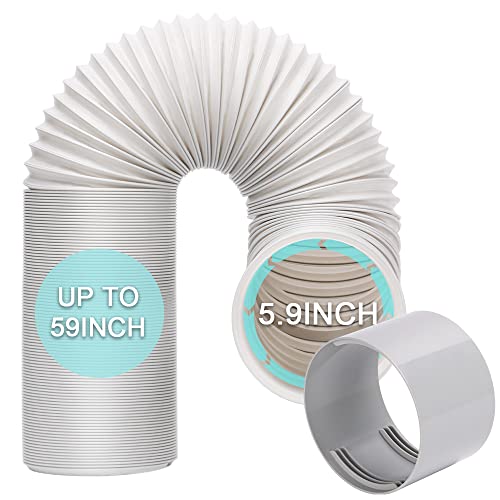
HOXHA Portable AC Hose 5.9″ with Coupler

YIJUHOU 4″ Dryer Vent Hose 26FT with Clamps

Hon&Guan 6″ Insulated Flexible Duct 8FT

Qualward Portable AC Hose 5.9″ Anti-Clockwise
Inside Each Recommended Option
Small-diameter branch runs are where most residential ductwork loses energy, and a 4-inch insulated flex hose is the usual fix for tight drops to a single room or a bathroom fan. The Rubber-Cal “HVAC Insulated-Flex” Duct Hose in this size uses a double-ply jacket, meaning two bonded layers of aluminum foil and PET film (a polyester plastic layer) wrapped over the inner core, which helps block condensation and heat gain as air travels through unconditioned attic or basement space. The glass-wool insulation layer is the same material used in many production-built air handlers, chosen for its resistance to heat transfer.
Where this 4-inch pick really earns its keep is in short connector runs between a trunk line and a ceiling register, or for venting a small inline fan. The 25-foot length gives a DIY installer room to trim to fit, and the insulation jacket keeps the surface temperature close to ambient, so it stays safer to handle in tight joist cavities. For whole-duct replacement, you’ll want to step up to the 6-inch or 12-inch Rubber-Cal options, but for one-off branch repairs this is the right scale.
What Makes Sense
- Double-ply jacket helps limit condensation in attic and basement runs.
- 25-foot length is forgiving for trimming to short branch connections.
- Insulated glass-wool core reduces heat loss in unconditioned spaces.
- Flexible design eases routing around joists and framing.
Trade Offs To Consider
- 4-inch diameter is too small for whole-house trunk replacement.
- Requires careful support to avoid sagging over longer spans.
Built With In Mind
Homeowners handling a single short branch repair or a small inline fan vent in an attic or basement.
Look Elsewhere When
You need a primary trunk-line run, where the Rubber-Cal “HVAC Insulated-Flex” Duct Hose 12″ x 25ft is the better fit.
Trunk lines are the highways of a residential duct system, and a 12-inch flex duct is a real upgrade over the 4-inch branch pick for whole-house air handlers or shop spaces. The Rubber-Cal “HVAC Insulated-Flex” Duct Hose in 12-inch form keeps the same double-ply aluminum and PET film jacket construction, so it carries the same condensation and air-leak resistance as the smaller sizes, just scaled for much higher air volumes. The glass-wool insulation is the same family of material, which means consistent thermal performance across your whole duct network when you mix sizes.
Big-diameter ductwork demands careful installation, and this pick assumes you have the room to route it. Depending on your joist layout, you may find the larger diameter harder to fish through tight cavities, and a helper makes the install noticeably smoother. For homeowners replacing a main trunk that runs from the air handler to a central plenum, this is the right scale.
Everyday Perks
- Handles the higher CFM (cubic feet per minute, a measure of airflow volume) of a whole-house air handler.
- Double-ply jacket matches the rest of the Rubber-Cal line for consistent sealing.
- 25-foot run suits most residential trunks without splicing.
Some Limits To Know
- Large diameter is harder to route through tight joist bays.
- Requires solid support to prevent sagging across longer spans.
- Glass-wool core means wearing a mask and gloves during cuts.
Who It Suits Best
Homeowners and pros replacing a primary trunk line on a residential or light commercial air handler.
Not Your Match When
You’re venting a portable AC, where the Qualward Portable AC Hose 5.9″ is a more practical fit.
Six-inch flex duct is the workhorse size for residential branch lines, sitting between the 4-inch pick above and the 12-inch trunk option you’ll see in a moment. The Rubber-Cal “HVAC Insulated-Flex” Duct Hose in 6-inch form shares the same double-ply aluminum and PET film jacket, so it carries the same condensation and air-leak resistance as the rest of the line. For most homeowners running a new branch to a bedroom, home office, or finished basement, 6-inch ductwork is the size the room’s supply boots are designed to accept.
Compared to the 4-inch pick, this size moves noticeably more air and pairs better with a multi-room system. If you are running a long branch with two or three takeoffs, this 6-inch hose gives you the headroom to keep air velocity in a comfortable range without noisy “whooshing” at the registers. It is a sensible middle ground when you don’t need full 12-inch trunk capacity.
Reasons It Performs
- Common 6-inch diameter fits most residential branch boots.
- Insulated jacket limits heat gain across unconditioned spaces.
- Same construction as the 4-inch and 12-inch siblings, simplifying repairs.
- Flexible body eases routing through joist and stud cavities.
Where It May Fall Short
- Still requires support straps every few feet to prevent sag.
- Glass-wool insulation demands careful handling during cuts.
Best Suited To
Homeowners running new branch lines to a single finished room or extending an existing 6-inch trunk.
Swap It Out When
You’re replacing a main trunk, where the Rubber-Cal “HVAC Insulated-Flex” Duct Hose 12″ x 25ft is the better scale.
Portable air conditioners rely on a single exhaust hose to dump heat out a window, and when that hose wears out or comes up short, the whole cooling setup suffers. The HOXHA Portable AC Hose 5.9″ with Coupler is built for that exact replacement, and it ships with a built-in coupler so you can daisy-chain it onto an existing hose for extra reach. The hose uses a 5.9-inch diameter with an anti-clockwise thread pattern, which matches the common portable AC standard used by brands like De’Longhi and many LG models.
For renters and apartment dwellers, this is the kind of part that turns a “my AC just died” moment into a 20-minute swap. The thickened polypropylene body and a built-in steel ring help the hose hold its shape under sustained heat, which is the real failure point on cheaper flexible exhaust hoses. If your current hose is cracking, kinking, or simply not long enough to reach a window, this pick solves both problems in one part.
Notable Gains
- Built-in coupler allows daisy-chaining to extend reach.
- Anti-clockwise thread matches most 5.9-inch portable AC units.
- Thickened polypropylene body holds shape under heat.
- Steel ring inside adds resistance to collapse at bends.
Worth Noting
- 5.9-inch size is not a fit for whole-house ductwork.
- Thread pattern must match your unit; some brands use clockwise threads.
Made For
Renters and apartment dwellers replacing a worn portable AC exhaust hose on a 5.9-inch standard unit.
A Better Fit Elsewhere
You need a longer single hose, where the Qualward Portable AC Hose 5.9″ stretches up to 80 inches.
Dryer vent hose takes more abuse than most residential ductwork, since it carries hot, moist air and lint on every cycle. The YIJUHOU 4″ Dryer Vent Hose 26FT uses a four-layer build: two layers of aluminum foil, a thick PVC (polyvinyl chloride) film, and an internal steel wire helix that lets you compress and bend the hose around tight laundry-room corners. The PVC outer layer also helps block light, which matters because dryer vents exposed to sunlight break down faster than shielded runs.
This pick ships with two stainless-steel clamps, which removes the usual “do I have the right size clamp” question at install. The aluminum body resists corrosion in the moist exhaust stream, and the wire helix keeps the lumen open even when you bend the hose around a joist. For shop ventilation or a small inline dust collector, the 4-inch diameter is a common standard that pairs with most hobby extractors.
What Works In Its Favor
- Four-layer build resists the heat and moisture of dryer exhaust.
- Includes two stainless-steel clamps for a complete install.
- Steel wire helix holds the hose open at sharp bends.
- PVC outer layer blocks UV that degrades exposed aluminum.
- 26-foot length fits most laundry-to-exterior-wall runs.
A Few Limitations
- Not a substitute for insulated HVAC supply ductwork.
- Aluminum foil layers can dent if stepped on during install.
- Lint buildup still requires periodic cleaning regardless of hose quality.
The Right Fit
Homeowners replacing a dryer vent run or adding a 4-inch vent line for a small shop dust collector.
Consider Something Else When
You’re running an insulated supply branch, where the Rubber-Cal “HVAC Insulated-Flex” Duct Hose 6″ x 25ft is the better match.
When a duct runs through a bedroom ceiling, the whoosh of moving air can be as disruptive as a fan on high. The Hon&Guan 6″ Insulated Flexible Duct 8FT is built specifically to address that problem, using a glass-wool insulation layer that absorbs some of the airborne noise before it reaches the register. The manufacturer states the glass-wool structure can reduce noise levels through the duct by up to 50 percent compared to uninsulated flex, which is a meaningful difference in a quiet room.
This 8-foot length is sized for short connection runs, such as between an inline exhaust fan and a roof vent, or a short branch from a trunk to a single room. The temperature range is broad enough for both heated and cooled air, so the same duct works for a bathroom exhaust in winter and a basement air handler in summer. Two clamps ship in the box, so you can finish the install without a hardware store run.
Well-Handled Touches
- Glass-wool insulation dampens airflow noise through the duct.
- 6-inch diameter fits standard inline fan and branch boots.
- Insulated jacket reduces heat loss across unconditioned runs.
- Two clamps included for a complete install.
Honest Caveats
- 8-foot length is short for long trunk extensions.
- Glass-wool core requires gloves and a mask during cuts.
- Wider temperature tolerance matters most in attic runs, where routing can be tricky.
Who Should Grab It
Homeowners running a short insulated branch to a bedroom, home office, or inline bath fan where noise matters.
Another Choice May Suit
You need a longer run, where the Rubber-Cal “HVAC Insulated-Flex” Duct Hose 6″ x 25ft offers more reach.
Portable AC exhaust hoses that come in the box are often too short for a real window or sliding-door setup, and that’s where the Qualward Portable AC Hose 5.9″ earns its keep. The hose extends up to 80 inches when fully stretched and can be shortened to as little as 15 inches for tight installs, so a single part covers everything from a sliding glass door to a tall casement window. The 5.9-inch diameter and anti-clockwise thread direction match the standard used by many portable AC units, so it slides in as a direct replacement.
For households that move the portable AC between the living room in summer and the bedroom at night, the flexible accordion body makes routing through different window kits much easier. Compared to the HOXHA pick above, this option prioritizes length over a built-in coupler, so if you just need one longer hose without daisy-chaining, this is the cleaner choice. Always measure your current hose and confirm the thread direction before swapping.
Useful Strengths
- Extends up to 80 inches for tall or deep window runs.
- Shortens to 15 inches for tight sliding-door setups.
- 5.9-inch anti-clockwise thread matches common portable AC standards.
- Flexible accordion body simplifies routing through window kits.
Factors To Consider
- Anti-clockwise thread must match your unit; clockwise-threaded models need a different part.
- Single hose length means no daisy-chain extension option like the HOXHA pick.
- Accordion ridges can collect dust and benefit from occasional cleaning.
Whose Shelf It Belongs On
Renters and homeowners who need a longer direct-replacement portable AC exhaust hose for a window or door setup.
Reach For A Different Pick When
You want to extend an existing hose, where the HOXHA Portable AC Hose 5.9″ with Coupler is a more flexible fit.
What To Weigh Before Choosing Air Conditioning Ductworks
Diameter and Air Volume
The first matching task is matching duct diameter to the air volume your system actually moves, measured in CFM (cubic feet per minute). A 4-inch flex duct is right for a single small branch or a bathroom fan. A 6-inch flex duct suits most residential branch lines that feed a single room. A 12-inch flex duct belongs on a main trunk line, where it carries air from the air handler to the central plenum. Undersizing a duct forces the blower to work harder and raises noise at the registers.
Insulation and Condensation
Insulated flex duct, which means a jacket of glass-wool or similar material wrapped around the inner core, matters most where the duct crosses unconditioned space. In an attic in July, an uninsulated supply line can lose several degrees before the air reaches the room, and a cold supply line in a humid basement can sweat. Look for double-ply jackets and a continuous insulation wrap with no gaps at the seams, since gaps are the most common source of condensation drips.
Length, Routing, and Support
Flexible duct only stays efficient when it’s pulled mostly straight. Every extra bend adds resistance, and a sagging run collects condensation at low points. Plan the route before you cut, strap the hose at the manufacturer’s recommended intervals, and keep the run as short as the layout allows. For portable AC exhaust, measure from the unit to the window kit before ordering, since underestimating length is the most common reason for a return.
Thread Direction and Compatibility
Portable AC hoses use either clockwise or anti-clockwise threads depending on the brand, and a mismatch means the hose will not seal. The HOXHA and Qualward picks both use the common 5.9-inch anti-clockwise standard, but some units require the opposite direction. Measure the diameter of your existing hose and check the thread orientation before you order, since the wrong thread is the most common reason a portable AC exhaust replacement fails to fit.
Key Considerations Across These Picks
Common Shopping Slip Ups
The most frequent mistake is buying the wrong diameter for the system. Shoppers often pick a 4-inch hose for a trunk run or a 12-inch hose for a single branch, and the resulting airflow is either starved or wasted. Measure the boots, trunks, and existing hose before you order, and write the numbers down. The second most common slip is ignoring thread direction on portable AC replacements, which sends a part back to the retailer within a day.
Where The Extra Money Goes
Higher-tier duct picks add more insulation, a thicker jacket, and a stronger internal helix that resists collapse at sharp bends. For unconditioned attic runs, the extra insulation pays back in lower cooling loss over a long summer. For a portable AC hose that sees gentle indoor use, the basic tier is usually enough, and the upgrade is worth it only when you need a longer reach or a built-in coupler. Pick the tier that matches the run, not the one with the longest spec sheet.
Frequently Asked Questions
What size ductwork do most homes use?
Most residential branch lines use 6-inch flexible duct, while main trunks commonly run 8 to 12 inches depending on the air handler. Smaller 4-inch lines are usually reserved for short drops to a single register or for bathroom fan venting.
How long can a flexible duct run be?
Each bend in a flexible duct adds resistance, so the goal is the shortest, straightest run the layout allows. Manufacturers publish a maximum equivalent length for each diameter, and exceeding that figure cuts airflow at the far registers.
Is insulated ductwork worth the extra cost?
For ducts that cross unconditioned space like an attic, basement, or garage, insulation pays for itself in lower heat gain and fewer condensation drips. For ducts that stay inside the conditioned envelope, the upgrade is less critical.
Can I use dryer vent hose for air conditioning?
Dryer vent hose is built for short, hot, moist exhaust runs, not for cooled supply air. It lacks the insulation and continuous jacket needed to prevent condensation on a cold AC line, so it belongs on the dryer only.
How do I know which thread direction my portable AC uses?
Look at the existing hose where it screws into the unit. Turn the hose clockwise; if it tightens, your unit uses a clockwise thread, and you need a clockwise replacement. If it loosens, you have the more common anti-clockwise standard.