
Wall air conditioners solve a real problem: you want serious cooling without sacrificing a window, blocking natural light, or dealing with the visual clutter of a unit hanging in your living room. They’re a smart fit for older homes without central air, basement conversions, sun-drenched bedrooms, and apartments where window rules ban traditional units. The picks below cover small bedrooms, large living areas, and even ductless mini-split systems for homeowners ready to invest in a permanent year-round solution. Each one has a clearly different strength, so the goal here is matching the right type to your room, your electrical setup, and your tolerance for installation work.
A Snapshot Of The Selections

GE 6,000 BTU Electronic Window Air Conditioner with Remote, White

Midea 8,000 BTU Smart Inverter Window Air Conditioner with Heat

LG 10,000 BTU Through-the-Wall Air Conditioner, 115V

Mountman 12,000 BTU Mini Split AC/Heating System, 19 SEER2
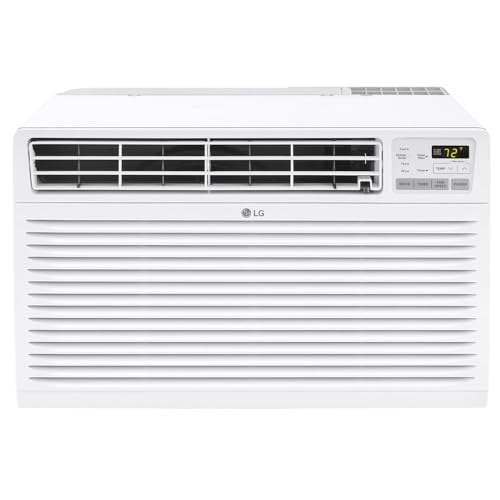
LG 14,000 BTU Through-the-Wall Air Conditioner, 230/208V

LG 11,800 BTU Through-the-Wall Air Conditioner, 115V
Frigidaire 12,000 BTU Wall Air Conditioner with Dehumidifier
The Details Behind The Selections
Small bedrooms and home offices rarely need a heavy-duty unit, and that’s exactly where the GE 6,000 BTU electronic window model earns its keep. It pulls a quiet, consistent chill into rooms up to 250 square feet, which covers most standard bedrooms, nurseries, and compact dens with room to spare. The included install kit helps renters and first-timers mount it without a separate hardware run, and the remote means you can tweak the temperature from bed without getting up.
Compared to the Midea 8,000 BTU that follows, this GE gives up heating and a larger coverage area in exchange for a tighter footprint and a lower draw on your electrical circuit. For a guest room that only runs in July, or a sun-facing office that traps heat all afternoon, that’s a reasonable trade.
Practical Advantages
- Right-sized for rooms up to 250 sq ft, so it doesn’t short-cycle or waste energy cooling empty space.
- Digital controls with a remote let you set the exact temperature and fan speed from across the room.
- Energy Saver mode cycles the compressor to trim power use during milder evenings.
- 24-hour timer helps you run cooling only when you actually need it, which matters in shoulder seasons.
- Included install kit removes the guesswork for first-time installers.
Honest Caveats
- At 6,000 BTU, it will struggle in open-concept layouts or loft-style rooms with high ceilings.
- The filter needs monthly cleaning during heavy-use months to keep airflow strong, a routine many owners overlook.
Key Product Details
Who It Suits Best
Renters and homeowners cooling a single small bedroom, nursery, or home office will get the cleanest fit from this GE.
Consider Something Else When
Anyone cooling a larger living area should skip ahead to the Frigidaire 12,000 BTU wall unit instead, which covers nearly twice the square footage.
Most window units only cool, which leaves you scrambling for a space heater the moment fall arrives. The Midea 8,000 BTU smart inverter flips that script by adding electric heat and a dehumidifier mode, so a single appliance handles three seasons in a mid-size room. The inverter compressor also ramps up and down gradually instead of kicking on and off, which tends to feel quieter and holds temperature more steadily.
For spaces up to 350 square feet, it covers larger bedrooms, bonus rooms, and small living areas where the GE 6,000 BTU would fall short. Just know that the heat function works as a heat pump, meaning it tapers off once outside temperatures drop into the low 40s Fahrenheit.
What Stands Out
- Three-in-one design replaces a separate heater and dehumidifier, freeing up floor space and outlets.
- Inverter technology adjusts output gradually, so the room settles at a stable temperature rather than swinging hot-cold.
- Energy Star rating signals better efficiency than older single-speed window units of similar capacity.
- Quiet operation mode lowers fan speed overnight for sleep-friendly background noise.
Trade-Offs To Consider
- The supplemental heat pump stops working around 41 degrees Fahrenheit, so it’s not a true cold-weather heater.
- Wider window-mounting footprint than a basic 6,000 BTU, so you’ll want to measure your window before ordering.
- More electronic features mean more to troubleshoot if something goes wrong years down the line.
Best Suited To
Owners in mild climates who want cooling in summer, drying in shoulder seasons, and supplemental warmth in fall will get a lot of mileage from this Midea.
Look Elsewhere When
Anyone needing real whole-home heating should pivot to the Mountman 12,000 BTU mini split, which handles genuine cold-weather heat pump duty.
Through-the-wall units look and feel more permanent than window models, and the LG 10,000 BTU is the sensible middle step for homeowners ready to make that jump. It runs on a standard 115V household circuit, which means no special wiring or panel upgrade in most homes. At 440 square feet of coverage, it handles a typical living room or large primary bedroom without overworking the compressor.
Three cooling speeds and three fan-only speeds give you finer control than the two-speed norm, and 4-way air deflection spreads cool air evenly across the room rather than blasting one corner. If you’re coming from a window unit and want something cleaner-looking, this is the natural upgrade path.
What Makes Sense
- Standard 115V power means you install it without hiring an electrician for new wiring.
- 4-way air deflection aims airflow up, down, left, and right, so cool air reaches the far side of longer rooms.
- 440 sq ft coverage handles most open living areas and master suites comfortably.
- Included remote lets you adjust settings without leaving the couch.
Points To Note
- Requires a wall sleeve and a cutout in your exterior wall, which is a more involved install than a window unit.
- Cooling-only with no heat function, so you’ll need a separate heating source in colder months.
Feature Snapshot
Whose Shelf It Belongs On
Homeowners with an existing wall sleeve and a 115V outlet will find this LG a clean, no-fuss replacement or first install.
Skip It When
Renters who can’t cut into a wall should stay with a window model like the GE 6,000 BTU at the top of the list.
Ductless mini splits are a different category entirely, and the Mountman 12,000 BTU is the pick here for homeowners ready to step up from a wall sleeve. A SEER2 rating of 19 puts it in efficient territory, and the 110/120V compatibility means it works on a standard household circuit rather than requiring a dedicated high-voltage line. The included installation kit and pre-charged condenser line set trim a real amount of money off the typical install bill.
Cooling and heating in a single unit, plus a dedicated dry mode for damp days, makes this a true year-round system for rooms up to 750 square feet. The trade-off shows up in installation complexity, since even a friendly DIY setup involves mounting the indoor head, running the refrigerant line, and wiring the outdoor unit.
A Few Strong Suits
- Heat pump function handles real winter heating, unlike the Midea 8,000 BTU’s supplemental-only design.
- 19 SEER2 efficiency rating translates to noticeably lower operating costs over a long cooling season.
- Covers up to 750 sq ft, which handles large living areas, open floor plans, and primary suites.
- Pre-charged condenser and included install kit reduce the parts-and-freon costs that often surprise first-time buyers.
Honest Caveats
- Installation requires drilling through an exterior wall, running refrigerant lines, and electrical work, so many owners hire a pro.
- Outdoor condenser needs clear airflow and occasional coil cleaning to stay efficient.
- Higher upfront cost than any of the through-the-wall units on this list.
Right Fit For
Homeowners without existing ductwork who want quiet, efficient year-round comfort in a single large room will get the most from this Mountman.
Not Your Match When
Anyone looking for a quick weekend swap should stay with the LG 10,000 BTU through-the-wall unit, which drops into an existing sleeve.
Open-concept living rooms and converted basement spaces are where smaller wall units start panting, and the LG 14,000 BTU steps in for those high-demand zones. Rated for rooms up to 700 square feet, it pushes enough cool air to handle a large great room, an apartment-wide studio, or a sun-baked west-facing living area. The 230/208V power requirement is the catch: it needs a dedicated circuit that not every home has on hand.
Three cooling speeds plus three fan-only settings give the same granular control as the smaller LG 10,000 BTU, and 4-way deflection keeps the airflow distributed. If your electrical panel is ready for it, this unit replaces the need for a portable or multiple smaller wall units.
Why It Works Well
- 14,000 BTU handles 700 sq ft rooms that would overpower smaller wall units.
- 4-way air deflection spreads cool air in every direction, avoiding the “cold zone by the unit, warm zone across the room” problem.
- Electronic controls with remote feel modern compared to older mechanical-dial wall units.
Where It May Fall Short
- 230/208V power means a dedicated high-voltage circuit, which often requires an electrician if your wall opening isn’t already set up for it.
- Cooling only, so plan for a separate heating source in winter.
- Larger and heavier than the LG 10,000 BTU, which complicates a one-person install.
Quick Facts
Made For
Homeowners with the right electrical service who need to cool a large open living area or a sizeable studio apartment will find the capacity they need here.
Swap It Out When
Anyone without a 230/208V circuit should look at the LG 11,800 BTU model, which delivers strong cooling on a standard 115V line.
One of the trickier things about through-the-wall units is sleeve compatibility, and the LG 11,800 BTU addresses that head-on with a universal design meant to fit most existing wall sleeves. For anyone replacing an older wall unit, that universality removes the most common reason a “simple swap” turns into a carpentry project. Running on 115V, it doesn’t demand an electrical upgrade, either.
At 530 square feet of coverage, it sits between the LG 10,000 BTU and the 14,000 BTU model, which makes it a practical middle choice for larger bedrooms, smaller living rooms, and efficiency apartments. Three cooling and three fan speeds cover the usual control range, and the remote keeps adjustments within reach.
Good Reasons To Consider
- Universal sleeve fit avoids the most common retrofit headache: a new unit that doesn’t match the old wall opening.
- 115V operation works with standard apartment and home wiring, no electrician required.
- 530 sq ft coverage handles a large primary bedroom, den, or combined living-dining area.
Worth Bearing In Mind
- Some users report the chassis feels lighter than the older LG 10,000 BTU, so handle with care during install.
- No heating function, so a separate heat source is necessary in colder months.
- Cooling-only design means no winter use, which shortens the value window in cold climates.
Spec Overview
Who Will Love This
Apartment dwellers and homeowners replacing an aging wall unit will appreciate the universal sleeve fit and standard 115V power.
Reach For A Different Pick When
Anyone needing year-round climate control should choose the Mountman 12,000 BTU mini split for true heat pump operation.
Humidity is the part of summer that window units often ignore, and the Frigidaire 12,000 BTU wall air conditioner tackles it directly with a dedicated dehumidifier mode. For basements, ground-floor apartments, or homes in muggy coastal climates, that extra moisture removal is what makes the air actually feel cool rather than just cold and clammy. The 12,000 BTU capacity covers rooms up to 550 square feet, which puts it in the same general class as the LG 11,800 BTU.
Running on standard 115V power, this Frigidaire drops into a typical wall sleeve without any electrical rework. The 24-hour timer and remote round out the convenience side, so you can schedule it to run only when the room is actually occupied.
Features That Help
- Integrated dehumidifier mode pulls moisture out of the air, which matters more than raw BTU in damp climates.
- 550 sq ft coverage handles large bedrooms, combined living-dining spaces, and finished basements.
- Programmable 24-hour timer trims energy use by running cooling only during the hours you set.
- 115V power keeps the install simple on standard household wiring.
Points To Keep In Mind
- Cooling-only, so you’ll need a separate heat source for cold-weather months.
- Dehumidifier mode works best with doors and windows closed, which can feel stuffy without occasional fresh-air circulation.
- Wall sleeve and exterior grille are typically sold separately, an extra step to plan into the budget.
Perfect Match For
Homeowners in humid regions who want a single wall unit that handles both temperature and moisture will find this Frigidaire a strong fit.
A Better Fit Elsewhere
Anyone in a dry climate who doesn’t need dehumidification will save money with the LG 10,000 BTU through-the-wall model.
Choosing The Right Wall Air Conditioner For Your Space
Match BTU Output To Your Room Size
BTU, or British Thermal Units, is the measure of how much heat an air conditioner can pull from a room in an hour. Picking the right number is the single biggest factor in how well the unit performs. A 6,000 BTU model handles a 250 sq ft bedroom, an 8,000 BTU covers a 350 sq ft bonus room, and 10,000 to 12,000 BTU is the sweet spot for most living areas between 440 and 550 sq ft. Going too big short-cycles the compressor and leaves the room damp, while going too small runs the unit constantly without ever catching up.
Window Versus Through-The-Wall Versus Mini Split
Window units are the easiest install and the lowest upfront cost, which is why the GE 6,000 BTU leads the list. Through-the-wall units look cleaner, free up the window, and handle larger rooms, but they require cutting into the exterior wall. Mini splits like the Mountman trade the simplest install for genuine year-round heating and cooling in a single ductless system.
Electrical Requirements And Circuit Compatibility
Most wall air conditioners run on standard 115V household current, but higher-capacity models like the LG 14,000 BTU require a 230/208V dedicated circuit. Check your breaker panel and existing outlet before ordering, and budget for an electrician visit if the wiring isn’t already in place. Assuming a standard 15- or 20-amp circuit is available handles roughly 95% of the units in this category.
Noise, Airflow, And Smart Features
Inverter compressors adjust output gradually, which keeps noise lower and temperatures steadier. Multiple fan speeds and 4-way air deflection both spread cool air more evenly across longer rooms. A 24-hour timer and remote control aren’t luxuries, they’re the kind of touches that decide whether the unit feels pleasant or annoying to live with day after day.
Key Considerations Across These Picks
Common Shopping Slip Ups
The most frequent mistake is buying by BTU number alone and ignoring the room’s actual conditions. A sun-drenched west-facing living room with high ceilings needs more capacity than the square footage suggests, while a shaded interior bedroom can often get by with a smaller unit. Another common trap is forgetting that wall units need a sleeve, and sleeve sizing varies by brand. The LG 11,800 BTU’s universal design sidesteps that issue, but other models often demand a matching sleeve sold separately.
What The Higher Tier Buys
Stepping up to a larger or inverter-based unit typically buys three things: more consistent temperatures, lower long-term energy costs, and quieter operation. A 14,000 BTU through-the-wall model can replace two smaller window units in a big open area, and an inverter mini split avoids the harsh on-off cycling that makes basic compressors feel loud. The upgrade makes most sense for rooms you cool daily through a long summer, not for a guest bedroom that runs a few weeks a year.
Frequently Asked Questions
What Size Wall Air Conditioner Do I Need For A 400 Square Foot Room?
A 10,000 to 12,000 BTU unit is the right range for a 400 sq ft space. The LG 10,000 BTU, LG 11,800 BTU, and Frigidaire 12,000 BTU all fall in that zone, so the choice comes down to features and electrical setup rather than raw capacity.
Can I Install A Through-The-Wall Air Conditioner Myself?
Many homeowners with basic carpentry skills can install a through-the-wall unit, especially when an existing sleeve is already in place. Cutting a new wall opening, running a dedicated electrical circuit, or sealing the exterior is where most DIY projects hit trouble, so professional help is worth budgeting for in those cases.
Do Wall Air Conditioners Use More Electricity Than Window Units?
Wall and window units use similar electricity at the same BTU rating, since the cooling mechanism is essentially the same. The bigger variable is efficiency features like inverter compressors and Energy Star ratings, which can meaningfully reduce operating costs over a long cooling season.
How Often Do I Need To Clean The Filter On A Wall Air Conditioner?
Cleaning the filter once a month during heavy-use summer months is a practical baseline for most units. A clogged filter reduces airflow, makes the compressor work harder, and raises energy use, so a quick rinse under the tap each month keeps the unit running at its rated efficiency.
What’s The Difference Between A Heat Pump And Supplemental Heat In These Units?
A heat pump, like the one in the Mountman mini split, can actually heat a room in genuinely cold weather. Supplemental heat, like the Midea 8,000 BTU window unit, uses heat pump technology but only works down to about 41 degrees Fahrenheit before switching off, so it’s a shoulder-season feature rather than a primary heat source.