
Stale, sluggish air makes a room feel ten degrees warmer than it really is, and a ceiling fan alone rarely fixes it. Air circulator fans earn their place by moving air across a whole space, not just blowing it in your face, which helps with summer comfort, winter heating balance, and everything in between. This roundup covers seven solid options across desk, pedestal, and smart categories, so you can match the right fan to your room, your noise tolerance, and your budget.
The Shortlist At A Glance
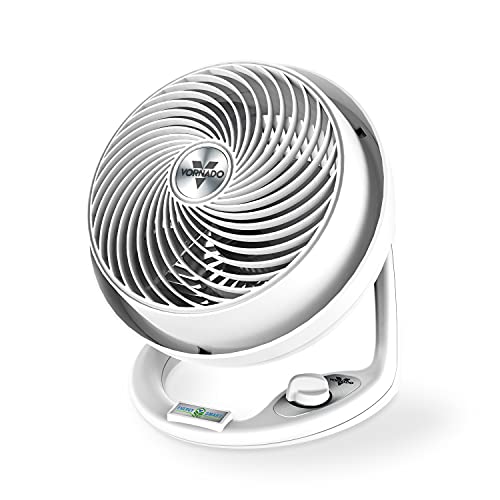
Vornado 610DC Energy Smart Air Circulator Fan
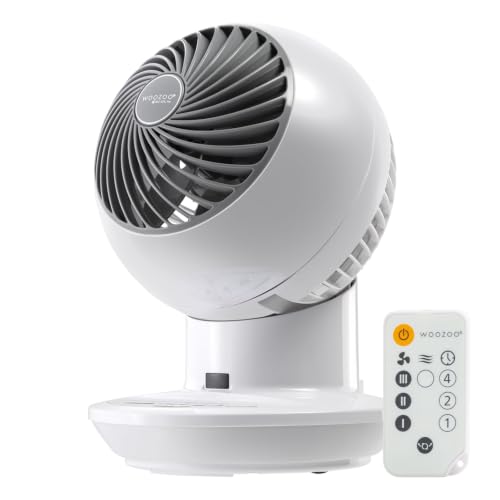
IRIS USA WOOZOO Air Circulator Fan (White, Remote)

IRIS USA WOOZOO Air Circulator Fan (Black, Remote)

DREO Smart Fan for Bedroom (12 Inch)

DREO Smart Fan (12 Inch, Quiet 20dB)

DREO Smart Fan (12 Inch, 90°+90°)

IRIS USA WOOZOO Medium Desk Fan (Black)
A Breakdown Of The Leading Choices
The Vornado 610DC sits in that sweet spot where build quality meets everyday practicality. Its DC motor (a brushless design that uses less electricity than older AC motors) sips power while still pushing air through a full room, and the variable speed dial gives you fine-grained control rather than a few coarse steps. The adjustable head tilts to direct flow where you need it, which matters for bedrooms where you want gentle circulation rather than a direct breeze.
You can leave it running through a long work-from-home day or overnight without dreading the power bill, and the brushed-metal-look housing feels solid on a nightstand or shelf. It is a fan you set up once and then stop thinking about.
Practical Pluses
- DC motor keeps electricity use low for daily or overnight runs.
- True variable speed lets you dial in a whisper-soft setting.
- Vortex-style airflow pushes air across a whole room instead of just one spot.
- Adjustable tilt head fits bedrooms, home offices, and living spaces.
Things To Consider
- No remote, so you will be reaching for the dial each time.
- Grille and blade assembly can collect dust, so periodic cleaning keeps noise down.
Who It Suits Best
Light sleepers, remote workers, and renters who want a low-maintenance circulator for a bedroom or small living space.
Where Another Pick Suits Better
Choose the IRIS USA WOOZOO Air Circulator Fan (White, Remote) if you want a handheld remote to control speed from across the room.
Where the Vornado leans into analog simplicity, this WOOZOO goes the other direction with a compact remote and a 52-foot max air distance. The pill-shaped body sits neatly on a dresser or shelf, and the included remote is genuinely useful for anyone who does not want to get up to change speed mid-Netflix session. The 90-degree adjustable tilt lets you aim air up at a ceiling, down at a couch, or straight across a small room.
Three speeds keep things simple, and the unit stays light enough to move between rooms without a hassle. Compared to the Vornado above, it is more of a convenience play than a power play, and that tradeoff works for many households.
What Stands Out
- Remote control with three speed settings plus an optional breeze mode.
- 90-degree tilt makes it easy to redirect flow as the room layout changes.
- Small footprint fits nightstands, dorm desks, and tight corners.
Points To Note
- Only three speeds, so fine-tuning airflow is limited compared to the Vornado’s variable dial.
- Remote batteries and small parts are easy to misplace in busy households.
Made For
Dorm residents, apartment dwellers, and small-bedroom occupants who want grab-from-bed control without paying for app-connected features.
Consider Something Else When
Pick the DREO Smart Fan for Bedroom (12 Inch) if you want app and voice controls rather than a line-of-sight infrared remote.
Think of this as the bigger sibling of the white WOOZOO above, with a black finish and a longer 56-foot max air distance. The standout feature is multi-directional oscillation, which sweeps the airflow across more of a room than a fixed-direction fan can manage. That extra reach makes it a sensible choice for a shared bedroom, a home office where you move around, or a small living area that needs consistent coverage.
The same three-speed remote setup keeps the controls familiar, and the housing still looks clean enough for a visible spot in a room. For shoppers who like the white WOOZOO concept but want more movement from the airflow itself, this is the natural next step up.
A Few Highlights
- 56-foot max air distance handles medium rooms more confidently than smaller desk units.
- Multi-directional oscillation spreads airflow across a wider zone.
- Compact tabletop form factor keeps it out of walkways.
Worth Noting
- Higher reach can mean more noticeable sound on the top speed.
- Black finish shows dust on the grille, so it needs a quick wipe-down now and then.
Best Suited To
Shared bedrooms, small offices, and renters who want a fan that covers more than one seat at a time.
Not Your Match When
Choose the Vornado 610DC Energy Smart Air Circulator Fan if whisper-quiet bedroom operation matters more than oscillation reach.
DREO’s smart fan swaps the dial-and-remote setup of the WOOZOO and Vornado models for an app-connected experience. The 12-inch frame houses a TurboWind-style system that pushes air up to 85 feet, which sounds dramatic but in practice means it can handle a larger room than a typical 8-inch desktop fan. The nine speed settings give you more gradations than the WOOZOO’s three, and the built-in 8- and 12-hour timers help with overnight or workday automation.
App and voice control make sense for anyone already running a smart home, since you can fold the fan into routines alongside lights and thermostats. Setup is straightforward through the companion app, and the unit pairs with common voice assistants for hands-free speed changes.
Where It Excels
- App and voice control fit naturally into existing smart home routines.
- Nine speeds allow more precise airflow tuning than three-step alternatives.
- 8- and 12-hour timers suit overnight sleep or full work shifts.
- 12-inch blade diameter covers more square footage than smaller desk fans.
Honest Caveats
- Smart features require a stable Wi-Fi connection and a working app account.
- Larger footprint than the WOOZOO tabletop models, so plan desk space accordingly.
Key Product Details
Who Should Grab It
Smart home enthusiasts and tech-forward households who want voice and app control alongside strong airflow.
Skip It When
Pick the IRIS USA WOOZOO Medium Desk Fan (Black) if you would rather skip Wi-Fi setup and keep controls physical.
At its lowest setting, this DREO variant runs around 20 dB, which lands in the range of a quiet library or a soft whisper. That alone makes it a strong candidate for light sleepers, nurseries, or home offices where background hum becomes grating after an hour. It shares the same 12-inch frame, 85-foot reach, and 90-degree plus 90-degree oscillation as the other DREO models, so you are not trading airflow for quiet.
Nine speeds and the same 8- and 12-hour timers round out the package, and the 20 dB floor means you can actually use the low end without sacrificing comfort. The honest read is that you will only hit that quiet figure on the lowest setting, so heavy daytime use sounds like a normal desk fan.
The Upside
- 20 dB minimum operation suits bedrooms, nurseries, and study sessions.
- Same 85-foot reach and 9-speed range as the louder DREO siblings.
- App and voice control keep adjustments hands-free.
Softer Spots
- Quiet operation is tied to the lowest speed; higher settings sound like any other fan.
- Smart controls still need a stable Wi-Fi network to work fully.
Whose Shelf It Belongs On
Light sleepers, shift workers sleeping during the day, and parents setting up a nursery who need a fan that disappears into the background.
A Better Fit Elsewhere
Choose the Vornado 610DC Energy Smart Air Circulator Fan if you want quiet operation without relying on app or Wi-Fi connectivity.
The third DREO in this lineup is essentially the same platform tuned for 3D coverage. The 90-degree vertical plus 90-degree horizontal oscillation means the fan head can sweep side to side and tilt up and down, which is more flexibility than the Vornado’s fixed tilt and the WOOZOO’s single-axis tilt. In an open-plan room or a corner office, that range helps avoid the dead spots that fixed-direction fans leave behind.
The 12-inch blade, 85-foot reach, nine speeds, and 8- and 12-hour timers all carry over from the DREO siblings above, so picking this one is really a question of whether 3D oscillation matters in your space. For most living rooms it is genuinely useful, for a small closet office it may be overkill.
Notable Upsides
- Dual-axis 90°+90° oscillation covers more area than fixed or single-tilt fans.
- 9 speeds and 85-foot reach suit open-plan living areas.
- App scheduling fits neatly into existing smart home routines.
Trade Offs
- More moving parts mean more potential points of mechanical wear over years of daily use.
- Smart features add setup friction compared to the dial-only Vornado.
Feature Snapshot
Perfect Match For
Open-plan living spaces, loft apartments, and home offices where you move between sitting and standing zones throughout the day.
Another Choice May Suit
Pick the IRIS USA WOOZOO Air Circulator Fan (Black, Remote) for a smaller room where single-axis oscillation is enough.
This WOOZOO medium desk fan is the simplest unit in the roundup, and that is exactly the point. It tilts 112 degrees, oscillates, and pulls air up to 36 feet, which is plenty for a personal desk, a kitchen counter, or a bedside table. Without smart features or a remote, the controls are direct, and the matte black finish blends into most setups without drawing attention.
It works well as a second fan for a specific spot, like a standing desk corner or a craft table, where a full-room circulator would be overkill. Compared to the DREO models, it asks for far less setup, and that tradeoff earns it a place on this list.
Positive Points
- 112-degree tilt plus oscillation covers a personal zone without repositioning.
- Compact body fits counters, nightstands, and dorm desks.
- No Wi-Fi or app pairing needed, so it works out of the box.
Room For Improvement
- 36-foot max reach is shorter than the WOOZOO black remote model or the DREO lineup.
- Limited to personal-zone use rather than whole-room circulation.
The Right Fit
Students, remote workers, and anyone who wants a small, low-fuss fan for a personal desk or counter space.
Reach For A Different Pick When
Choose the DREO Smart Fan (12 Inch, 90°+90°) if you need whole-room coverage rather than a personal zone.
What Matters Most Before Choosing Air Circulator Fans
Room Size and Airflow Reach
The single biggest factor is matching reach to your room. A 36-foot max distance covers personal spaces like desks or nightstands, while 52- to 56-foot models suit small-to-medium bedrooms. Anything in the 85-foot range, like the DREO lineup, handles open living areas without straining.
Noise Floor and Speed Steps
Low-end noise matters more than peak output for bedrooms and nurseries. A fan rated around 20 dB at its lowest setting disappears into the background, while a 3-speed unit tends to jump from too soft to too loud. More speed steps mean more usable settings between those extremes.
Controls: Dial, Remote, or App
Dial controls never fail and need no setup, which is why the Vornado appeals to renters and minimalists. Remotes add grab-from-bed convenience, while app and voice control fit households already running a smart home. Pick the control style that matches how you actually live.
Oscillation and Tilt Range
Fixed-direction fans leave dead spots in larger rooms, while single-axis tilt helps but still leaves corners untouched. Dual-axis oscillation, like the 90°+90° DREO configuration, sweeps airflow across more of a room without needing a second fan.
Key Considerations Across These Picks
Common Shopping Slip Ups
Chasing the highest airflow number often backfires, because peak reach tells you nothing about how the fan sounds at that setting. Shoppers also tend to skip measuring their desk or nightstand, then end up with a 12-inch unit that overpowers a small surface. Reading the noise floor at the lowest speed catches most disappointment before checkout.
Where The Extra Money Goes
Spending up on the DREO models buys smart connectivity, more speed steps, and wider oscillation range. That upgrade pays off in larger rooms and for households already invested in app or voice control. For a small bedroom or a desk, the simpler Vornado or WOOZOO units deliver most of the comfort at a noticeably lower entry cost.
Frequently Asked Questions
What is the difference between an air circulator fan and a regular fan?
An air circulator fan is designed to move air across a whole room rather than just blowing it in one direction at the user. The grilles and blade angles are tuned to push air further and create circulation patterns, which helps with overall room comfort instead of a single cooling spot.
Can I leave an air circulator fan running overnight?
Most modern units, including the Vornado 610DC and the DREO models, are built for extended run times, and DC motors tend to use less electricity during long sessions. Models with built-in timers, like the 8- and 12-hour options on the DREO lineup, let you set an automatic shutoff for sleep.
How loud are air circulator fans at their lowest setting?
Quieter models like the DREO 20 dB variant run at roughly the level of a soft whisper, while standard 3-speed units are noticeably louder on low. The Vornado 610DC’s variable speed dial lets you tune below typical low-speed thresholds, which is helpful for light sleepers.
Do air circulator fans help with heating in winter?
Yes, because they push warm air that has collected near the ceiling back down into the living space. Many people run a circulator in reverse direction or on low during winter to balance room temperature and reduce hot and cold spots.
Where is the best place to put an air circulator fan in a room?
A corner placement aimed across the longest dimension of the room tends to produce the best whole-room circulation. For desks and personal cooling, place the fan about three to six feet away at chest level for direct comfort.