

A stubborn room that never matches the rest of the house is a frustrating problem. One side stays toasty in winter, the other feels like a freezer in summer, and the central system just cannot push air that far. AC vent fans solve that gap without ripping open walls or swapping out an HVAC system, and the seven options below cover everything from full crawl space ventilation to quiet register boosters you drop into an existing floor vent.
The Leading Options At A Glance

AC Infinity AIRTITAN T8 Crawlspace Basement Ventilator Fan

VIVOSUN Quiet Register Booster Fan with Thermostat
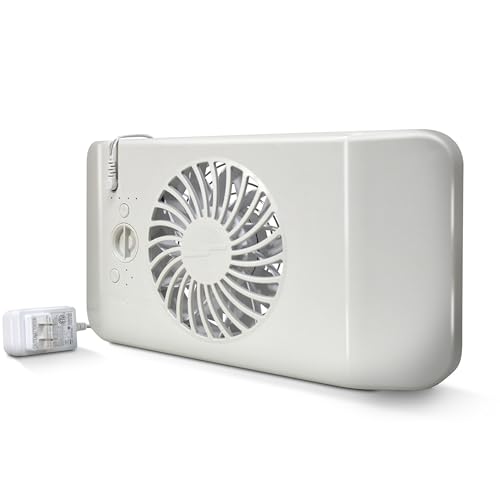
Suncourt HC600 Register Booster Fan

Suncourt Flush Fit Register Booster Fan (Brown)
SANYCASA Register Booster Fan with App Control

MATULSA Register Booster Fan with Remote

VELLEE Quiet Register Booster Fan (White)
More On The Choices That Made The List
The AIRTITAN T8 operates in a different category than the register boosters below. Instead of pushing air through a single vent, it pulls exhaust from an entire crawl space or basement, tackling moisture and stagnant air at the source. The IP-55 rating (a measure of resistance to dust and water jets) means it can handle the damp, gritty conditions of an under-house environment without complaint.
WiFi and Bluetooth connectivity open up dynamic programming for temperature, humidity, and VPD (vapor pressure deficit, a ratio of moisture in the air relative to temperature), plus timers and minimum speed settings you can tune from a phone. For homeowners with musty basements or moisture-sensitive foundations, this is the kind of set-and-forget installation that pays off year after year. Compared to the register fans later in this list, it is heavier hardware aimed at a structural problem rather than a comfort tweak.
The Good Stuff
- Whole-space exhaust that addresses moisture, odors, and stale air at the source
- IP-55 rated enclosure handles dusty and damp crawl space conditions
- App-based programming for VPD, temperature, humidity, and cycle scheduling
- Dynamic fan curves adjust speed based on real-time climate readings
- Alerts and climate data viewable remotely through the WiFi connection
Worth Noting
- Installation requires cutting into a foundation wall or vent, which most people leave to a contractor
- Far heavier and pricier than any register booster on this list, so it is overkill for simple room-balancing
Made For
Homeowners fighting dampness, mold risk, or stale air in a crawl space or basement who want a permanent, programmable solution rather than a quick fix.
Reach For A Different Pick When
The VIVOSUN Quiet Register Booster Fan suits you better if you simply need to push more warm or cool air into a stubborn bedroom, with no foundation work involved.
VIVOSUN designed this booster for the room where noise actually matters: a nursery, home office, or bedroom where a rattling fan would defeat the purpose. The stator-blade PWM (pulse-width modulation, an electronic method of controlling motor speed for quieter, more efficient operation) design pushes air farther than a standard booster can manage, which helps when your duct run is long or the static pressure in the system is high.
The smart thermostat reads room temperature and ramps the fan up or down automatically, so you are not babysitting a switch. It fits standard 4×10 register holes, which covers a lot of older homes but rules out some newer 6×10 layouts. For households that need balance without a sound, this one earns its slot.
Why It Works Well
- Hydro-mechanical stator blades push air farther than typical booster fans, even against back pressure
- Smart thermostat auto-adjusts speed based on real-time room temperature
- Designed to complement existing HVAC without ducting or contractor work
Points To Keep In Mind
- Only fits 4×10 register openings, so measure before you commit
- Lacks the speed granularity of a 10-speed unit like the MATULSA below
Who It Suits Best
Anyone running a 4×10 register in a quiet space where a loud fan would be more annoying than the temperature imbalance it solves.
A Better Fit Elsewhere
The Suncourt HC600 makes more sense if you need one booster that adapts to 4×10, 4×12, 6×10, and 6×12 vents across a larger home.
Suncourt has been making register boosters in the US since 1988, and the HC600 reflects that experience. It fits four common register sizes (4×10, 4×12, 6×10, and 6×12) without a custom adapter, which makes it the most flexible option for households that have moved across a few different floor plans. Eight adjustable speeds give finer control than the typical 3- or 5-speed unit.
The auto on/off mode reads temperature and toggles the fan only when the HVAC is actively heating or cooling, so it does not run pointlessly between cycles. For most people dealing with a single stubborn room, this is the workhorse pick, more versatile than the VIVOSUN and sturdier than most newer brands.
Points In Its Favor
- Fits four common register sizes without buying an extra adapter plate
- 8 adjustable speeds let you dial airflow for a small bedroom or a large living room
- Auto on/off mode ties operation to active HVAC cycles, saving wear and energy
- Long-running US-based brand with replaceable parts and broad compatibility
Trade Offs
- Lacks a remote control, so manual speed changes mean bending down to the unit
- No app connectivity for those who want smartphone scheduling
Right Fit For
Homeowners with a mix of register sizes across the house who want a reliable, US-made booster without a learning curve.
Skip It When
The SANYCASA Register Booster Fan with App Control is the better match if you live in your phone and want scheduling plus remote adjustments.
The HC500 trades some airflow for a slimmer visual profile. Its flush design sits closer to the floor, which matters in rooms with low furniture, thick rugs, or walking paths where a chunkier booster would be a trip hazard. The brown finish blends with darker wood floors, a small but welcome detail for design-conscious households.
You get 5 adjustable speeds instead of the HC600’s 8, and airflow tops out at around 85% boost rather than the higher numbers some competitors claim. That is a real trade-off, but for a guest room or formal dining space where you want the fan to disappear into the room, the visual gain often feels worth it.
The Upside
- Low-profile flush design avoids trip hazards in high-traffic rooms
- Brown finish complements darker flooring better than typical white boosters
- 5 fan speeds cover most room sizes with reasonable control
Some Limits To Know
- Airflow boost ceiling is lower than the HC600 or the MATULSA
- Adapter plate needed for 4×10 openings in some installations
Whose Shelf It Belongs On
Homeowners who care about how a booster looks in a finished room and do not need maximum airflow for a chronically cold basement-level space.
Where Another Pick Suits Better
The Suncourt HC600 fits the bill better if you want stronger airflow and broader size compatibility in a single unit.
SANYCASA leans into the smart-home angle with an intelligent thermostat and 10 speeds you control from a phone. It targets 6×10 register openings, which lines up well with newer construction, and the app lets you program schedules, set temperature triggers, and tweak fan curves from the couch.
The trade-off is that you are buying into another app ecosystem, and owners of larger vent openings will need to look at sibling sizes. In our view, this is the right pick for tech-forward households already managing other connected devices.
Strengths Worth Knowing
- 10-speed range gives finer control than most 5- or 8-speed boosters
- App control supports scheduling, temperature triggers, and remote adjustments
- Intelligent thermostat auto-adjusts speed to current room conditions
Factors To Consider
- Best for 6×10 openings, less flexible than the Suncourt HC600 for mixed sizes
- Setup depends on the app, which adds a step older folks may not love
Best Suited To
Smart-home enthusiasts with 6×10 vents who want scheduling and remote speed control from a phone.
Consider Something Else When
The MATULSA Register Booster Fan with Remote is the better fit if you want quick manual adjustments without opening an app.
Quick Facts
MATULSA focuses on the comfort of not bending down. The included remote handles 10 speeds, thermostat settings, and on/off from across the room, which sounds small until you are crouched over a floor vent at 11 p.m. It targets the common 4×10 register size and installs in minutes.
Compared to the VIVOSUN above, you trade stator-blade engineering for more speed granularity and a remote. For living rooms and main-floor spaces where you want fine control without phone setup, this one fits the bill.
Benefits That Matter
- Remote control covers speed, thermostat, and on/off without bending to the unit
- 10 speeds let you tune airflow from a whisper to a serious push
- Plug-and-play installation with no special tools required
Less Ideal Details
- Remote batteries are user-replaced, a small but ongoing maintenance task
- Best suited to 4×10 vents, so measure before you commit
Perfect Match For
Living room owners with 4×10 vents who want fine speed control and hate bending down to adjust a register fan.
Not Your Match When
The Suncourt HC600 suits you better if you want a more established US-made brand and broader register size compatibility across multiple rooms.
Key Product Details
VELLEE targets a specific duct opening, 4×12, that is common in mid-century homes and many newer builds. The white finish disappears against most trim, and a high-sensitivity temperature sensor auto-starts the fan when the HVAC kicks on. That auto behavior, paired with a quiet motor, makes this a year-round option rather than a seasonal tool.
Without app control, you give up the connected-home perks of the SANYCASA above, but you get a simple, well-targeted booster for a specific duct size. For 4×12 households who want a set-and-forget solution, this one delivers.
A Few Highlights
- Targeted 4×12 duct opening fits a common size not all boosters cover
- Auto temperature sensor starts the fan only when the HVAC is actively running
- White finish blends with most trim and flooring styles
Points To Note
- Single-size focus means it will not adapt to other register openings in the same home
- Lacks a remote or app, so all adjustments happen on the unit itself
Who Should Grab It
Households with 4×12 duct openings who want a quiet, automatic booster without a learning curve or extra accessories.
Look Elsewhere When
The Suncourt HC600 is the smarter pick if you have multiple vent sizes across the house and want one booster that handles them all.
What Matters Most Before Choosing Ac Vent Fans
The right AC vent fan depends less on raw specs and more on what problem you are solving. A whole-home moisture issue calls for a different tool than a single stubborn bedroom, and the category splits naturally into two groups.
Whole-Space Ventilation vs Register Boosting
The AC Infinity AIRTITAN T8 sits in the first group, handling crawl space and basement air exchange at the source. Register boosters like the Suncourt HC600, VIVOSUN, MATULSA, SANYCASA, VELLEE, and Suncourt HC500 sit in the second, pushing more conditioned air through existing duct openings. Measure the room and the problem before picking a category. Whole-home fans need installation work, while register boosters drop in with no tools.
Register Size and Duct Compatibility
Measure your register openings before buying anything. Common residential sizes include 4×10, 4×12, 6×10, and 6×12, and not every booster fits them all. The Suncourt HC600 stands out for covering four sizes in one unit, while the VELLEE and MATULSA target single sizes for a tighter fit.
Noise Level and Smart Features
Bedrooms and home offices need quiet operation, and stator-blade designs like the VIVOSUN keep sound down even at higher speeds. Smart thermostats, app control, and remotes add convenience but only if you will use them. A 10-speed remote like the MATULSA’s is a real quality-of-life upgrade for living rooms, but a simpler auto-on/off setup works fine in low-traffic rooms.
Key Considerations Across These Picks
Pitfalls Shoppers Hit
The most common mistake is buying a booster without measuring the register opening, then discovering it does not fit a 6×10 vent or a 4×12 duct. Another is reaching for a heavy-duty crawl space fan when the real issue is a single bedroom that needs better airflow. Match the tool to the room, and measure twice.
When Paying More Pays Off
Higher-tier models in this category tend to earn their price with better motor control, quieter operation, and broader register compatibility. The Suncourt HC600, SANYCASA, and MATULSA all include features that cheaper boosters skip, like 8 to 10 speed settings and intelligent thermostats. For a chronically uncomfortable room you use every day, the upgrade is usually worth it. For a guest room used a few times a year, a simpler 5-speed unit is enough.
Frequently Asked Questions
Do AC vent fans really make a difference in room temperature?
Yes, in rooms where the HVAC duct run is long or the static pressure is high, a register booster can push noticeably more conditioned air into the space. The effect is most dramatic in rooms at the end of a duct run or above a garage.
Will a vent fan increase my electricity bill noticeably?
Register boosters draw very little power, and smart thermostats on units like the SANYCASA and VELLEE only run them when the HVAC is actively heating or cooling. Most households see a negligible change in electricity use, especially compared to running the central system longer to compensate.
Can I install a register booster without tools?
Most register boosters on this list are designed for tool-free installation. The MATULSA and SANYCASA specifically mention plug-and-play setups, while the Suncourt HC600 may need an adapter plate for certain register sizes.
How loud are register booster fans?
Quieter models like the VIVOSUN use stator-blade PWM motors that stay subdued even at higher speeds. Loudness varies by speed setting, so running a unit on low in a bedroom is usually fine for sleepers who prefer white noise.
Is a whole-home ventilator worth it over a register booster?
A whole-home ventilator like the AC Infinity AIRTITAN T8 addresses moisture, mold risk, and stale air at the foundation level, which register boosters cannot touch. The trade-off is installation complexity and cost, so it only makes sense for homes with a real moisture or air quality problem rather than a single imbalanced room.