

A failed furnace control board tends to show up at the worst possible moment: a cold snap, a holiday morning, or a family weekend. When the heat cuts out and the thermostat just blinks, swapping the board can bring the whole system back without a service call, provided the part matches the furnace model exactly. These seven replacement boards cover Goodman, Carrier, Rheem, Dometic RV, and Chamberlain garage opener systems, so the right fit is usually one cross-reference away.
The Picks In Brief

ICM Controls ICM280 Furnace Control Board

62-24140-04 Rheem OEM Replacement Furnace Control Board

PCBDM133S Defrost Control Board for Goodman and Amana
ICM282A Furnace Control Board for Carrier HK42FZ Series
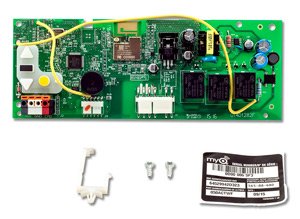
Chamberlain 050ACTWF AC WiFi Receiver Logic Board

DIPMOTOR Furnace Fan Blower Control Board for Goodman PCBFM103S

FONGLP 3106996022 Heat & Cool Relay Board for Dometic RV
A Deeper Look At The Lineup
The ICM280 is a form-fit replacement for several legacy Goodman boards, including the B18099 series, plus UTEC 1012-933D, Texas Instruments 41F-5, and White-Rodgers 50T35-730 units. That cross-compatibility makes it a quiet lifesaver for older homes where the original part is no longer stocked at the local HVAC supplier.
For homeowners who already pulled a dead board and identified the part number on the silkscreen, the swap itself usually takes under an hour with basic tools. The built-in diagnostic LED helps pinpoint why the old board failed, so you are not just guessing when the new one goes in.
Strengths Worth Knowing
- Covers four major legacy board footprints, reducing the chance of an empty trip to the supply house.
- Diagnostic LED blinks out fault codes, which saves diagnostic time on a future failure.
- Brownout protection shields the board from low-voltage events common during winter storms.
- Controls gas valve, ignitor, blower, inducer, humidifier, and air cleaner through one board.
- Made in the United States, with consistent component sourcing reported by long-term installers.
Things To Consider
- The plastic connector labels can wear off after years of service, so label wires during removal.
- Always confirm the exact part number on the original board before ordering, since several Goodman models share housings.
Who It Suits Best
Homeowners with a Goodman, UTEC, Texas Instruments, or White-Rodgers furnace from the early 2000s who want a single replacement that fits multiple footprints.
Consider Something Else When
Rheem system owners should skip ahead to the Rheem OEM board below, since mixing form factors risks a wiring mismatch.
This Rheem part number 62-24140-04 is the factory OEM board for several Rheem gas furnace models, meaning it carries the same firmware profile and connector layout as the original. When a Rheem furnace shows a red status code pointing at the control board, the 62-24140-04 is the part the service tech reaches for first.
Unlike the cross-brand ICM280 covered above, this one is engineered for Rheem’s ignition and blower timing logic. Owners with a single-brand Rheem system often prefer OEM over aftermarket to keep warranty conversations simple.
Where It Helps
- Factory Rheem specification matches original ignition sequence and timing curves.
- Direct fit reduces the chance of a stray wiring error during installation.
- Keeps service records clean if the furnace is still under OEM coverage.
Worth Noting
- OEM pricing tends to run higher than the multi-fit aftermarket boards on this list.
- Stock fluctuates since Rheem does not produce the part as frequently as commodity boards.
Key Specs
Right Fit For
Rheem furnace owners with a failed 62-24140-04 board who want an exact factory replacement without adapting connectors.
A Better Fit Elsewhere
Households running a Goodman or Carrier system should look at the ICM280 or ICM282A reviewed below, since cross-brand swaps can cause ignition timing issues.
The PCBDM133S is a defrost control board, a small but critical component in heat pump systems that decides when to reverse refrigerant flow and melt ice off the outdoor coil. The MAHUIBIN replacement fits Goodman and Amana units, swapping in for the older PCBDM133, PCBDM160, and PCBDM160S boards.
Compared to the furnace boards above, this one solves a very different symptom: a heat pump that runs constantly in heating mode but delivers cold air, or an outdoor unit coated in ice. Three selectable defrost run times (30, 60, or 90 minutes of compressor runtime before initiating a defrost) give installers a way to tune behavior for the local climate.
What Pays Off
- Selectable delay and normal defrost modes cover both mild and harsh winter regions.
- Test mode shortens the defrost interval for service verification, which speeds up the diagnostic call.
- Direct replacement for several Goodman and Amana defrost boards reduces part-hunting.
Points To Keep In Mind
- Defrost boards sit in the outdoor unit, so the swap often requires working in tight, exposed spaces.
- Misreading a defrost board failure for a refrigerant issue can waste a charge of coolant before the real fix.
At A Glance
Built With In Mind
Heat pump owners in regions with regular frost who notice outdoor unit icing or sudden loss of heating output.
Reach For A Different Pick When
Homeowners with a straight gas furnace and no heat pump should choose the ICM280 or ICM282A instead, since defrost boards serve a different refrigerant cycle.
The NEALMART-branded ICM282A is built for the Carrier HK42FZ family, a long-running control module series found in many Carrier, Bryant, and Payne gas furnaces. It also cross-references the CEPL1311012-01 and 325878-751 boards, which widens the swap-in window significantly.
Where the ICM280 above is the right call for Goodman systems, this one is the natural mirror for Carrier systems of similar vintage. Microprocessor-based design with a 100 percent gas shutoff on ignition failure adds a layer of safety that older mechanical modules lacked.
Notable Gains
- Replaces ten different Carrier board references, simplifying the search for aging systems.
- 100 percent gas shutoff on ignition failure prevents unburned gas accumulation.
- Drives the gas valve, ignitor, blower, inducer, humidifier, and air cleaner through one module.
- Updated revision compared to the earlier ICM282, addressing a few field-reported edge cases.
Trade Offs
- Wiring harness pinouts can vary slightly across the HK42FZ family, so a quick visual check before powering on is wise.
- Some installers report a short break-in period as the new board relearns the induced-draft sequence.
Feature Snapshot
Best Suited To
Homeowners with a Carrier, Bryant, or Payne furnace using an HK42FZ-series board who want a microprocessor upgrade over the original.
Where A Sibling Pick Shines
Goodman households should keep the ICM280 on the shortlist instead, since Carrier module pinouts are not interchangeable with Goodman systems.
The Chamberlain 050ACTWF sits in a different category than the rest of the list, but it qualifies as an AC control board in the broader sense. It is the receiver logic board inside several Chamberlain AC belt-drive and chain-drive garage door openers, carrying the WiFi radio that talks to the myQ app.
When a Chamberlain opener loses its wireless connection or stops responding to remotes, the logic board is a common culprit. After installation, you will need to reprogram the travel limits, force settings, and re-pair each remote, keypad, and the myQ app, a small chore most homeowners handle in a single afternoon.
Reasons It Performs
- Restores myQ smartphone control without replacing the entire opener unit.
- Fits a wide range of Chamberlain AC belt and chain drive models, including the B550, C450, and B2401 series.
- Replaces the older 050ACTBMC board, making the swap straightforward for current owners.
Honest Caveats
- Reprogramming travel limits and force settings is required after the board swap, which adds a setup step.
- Remotes, keypads, and the myQ app all need re-pairing, so set aside a quiet hour for the process.
Quick Facts
Perfect Match For
Chamberlain opener owners whose garage door has lost wireless or myQ connectivity and want to keep the existing motor unit.
Swap It Out When
Households running a LiftMaster, Genie, or older non-WiFi opener should look elsewhere, since this board is engineered specifically for Chamberlain AC units.
The DIPMOTOR board focuses on a specific subsystem inside a Goodman furnace: the blower fan timing circuit, the small module that controls when the blower starts after a heat call and how long it runs to clear residual heat. It replaces the OEM PCBFM103S and is also compatible with B1370735S and PCBFM131S references.
Where the ICM280 handles the main ignition sequence, this one handles the lingering airflow problem: a blower that cuts off too early and leaves the heat exchanger hot, or a fan that never shuts off. The dual-layer board design and upgraded component values aim to extend service life in the high-heat area near the blower housing.
Advantages To Know
- Dual-layer board construction with upgraded resistor values, designed to handle sustained heat near the blower.
- Time delay circuit controls when the blower engages and how long it cools down, which protects the heat exchanger.
- Covers Goodman, Daikin, and Amana blower modules for broader household compatibility.
Less Ideal Details
- Power must be fully disconnected before the swap, since the blower housing carries live voltage even at the thermostat.
- Installation requires reaching the blower compartment, which can be tight in low-clearance installations.
Whose Shelf It Belongs On
Goodman homeowners dealing with a blower that runs nonstop, shuts off too early, or never engages after a heat call.
Skip It When
Households with a Carrier or Rheem system should choose the ICM282A or Rheem OEM board, since the PCBFM103S form factor is Goodman-specific.
The FONGLP 3106996022 is an analog relay control board built for Dometic rooftop air conditioners in RVs, the kind that click loudly when the compressor cycles on. It fits the 579, 590, and 595 series units, plus a long list of Dometic model references that share the same relay footprint.
For RV owners, a failed relay board often shows up as a system that blows air but never cools, or a furnace mode that simply does nothing. The board swaps out from the return air grille area with basic hand tools, which is a relief compared to pulling the entire rooftop unit down.
What Helps Most
- Direct fit for Dometic 579, 590, and 595 series rooftop AC units found in many motorhomes and travel trailers.
- Cross-references a long list of Dometic part numbers, reducing the search across RV service manuals.
- Restores both cooling and furnace modes through a single relay board, simplifying the repair.
Possible Compromises
- RV rooftops expose the unit to UV and weather, so inspecting the housing gasket at the same time is wise.
- Some owners report that the analog relay click is louder than expected compared to newer digital boards.
Spec Overview
Who Should Grab It
RV owners with a Dometic rooftop unit that runs the fan but no longer cools or heats, and who want a part that drops into the existing relay slot.
Look Elsewhere When
Residential homeowners should stay with the furnace boards above, since this relay is sized for 12V and 120V RV circuits, not household line voltage.
What To Match Before You Order A Replacement Board
Control board shopping is more about the part number on the silkscreen than the brand on the box, so the first step is identifying the exact reference printed on the original board. Cross-reference charts on the listing help, but a photo of the original label removes any doubt before you cut the power.
Voltage matters as well. Furnace control boards run on 24V control signals with line voltage to the blower and inducer, while the RV relay above handles a mix of 12V and 120V. RV parts and household furnace parts are not interchangeable, even when the relay looks similar at a glance.
Connector layout is the third checkpoint. The ICM280 and ICM282A both use common residential footprints, but pin assignments differ by manufacturer. A careful photo of the wiring harness before removal turns a stressful swap into a quick afternoon.
Finally, think about the symptom. A furnace that will not ignite usually points to the main control board, while a blower that runs forever points to a timing board like the DIPMOTOR model above. A heat pump that ices up in winter points to the defrost board from MAHUIBIN. Matching the symptom to the right subsystem avoids replacing the wrong module.
Key Considerations Across These Picks
Common Shopping Slip Ups
The most frequent mistake is matching a board by furnace brand rather than by part number. Goodman, Carrier, Rheem, and White-Rodgers all made similar-looking boards with different firmware, so a Carrier unit with a Goodman board installed often shows confusing fault codes. Pull the old board first, photograph the silkscreen, and confirm the reference before ordering.
Another common slip is overlooking defrost boards on heat pump systems. A heat pump that loses heating in winter is often blamed on the furnace board, but the real culprit can be a stuck defrost relay on the outdoor unit. If your home uses a heat pump, check both boards before deciding which one to replace.
Where The Extra Money Goes
Stepping up to a board with diagnostic LEDs, dual-layer construction, or upgraded component values usually buys longevity in a hot environment. Boards mounted near the blower housing see sustained heat, so the extra copper and resistor headroom can translate into years of additional service life. For a system that runs eight months a year, that durability is often worth the small upcharge over a basic replacement.