

A soft start kit sits between your air conditioner and its power source, gently ramping the compressor up to speed instead of letting it slam on at full current. RV owners chasing a smaller generator, off-grid cabin dwellers running on solar, and homeowners tired of flickering lights every time the condenser kicks on all share the same problem this gear solves. These seven picks cover the RV crowd, residential homes, heat pumps, and even legacy compressor hard-start repairs.
The Leading Options At A Glance

MICRO-AIR EasyStart FLEX 398 Bluetooth Soft Start Kit

Briidea RV Air Conditioner Soft Starter

AIRGO Soft Starter for Air Conditioners & Heat Pumps

Spartan Power SpartanStart RV Soft Start Kit

Seentech SPP6 Relay/Capacitor Hard Start Kit
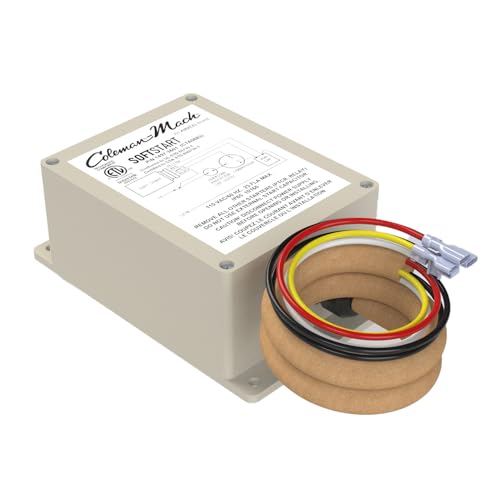
MACH Coleman Soft Start Kit for RV Air Conditioner 1497-3601
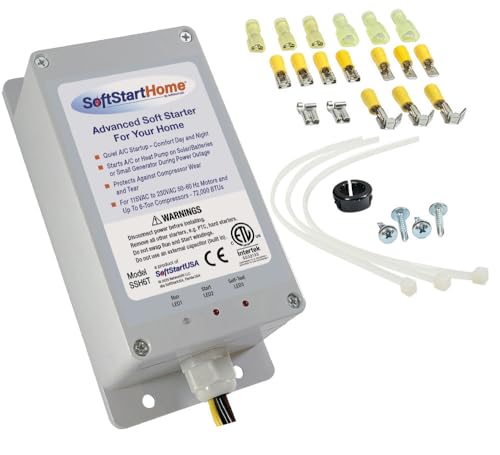
SoftStart Home Soft Starter for Air Conditioners & Heat Pumps
The Details Behind The Selections
The Micro-Air EasyStart FLEX 398 is the most flexible option in this roundup, covering everything from a rooftop RV unit up to a 6-ton residential system, all without swapping devices. Bluetooth tuning through a phone app is a genuinely practical touch for anyone fine-tuning compressor ramp behavior on the fly.
For RVers running a 15K BTU rooftop on a 2kW generator, the FLEX means the air conditioner stops being the only appliance allowed to run. Pair it with an inverter or a small portable generator, and you can cool the cabin while the coffee maker runs. Larger residential installs benefit from the same gentle ramp, reducing the brown-out flicker that plagues older neighborhood circuits.
Reasons It Performs
- One unit covers RV through 6-ton residential systems, no need to buy twice if your setup changes.
- Bluetooth app control lets you tune startup behavior without pulling the unit down for adjustments.
- Installation kit is included, which keeps the first-time install to a single shopping trip.
- Reduces inrush surge enough to run a typical RV AC off a 20A household outlet in many cases.
- Compressor-friendly ramp extends motor life in the long run.
Trade Offs
- Higher price point than RV-only soft starters, which may be hard to justify for a single-van setup.
- Wiring work inside the AC plenum requires comfort with line-voltage electrical, so many owners call a tech.
- Bluetooth setup adds a small step that simpler plug-and-play units skip.
Key Product Details
Who It Suits Best
Full-time RVers and homeowners with a single flexible solution in mind, especially those who already use Micro-Air accessories.
Where Another Pick Suits Better
The Briidea RV Air Conditioner Soft Starter is the friendlier pick for a one-van setup on a tight budget.
Briidea’s RV soft starter is aimed squarely at the boondocking crowd running modest 2,200W generators. The whole pitch is letting the rooftop AC start without dragging every other appliance offline, which is the daily reality for anyone camping off the grid.
Compared to the Micro-Air EasyStart FLEX 398 above, this one keeps the feature list trim and the price approachable. It’s a sensible match for a single RV rather than a flexible whole-property solution, and for many weekend warriors that’s exactly the right trade.
Useful Touches
- Targets the most common RV generator size, around 2,200W, so it solves a real weekend problem.
- Lower price makes it easy to justify for a single van or travel trailer.
- Lets a 20A household outlet power the rooftop AC at many campgrounds with limited pedestals.
Things To Consider
- RV-only design limits it for residential or heat pump use.
- Wiring still requires comfort with the AC’s electrical compartment; many owners factor in a service visit.
- Smaller unit ecosystem means fewer setup guides floating around than for the Micro-Air option.
Right Fit For
Occasional RVers with small inverter generators who want cooling without giving up the rest of the cabin outlets.
Consider Something Else When
Heat pump owners should look at the AIRGO Soft Starter for Air Conditioners & Heat Pumps, which handles reverse-cycle compressors.
The AIRGO soft starter earns its spot by handling both air conditioners and heat pumps, which sounds simple until you remember that heat pumps reverse refrigerant flow to switch between heating and cooling. A standard soft start can confuse that cycle, so a unit built for both modes is genuinely different hardware, not a marketing tweak.
Reverse motor protection is the headline feature, and it pairs naturally with generator, stored-energy, and solar compatibility. For cabins on off-grid power or homes in regions where the heat pump carries a heavy winter workload, that combination is the actual point of buying this class of device. Compared to the Spartan Power SpartanStart below, the AIRGO is the more stationary, residential-leaning choice.
Notable Gains
- Heat pump compatibility covers year-round heating and cooling in one device.
- Reverse motor protection is built in, so directional changes don’t trip the system.
- DIY-friendly install cuts the cost of calling a technician for many homeowners.
- Plays well with generators, solar, and battery banks for off-grid homes.
Some Limits To Know
- Specified 16 to 32A current range means larger commercial condensers fall outside its wheelhouse.
- Less brand recognition than Micro-Air, so community troubleshooting guides are still growing.
Core Features
Made For
Heat pump owners on off-grid or weak-grid power who want year-round compressor protection in a single install.
Not Your Match When
Full-time RVers chasing a generator-friendly rooftop setup should reach for the Spartan Power SpartanStart instead.
The SpartanStart was built around the RV reality of starting a 20K BTU rooftop off a 2,200W inverter, which is the upper edge of what a small portable generator can handle. Its pre-load and anti-stall features specifically pre-empt the moment when a small generator would otherwise choke.
One detail owners appreciate is the seamless switching between generator, inverter, and shore power without manual reconfiguration. For van lifers, that means rolling into a campsite with hookups, the AC already running, no menu diving required. Where the Briidea above keeps the feature list simple, SpartanStart leans into RV-specific tuning.
Notable Upsides
- Generator anti-stall logic is genuinely tuned for 2,200W class inverters.
- Handles up to 20K BTU units, the largest common RV rooftop size.
- Battery-friendly ramp reduces the deep draw that kills lithium banks during startup.
- No learning routine required at install, which shortens setup time.
Points To Note
- RV-focused, so residential homes should look at the SoftStart Home or AIRGO instead.
- Confirmed compatibility with your specific AC model is worth checking before purchase.
- Wiring is still inside the rooftop unit, so a service appointment may be the easier path.
Best Suited To
Van and camper owners with mid-size inverter setups who switch between generator and shore power often.
Look Elsewhere When
Coleman-Mach rooftop owners wanting an OEM-aligned install will be happier with the MACH Coleman Soft Start Kit for RV Air Conditioner 1497-3601.
The Seentech SPP6 is the only true hard start kit in this roundup, and the distinction matters. A hard start kit adds torque, up to 500 percent per the manufacturer, to push a struggling compressor past its locked-rotor hump. That’s the opposite of a soft starter, which is built to slow startups down.
If you have an older residential or commercial compressor that groans but won’t quite kick on, the SPP6 can buy it a few more seasons before replacement. The cross-reference list covers SPP6, TJ90HS6, AP4502872, 35702, DST-6, ERPP6, HS6, and HS650, which is a wide swath of legacy HVAC parts.
A Strong Showing
- 500 percent starting torque jump gets tired compressors running again.
- Wide BTU compatibility from 4,000 window units up to 120,000 commercial systems.
- Direct replacement for many older part numbers, simplifying the swap.
- Lower cost than full compressor replacement on borderline units.
Honest Caveats
- Hard start kits add current spike rather than reduce it, so they’re not for generator or weak-grid users.
- Working with line-voltage HVAC components calls for a qualified technician on most residential installs.
- Doesn’t extend compressor life the way a true soft starter does; it just gets the motor past the start.
Who Will Love This
Homeowners and HVAC techs reviving a worn compressor on a budget, where full replacement isn’t yet justified.
A Better Fit Elsewhere
Anyone trying to run an AC on a small generator should grab the Briidea RV Air Conditioner Soft Starter instead.
Coleman-Mach has been in the RV climate control space since the late 1960s, and the 1497-3601 soft start kit is built to drop into that specific ecosystem. For owners of Coleman-Mach rooftop units, the OEM alignment removes a layer of compatibility guessing that third-party kits sometimes introduce.
Unlike the Micro-Air EasyStart FLEX 398, which targets broad compatibility, this one is happy to be a specialist. The trade is obvious: Coleman-Mach owners get a snugger fit, and everyone else should look at the more universal options in this list.
Positive Points
- OEM-built for Coleman-Mach units, which simplifies install and integration.
- Part number 1497-3601 is widely stocked in the RV service world.
- Plug-in style install compared to splicing into compressor wiring in many cases.
Worth Noting
- Most useful specifically for Coleman-Mach units, less so for other RV AC brands.
- Specs beyond compatibility aren’t deeply listed in the source data, so confirm model fit before purchase.
Perfect Match For
Coleman-Mach rooftop owners wanting a kit designed for their specific unit from the start.
Reach For A Different Pick When
Multi-brand RV owners or anyone running a non-Coleman AC will find more flexibility in the Micro-Air EasyStart FLEX 398.
The SoftStart Home rounds out the list with a residential-first design, including heat pump coverage and a stated 70 percent reduction in startup power. For homeowners whose main complaint is dimming lights every time the condenser kicks on, that’s the headline number to care about.
A 15-minute install is the other big talking point, and it leans on the home wiring layout rather than the more involved RV rooftop access. Compared to the AIRGO, this unit positions itself as the pick for everyday suburban homes, while AIRGO leans more toward off-grid and weak-grid situations.
The Value In It
- 70 percent reduction in startup power, which keeps lights steady and breakers happy.
- Covers residential AC and heat pump systems up to 6 tons, matching most suburban homes.
- Generator and solar compatibility, useful during outages.
- Extends compressor life by reducing heat buildup during the inrush moment.
- 15-minute install time is on the friendlier end for homeowner DIY.
Some Limits To Know
- Residential focus means RV owners should still prefer Micro-Air or SpartanStart.
- 6-ton ceiling leaves out the largest whole-home or small-commercial systems.
- Working inside the condenser still requires electrical caution, even with a short install window.
Feature Snapshot
Who Should Grab It
Suburban homeowners on standard residential service who want steady lights and a longer-lived compressor.
Swap It Out When
Off-grid and RV applications fit the AIRGO Soft Starter or Micro-Air EasyStart FLEX 398 better.
Choosing A Soft Start Kit That Actually Fits Your Setup
The first decision is the environment: RV, residential home, or off-grid cabin. RV units typically run on 120V shore power or small inverter generators, which puts a hard ceiling on what the compressor can pull at startup. Residential homes usually have more headroom but still benefit from reducing the inrush that flickers the lights and stresses the compressor windings. Off-grid setups on solar or stored energy care most about keeping that startup spike inside the inverter’s surge window.
Next, match the kit to the BTU rating. A 15K BTU RV rooftop and a 6-ton residential condenser live in different universes, and oversizing or undersizing a soft starter both cost you. Heat pump compatibility is its own checkbox, since reverse-cycle systems ask more of the controller than a standard cooling-only unit.
Generator and solar pairing is the third pillar. The Micro-AIR EasyStart FLEX 398 and SoftStart Home both lean into generator-friendly ramps, while the AIRGO explicitly calls out stored-energy and solar compatibility. If you only have grid power, any of the residential picks works, but the generator-tuned models won’t hurt and may help during outages.
Finally, installation comfort matters. Some kits, like the MACH Coleman Soft Start Kit for RV Air Conditioner 1497-3601, drop into a specific brand with minimal wiring. Others, like the Seentech SPP6 hard start kit, involve working near line-voltage terminals and benefit from a qualified HVAC technician.
Key Considerations Across These Picks
Where Shoppers Go Wrong
The most common mistake is buying a hard start kit when a soft starter is actually the right tool. Hard start kits, like the Seentech SPP6, boost torque to push a struggling compressor past its startup hump, which is great for aging hardware but counterproductive for generator and weak-grid users. Soft starters do the opposite, reducing the inrush so the system starts gently, and that is what most modern scenarios actually need.
The second misstep is ignoring the BTU and current range. A unit rated for 16 to 32 amps (AIRGO) won’t cover a 5-ton draw the way a 6-ton-rated soft starter will, and a 15K BTU RV kit won’t help a residential condenser. Matching the device to the load matters more than feature lists.
What The Higher Tier Buys
Stepping up from a basic RV-only unit to a flexible model like the Micro-AIR EasyStart FLEX 398 adds Bluetooth tuning, broader BTU coverage, and dual-use potential across RV and home. For most shoppers, that flexibility justifies the price difference, especially anyone with mixed setups or plans to grow their system. Premium tier also tends to include installation kits and app-based diagnostics that basic models skip, which pays off over years of ownership rather than months.
Frequently Asked Questions
What does an AC soft start kit actually do?
It ramps the compressor up to speed gradually instead of slamming it on at full current, which reduces the inrush surge that trips breakers, dims lights, and stresses motor windings. The end result is a quieter, gentler startup that also lets smaller generators handle the load.
Can a soft start kit let me run my AC on a smaller generator?
In many RV cases, yes. A typical 15K BTU rooftop paired with a 2,200W generator is a common combination supported by kits like the Briidea and SpartanStart, though real-world results vary with altitude, temperature, and other running loads.
Will a soft starter help an old compressor that struggles to start?
Not really. A struggling compressor is better served by a hard start kit like the Seentech SPP6, which adds torque to push past locked-rotor resistance. Soft starters reduce current, which is the opposite of what a worn motor needs.
Are soft start kits safe to install yourself?
Many homeowner-oriented units are designed for DIY, but the work happens near line-voltage wiring. Comfort with electrical safety and your local code requirements is essential, and calling a licensed HVAC technician is the safer path for anyone uncertain.
Do soft starters work with heat pumps?
Some do, but it is not universal. Units like the AIRGO and SoftStart Home explicitly support heat pump systems with reverse-cycle operation, while RV-focused kits typically do not. Check the product’s stated compatibility before purchase.