
When summer hits and the air turns thick, a good fan stops feeling optional and starts feeling essential. The trick is finding one that matches your space, your noise tolerance, and how far you need the breeze to travel. This lineup covers everything from full-room tower fans to pocketable personal coolers, so you can match the right tool to the right job.
A Quick View Of The Lineup
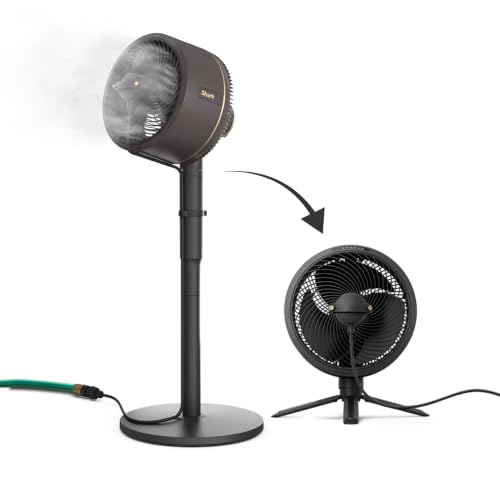
Shark FlexBreeze 2-in-1 Fan with Misting Attachment, Charcoal (FA222)

Shark FlexBreeze Pro Mist 2-in-1 Fan with Integrated Mist, White (FA302WH)

Shark FlexBreeze 2-in-1 Fan with Misting Attachment, White (FA222WH)

Lasko Elevation DC Tower Fan with Remote, EST100, 42″ to 54″, Black

PUUXUMIC Portable Ice Fan 4-IN-1 with 1500ml Water Tank

OmniBreeze Digital Electric Tower Fan, 36-Inch, Bladeless
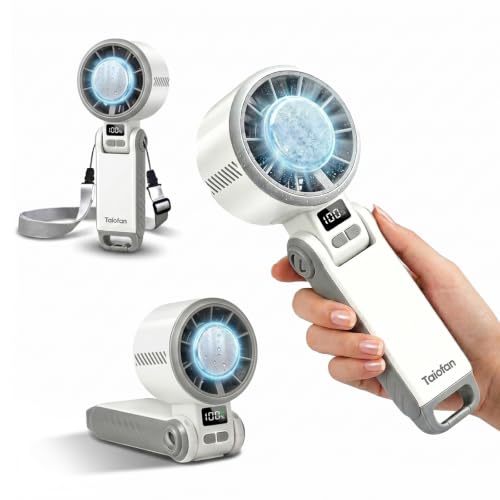
Taiofan Portable Handheld Fan with Semiconductor Ice Cooling
More On The Choices That Made The List
The Shark FlexBreeze in charcoal earns its spot as a patio workhorse, with a weather-resistant build that shrugs off rain and sun exposure. You can run it corded for all-day cooling or drop the battery in for cable-free placement anywhere from the garage to the beach.
It converts between a full pedestal and a compact tabletop fan without tools, so the same unit follows you from morning coffee on the deck to a late-night work session in the garage. If your outdoor cooling needs shift with the season, that flexibility matters more than raw power.
Where It Delivers
- Five speed settings cover everything from a quiet background breeze to full-throttle airflow on the hottest afternoons.
- Up to 24 hours of cordless runtime on lower settings means you can leave it outside through an entire gathering without recharging.
- The included misting attachment adds a cooling layer of fine water particles, useful in dry climates where moving air alone feels insufficient.
- Reaches roughly 70 feet of effective airflow, so one fan can cover a large patio or a long picnic table.
Things To Consider
- The misting accessory needs a garden hose hookup, which limits where you can set up.
- At higher speeds, the fan is loud enough that quiet conversation nearby gets harder.
Key Attributes
Built With In Mind
Homeowners with covered patios, garages, or backyards who want one fan they can leave outdoors and move between spots.
Consider Something Else When
Shoppers wanting a quieter indoor-only tower should look at the Lasko Elevation DC Tower Fan, which suits bedrooms far better.
The Pro Mist takes the FlexBreeze formula and solves its biggest inconvenience: no hose required. The integrated misting tank lives inside the unit, so you get evaporative cooling without dragging a garden hose across the deck.
Runtime varies meaningfully by speed, so you may find that cranking to the top setting eats battery faster than the standard FlexBreeze. For most backyards, the trade is worth it for the freedom to place the fan anywhere.
A Few Highlights
- Onboard water tank removes the hose dependency that limits other misting fans.
- Whisper-quiet operation at lower speeds makes it workable on porches where you actually want to talk.
- Same pedestal-to-tabletop conversion as the standard model, so portability stays intact.
Trade Offs
- Refilling the integrated tank mid-evening is a chore if you run mist on high all day.
- Higher price point than the hose-attached FlexBreeze, which makes sense only if you need the portability.
- At maximum speed with mist active, expect closer to two hours of cordless runtime, not the headline 24 hours.
Made For
Hosts who entertain outdoors often and want a misting fan that does not need a permanent water line nearby.
Look Elsewhere When
Budget-focused shoppers who already have a hose outlet nearby will get more value from the standard Shark FlexBreeze in Charcoal.
The white version of the FlexBreeze offers the same convertible pedestal design with a finish that blends into bright, sunlit patios. Functionally it mirrors the charcoal model, so the real decision is aesthetic and how the color holds up in your setting.
For a coastal-style deck or a minimalist living room, the white housing disappears into the background more easily. If your décor leans modern and bright, the color alone can justify choosing this over its darker sibling.
Useful Highlights
- White finish reads as a piece of furniture rather than an appliance in visible indoor-outdoor rooms.
- Identical 5-speed motor and 70-foot reach as the charcoal version, so performance is unchanged.
- Same up to 24 hours of cordless runtime on lower settings for all-day outdoor placement.
Points To Note
- White housing shows dust, pollen, and water spots more readily than the charcoal model, so cleaning frequency goes up.
- Still depends on a hose connection for the misting feature.
Best Suited To
Design-conscious shoppers who want outdoor cooling that complements light-colored or contemporary décor.
Reach For A Different Pick When
You want cordless misting without a hose, in which case the Shark FlexBreeze Pro Mist is the better fit.
The Lasko Elevation brings something none of the outdoor-focused Shark models do: a near-silent DC motor that actually disappears into a quiet room. Tower fans use a slim vertical column to push air up and out, ideal for spaces where a spinning blade fan would feel intrusive.
The height adjusts from 42 to 54 inches, which sounds small but matters in practice. A fan that sits too low blows over your knees, while one aimed too high wastes its output on the ceiling. Lasko gets this right.
Bright Spots
- DC motor runs quietly enough to sleep next to, which is rare for fans at this airflow level.
- Eight speed settings plus four modes (including sleep and natural breeze) give you real tuning control.
- Remote control and child lock make it a strong fit for bedrooms and shared family spaces.
- Adjustable height means the same fan works as a bedside unit and a living room centerpiece.
Honest Caveats
- Tower fans cost more to manufacture than pedestal fans, and this one reflects that in its price tier.
- The narrow column means the airflow feels concentrated directly in front of the fan, weaker off to the sides.
Feature Snapshot
Whose Shelf It Belongs On
Light sleepers, remote-control fans, and anyone cooling a bedroom or home office who values silence over raw power.
Swap It Out When
You need outdoor durability instead of indoor quiet, which is exactly what the Shark FlexBreeze delivers.
The PUUXUMIC is a desktop unit, not a room cooler, and that’s the point. It combines a regular fan, a cool-mist humidifier, and a 7-color night light in a footprint small enough to sit on a nightstand or a desk. For personal spot cooling, that focus is the whole appeal.
The 1500ml tank is generous for the category and supports two mist modes, which matters on genuinely humid days when the air feels heavy. You won’t cool a living room with this, but your immediate space will feel noticeably fresher.
The Case For It
- Compact enough to sit on a bedside table, desk, or kitchen counter without taking over the surface.
- 2 to 8 hour timer lets you run it overnight without leaving it on all night.
- Remote control means you can adjust settings from bed without getting up.
- Multi-function design reduces the number of devices cluttering your nightstand.
Some Limits To Know
- Cooling effect is personal and local, not a substitute for a real room fan or air conditioner.
- Water tank needs regular refilling and cleaning to avoid mineral buildup, especially with tap water.
Quick Facts
Right Fit For
Home office workers, students in dorms, and anyone wanting personal cooling without a full-size fan nearby.
Where Another Pick Suits Better
Anyone needing to cool a full bedroom should step up to the Lasko Elevation DC Tower Fan instead.
The OmniBreeze addresses a real problem in small apartments: most tower fans are either too tall or too wide. At 36 inches with a slim bladeless column, it fits where bulkier models can’t, like next to a couch, in a corner, or behind a desk.
Bladeless design also means no exposed spinning grille, which is a safety plus in homes with curious kids or pets. The trade-off is usually airflow strength, but the OmniBreeze compensates with smart modes that auto-adjust to room temperature.
Notable Gains
- Bladeless construction is safer around children and easier to wipe clean than a traditional grille.
- LED display and remote control make adjustments quick, even from across the room.
- Auto mode reads the room temperature and adjusts speed accordingly, so you are not constantly fiddling with settings.
- Four operating modes including sleep and natural breeze give flexibility without complexity.
Less-Strong Areas
- Bladeless towers generally move less air than pedestal fans at the same price point.
- Auto mode depends on accurate ambient temperature reading, so placing the fan in direct sunlight can throw off its judgment.
Spec Overview
Perfect Match For
Apartment dwellers and small-space households who want a slim, safe tower fan that doesn’t dominate the room.
Skip It When
You need stronger airflow for a larger room, in which case the Lasko Elevation DC Tower Fan is the better match.
The Taiofan is the smallest unit in this lineup, but it does something none of the others can: semiconductor cooling, which is a small thermoelectric plate that actively pulls heat away from a contact surface. That gives it a brief “ice” sensation on contact, not a sustained chill, but on a sweltering platform or in a stuffy subway, brief is enough.
With a 4000mAh battery and five speeds, it doubles as a regular personal fan for everyday use. The honest read is that this is a commuting tool first and a personal cooler second, ideal for anyone who spends real time outdoors or in transit.
Key Advantages
- Fits in a bag or large pocket, so you actually carry it instead of leaving it on the dresser.
- Five speed settings give meaningful control over a small unit’s airflow.
- USB rechargeable, meaning you can top it up from a laptop, power bank, or car charger.
Points To Keep In Mind
- Semiconductor cooling effect is brief and contact-based, not a substitute for room cooling.
- At higher speeds, the 4000mAh battery drains noticeably faster than handheld fans without cooling tech.
- The ice-cooling feature is most noticeable when the unit is fully charged, so topping up matters.
Who Should Grab It
Commuters, festival-goers, and travelers who want personal cooling that fits in a jacket pocket.
Not Your Match When
You need a fan for a fixed location like a bedroom or office, where the PUUXUMIC Portable Ice Fan or the Lasko Elevation will serve you far better.
Factors To Consider When Choosing Ac Fans
Room Size and Airflow Reach
A fan’s real-world usefulness comes down to how much air it moves and how far that air travels. Tower and pedestal fans with longer reach work for open living areas, while compact desktop units are built for personal space cooling. Match the fan to the room, and you avoid buying more or less than you need.
Noise Level and Sleep Use
DC motors (the type in the Lasko Elevation) run quieter than traditional AC motors, which makes them far better for bedrooms. Tower fans in general produce less whirring than pedestal fans because their blades are smaller and more enclosed. Check the speed range too, since most fans get loud only at the top settings.
Indoor Versus Outdoor Construction
Outdoor-rated fans use weather-resistant materials that handle UV, rain, and dust. Indoor tower fans look better in living spaces but should never sit outside. The Shark FlexBreeze models bridge both, though they are clearly designed with outdoor use as the priority.
Misting and Evaporative Cooling
Misting fans combine water droplets with airflow to cool faster, which works well in dry heat but adds humidity. In already humid climates, misting can make the air feel heavier, so a standard fan often serves better. Consider your local conditions before paying extra for misting capability.
Key Considerations Across These Picks
Common Shopping Slip Ups
The biggest mistake is buying for peak power rather than daily use. A fan that screams on high but lacks a usable low setting will frustrate you on mild days. Also watch for fans without oscillation, which concentrate airflow in one spot and leave the rest of the room untouched. Remote controls and timers sound minor until you are using them every night.
Where The Extra Money Goes
Higher-tier fans typically buy quieter motors, better materials, and longer warranties. DC motors cost more to manufacture but use less electricity, which adds up over years of summer use. Premium fans also tend to offer smarter features like auto mode and sleep curves, which adjust airflow as the room temperature drops overnight. The upgrade is worth it for daily users and less critical for occasional backup cooling.
Frequently Asked Questions
What size fan do I need for my room?
For bedrooms under 150 square feet, a tower or compact pedestal fan handles the job. Living rooms over 250 square feet benefit from pedestal fans with longer reach, ideally with oscillation to spread airflow across the space.
Are bladeless fans worth the extra cost?
Bladeless designs are safer around children and easier to clean, but they typically move less air than bladed fans at the same price. They make sense for small rooms and safety-focused households, less so for large open spaces.
How long do portable fan batteries last?
Runtime varies dramatically by speed setting. Most cordless fans advertise 20 to 24 hours on the lowest setting, but at top speed that drops to two to six hours. Treat the headline runtime as a best-case figure, not a typical one.
Can I use an outdoor fan indoors?
Yes, though outdoor fans tend to be louder and larger than indoor models. The reverse is riskier, since indoor fans are not built to handle moisture or UV exposure, and using one outdoors can shorten its lifespan significantly.
Do misting fans really cool better?
In dry climates, yes. Misting fans lower the effective temperature by combining water evaporation with airflow, which mimics the chill of natural breeze. In humid climates, the extra moisture can make the air feel heavier rather than cooler.