

Air conditioners, dehumidifiers, and basement equipment all produce the same hidden problem: condensate that has nowhere to drain. Once the gravity line won’t reach, a small electric pump takes over, moving that water uphill to a sink, drain, or the outside. The right unit keeps a pan from overflowing onto drywall, the wrong one cycles on at 3 a.m. and burns out in a season. This roundup sorts through seven models built for different homes, ductless mini splits, and light commercial rigs, so you can match capacity and lift to your real setup.
The Choices Worth Comparing

RectorSeal Mighty Pump 97795 Hand Operated A/C Condensate Pump, Lightweight Heavy Duty PVC
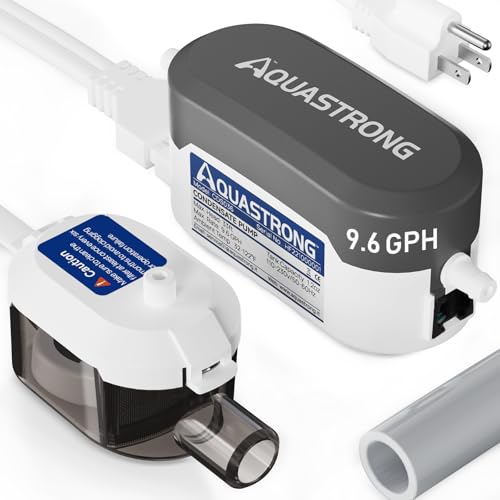
Aquastrong Mini Split HVAC Condensate Pump 9.6 GPH 33 FT Lift
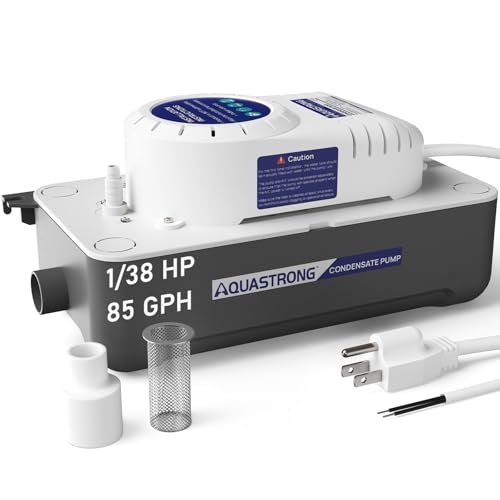
Aquastrong 1/38 HP 85 GPH HVAC Condensate Pump 20 FT Lift

MSELTOS 1/30 HP 132 GPH HVAC Condensate Pump 20 FT Tubing

Automatic Small Sump Pump with Water Sensor 5 FT 55 GPH

Roamoris PM01 Mini HVAC Condensate Pump with Level Sensor

Aquastrong 115V 70GPH HVAC Condensate Pump with 19.7ft Tubing
Inside Each Recommended Option
Unlike every other pick on this list, the RectorSeal Mighty Pump isn’t an electric pump at all. It’s a hand-operated PVC tool that you squeeze to push pressurized air through a clogged condensate line, clearing slime, mold, and sediment that would otherwise back up the pan.
For homeowners in older properties with recurring primary-line clogs, this tool earns a permanent spot in the utility drawer. The PVC body stays light, resists corrosion from standing water, and the manual action means no motor to fail. You won’t drain anything, you just blow the blockage out.
Everyday Perks
- Needs no power outlet, so it’s safe to use near wet pans and breaker panels
- Lightweight PVC body resists the minerals and biofilm common in condensate
- Manual operation means nothing to plug in, reset, or replace over time
- Doubles as a maintenance tool you can use before a clog ever forms
Trade Offs
- It’s a clearing tool, not a draining pump, so it doesn’t solve gravity-drain problems on its own
- Requires physical effort, which gets tiring on long, deep clogs
Who It Suits Best
Homeowners in humid climates whose primary condensate line clogs once or twice a season, and who want a low-cost preventive tool to keep in the garage.
Where Another Pick Suits Better
The Aquastrong Mini Split HVAC Condensate Pump suits ductless mini split owners who need a real electric pump, not just a clearing tool.
Where most condensate pumps rattle like a small refrigerator, this Aquastrong unit runs at roughly 20 dB, the kind of low hum that disappears under a window unit at night. It’s built specifically for ductless mini splits where a single head dumps modest amounts of water that need lifting up and across to a remote drain.
The 33 ft vertical lift rating is generous for a pump this small, and the thermally protected motor with a Hall effect switch (a magnetic sensor that triggers operation without a mechanical float) keeps the unit cycling only when water actually rises in the reservoir. The 3.3 ft power cord fits behind most indoor heads without an extension.
Benefits That Matter
- 20 dB operation makes it livable in bedrooms, nurseries, and home offices
- 33 ft head rating covers multi-story drain routing in townhomes
- Universal 115V/230V compatibility simplifies retrofits
- Hall switch design avoids the sticking-float failures common in cheaper pumps
Soft Spots
- 9.6 GPH is on the low side for whole-home air handlers or commercial-grade condensate output
- 3.3 ft cord can be short when the nearest outlet sits across the room
Key Specs
Made For
Apartment dwellers and homeowners running one or two ductless mini split heads in quiet living spaces, where a loud pump would be unacceptable.
Consider Something Else When
The MSELTOS 1/30 HP 132 GPH HVAC Condensate Pump handles much heavier loads for homeowners with full central air and a basement air handler.
This Aquastrong model steps up the flow without stepping up the noise footprint in a major way. At 85 GPH, it can clear a full residential condensate line during humid stretches, and the 20 ft lift covers most basement-to-attic drain paths in single-family homes.
Compared to the smaller Aquastrong Mini Split, this one trades head pressure for volume, which is the right move when the AC is running for hours in July. The motor runs cooler thanks to thermal protection, and the safety switch cuts the system if the reservoir ever fills past the high-water mark, preventing pan overflow during a stuck-float situation.
Well-Handled Touches
- 85 GPH moves full-home condensate without constant cycling
- Thermal-protected motor extends service life under heavy summer loads
- Automatic safety switch shuts the system off before an overflow
- Dual-voltage design adapts to both 115V household and 230V commercial lines
Worth Bearing In Mind
- Not as quiet as the dedicated mini split pump, so placement matters in living zones
- 20 ft lift is shorter than the smaller Aquastrong above, so very tall homes may need a mid-boost setup
Right Fit For
Homeowners with a standard split-system central air handler and a basement utility room, where capacity and reliability matter more than absolute silence.
Skip It When
The Aquastrong Mini Split HVAC Condensate Pump is the better fit for sound-sensitive spaces where 33 ft of head pressure is more important than raw GPH.
This is the workhorse of the group. The MSELTOS 1/30 HP moves 132 gallons per hour, which is overkill for a single mini split and right-sized for a commercial ice maker, a high-output dehumidifier, or a basement boiler with serious condensate output.
The 20 ft of included discharge tubing removes a separate purchase from the install, and the automatic safety switch gives installers a clean contact closure to wire back to the air handler. The 1/30 HP motor is small enough to mount near the pan without strain on the housing.
Notable Gains
- 132 GPH handles the heaviest residential and light commercial condensate loads
- Bundled 20 ft tubing saves a trip to the hardware store
- Safety switch provides a clean shutoff signal for the air handler
- Dual-voltage flexibility for residential or commercial wiring
Honest Caveats
- Bulkier than the mini-split-focused models, so tight ceiling cavities won’t accept it
- Higher flow means more frequent reservoir cycles, which can shorten switch life if the float jams
Key Specs
Best Suited To
Light commercial spaces, basements with high-output dehumidifiers, and homeowners running multiple air handlers or a commercial-style ice maker.
Not Your Match When
The Automatic Small Sump Pump with Water Sensor fits better in shallow ceiling pans where 132 GPH is far more than the system can ever produce.
This MSELTOS mini pump is the answer to the most common complaint about condensate pumps: the housing is too tall to fit in a shallow ceiling pan. At roughly 2.24″ × 1.38″ × 2.2″, it slips into spaces where a traditional reservoir pump simply won’t go.
The float switch handles auto on/off, the 55 GPH flow covers a mid-size portable AC or dehumidifier, and the 5 ft vertical lift is enough for most above-floor drain ties. The trade-off shows up when you need to push water up multiple stories or carry a much higher flow rate.
Positive Points
- Sub-2.5 inch profile fits shallow ceiling cassettes and closet pans
- Float switch gives dependable auto cycling in modest condensate streams
- Lightweight body simplifies mounting with basic hardware
- Compatible with 115V and 230V wiring for retrofit flexibility
Possible Compromises
- 5 ft lift limits use to short vertical runs, often a problem in tall basements
- 55 GPH won’t keep up with a whole-home air handler during peak humidity
Feature Snapshot
Who Will Love This
Renters and homeowners with a portable AC, mini dehumidifier, or a shallow pan above a closet, where every inch of headroom matters.
A Better Fit Elsewhere
The Roamoris PM01 Mini HVAC Condensate Pump works better for fully submerged basin installs where a side-mounted float won’t always trigger reliably.
The Roamoris PM01 takes a different approach from the reservoir-style pumps earlier in the list. It’s a small submersible unit with an integrated level sensor, which means it sits in the condensate itself and shuts off automatically when the water drops below the probe.
For tight spots behind an air cooler or inside a dehumidifier reservoir, this design dodges the failure mode where a float switch sticks against a wall. The auto shutoff also prevents dry running, a common cause of premature motor burnout. The 13 ft lift rating with flow control gives installers room to push water through longer horizontal runs.
Notable Upsides
- Submersible design eliminates the sticking-float issue common in basin pumps
- Integrated level sensor shuts the motor off before dry running
- Compact housing slips behind air handlers and inside dehumidifier trays
- Flow control at the discharge helps tame long horizontal runs
Smaller Limitations
- Submerged design means routine cleaning of the intake screen, which gets forgotten
- 110V-only, so 230V commercial wiring needs a different solution
Key Specs
Perfect Match For
Apartment dwellers and small-office users running a dehumidifier or portable AC with a deep catch tray, where a traditional float switch would be prone to failure.
Reach For A Different Pick When
The Aquastrong 115V 70GPH HVAC Condensate Pump works better in standard residential drain pans where dual-voltage flexibility and a remote reservoir matter more than a submersible footprint.
The third Aquastrong on the list lands as the everyday pick for a reason. 70 GPH covers a typical central air handler or mid-size dehumidifier without overbuilding, and the 16 ft vertical lift is enough for most basement drain tie-ins without forcing you up a wall to the ceiling.
The 19.7 ft of included discharge tubing is the kind of detail that saves an afternoon, and the automatic safety switch gives you the same shutoff logic as the bigger Aquastrong units. The float switch starts the cycle at 1.63 inches of water and stops at 0.9 inches, which keeps residual water in the reservoir and reduces short-cycling.
Key Advantages
- 70 GPH balances flow and motor longevity for typical residential loads
- Bundled 19.7 ft tubing removes a second order from the install
- Float switch calibration reduces short-cycling and motor wear
- Automatic safety switch protects against overflow if the float sticks
Points To Note
- 115V only, so 230V commercial applications need a different model
- 16 ft lift won’t reach drain lines higher than a second-floor ceiling
Technical Highlights
Built With In Mind
Homeowners replacing an aging condensate pump on a mid-size central air system, who want a complete kit without sourcing tubing separately.
Where A Sibling Pick Shines
The Aquastrong 1/38 HP 85 GPH HVAC Condensate Pump handles higher-flow central systems where 70 GPH would run the motor nonstop through humid stretches.
What To Match Before You Choose an Ac Drain Pump
Flow Rate and Vertical Lift
Flow rate, measured in GPH, tells you how much water the pump can move per hour, while vertical lift (sometimes called “head”) is the maximum height the pump can push water upward. A small ductless mini split may produce only a few gallons per day, so a 9.6 GPH pump is fine, but a basement air handler in August can pour out far more.
Measure the distance from the pan to the drain tie-in and add a safety margin of 20 to 30 percent for friction loss in the tubing. Picking a pump that just barely reaches the height will leave you with air-locked lines and a noisy short-cycle. Where lift matters more than flow, the Aquastrong Mini Split stands out, but for sheer volume, the MSELTOS 1/30 HP carries the day.
Noise Level and Placement
A condensate pump installed in a closet, bedroom, or living area needs to be quiet. Anything above roughly 30 dB becomes noticeable, especially at night. Pumps like the 20 dB Aquastrong Mini Split are designed with thermally protected motors that run cool, which tends to reduce hum. Conversely, workhorse pumps with high GPH and bigger motors are better off in utility rooms, basements, or above-ceiling cavities where the noise stays out of earshot.
Voltage, Tubing, and Safety Switches
Most residential pumps run on 115V, while commercial or international installs may require 230V. Several models on this list handle both, which simplifies future upgrades. An automatic safety switch is worth the small extra cost: it cuts the system when the reservoir overfills, preventing ceiling stains or a flooded closet. Bundled tubing is a small but real benefit, because buying the right diameter and length separately can eat a Saturday afternoon.
Reservoir Design vs. Submersible Pumps
Traditional reservoir pumps sit beneath the pan and use a float switch to start the motor. Submersible pumps like the Roamoris PM01 sit inside the water and use a level sensor instead. Reservoir pumps handle higher flow, but float switches can stick. Submersible pumps avoid that failure mode but need occasional intake screen cleaning. Choose based on the access you have to the pan and how comfortable you are with light maintenance.
Key Considerations Across These Picks
Pitfalls Shoppers Hit
The most common mistake is under-sizing the pump for the actual condensate load. A 9.6 GPH mini split pump will run constantly in a basement with a 4-ton air handler, and that constant cycling kills motors within a season. Measure the worst-case summer output from the air handler or dehumidifier, not the average.
Another slip is ignoring vertical lift. A pump rated for 20 ft at zero flow will move far less water at full flow, so pick a unit with more head than the install strictly requires. Skipping the safety switch is a third miss, since it only takes one stuck float to soak a ceiling, and most pumps with a switch wire it back to the air handler with little effort.
Where The Extra Money Goes
Spending up on a higher-tier pump usually buys quieter operation, longer motor life, and dual-voltage compatibility. The Aquastrong 1/38 HP costs more than the compact MSELTOS but adds thermal protection and a Hall effect switch, which tend to outlast mechanical float switches in humid basements.
A higher-tier unit also tends to include safety switches, better tubing, and quieter motors, which together reduce callbacks and avoid the ceiling-stain scenario that comes with a stuck float. For most homeowners, the upgrade pays off within a few seasons, especially in homes where the pump runs daily through humid months.
Frequently Asked Questions
How do I know what GPH my AC drain pump needs?
Check the manufacturer’s spec sheet for the air handler, furnace, or dehumidifier. Output is usually listed in gallons per day. Divide by 24 to get a rough hourly rate, then pick a pump rated at least 25 percent above that number to avoid constant cycling. Whole-home systems typically need 70 to 132 GPH, while a single mini split head rarely needs more than 10 GPH.
Can I install a condensate pump myself?
Most reservoir-style pumps mount near the pan with simple hardware and run tubing to a nearby drain. The harder part is wiring the safety switch back to the air handler, which may require a licensed technician depending on local code. Submersible pumps are even simpler, since they drop into a basin and plug into a standard outlet. Always disconnect power at the breaker before working near the air handler.
Why does my condensate pump keep short-cycling?
Short cycling usually means the reservoir isn’t holding enough water between cycles, the float switch is sticking, or the discharge line has a restriction causing back-pressure. Check the tubing for kinks and clean the intake screen, then watch the float through a full cycle. Persistent short-cycling is often the first sign of a failing motor.
How long do AC drain pumps typically last?
A well-maintained residential pump runs three to seven years, depending on humidity, usage, and water quality. Hard-water areas tend to scale the float and reservoir faster, which shortens life. Replacing the tubing and rinsing the reservoir once a year extends the service life of most units on this list.
Do condensate pumps need a dedicated circuit?
Most residential pumps draw under 100 watts, so they can share a circuit with other low-draw devices. The safety switch should still be wired to shut off the air handler when the reservoir overfills, which usually requires tapping into the handler’s control board. Refer to the local electrical code for specifics, since some jurisdictions require a dedicated circuit for any device tied to a safety switch.