

A whole-home climate solution used to mean ripping into walls, paying an HVAC crew for days, and surrendering your weekends to renovation dust. A 4 zone mini-split setup flips that script: four indoor air handlers fed by a single outdoor condenser, each room getting its own thermostat, no new ductwork in sight. The right system keeps a home office cool while the nursery stays warm, without one room fighting the other.
This roundup looks at seven quad-zone ductless systems that handle real multi-room layouts, from modest apartments to larger homes with bonus rooms and finished basements. Each pick brings a different strength to the table, whether that’s voice control, a higher SEER2 efficiency rating, or a mixed-zone indoor unit configuration.
A Side-By-Side Look

Mountman 12000 BTU Mini Split AC/Heating System 19 SEER2
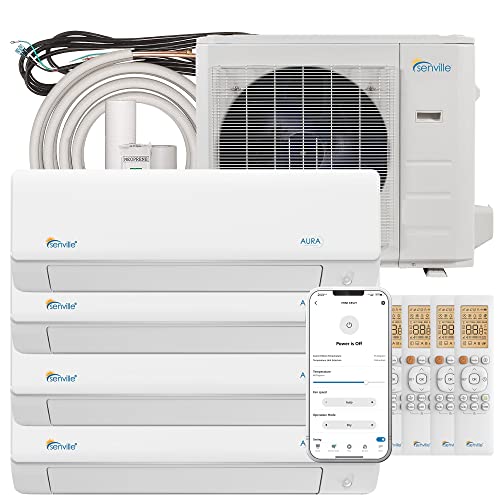
Senville 4 Zone Mini Split AC/Heating System 36000 BTU

DELLA 35K BTU 4 Zone Mini Split AC (3x9K+12K)

DELLA 35K BTU 4 Zone Mini Split AC (3x9K+18K)
ROVSUN 4 Zone 38000 BTU (12K x4) Mini Split AC/Heating System

ROVSUN 38000 BTU Quad Zone WIFI Mini Split AC/Heating System

YITAHOME 48000 BTU Mini Split AC/Heating System 20 SEER2
The Details Behind The Selections
The Mountman entry in this category is unusual: a single 12,000 BTU head paired with 19 SEER2 efficiency (a Seasonal Energy Efficiency Ratio, where higher numbers mean less electricity used per unit of cooling). It runs on standard 110/120V household current, so there’s no need to pull a dedicated 220V line. For one well-sealed bedroom, home office, or converted garage, that simplicity is the main draw.
Coverage is rated up to about 750 square feet, and the package includes the line set, mounting hardware, and pre-charged refrigerant. Heating comes from a built-in heat pump, so the same hardware covers the cold side of the calendar too. The honest read is that this is a solid single-room unit wearing a “4 zone” listing badge, best for anyone building out a system room by room rather than finishing the whole house at once.
What Works In Its Favor
- Standard 110/120V power means no electrician visit for most homes
- 19 SEER2 inverter efficiency trims summer utility bills noticeably
- Pre-charged condenser speeds up installation on a weekend project
- Built-in heat pump covers shoulder seasons without separate heating hardware
Things To Consider
- Only one indoor head, so calling this a 4 zone system stretches the label
- Line set length is limited, restricting where the outdoor unit can sit
Who It Suits Best
Someone starting a multi-room upgrade one room at a time, or a homeowner outfitting a single converted space without rewiring the panel.
Where Another Pick Suits Better
Step up to the ROVSUN 4 Zone 38000 BTU (12K x4) if you genuinely need four independently controlled rooms from a single outdoor unit.
The Senville quad-zone setup pairs a single 36,000 BTU outdoor condenser with four 9,000 BTU wall-mounted heads, one for each room. Total system capacity lands around three tons, which is plenty for a mid-sized home’s worth of common spaces. Where this one separates from the field is voice integration: you can nudge a room’s temperature from the couch or the kitchen counter without reaching for a remote.
For households already running a smart speaker routine, that hands-free control becomes the reason to pick Senville over a quieter competitor. Compared to the Mountman at pick one, this is a genuinely different scale of project, requiring a 208/230V electrical circuit and professional line-set work. Energy Star certification means the unit meets stricter efficiency baselines than minimum-rated gear, and AHRI certification confirms the published performance numbers come from independent lab testing rather than marketing copy.
Where It Helps
- Voice control removes the friction of tracking down four different remotes
- Energy Star rating keeps annual cooling costs from ballooning
- Four equal 9K heads suit bedrooms of similar size
- Independent temperature control per room ends thermostat squabbles
Worth Noting
- Requires 208/230V wiring, which most homes don’t have at the condenser spot
- All four heads being 9K leaves little flexibility for one oversized great room
Key Specs
Right Fit For
Smart home households that already use voice assistants and want climate control to join that ecosystem.
Skip It When
You’d rather avoid hiring an electrician for the 230V line, in which case the DELLA 35K BTU 4 Zone Mini Split AC (3x9K+12K) offers a similar four-room layout on a comparable power requirement with a larger indoor option.
The first DELLA in this list splits capacity across three 9,000 BTU heads and one 12,000 BTU head, a common real-world mix for a three-bedroom home with a larger living area. Total system output is 35,000 BTU at 19 SEER2, with a 16-foot line set included to bridge typical indoor-to-outdoor distances. ETL listing confirms the unit meets published North American electrical safety standards.
The bigger indoor head handles a great room or open kitchen, while the three smaller units serve bedrooms with individual comfort settings. Heat pump operation extends down to -13°F, so this isn’t a system that taps out in a cold snap. Compared to Senville’s all-9K layout, DELLA’s mixed capacity fits homes where one room is meaningfully larger than the others, which is most of them.
What Makes Sense
- Mixed BTU layout matches how most homes are actually shaped
- Heat pump rated to -13°F for cold-winter regions
- 19 SEER2 efficiency earns back its price difference over a few summers
- ETL listed for verified electrical safety compliance
Honest Caveats
- Self-cleaning function is absent despite the remote’s button
- 208/230V requirement means a panel upgrade is common in older homes
Quick Facts
Made For
Homeowners with three bedrooms and one larger common area who need each space on its own thermostat.
Not Your Match When
That one oversized room is a vaulted great room that needs serious throw, in which case the DELLA 35K BTU 4 Zone Mini Split AC (3x9K+18K) trades the 12K head for an 18K unit.
Where the previous DELLA swaps a 12K head into a four-room mix, this version steps up to an 18,000 BTU head for the room that needs it most. That bigger indoor unit is built for open floor plans, vaulted ceilings, or a sun-drenched addition where 9,000 BTU would struggle on a July afternoon. The three smaller heads cover standard bedrooms, keeping the total system BTU and SEER2 ratings identical to pick three.
This is the configuration for homes where the living area dominates the square footage. A 16-foot line set ships in the box, which works for most suburban installations. The same -13°F heat pump rating applies, and ETL listing plus AHRI certification provide the same safety and performance verification as the sibling model. In most split-level homes, the 18K head sits where the family gathers while the 9K units handle the private rooms down the hall.
What Stands Out
- 18K indoor head handles open-concept living without overworking
- Identical 19 SEER2 efficiency to the smaller DELLA variant
- Heat pump low-temp rating keeps the basement office warm in February
- Pre-charged refrigerant cuts install time for a contractor crew
Points To Keep In Mind
- The 18K head is physically larger and may clash with smaller wall sections
- No self-cleaning function on the indoor units despite the remote’s button
Best Suited To
Homeowners with one dominant common space and three smaller rooms who want real cooling capacity where the family actually lives.
A Better Fit Elsewhere
Floor plan leans toward four roughly equal rooms, in which case the ROVSUN 4 Zone 38000 BTU (12K x4) splits capacity evenly across every head.
ROVSUN’s first entry here trades a single oversized head for four matched 12,000 BTU units, all hanging off a 38,000 BTU outdoor condenser. Total system efficiency lands at 20 SEER2, edging past the 19 SEER2 DELLA and Senville options in this list. The 25-foot line set gives the installer more flexibility on where to mount the outdoor unit, useful when the electrical panel sits far from a convenient wall.
This configuration fits homes where no single room is dramatically larger, like four bedroom suites around a central hallway, or a finished basement with three zones plus a main-floor bonus. The 208/230V power requirement returns, so an electrician is part of the plan. Compared to the mixed DELLA at pick four, ROVSUN prioritizes symmetry and a slightly higher efficiency rating over the option of a 18K head for an oversized great room.
A Strong Showing
- 20 SEER2 efficiency saves measurable kWh over a 19 SEER2 baseline
- Four equal 12K heads suit homes with similar room sizes
- 25-foot line set handles longer wall-to-yard distances
- Turbo mode speeds up recovery after coming home to a hot house
Trade Offs
- 208/230V wiring installation adds to the project budget
- Symmetrical layout may oversize a small bedroom while undersizing a large den
Feature Snapshot
Who Should Grab It
Owners of symmetrical four-room layouts who want the highest SEER2 rating in this roundup and don’t mind the electrical work.
Reach For A Different Pick When
Wi-Fi app control matters more than efficiency gains, in which case the ROVSUN 38000 BTU Quad Zone WIFI Mini Split AC/Heating System adds app-based climate management on a similar 38K platform.
Same outdoor capacity as the previous ROVSUN, but this model adds built-in Wi-Fi for app-based control. Four 9,000 BTU heads run off the 38,000 BTU condenser at 20 SEER2, and each room can be adjusted from a phone instead of hunting down a physical remote. The included 25-foot line set matches the sibling model, and the heat pump handles year-round climate duties.
The trade-off shows up in room sizing: all four heads are 9,000 BTU, so this fits homes with smaller, similarly sized rooms rather than a mix of small bedrooms and a great room. For households already managing lights, locks, and thermostats from a phone, adding the climate system to the same app saves the friction of yet another interface. Compared to the Senville at pick two, this lands similar voice-and-app convenience with a higher SEER2 rating and a more generous line set length.
Advantages To Know
- Wi-Fi app control unifies all four zones in one interface
- 20 SEER2 efficiency keeps operating costs down
- Four equal 9K heads suit smaller bedroom-style rooms
- 25-foot line set covers longer install distances
Where It Is Less Suited
- 9K heads may feel underpowered in a large living area
- Wi-Fi setup adds a small step that the non-connected sibling skips
Perfect Match For
Tech-forward homeowners with four similarly sized rooms who want the air conditioner in their existing smart-home app rather than on a separate remote.
Swap It Out When
Equal-sized heads are great but a single oversized common room rules the home, in which case the DELLA 35K BTU 4 Zone Mini Split AC (3x9K+18K) fits that 18K head into the same four-room total.
YITAHOME tops out this roundup with a 48,000 BTU total capacity spread across four 12,000 BTU heads, the highest combined output here. At 20 SEER2, it matches the most efficient entries and pushes past the DELLA and Senville options in raw cooling muscle. This is the pick for larger homes where the previous systems would feel underworked on a hot afternoon.
The honest read is that 48K BTU is overkill for an apartment and a stretch for some 2,000-square-foot layouts, so homeowners in milder climates or smaller homes may find the ROVSUN 38K platform at pick five a smarter match. Where this YITAHOME shines is a four-bedroom home with high ceilings, a finished basement, or a bonus room that consistently runs hot. The system is built for year-round use with a heat pump that covers heating, cooling, and dehumidification modes independently per zone.
Positive Points
- 48,000 BTU total handles larger four-room homes comfortably
- 20 SEER2 efficiency keeps operating costs reasonable at this capacity
- Each zone runs independent heating, cooling, or dehumidification
- Four equal 12K heads suit generous bedrooms or office spaces
Factors To Consider
- Total capacity can be excessive for homes under 1,800 square feet
- Larger condenser footprint needs more outdoor placement space
Feature Rundown
Built With In Mind
Larger four-room homes with high ceilings, finished basements, or bonus rooms that need serious cooling capacity.
Where Another Pick Suits Better
The floor plan is closer to mid-sized, in which case the ROVSUN 4 Zone 38000 BTU (12K x4) at 38K BTU covers similar room configurations with a smaller condenser footprint.
What Matters Most Before Choosing 4 Zone Mini-Splits
Sizing Each Zone To The Room It Serves
A mini-split’s BTU rating describes how much heat it can move per hour, not how much cooling power you need. An undersized head runs constantly without ever catching up on a hot afternoon, while an oversized one cycles on and off so quickly that humidity lingers. For a standard bedroom with 8-foot ceilings, a 9,000 BTU head typically covers 350 to 400 square feet. Vaulted ceilings, west-facing windows, or top-floor heat can each demand 20 to 30% more capacity, which is why a 12K or 18K head in a great room rarely feels like overkill.
Voltage And Electrical Requirements
The Mountman at pick one runs on standard 110/120V current, but every multi-head system in this list requires 208/230V power, the same voltage used by electric dryers. Most homes don’t have that circuit at the planned outdoor location, so a licensed electrician and a panel inspection are part of the budget. Forgetting this step is one of the more common surprises first-time ductless shoppers report.
Efficiency Ratings And Long-Term Operating Cost
SEER2 (Seasonal Energy Efficiency Ratio 2) is the updated efficiency standard, where higher numbers mean less electricity per unit of cooling. The jump from 19 SEER2 to 20 SEER2 sounds small on paper but compounds over the system’s 15-to-20-year life. For a system running eight hours a day through summer, that gap can mean noticeable annual savings. AHRI certification independently verifies the published ratings, so look for that mark when comparing systems on the product page.
Installation Realities Worth Planning For
Most multi-zone systems require a 208/230V electrical line, mounting brackets on load-bearing exterior walls, refrigerant line sets connecting each head to the outdoor unit, and a condensate drain routed to a safe discharge point. Pre-charged condensers shorten the install by skipping the refrigerant vacuum and topping step, but the line set still needs professional brazing. A weekend DIY project this is not, in most cases.
Things Worth Knowing Before You Click
Common Shopping Slip Ups
Underestimating the electrical work is the most common budget shock, since older homes often need a subpanel or new circuit run to support a 208/230V condenser. Buying four equal 9K heads for a home with one oversized great room is the second common miss, leaving the main living space undercooled while bedrooms run cold. Finally, ignoring the included line set length can derail an install, since extending refrigerant lines requires a separate vacuum and recharge that wipes out the pre-charged convenience.
What The Higher Tier Buys
Moving from a 19 SEER2 to a 20 SEER2 system trims annual electricity use by roughly 5 to 8%, depending on local rates and runtime. Higher-tier systems also tend to include Wi-Fi modules, voice integration, and longer line sets that give installers more placement freedom. For a 15-to-20-year install, the efficiency gap alone often justifies the upgrade, and the smart-home integration is the cherry on top for households already running connected devices.
Frequently Asked Questions
How many rooms can a 4 zone mini-split actually cool?
A 4 zone mini-split cools four rooms, each with its own indoor air handler and individual temperature setting. Total coverage depends on the BTU rating and ceiling height, but most systems in this roundup handle 1,200 to 1,900 square feet across the four zones combined.
Do these systems heat as well as they cool?
Yes, every system here includes a heat pump (a refrigeration cycle run in reverse to pull heat from outdoor air) that handles both heating and cooling from the same hardware. Several models rate down to -13°F, making them functional even in cold-winter climates, though efficiency drops as outdoor temperatures fall.
Can I install a quad-zone mini-split myself?
In most jurisdictions, a licensed HVAC contractor is required for the refrigerant line work, electrical hookup, and final commissioning. Mounting the indoor brackets and drilling the wall pass-through are common DIY portions, but the refrigerant side and electrical tie-in typically need a pro.
What does SEER2 actually measure?
SEER2 measures seasonal cooling efficiency under updated 2023 testing standards that better reflect real-world conditions, with higher numbers meaning lower electricity use. A 20 SEER2 unit uses roughly 5 to 8% less power than a 19 SEER2 unit over a typical cooling season.
Is a 48,000 BTU system too much for a normal home?
For homes under about 1,800 square feet, yes, 48K BTU often overshoots the actual load and short-cycles frequently. For larger four-bedroom homes with high ceilings, finished basements, or west-facing additions, the extra capacity is the difference between catching up on a hot day and chasing the thermostat all afternoon.