

Cooling a big house on a hot afternoon is the kind of comfort you don’t think about until the system falters. A 5-ton central unit handles roughly 2,000 to 2,500 square feet when the home is well insulated and the ductwork is sound, which is why this size lands in so many two-story builds, finished basements, and Southwest ranch homes. The picks below split into three camps: cooling-only condensers that pair with existing air handlers, full heat pump packages for year-round climate control, and inverter-driven systems that throttle output to match demand. The right match comes down to your region, your existing ducts, and how much runtime you expect each summer.
An Overview Of The Picks

Goodman 5 Ton 14.3 SEER2 Air Conditioner Condenser GLXS4BA6010
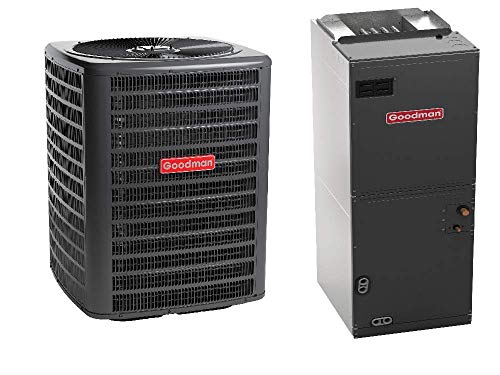
Goodman 5 Ton 14.5 SEER2 R-32 Heat Pump System

TOSOT 5 Ton Inverter Heat Pump 18.5 SEER2

Senville 5 Ton Heat Pump 10kW Aux 55,000 BTU

ACiQ 5 Ton 16 SEER2 Central Air Conditioner

COSTWAY 5 Ton 60,000 BTU Inverter Heat Pump
Senville 5 Ton Heat Pump 20kW Aux 55,000 BTU
Why These Options Stand Out
This is a cooling-only outdoor condenser, which is a fancy way of saying it pushes refrigerant out to a coil and never makes heat on its own. That makes it the right shape for anyone who already owns a working air handler and just needs to retire the worn-out unit outside. The 14.3 SEER2 rating (a measure of seasonal cooling efficiency; higher numbers mean lower electric bills) sits at the federal minimum for new equipment, so it isn’t a flagship, but the Goodman name and included thermostat keep the install simple.
For households replacing a single failed condenser, that stripped-down focus is a feature, not a gap. You sidestep the cost of components you don’t need and lean on parts and service networks that have supported this brand for years. Compared to the Goodman heat pump bundle below, this one trades heating capability for a leaner price profile, and for many Southern homes that already run a furnace, that swap makes sense.
A Few Highlights
- Cooling-only design drops upfront cost when you already own an air handler
- Included thermostat removes a separate purchase from your project list
- 5-ton capacity matches the rough load of most 2,000 to 2,500 square foot homes
- Goodman service network tends to make replacement parts easy to source
Worth Noting
- 14.3 SEER2 sits at the federal baseline, so monthly bills won’t drop as much as with higher-rated options like the ACiQ 16 SEER2
- Professional installation is still required for line set brazing and refrigerant charging
Who It Suits Best
Homeowners replacing a failed condenser in a home that already has a functioning air handler and furnace.
Look Elsewhere When
Anyone in a cold-winter climate that needs a single unit to handle both seasons should look at the Senville 20kW Aux instead.
Goodman’s paired system pairs the GLZS4BA6010 condenser with the AMST60DU1300 air handler, giving you a matched set that runs on R-32 refrigerant, a newer formulation with a lower global-warming potential than the older R-410A. A heat pump reverses the cooling cycle to pull heat from outdoor air even in winter, so this single system covers both seasons. The 14.5 SEER2 rating nudges slightly above the federal floor, which trims summer bills compared to a baseline unit without climbing into premium territory.
Multi-position design means the air handler can sit vertically or horizontally, which helps in tight attics, basements, or closet installations. The honest read is that this is the kind of workmanlike bundle a contractor spec’s for a full system swap, and the matched components take the guesswork out of compatibility. Compared to the first pick, you gain heating capability and a slight efficiency bump, but you give up the freedom to keep an existing air handler.
Why It Works Well
- R-32 refrigerant lowers environmental impact versus legacy R-410A systems
- Multi-position air handler adapts to vertical or horizontal duct layouts
- Matched condenser and air handler remove sizing guesswork for installers
- 14.5 SEER2 keeps operating costs modest in mixed climates
Trade Offs
- Heat pump performance drops sharply below freezing, so very cold regions may need a gas furnace backup
- Higher upfront cost than the cooling-only condenser in the first slot
Key Specs
Made For
Full-system replacements in mild to moderate climates where a single heat pump handles both heating and cooling.
Consider Something Else When
Cold-climate homeowners should consider the Senville 5 Ton 20kW Aux for stronger auxiliary heat.
The TOSOT package brings serious range to the table: it claims operation from negative 22 degrees up to 130 degrees Fahrenheit, which covers the polar vortex crowd and the Phoenix afternoon crowd in one chassis. The two-stage inverter compressor adjusts output in fine increments rather than blasting on and off, so the system sips power when full capacity is overkill and ramps up when the house actually needs it. The 18.5 SEER2 rating reflects that thrift during cooling months.
That 25-foot copper line set included in the bundle removes a common accessory purchase, which is a quiet win for anyone coordinating a new install. Where this lands differently from the Goodman bundle above is the temperature envelope: if your winters regularly drop below 10 degrees and you still want a heat pump, the TOSOT holds capacity that competing units lose. The catch is the higher price tag, and very hot climates may want to verify output at peak afternoon temperatures with the installer.
Where It Helps
- Two-stage inverter compressor modulates output for steady temps and quieter cycles
- Rated operation from -22 to 130 degrees Fahrenheit covers extreme climates
- 18.5 SEER2 trims summer electricity use compared to baseline units
- 25-foot copper line set included in the package
Points To Keep In Mind
- Premium price versus the Goodman heat pump bundle in slot two
- Two-stage inverter tech is more complex, so service calls may require specialized training that some local HVAC techs lack
Right Fit For
Households in regions with punishing summer heat or subzero winter cold that need a heat pump capable of holding capacity in both extremes.
Skip It When
Mild-climate homes that won’t exercise the wide temperature range are better served by the Goodman 14.5 SEER2 bundle.
Senville ships the air handler and condenser together in this 5-ton package, which removes the chore of matching a coil to a furnace later. The variable-speed inverter compressor is the same idea you saw on the TOSOT, dialing output up and down instead of cycling on and off, which holds room temperature steadier and keeps noise lower at part load. The 10-kilowatt auxiliary heat strip kicks in when outdoor temps drop past the heat pump’s comfort range, which matters more in shoulder seasons than deep winter.
For most whole-house retrofits, this lands in a comfortable middle ground: more efficient than a basic condenser, simpler to install than a true cold-climate system, and priced below the premium inverter units. You may find the 10-kW aux strip underpowered if your home sits in a region where winter temps regularly hover around zero, in which case the next Senville on this list, the 20-kW model, is the better match.
A Favorable Mix
- Variable-speed inverter compressor smooths temperature swings
- 10-kW auxiliary heat strip covers mild winter dips without a furnace
- All-in-one bundle cuts install planning time
- 208/230V operation matches standard residential electrical service
Some Limits To Know
- Aux heat capacity falls short in regions with prolonged sub-freezing weather
- Documentation and warranty support can vary outside of the installer network
Spec Overview
Best Suited To
Homeowners doing a full system replacement in regions with mild winters who want inverter efficiency without the premium price.
Reach For A Different Pick When
Anyone facing real winter cold should reach for the Senville 5 Ton 20kW Aux, which doubles the auxiliary heat capacity.
ACiQ positions this as a condenser-only upgrade, meaning the indoor coil and air handler come from your existing setup. The 16 SEER2 rating lands well above the federal floor, which is where the long-term savings story lives: in regions with long cooling seasons, a couple of SEER points compounds into real dollars on the summer utility bill. The Gold Fin coating on the coils resists corrosion, which is a quiet but meaningful detail for homes within a few miles of saltwater or in high-humidity zones where standard coatings tend to pit.
The inverter compressor operates from negative 13 to 122 degrees Fahrenheit, which covers most of the continental U.S. without complaint. Built-in leak detection is the kind of feature you don’t think about until it saves you from a slow refrigerant loss, at which point it earns its place. Compared to the Goodman 14.3 in the first slot, the ACiQ is a clear step up in efficiency, with trade-offs in price and the need for a compatible variable-speed indoor coil to fully unlock the inverter benefit.
A Strong Showing
- 16 SEER2 efficiency trims summer bills over baseline 14.x units
- Gold Fin coil coating resists corrosion in coastal or humid environments
- Built-in leak detection flags refrigerant loss before performance drops
- Inverter compressor adjusts output on demand
Honest Caveats
- Requires a compatible variable-speed indoor coil to deliver full inverter efficiency gains
- Higher upfront cost than the Goodman cooling-only condenser in slot one
Feature Snapshot
Who Should Grab It
Coastal or humid homeowners upgrading a condenser and willing to pair it with a compatible variable-speed indoor coil for full efficiency.
Swap It Out When
Anyone wanting a complete heat pump system for year-round use should swap to the TOSOT 18.5 SEER2 bundle instead.
The COSTWAY bundle is the highest-efficiency split in the roundup at 17 SEER2, paired with a 60,000 BTU air handler and inverter compressor. The 5 to 125 degree Fahrenheit operating range covers most populated U.S. regions, though it doesn’t reach the deep-cold territory the TOSOT claims. RS485 and 24-volt communication support means the unit can drop into either a traditional thermostat wiring scheme or a smart-building control system, which is the kind of detail contractors appreciate during install.
For homeowners modernizing an older central system, the multi-position air handler gives the same attic-versus-closet flexibility seen on the Goodman bundle above. Where this stands out is the smart-home wiring path: if you’ve already invested in a home automation hub that speaks RS485, this is a smoother fit than the other heat pumps here. Depending on your existing ductwork and your thermostat preferences, the 17 SEER2 rating may or may not justify the premium over the Senville 10-kW Aux in slot four.
Real-World Strengths
- 17 SEER2 efficiency sits in the premium tier for ongoing summer savings
- RS485 communication integrates with smart-home and building control systems
- 60,000 BTU air handler handles the cooling load of most large single-family homes
- Multi-position install supports vertical or horizontal duct layouts
Practical Considerations
- Higher upfront cost than the Senville 10-kW Aux package
- Smart-communication features only pay off if your existing controls actually use RS485
Perfect Match For
Tech-forward homeowners with smart-home or building automation systems who want premium efficiency and flexible communication.
Where Another Pick Suits Better
Budget-focused shoppers with standard thermostat wiring are better served by the Senville 5 Ton 10kW Aux, which delivers similar inverter cooling at a friendlier price.
The second Senville on the list is the cold-climate answer to its sibling in slot four, doubling the auxiliary heat capacity from 10 to 20 kilowatts. That extra strip matters more than it sounds: when outdoor temps slide into the teens or single digits, the heat pump alone struggles to keep up, and the aux heat takes over without a separate furnace. The variable-speed inverter compressor still runs the show on mild days, so you don’t sacrifice efficiency when conditions are easy.
Northern homeowners in zones where winter temps regularly drop into the teens or below are the obvious audience here. Compared to the 10-kW Senville, this is the same core system with a more capable electric backup, so the choice is really about how often your heat pump alone can carry the home. One thing worth considering is that 20 kW of electric strip heat is a serious draw on a 208/230-volt panel, so your existing electrical service needs the headroom.
The Value In It
- 20-kW auxiliary heat covers deep winter cold without a backup furnace
- Variable-speed inverter compressor holds efficiency in mild weather
- All-in-one bundle with matched air handler and condenser
- 208/230V operation matches standard residential service
Points To Note
- 20 kW of aux heat puts real demand on your electrical panel, which may need a service upgrade
- Heavier than the 10-kW sibling, so the install crew may need extra handling time
Feature Rundown
Built With In Mind
Northern homeowners in regions with sub-freezing winters who want a single all-electric system without relying on a gas furnace backup.
Not Your Match When
Anyone with a mild winter climate and an existing furnace should consider the Goodman 5 Ton 14.3 SEER2 Condenser and keep their current heating setup.
What To Weigh Before Choosing a 5 Ton AC Unit
Match the System to Your Existing Equipment
The first question isn’t which brand sounds best; it’s whether you need a complete system or just a condenser. Homes with a working air handler and furnace pair nicely with cooling-only condensers like the Goodman 14.3 SEER2, while full replacements call for a matched heat pump bundle such as the COSTWAY or TOSOT. Skipping this step is how people end up with components that fight each other on the control board.
Think in Climate Zones, Not Brand Names
A heat pump that runs flawlessly in Atlanta may lose half its capacity in Minneapolis. The TOSOT’s -22 to 130 degree range handles extremes, the Senville 20-kW Aux covers cold with a beefy electric backup, and the Goodman 14.5 SEER2 bundle suits mild mixed climates. SEER2 ratings look similar on paper but compound over a 15-year operating life, especially in regions with long cooling seasons.
Right-Size With a Manual J, Not a Rule of Thumb
A “5-ton” label is a starting point, not a final answer. Manual J is the industry calculation that factors in insulation, window count, ceiling height, duct leakage, and orientation to land on a precise load. For most well-insulated 2,000 to 2,500 square foot homes, 5 tons lands in the right zone, but a Manual J run by an HVAC contractor prevents the short-cycling that comes with an oversized unit.
Look Beyond the Unit at the Supporting Cast
Ductwork, line set length, electrical service, and thermostat compatibility all shape whether a system delivers on its spec sheet. A 17 SEER2 inverter is only as good as the coil it pairs with, and a 20-kW aux heat strip needs panel headroom. Factoring these into the project early keeps the install from turning into a series of surprises mid-project.
Smart Moves Before You Commit
Pitfalls Worth Dodging
The most common misstep is buying a 5-ton unit because the home “looks about that size,” without running a proper load calculation. Undersized systems run endlessly on the hottest days, and oversized systems short-cycle, which wears compressors and leaves humidity hanging in the air. The other trap is matching a premium inverter condenser to an older single-stage air handler, which wastes the efficiency gains and creates control headaches.
When Paying Up Earns Its Keep
Higher-tier heat pumps like the TOSOT and COSTWAY cost more up front, but the inverter compressor, wider operating range, and stronger efficiency ratings pay off across a long service life. For homes in extreme climates or those with smart-home wiring, the upgrade translates into lower monthly bills, steadier temperatures, and quieter operation. For mild-climate homes with simple controls, the Goodman baseline bundle covers the essentials without the premium price.