

When a January cold snap rolls through and your outdoor spigot or AC line sits exposed, the difference between a quiet winter and a cracked-pipe headache often comes down to the foam wrapped around it. Choosing the right 4 inch foam pipe insulation matters whether you’re protecting copper plumbing, sealing a drafty gap, or wrapping an HVAC refrigerant line. This roundup walks through seven solid options worth a look, breaking down what each one actually does on the job.
The Main Contenders

Redford Supply Co. Pipe Insulation 4 inch x 14 ft, Outdoor Freeze Protection Wrap
Dualplex Neoprene Foam Strip Roll 4 inch x 10 ft x 1/4 inch Thick

Amylove 24 Pcs 3.3 Feet Foam Pipe Insulation Foam Tube 1/2 Inch (Black)

Amylove 12 Pcs 3.3 Feet Pipe Insulation Foam Tube Black Pool Noodles, 1 Inch
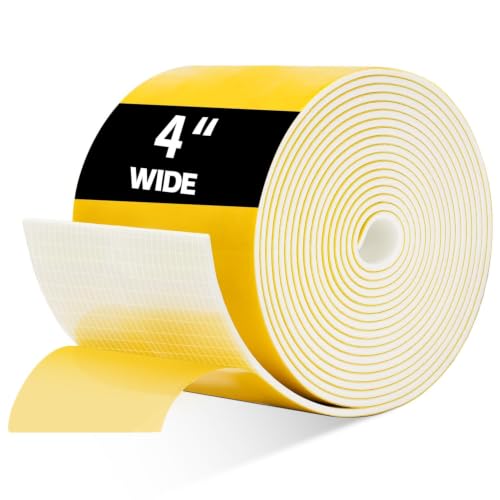
DEMEDO Pipe Insulation Tape 4 inch x 16.5 FT Self Adhesive (White)
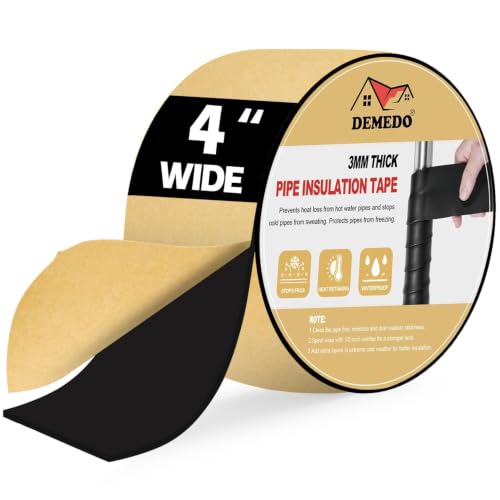
DEMEDO Pipe Insulation Tape 4 inch x 16.5 FT Self Adhesive (Black)
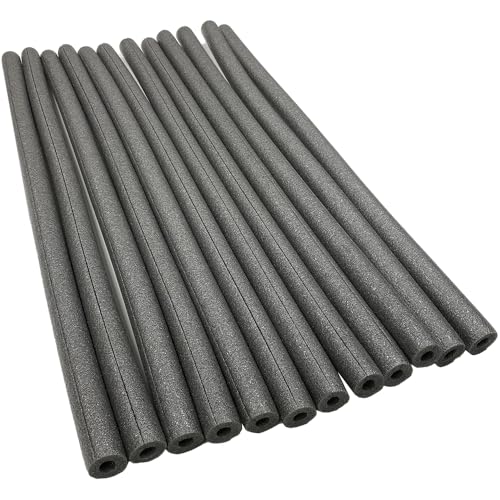
Foam King Foam Pipe Insulation Foam Tube for Pipe Covers – 12 Pack
Inside Each Recommended Option
Redford Supply Co.’s 4 inch x 14 ft wrap goes after the kind of freeze protection job most homeowners actually face: a long stretch of exposed copper, PVC, or AC line running along an exterior wall or under a porch. The 4-inch width gives you enough material to wrap a standard residential pipe with a single pass, which keeps the install moving along rather than piecing together shorter strips.
Compared to the bulk multi-piece bundles on this list, this one rolls out as a single continuous length, so there are fewer seams where cold air can sneak in. You may find the foam a touch bulky to bend around tight elbows, but for straight runs along a foundation or attic joist, the length-to-width ratio is well thought out.
The Upside
- 14-foot continuous run means fewer cold-air seams on long exterior pipes
- 4-inch width covers standard residential copper, PVC, and AC refrigerant lines
- Flexible foam conforms to gentle curves and offset joints without fighting back
- Works for both freeze protection and basic condensation control on cold water lines
Things To Consider
- Tight 90-degree elbows may require slitting and overlapping, which adds install time
- No built-in adhesive, so you’ll want tape or zip ties on hand for a secure wrap
- Outdoor exposure over multiple seasons may degrade the foam without a protective outer jacket
Made For
Homeowners with a long, straight exterior water line or AC line who want to finish the job in one wrap and be done with it.
Where Another Pick Suits Better
For pipes with lots of bends, valves, and irregular fittings, the Dualplex Neoprene Foam Strip Roll offers a strip format that bends around geometry more easily.
Dualplex’s neoprene foam strip rolls out as a high-density weather sealing strip, which puts it in a slightly different lane than the pure pipe-wraps on this list. The 1/4-inch thickness gives the strip real body, so when you press it into a window or door gap, it actually pushes back against drafts rather than compressing flat and disappearing.
The 4-inch width matches the rest of the picks here, but the 10-foot length keeps it sized for sealing tasks rather than whole-pipe runs. In our view, this lands best for anyone who wants one foam product to handle both pipe insulation in spots and a few weatherproofing chores around the house.
Real Benefits
- High-density neoprene resists compression and holds its shape over time
- Non-adhesive backing protects finishes on windows and doors you don’t want to mar
- Oil- and water-resistant foam handles garage and workshop environments well
- Cuts cleanly with scissors for custom lengths around oddly shaped gaps
Trade Offs
- 1/4-inch thickness may be too thick for tight window channels, so measure first
- Without adhesive, the strip needs a mechanical fastener or friction fit to stay put on vertical surfaces
- Less suited as a primary pipe insulator compared to the dedicated pipe wraps above and below
Key Product Details
Right Fit For
DIYers who need a multi-purpose foam strip for sealing doors, windows, and the occasional pipe section without committing to a permanent adhesive.
Skip It When
Your main goal is full-coverage pipe insulation, because the Redford Supply Co. Pipe Insulation 4 inch x 14 ft is purpose-built for that job.
Amylove’s 24-piece bundle leans hard into volume, giving you nearly 80 feet of pre-cut foam tubing split into manageable 3.3-foot sections. Each tube is sized for 1/2-inch copper pipe, with a roughly 15 mm inner diameter that slides on without forcing. For a whole-home plumbing overhaul, that head count saves a trip back to the hardware store mid-project.
Where the single-roll Redford Supply Co. wrap above trades seam-free length for simplicity, this approach trades that for coverage spread across many short segments. Depending on your pipe layout, the shorter sections can actually be easier to thread through joist holes and around corners than wrestling with one long piece.
Where It Helps
- 24 segments cover roughly 79 feet of 1/2-inch copper line
- Pre-slit design wraps around pipes without disconnecting fittings
- Lightweight foam cuts easily with a utility knife for custom lengths
- Black color blends into basement, crawl space, and utility room environments
Worth Noting
- 24 separate joints mean 24 potential cold spots unless each seam is sealed carefully
- Sized specifically for 1/2-inch copper, so larger diameter pipes need a different option
- Foam thickness is modest at around 11.5 mm, which limits R-value on extreme cold snaps
Quick Facts
Who It Suits Best
Homeowners insulating a long run of 1/2-inch copper piping across a basement or crawl space who want plenty of spare segments left over for repairs.
Not Your Match When
You have just one or two short runs to cover, because the Foam King Foam Pipe Insulation 12-pack is a more proportionate starting point.
The sister product to the 24-pack above, this 12-piece Amylove bundle targets 1-inch copper pipe with a 27 mm inner diameter. That makes it the right call when your plumbing runs through thicker supply lines rather than the smaller 1/2-inch branches, and you still want a generous amount of foam on hand without committing to a 24-pack.
The 3.3-foot segments are easy to slide on one at a time, which helps when the pipe has multiple joints and turns. You may find the thinner wall here (around 7.5 mm) trades a bit of insulating depth for the wider fit.
Strong Points
- Targeted 1-inch fit suits larger residential supply lines
- 12 segments deliver around 39 feet of total coverage
- Pre-slit tubes wrap around existing pipes without disassembly
- Black foam disappears visually in utility spaces
Points To Note
- Thinner 7.5 mm wall provides less thermal resistance than thicker foam alternatives
- 12 segments still mean 12 seams that need careful sealing in unheated spaces
- Sized only for 1-inch copper, so a mixed-diameter system requires a second product
Feature Snapshot
Best Suited To
Anyone retrofitting insulation onto 1-inch copper supply lines in a basement, garage, or workshop who wants a balanced pack size.
Look Elsewhere When
Your pipes are 1/2-inch lines, in which case the Amylove 24 Pcs Foam Pipe Insulation 1/2 Inch fits better and costs less per foot.
DEMEDO’s pipe insulation tape flips the format on its head: instead of sliding pre-formed tubes over your pipes, you wrap a 4-inch wide rubber foam tape around them like a bandage. The 16.5-foot length gives you room to spiral-wrap a decent run, and the self-adhesive backing sticks to itself as you go.
That tape approach is genuinely useful when the pipe has fittings, valves, or odd geometry that a rigid foam tube can’t slide over. The soft rubber foam bends easily and conforms to shapes the Amylove tube kits above would struggle to hug.
Features That Help
- Self-adhesive backing holds the wrap in place during and after installation
- 16.5-foot length covers more linear pipe than many short segmented kits
- Soft rubber foam bends around elbows, valves, and T-joints without fighting back
- White color stays clean-looking in finished mechanical rooms and basements
Honest Caveats
- Adhesive may weaken on cold outdoor surfaces below freezing during install
- Wrapping takes more time per foot than slipping on a pre-formed tube
- Not designed to match specific nominal pipe diameters, so fit depends on how tightly you wrap
Who Will Love This
Homeowners wrapping a plumbing or HVAC run with multiple bends, valves, or unusual fittings where a rigid tube simply won’t cooperate.
A Better Fit Elsewhere
For long straight runs where speed matters, the Redford Supply Co. Pipe Insulation 4 inch x 14 ft goes down faster with fewer steps.
The black version of DEMEDO’s tape uses the same 4-inch width, 16.5-foot length, and self-adhesive rubber foam construction as the white version above, just in a darker color. That color choice is the meaningful difference, and it matters more than it sounds when the pipe in question sits on a sun-facing exterior wall or a visible section of AC line set.
Dark foam absorbs UV rather than reflecting it, which can extend service life in outdoor installations. It also hides the inevitable dust, pollen, and grime that show up fast on a white surface in an outdoor setting.
Useful Touches
- Black color resists visible UV degradation on outdoor AC line sets
- Self-adhesive rubber foam wraps irregular shapes without leaving gaps
- 16.5-foot length matches the white version, so behavior is consistent
- Cuts to size with household scissors, no special tools required
Less Ideal Details
- Same adhesive cold-weather concern as the white version in deep winter installs
- Dark color absorbs heat, which can matter on hot attic piping in summer
- Wrapping time remains longer than slipping on a pre-formed tube
Technical Sheet
Perfect Match For
Homeowners wrapping an outdoor AC refrigerant line set or a sun-exposed exterior pipe where appearance and UV resistance both matter.
Another Choice May Suit
For indoor mechanical rooms where a clean white look is the priority, the DEMEDO Pipe Insulation Tape in white keeps the same performance with a lighter finish.
Foam King’s 12-pack rounds out the list with pre-slit tubes designed for quick installation on copper, iron, and PVC pipes. The 3-foot length per cover keeps each piece manageable, and the 5/8-inch nominal inner diameter with a 3/8-inch wall thickness gives this kit a thicker insulating layer than the Amylove tubes above, which translates to better freeze protection on a single-digit night.
Owners commonly report using this kit across both hot and cold water lines because the foam reduces pipe sweating in summer and heat loss in winter. The pre-slit design lets you wrap the tube around pipes already connected, which avoids draining the system just to insulate it.
Standout Benefits
- 3/8-inch wall thickness offers stronger freeze protection than thinner foam tubes
- Pre-slit tubes wrap around existing pipes without disconnecting any fittings
- Works on copper, iron, and PVC, so one kit handles mixed plumbing materials
- Helps reduce pipe noise, which is a quiet bonus on plastic drain lines
Where It Is Less Suited
- Sizing is approximate and can vary slightly from piece to piece, so test-fit before taping
- 12 segments may not be enough for a full-house retrofit on larger homes
- Light-colored foam can show dirt in crawl spaces and outdoor runs over time
Whose Shelf It Belongs On
First-time DIYers insulating a moderate plumbing run who want a forgiving pre-slit format and thicker foam walls for colder climates.
Reach For A Different Pick When
You need a lot more coverage than 12 pieces, because the Amylove 24 Pcs Foam Pipe Insulation 1/2 Inch doubles the segment count at a comparable price point.
What Matters Most Before Choosing 4 Inch Foam Pipe Insulations
Match the Foam to Your Pipe Diameter
The single most common mistake is buying a 4-inch wide foam product and assuming it fits a 4-inch diameter pipe. The “4 inch” in most product names refers to the width of the foam strip or tube, not the pipe’s outside diameter. For most residential copper water lines, you’ll be working with 1/2-inch or 3/4-inch pipe, so a foam tube with a matching inner diameter is the right call. Always measure the pipe’s outside diameter before ordering, then match that to the foam’s inner diameter.
Decide Between Tube and Tape Formats
Pre-formed foam tubes slide on fast and create a clean, uniform look on straight runs. They work best when the pipe is already exposed and you can slide the tube over one end. Self-adhesive foam tape wraps around pipes that are already installed between walls, with multiple bends, or covered in valves. For most retrofit projects where the plumbing is already live, tape formats like the DEMEDO options above save hours of work.
Think About Wall Thickness and Climate
Foam wall thickness directly affects how much cold the pipe is shielded from. In climates that rarely drop below freezing, a thinner 7 to 8 mm wall is enough to prevent condensation and minor cold snaps. In regions with extended sub-freezing periods, look for 3/8-inch or thicker walls, and consider adding a protective outer jacket for outdoor runs. R-value is a measure of how well a material resists heat flow, and higher numbers mean better insulation, though most residential pipe foams don’t publish R-values directly.
Consider Indoor vs Outdoor Use
Outdoor installations face UV exposure, moisture cycling, and temperature swings that indoor foam never sees. For outdoor lines, pair the foam with UV-resistant tape or a protective wrap, and lean toward darker colors like the black DEMEDO tape that hide grime and resist visible sun damage. Indoor applications in basements, crawl spaces, and mechanical rooms can use lighter, more flexible foam without those extra steps.
Key Considerations Across These Picks
Where Shoppers Go Wrong
The biggest trap is buying based on the “4 inch” label without checking what that measurement actually refers to. Width of the foam strip, length of the roll, and inner diameter of the tube are three different things, and a 4-inch measurement could describe any of them. Always read the inner diameter or compatible pipe size before you commit to a foam product. The other common slip-up is underestimating how much material you need: measure twice, add 10 percent for waste, and remember that every fitting and valve usually needs its own short piece of foam.
Where The Extra Money Goes
Higher-tier foam products tend to buy you thicker walls, better UV resistance, and self-adhesive backing that holds up in cold weather. They also often include longer continuous lengths, which means fewer seams on long runs. For a one-time small repair in a basement, the budget options handle the job just fine. For outdoor AC line sets or plumbing in unheated spaces where a freeze means a burst pipe, the upgrade to thicker foam with UV-stable materials tends to pay for itself the first time a deep cold snap hits.
Frequently Asked Questions
What does “4 inch” actually mean on foam pipe insulation?
It usually refers to the width of the foam strip or the length of the tube, not the pipe’s diameter. The inner diameter of the foam tube tells you which pipe size it fits, so always check that spec before ordering for a specific pipe.
Can foam pipe insulation go outside?
Yes, but outdoor foam needs to handle UV exposure and moisture. Pair it with UV-resistant tape or a protective jacket, and pick darker colors for better long-term appearance on sun-facing walls.
How long does foam pipe insulation last?
Indoor foam typically lasts many years without issue. Outdoor foam depends on UV exposure, but you can generally expect a few seasons of service before the material starts to break down without a protective wrap.
Do I need to remove the foam to access the pipe later?
Most pre-slit tubes and self-adhesive tape can be peeled back or cut away for pipe access, then replaced. Reusable installation is one advantage of the pre-slit format over fully glued systems.
Is thicker foam always better for freeze protection?
Generally, yes, because thicker walls add more insulating value. The trade-off is reduced clearance in tight stud bays and slightly higher material cost, so match the thickness to your climate rather than defaulting to the thickest option.