
Picking a thermostat that actually fits your HVAC system saves real headaches later. Most households running two-stage heating or cooling have equipment that deserves better than a basic single-stage wall unit, but the spec sheets can blur together fast. This roundup cuts through the noise with seven well-matched 2 stage thermostats, each one scored for everyday use, scheduling, and how cleanly it integrates into a typical American home.
The Picks In Brief

Suuwer 5-1-1 Day Programmable Thermostat for Home 2 Heat/ 2 Cool

Honeywell Home X2P Programmable Thermostat (White)
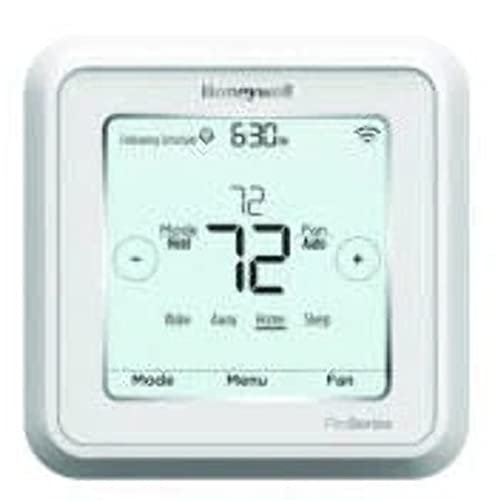
Honeywell TH6320WF2003 Lyric T6 Wi-Fi Thermostat (3H/2C)

Honeywell Home X2S Smart Wi-Fi Thermostat (Gray)

Heagstat 5-1-1 Day Programmable Thermostat, 2 Heat/ 2 Cool
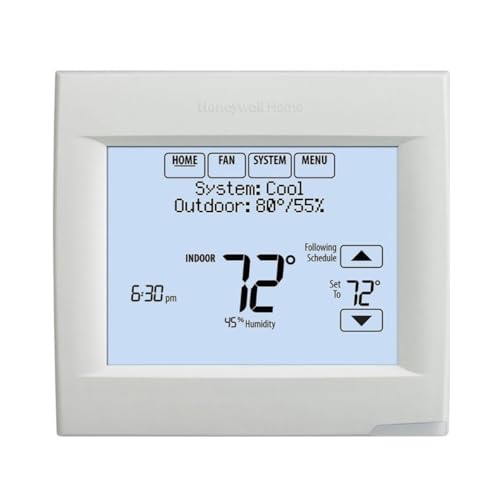
Honeywell TH8321WF1001/U Wi-Fi 8000 Thermostat, 3H/2C

Honeywell TH4210U2002 T4 Pro Programmable Thermostat
The Picks, Examined More Closely
The Suuwer programmable thermostat lands as the most wallet-friendly 2 heat/2 cool unit on this list, and it doesn’t feel like a stripped-down version of anything. The 5-1-1 day schedule, which means five days for weekdays plus separate Saturday and Sunday blocks, gives you a realistic way to match comfort to a typical work routine without needing an app or a learning curve. For homeowners upgrading from a manual dial, this is a comfortable first step into multistage control.
Wiring is where you’ll want to slow down. Suuwer supports a wide range of conventional systems, including multistage heating and cooling, boiler-only radiant setups, and standard forced-air furnaces. That’s flexibility, but it also means a mismatched jumper or wrong terminal can leave the unit lifeless on the wall. Most households with a recent conventional system will wire it in without drama, though the second-stage call may stay dormant if your equipment only has a single stage.
Standout Benefits
- Multistage-ready at a budget-tier cost, so a two-stage furnace finally gets the staging it was designed for.
- 5-1-1 day programming mirrors the way most American weeks actually run, with Saturday and Sunday getting their own blocks.
- Broad system support covers conventional forced-air, multistage, and boiler-radiant configurations from a single unit.
- Manual push-button layout means no phone, no account, and no app updates to babysit.
Trade Offs
- No Wi-Fi or app control, so adjusting from the office means waiting until you get home.
- Wiring complexity rewards a careful read of the installation photos before you start, especially with multistage systems.
Key Specs
Who It Suits Best
DIY-friendly homeowners with a conventional multistage system who want genuine staging without paying for app connectivity.
Look Elsewhere When
The Honeywell Home X2P Programmable Thermostat fits better if you want a cleaner, more guided setup experience with on-screen prompts.
The Honeywell Home X2P Programmable Thermostat (White) is built for households that want a sensible schedule without committing to a smart-home ecosystem. Its 5-2 day structure gives weekdays a shared plan and weekends their own, which lines up with how most working families actually live. On-screen reminders for filter changes are a small but useful touch for anyone who has forgotten a filter swap for a season too long.
There’s a non-programmable option tucked into the menu, and that matters. Renters, guest spaces, and elderly relatives who don’t want to think about schedules can leave it on a single setpoint and let the thermostat behave like a quality digital unit. Compared with the Suuwer that opened this list, the X2P trades some multistage flexibility for a more guided setup flow and a more polished display.
What Pays Off
- Filter-change reminders take a small recurring chore off your mental load.
- Non-programmable mode gives a clean fallback for anyone who just wants a dialed-in setpoint.
- 5-2 day scheduling with separate weekend blocks is a comfortable fit for standard work routines.
Things To Consider
- Optimized for single-stage 1 heat/1 cool systems, so it won’t unlock the second stage on a true two-stage furnace.
- No Wi-Fi means no remote control or app-based scheduling shortcuts.
- Display customizations are useful but not deep, so expect a basic UI rather than rich data dashboards.
Right Fit For
Households with single-stage equipment that want a clean, programmable Honeywell experience without app management.
Skip It When
The Honeywell TH6320WF2003 Lyric T6 makes more sense if you actually have 3 heat/2 cool heat pump equipment and want Wi-Fi on top.
The Honeywell TH6320WF2003 Lyric T6 fills a specific slot that the cheaper picks in this roundup can’t: true 3 heat/2 cool heat pump support, with 2 heat/2 cool conventional coverage as a fallback. For homes running a multi-stage heat pump with auxiliary heat strips, that’s a meaningful difference. The 4.09″ x 4.09″ footprint gives the screen enough room to read clearly from across the room, and the Wi-Fi layer lets you tweak setpoints from the driveway on a cold morning.
Where the X2P keeps things simple, the Lyric T6 expects a deeper setup pass. Configuring the right staging, O/B reversing valve direction, and auxiliary heat lockouts takes a careful read of the manual. Get it right and the unit runs smoothly for years. Skip a step and you’ll wonder why the heat pump short-cycles or why the strip heat is running when it shouldn’t.
Everyday Perks
- 3 heat/2 cool heat pump support unlocks the staging on more advanced systems that other picks on this list can’t address.
- Wi-Fi access through Honeywell’s platform means schedule edits from a phone, a tablet, or a laptop.
- A 4.09-inch square face gives the display enough real estate to stay readable at a distance.
- Conventional 2 heat/2 cool fallback keeps it useful if you ever swap equipment types.
Worth Noting
- Heat pump configuration includes several setup toggles, and getting the reversing valve or auxiliary lockout wrong can cause comfort issues.
- Wi-Fi setup depends on the Honeywell app continuing to be supported, which is a long-term consideration for any connected device.
Made For
Households running a multistage heat pump with auxiliary strip heat who want remote control and clean scheduling.
Reach For A Different Pick When
The Honeywell Home X2S Smart Wi-Fi Thermostat is the better match if your system is conventional 2 heat/2 cool and you want a simpler connected setup.
The Honeywell Home X2S Smart Wi-Fi Thermostat (Gray) is the connected cousin of the X2P, and it carries an Energy Star rating that gives it credibility in efficiency conversations. The 2 heat/2 cool conventional compatibility covers most American homes with a two-stage furnace and AC pair, while a 2 heat/1 cool heat pump mode lets it flex into lighter heat pump setups. Auto-away is the kind of feature that quietly pays for itself, dropping the setpoint when your phone’s location says nobody’s home.
Indoor humidity monitoring and air filter reminders round out the package, and both are small but real ownership comforts. Where the Honeywell TH6320WF2003 Lyric T6 is the right call for serious heat pump staging, the X2S targets the more common two-stage conventional household that still wants app control and a friendly setup path.
The Upside
- Auto-away learns your routine well enough to ease off heating and cooling when the house is empty, which shows up on monthly bills.
- Indoor humidity readings on the main display let you catch moisture issues before they become mold issues.
- Flexible scheduling through the app gives you per-day granularity that the older 5-2 units can’t match.
- Energy Star certification means the unit meets efficiency criteria independent of your equipment’s age.
Some Limits To Know
- Heat pump support tops out at 2 heat/1 cool, so it’s not a fit for 3-stage heat pump equipment.
- Auto-away depends on your phone’s location, so a household member without the app can throw off the detection.
Best Suited To
Connected households with conventional two-stage equipment who want app control, humidity insight, and a friendly setup.
Not Your Match When
The Honeywell TH8321WF1001/U Wi-Fi 8000 is a better fit if you need 3 heat/2 cool support or a commercial-style mounting footprint.
The Heagstat 5-1-1 Day Programmable Thermostat takes a slightly different angle on scheduling than the Suuwer that opened this list. Where most 5-1-1 units give you four daily periods, the Heagstat labels them in plain language: wake, leave, return, sleep. That might sound cosmetic, but it actually changes how the schedule feels when you’re setting it up. The white backlight is a quietly useful upgrade for anyone fumbling with a thermostat in a dark hallway at 6 a.m.
System coverage mirrors what the Suuwer offers, with conventional single-stage and two-stage forced-air, gas, oil, and electric systems all on the table. For a homeowner who schedules around a job and a school run, the wake/leave/return/sleep framing fits almost too well. The trade-off is the same as the Suuwer’s: no Wi-Fi, no app, and a real need to check terminal compatibility before installing.
Why It Works Well
- Wake, leave, return, and sleep labels make the schedule setup feel intuitive from the first pass.
- White backlight is easy on the eyes during a middle-of-the-night adjustment.
- Conventional single and two-stage forced-air support covers gas, oil, and electric furnace pairings.
- Manual push-button interface works well for anyone who doesn’t want to learn a new app.
Minor Gripes
- No Wi-Fi means you can’t tweak the schedule from the office or a vacation rental far from home.
- Two-stage staging only activates if your equipment actually supports it, so a single-stage furnace won’t get any staging benefit.
Feature Snapshot
Who Should Grab It
Homeowners who plan their comfort around a regular weekly rhythm and want clear, named time blocks instead of abstract numbers.
Swap It Out When
The Suuwer 5-1-1 Day Programmable Thermostat is the better call if you want a similar manual interface with a slightly different feature emphasis.
The Honeywell TH8321WF1001/U Wi-Fi 8000 sits at the heavy end of this roundup, and that’s by design. With up to 3 heat/2 cool support and a remote-access platform through Honeywell’s Total Connect Comfort service, it’s the unit you reach for when a residential job has unusual equipment or a small commercial space needs the same level of control. The intuitive programming flow shortens the install-to-running time on jobs that would otherwise take a long setup pass.
Compared with the Honeywell TH6320WF2003 Lyric T6, this is a step up in capacity and a step closer to pro-grade. The Wi-Fi 8000 lives in that middle ground between a homeowner-grade smart thermostat and a full building automation panel, which is exactly the niche it’s built to fill. For a residential homeowner with straightforward 2 stage heat and cool, it’s more thermostat than you need, but for the right job, it’s the right tool.
Useful Touches
- Up to 3 heat/2 cool staging handles multistage heat pumps and dual-fuel setups that the rest of this list can’t.
- Remote management through Honeywell’s platform gives shop owners and property managers real visibility across multiple sites.
- Programming flow is built for installer speed, which means less time on a ladder with a manual.
- Compatibility with residential and light commercial equipment broadens the install base considerably.
Honest Caveats
- More thermostat than a typical homeowner with a 2 stage furnace will ever exercise, so the extra capacity has to be worth the cost to you.
- Wi-Fi and app features depend on Honeywell’s platform continuing to be supported over the unit’s lifespan.
Quick Facts
Whose Shelf It Belongs On
Contractors, property managers, and homeowners with high-stage or dual-fuel equipment who need commercial-grade staging in a residential form factor.
Consider Something Else When
The Honeywell Home X2S Smart Wi-Fi Thermostat is a cleaner fit for a conventional 2 heat/2 cool household that doesn’t need the extra stages.
The Honeywell TH4210U2002 T4 Pro closes the roundup with a unit that does less on purpose. Its 2H/1C heat pump and 1H/1C conventional staging keeps the menu shallow, which is a real benefit if the last thing you want is a thermostat that needs a manual. The UWP mounting system is the same hardware used across Honeywell’s T-Series, so swapping in a replacement is a five-minute job with a screwdriver. The included J-box adapter covers older installations where the wiring box is shallow or recessed.
Filter change reminders and a soft-key controlled LED backlight are the kind of small, practical touches that show this unit was designed for repeat service calls. For a homeowner with a 1H/1C conventional system, it’s almost too much thermostat, but for a 2H/1C heat pump, it’s a thoughtful match. Compared with the heavier Wi-Fi 8000 above, this is a refreshing return to honest, no-frills hardware.
What Makes Sense
- UWP mounting system standardizes the install across the T-Series, which means faster swaps and fewer trips back to the truck.
- Included J-box adapter covers older junction boxes that other thermostats assume you’ve already replaced.
- Filter change reminders are visible right on the home screen, not buried in a settings menu.
- Push-button operation with soft keys keeps the day-to-day interaction simple for non-technical household members.
Where It Is Less Suited
- Conventional 1H/1C support means no second stage on conventional equipment, so a true two-stage furnace won’t get full staging.
- No Wi-Fi or app, which can feel like a step back if you’ve been running a connected thermostat for years.
Product At A Glance
Perfect Match For
Homeowners with a 1H/1C conventional or 2H/1C heat pump system who want honest, repeatable hardware without app management.
A Better Fit Elsewhere
The Honeywell TH6320WF2003 Lyric T6 makes more sense if you want 3 heat/2 cool heat pump support and full Wi-Fi control.
Choosing The Right Thermostat For Your HVAC Stages
The first thing to confirm is your equipment’s actual stage count, not what the brochure says. Look at the model number on your furnace or air handler, and the spec plate on your outdoor condenser. A “two-stage furnace” has a low and a high fire, and your thermostat must support that 2 heat/2 cool conventional profile to access the quieter, more efficient low stage. A heat pump adds another layer, with stages for the compressor, reversing valve, and auxiliary strip heat all behaving differently.
Match the thermostat’s stage count to your equipment’s stage count before anything else. A 1H/1C thermostat wired to a two-stage furnace will still heat the house, but it will always call for the high stage, which means more noise, more cycling, and higher fuel use. That’s the single biggest reason people feel like a new thermostat “doesn’t make a difference”: they installed a unit that didn’t unlock what their equipment was already capable of.
Connectivity is the next decision point. App control and remote scheduling are genuinely useful if your weekly rhythm varies, if you travel for work, or if you want to nudge the temperature from bed. They’re unnecessary friction if your week is predictable, your Wi-Fi is unreliable, or you simply prefer a wall unit that does its job without a phone. The picks above split cleanly on this line.
Finally, give some thought to the installation itself. Most of these thermostats need a common wire (often labeled C) for continuous power. Older homes without a C-wire can use a power adapter or a wire pulled from the furnace, but that’s a separate part of the project. Knowing this before you buy avoids the common disappointment of opening the box, climbing the ladder, and realizing you’re not quite done.
Where Shoppers Go Wrong On 2 Stage Setups
Common Shopping Slip Ups
The single most common misstep is matching a thermostat to a brochure rather than to the equipment in the attic or basement. People buy a 2 stage thermostat, feel good about the upgrade, and never realize their furnace was always going to call for the high stage because the staging was never configured. Pull the model number first, confirm the stage count second, and then shop.
A second slip is ignoring the C-wire. Wi-Fi and backlit thermostats draw a small but constant current, and most older homes don’t have a common wire running to the thermostat location. The result is a thermostat that resets randomly, dims unexpectedly, or refuses to power the Wi-Fi radio. Verify the wiring at the wall before you order, and add a power adapter or a new wire run to your plan if it’s missing.
When Paying More Pays Off
The premium tier in this category usually buys three things: heat pump staging depth, app and remote platform support, and a screen you’ll actually look at. For homeowners with multistage heat pumps and dual-fuel setups, the extra cost unlocks staging that a budget unit physically cannot access, and that shows up in comfort and efficiency.
For everyone else, the upgrade is mostly about quality-of-life features: humidity readouts, filter reminders, auto-away logic, and remote access. If you travel, run an inconsistent schedule, or just enjoy the feel of a polished app, those features are worth a moderate spend. If your week is a steady rhythm and your current thermostat just needs replacing, a no-frills unit will serve you well for years.