

A two-car garage stays cold for months in much of the country, and most homeowners only realize how bad it is once they’re halfway through a winter project. You want enough warmth to keep tools working, paint curing, and hands from going numb, but you don’t want to install something that fights your electrical panel. This lineup mixes active heaters with passive upgrades, so you can warm the air you already have or stop losing it in the first place.
A Quick View Of The Lineup
Dura Heat EUH1465 Electric Forced Air Heater with Pivoting Base 5,120 BTU
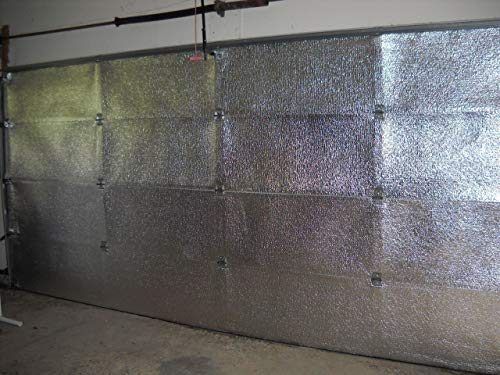
US Energy NASATECH 2 Car Garage Door Reflective Insulation Kit (R8)

NewAir Electric Space Heater for Garage 240V Industrial Heater

Dr. Infrared Heater DR-966 Hardwired Shop Garage Commercial Heater

Shinic 2 Packs Ceiling Mounted Heater with Halogen Light

Privacy Garage Door Screen for 2 Car Garage 16x7FT Silver Grey
Shinic Ceiling Mounted Heater with Halogen Light (Single Unit)
More On The Choices That Made The List
Plug-in garage heat doesn’t get much friendlier than the Dura Heat EUH1465. It runs on a standard household outlet, weighs barely more than a toolbox, and tilts on its pivoting base so you can aim the airstream at a workbench instead of the cold concrete floor. The yellow steel body is built for shop abuse, and the ceramic element pushes warm air out fast once you flip the switch.
For homeowners who only heat the garage on weekend projects, this kind of simplicity is a real win. You don’t need an electrician, and you can stow it on a shelf when spring arrives. Just keep expectations matched to its size: it’s rated for spaces up to 250 square feet, so a full two-car footprint will feel under-heated on the coldest mornings.
Practical Advantages
- Plugs into a standard 120V outlet, so setup takes about ten seconds
- Pivoting base lets you redirect warmth across a bench instead of one corner
- Rugged steel housing handles the bumps of a working shop
- Built-in thermostat means you set it and walk away
- Lightweight enough to carry from garage to shed without effort
Worth Noting
- Coverage tops out around 250 square feet, so full two-car garages stay chilly at the far end
- Fan noise is noticeable in a quiet space
- No cord wrap, so storage gets awkward if you stash it on a shelf
Quick Facts
Made For
Weekend tinkerers and hobbyists who heat one corner of a garage at a time rather than the whole space.
Reach For A Different Pick When
The NewAir Electric Space Heater suits you better for a full two-car footprint, since it runs on 240V and pushes far more air.
The thinnest part of your garage wall is the door, and this kit attacks that weakness head-on. Four rolls of reflective foam core go straight onto the inside of a 16-panel garage door, creating a sealed air pocket that lifts the R-value to R8 (a higher R-value means better resistance to heat flow). The double-sided foam tape holds the panels up without changing how the door opens or closes, and the whole job takes a Saturday afternoon with a razor and squeegee.
It’s not a heater at all, and that’s the point. Used alongside any of the active heaters in this list, it cuts the work they have to do, so the warmth you generate sticks around instead of bleeding out through thin panels. The same coating reflects summer heat back, which helps on July afternoons when the garage turns into an oven.
Positive Points
- Pre-cut panels fit common 16×7 to 18×8 two-car doors
- Reflective surface helps in both winter and summer
- Lightweight design leaves door balance and travel unchanged
- Step-by-step instructions make a first-time install manageable
Trade Offs
- Won’t warm the garage on its own, it’s a complement to a heater
- Tape adhesion can struggle in unheated garages until it fully cures
- Panels need careful alignment to look tidy across all 16 sections
Right Fit For
Homeowners who already own or plan to buy an active heater and want every BTU to count.
Look Elsewhere When
You only need occasional spot heat, because the Shinic Ceiling Mounted Heater (Single Unit) gives you that without any install project at all.
Step up from a 120V plug-in and the garage finally feels like part of the house. The NewAir runs on 240V through a heavier cord, so it pulls 5,600 watts of fan-forced heat and warms areas up to around 800 square feet, which covers most two-car footprints with room to spare. The black steel cabinet sits on the floor or a low shelf, and the strong airflow pushes warm air across the whole room rather than a single corner.
It’s still portable, just heavier than a weekend shop unit, and it needs a 240V receptacle that not every garage already has. If your panel has spare breaker space and you’re done fighting cold mornings in January, this is the kind of upgrade that changes how often you actually use the garage in winter.
The Value In It
- 5,600 watts of fan-forced heat covers full two-car garages
- 240V design runs more efficiently than chaining 120V heaters
- Sturdy housing built for daily use in shops and warehouses
- Strong airflow spreads warmth past the immediate vicinity of the unit
Some Limits To Know
- Requires a 240V outlet and a compatible breaker slot
- Heavier than 120V plug-ins, so moving it between spots takes effort
- Fan runs loud under high settings
Feature Card
Who Should Grab It
Shop owners and serious DIYers who already have a 240V outlet and want one heater to cover the whole garage.
Consider Something Else When
You don’t want electrical work, because the Dura Heat EUH1465 just plugs into any standard wall outlet.
The DR-966 skips the cord and plugs entirely, because this is a hardwired unit that an electrician ties straight into your panel. You can run it at 3,000W on a smaller breaker or step up to 6,000W when the circuit allows, and the spiral steel sheath elements (heavy-duty tubular coils inside a steel shell) push serious heat across a long, wide shop. It mounts on the ceiling or wall and stays out of the way of car doors and rolling tool chests.
For homeowners building out a real workshop, the hardwired approach pays off in cleanliness and long-term durability. The trade-off is upfront cost and the need for a licensed install, which adds to the project budget. Once it’s in place, the only thing you touch is the thermostat dial.
Standout Benefits
- Dual 3,000W / 6,000W settings match output to your circuit
- Spiral steel sheath elements rated for demanding commercial use
- Ceiling or wall mount keeps floor space clear for vehicles
- Hardwired design means no bulky cord to trip over
Potential Drawbacks
- Requires professional installation and a dedicated 240V circuit
- Mounting hardware and placement take planning before you buy
- Overkill for a garage you only heat a few weekends a year
At A Glance
Best Suited To
Homeowners finishing a permanent workshop build who want a clean, mounted heat source tied into the panel.
Skip It When
You want something you can move, because the NewAir Electric Space Heater rolls wherever you need it without an install.
Radiant heat skips the air entirely and warms the person standing in front of it, which is exactly what you want at a workbench on a February afternoon. The Shinic 2-pack hangs from the ceiling, swivels 90 degrees, and uses dual quartz tubes to push infrared warmth (heat delivered as light waves that hit objects directly) onto the spot you’re working on. The built-in halogen light is a thoughtful touch, since you’re already mounting a fixture overhead, and five mode settings let you tune output from 750W up to 1,500W per unit.
Two units in the box means you can cover a long bench or split heat between two workstations, though that also means two outlets and two mounts to plan for. For woodworkers and detail-oriented tinkerers, this style of targeted heat often beats a single big fan heater blowing warm air into the rafters.
Practical Pluses
- Two-pack design covers more square footage from a single purchase
- 90-degree rotation aims warmth at the work, not the ceiling
- Halogen work light adds visibility without a second fixture
- Five power modes give granular control over output
A Few Limitations
- Radiant heat only reaches what’s in front of the unit
- Quartz tubes get hot to the touch during use
- Two separate ceiling mounts take more install planning than a single heater
Who Will Love This
Woodworkers and bench hobbyists who stay in one spot and want direct warmth plus overhead light in a single fixture.
Swap It Out When
You need whole-room heat, because the NewAir Electric Space Heater circulates warm air across the entire garage instead of one zone.
Sometimes the easiest way to keep a garage warm is to stop treating it like an open-air breezeway. The FEGO Privacy Screen mounts inside the garage door frame and seals the opening with a retractable fiberglass mesh and a weighted bottom hem. From the outside, the silver reflective coating turns the opening into a blurred, private surface. From the inside, you keep airflow and a clear view out.
The screen blocks drafts that slip under and around a closed garage door, and the magnetic center seam lets you walk through without fussing with a zipper. It’s a passive upgrade, so the real warmth still has to come from a heater, but you’ll feel the difference the first windy night.
What It Does Well
- Reflective coating adds privacy without blocking your outward view
- Magnetic walk-through design handles frequent in-and-out traffic
- Weighted bottom keeps the screen seated against the threshold
- Fiberglass mesh lets fresh air circulate on milder days
Practical Considerations
- Privacy effect depends on outside lighting, so bright backlight can reduce it
- Not a full insulation barrier, drafts will still find small gaps
Perfect Match For
Garage gym and hobby space owners who want the door open for air without giving up privacy or comfort.
A Better Fit Elsewhere
Cold-climate garages that lose heat fast, where the US Energy NASATECH Reflective Insulation Kit attacks the door panels themselves for a stronger thermal seal.
Same heater as the two-pack above, just one fixture instead of two. The single Shinic mounts to the ceiling, runs on a standard 120V outlet, and pairs a dual quartz radiant element with a built-in halogen work light. Five mode settings let you run at 750W for a gentle warm-up or push to 1,500W when the temperature really drops. The 90-degree tilt aims the warmth at your bench instead of the cold floor.
This is the right call for a one-person shop or a single-car bay that doubles as a project space. It doesn’t try to heat the whole garage, so you save on the install and the electrical draw, and you still get the bonus of a brighter overhead light.
Notable Gains
- Plugs into a standard 120V outlet with no electrician required
- Five heat modes cover everything from mild chill to deep cold
- Integrated halogen light brightens the work area
- Ceiling mount leaves wall and floor space open
Points To Keep In Mind
- Single unit only covers one workstation effectively
- Quartz tubes run hot, so clearance from combustibles matters
Built With In Mind
Solo DIYers and hobbyists who work at one bench and want a single fixture to handle light and warmth together.
Not Your Match When
You have two separate work zones, since the Shinic 2 Packs Ceiling Mounted Heater covers both at once for less than buying singles.
What To Match Up Before You Pick A Garage Heater
Power And Circuit Capacity
120V heaters are the easiest path because they plug into any standard outlet, but they top out around 1,500W. For a full two-car garage, a 240V unit like the NewAir or the Dr. Infrared DR-966 delivers the kind of output that actually moves the needle. Check your panel before you commit, because adding a 240V circuit means an electrician and a permit in many areas.
Heat Type: Forced Air vs. Radiant
Forced-air heaters warm the air and push it around the room, which works well for general comfort and drying paint. Radiant heaters, like the Shinic units, heat objects and people directly, which feels more immediate at a workbench. Pick forced air for whole-room comfort and radiant for targeted task heat.
Coverage Area vs. Garage Size
Manufacturer coverage numbers assume reasonable insulation and a closed door. A typical two-car garage sits between 400 and 600 square feet, and you should treat the listed coverage as a ceiling rather than a guarantee. If your garage is uninsulated or has a high ceiling, lean toward the higher output option.
Install Effort And Long-Term Use
Portable units cost nothing to set up, while hardwired and ceiling-mounted options need planning and sometimes professional help. If you only need heat a few weekends a year, plug-in simplicity usually wins. For year-round workshop use, the install effort pays off in cleaner results and consistent comfort.
Key Considerations Across These Picks
Pitfalls Shoppers Hit
Most returns on garage heaters trace back to a mismatch between outlet and output, so verify your circuit before you fall for a high-wattage spec. Buying a small 120V heater for a drafty two-car space is the other common miss; you’ll run it constantly and still feel cold. Insulation, the US Energy NASATECH kit, and the FEGO screen, often do more for comfort than upgrading to a bigger heater.
Where The Extra Money Goes
Stepping up to commercial-grade metal housings, spiral steel heating elements, and dual wattage settings costs more because the components last longer under heavy use. The Dr. Infrared DR-966 sits at the top of that tier, and the price reflects a unit built to run for hours on end in a real shop. For occasional home use, the lower tiers deliver most of the comfort at a fraction of the cost.
Frequently Asked Questions
How many BTUs do I need for a two-car garage?
A standard two-car garage usually needs somewhere between 30,000 and 50,000 BTUs to feel comfortable during projects, depending on insulation and ceiling height. Most electric heaters in this list pair with a forced-air fan or radiant element rather than a pure BTU rating, so use the coverage area in square feet as your real guide.
Can I run a garage heater on a regular outlet?
Any 120V heater plugs into a standard outlet safely, including the Dura Heat EUH1465 and the Shinic ceiling unit. Heaters that run on 240V, like the NewAir and the Dr. Infrared DR-966, need a dedicated circuit and a compatible receptacle, which usually calls for professional installation.
Is a radiant or forced-air heater better for a garage?
Forced-air heaters warm the room evenly and help dry paint or thaw frozen parts, while radiant heaters warm whatever they’re pointed at almost instantly. Pick forced air for whole-room comfort and radiant when you spend most of your time in one spot at a bench.
Do garage door insulation kits really help?
The US Energy NASATECH kit targets the biggest thermal weak point in most garages, which is the thin metal door, and it reflects radiant heat back into the room. Used alongside any active heater, you can feel the difference on a windy night and notice the heater cycling less often.
How long do electric garage heaters typically last?
Residential units with ceramic or quartz elements tend to last several seasons of regular weekend use, while commercial-grade models like the Dr. Infrared DR-966 are rated for much heavier duty cycles. Keeping the unit clean and giving the element room to breathe goes a long way toward extending its life.