

Working in a cold garage wears you down fast. Your fingers go stiff, your tools get slippery, and projects that should take an hour stretch into three. The right heater turns that space into somewhere you’ll actually want to spend time in January, whether you’re wrenching on a motorcycle, painting a cabinet, or just trying to keep a tinkering hobby alive through the winter. Most folks reach for a 120-volt plug-in model because the wiring is already there, and the install is basically “find an outlet.”
The tricky part is matching the heater to the space. A wall-mounted unit with oscillation works for a finished bonus room. A rugged forced-air shop heater with a steel body is what you want over a concrete floor. The list below covers the main styles so you can pick the one that fits how your garage actually gets used.
Your Options, Compared

JNDRO Wall-Mounted Space Heater with Thermostat and Remote, 1500W

DR. INFRARED HEATER DR218-1500W Greenhouse Garage Workshop Infrared Heater
Dura Heat EUH1465 Electric Forced Air Heater with Pivoting Base, 5,120 BTU
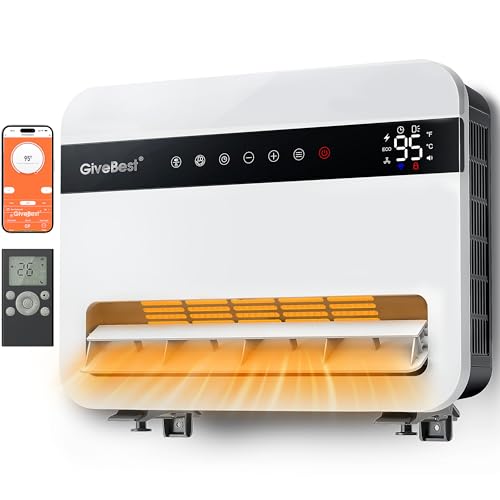
Givebest 1500W Wall Mount Space Heater, Alexa Compatible, White

Dura Heat EUH1500 Electric Forced Air Heater, 5,120 BTU

NewAir Electric Garage Heater, Portable, 240V Industrial

InoKraft 7,500W Electric Garage Heater, 240V, Ceiling Mount
Why These Options Stand Out
This is the pick for a garage that’s doing double duty as a workout room, a craft space, or a quiet home-office corner. The JNDRO hangs on the wall, so the floor stays clear for whatever you’re working on, and the LED display is easy to read from across the room. The remote keeps you from getting up to fiddle with controls mid-project.
Oscillation (the side-to-side sweep of the heating element) at 60, 90, or 120 degrees lets you aim warmth where you actually sit, rather than blasting one corner. The ECO mode trims output when the room hits your target, which matters for anyone running the heater through a long evening. Compared to the DR. INFRARED HEATER DR218-1500W below, this one is meant for finished, occupied rooms rather than open work bays.
Strengths Worth Knowing
- Wall-mount design keeps floor space open for benches, tools, or a parked car.
- Three oscillation angles let you focus heat on a workbench, a couch, or a treadmill area.
- 24-hour timer is handy for pre-warming the space before you head out for the morning.
- ECO thermostat mode reduces wattage draw once the room hits the set temperature, which helps on long sessions.
Things To Consider
- Best suited to smaller, better-insulated areas; a drafty two-car bay will outpace a 1500W wall unit.
- Wall mounting means you’ll want a stud finder handy during install, and the cord still needs to reach a standard outlet.
Key Specs
Who It Suits Best
Anyone treating the garage as a finished room and wanting a heater they can leave on the wall without a bulky base unit on the floor.
Where Another Pick Suits Better
The Dura Heat EUH1500 is a better fit for a true shop with a concrete floor and no finished walls to mount on.
The DR218-1500W takes a different angle on warmth. Infrared heaters warm objects and surfaces directly rather than pushing hot air around, which is a real advantage in a drafty garage where the air keeps cycling. You feel the heat the moment you stand in front of the unit, even before the room temperature climbs.
The sealed motor is permanently lubricated, meaning it doesn’t need routine oiling the way some older shop heaters do. For a greenhouse or a garage where you walk in, work, and walk out, that direct-object warmth feels more natural than waiting for the air to catch up.
The Case For It
- Infrared heat warms people and objects quickly, even when the surrounding air is still cool.
- Permanently lubricated motor reduces routine maintenance over the life of the unit.
- Comes from a brand with a long track record in workshop and greenhouse heating.
Worth Noting
- Infrared heat radiates outward in a line, so you’ll need to position it carefully to avoid cold spots behind you.
- 1500W on 120V is the same draw as a typical space heater, so it won’t outperform a comparable fan-forced unit in a large open bay.
Made For
Garage or greenhouse owners who want radiant warmth aimed at a work zone and don’t mind aiming the unit at where they’re standing.
Skip It When
The Dura Heat EUH1465 is the better fit for someone who needs to push warm air across a wide bench area.
The Dura Heat EUH1465 is the kind of heater you set on a workbench or the floor and aim at whatever you’re doing. The pivoting base lets you tilt the heat output up toward a workbench, down across a floor, or straight at a standing project. A 1500W PTC ceramic element (a self-regulating ceramic heating plate that adjusts output as it warms) drives a high-velocity fan, pushing warm air across a coverage area of roughly 250 square feet.
The yellow steel body is easy to spot on a cluttered floor, which matters more than it sounds in a busy shop. For someone working on a single car bay, the EUH1465 hits a useful middle ground between wall-mounted comfort units and the heavier 240V shop heaters at the end of this list.
Notable Upsides
- Pivoting base lets you redirect the heat beam without lifting the unit.
- PTC ceramic element self-regulates, reducing the risk of overheating during long sessions.
- Yellow steel body is rugged enough for a working garage and easy to spot.
- Onboard thermostat lets you set a target temperature rather than babysitting the switch.
Trade Offs
- Forced-air output means the fan noise is noticeable; it’s not the choice for a quiet office space.
- Heating a detached, drafty two-car bay in deep winter will push this unit to its limits.
Best Suited To
Single-car garage hobbyists who want a portable unit they can pivot toward the current project without rewiring the wall.
Not Your Match When
The JNDRO Wall-Mounted Space Heater suits a finished garage room where fan noise would be a distraction.
The Givebest is the wall-mounted option for anyone already running their house on voice commands. It pairs with a smart-home assistant, so you can call for heat from the couch or schedule it through an app. The 120-degree oscillation sweeps warm air across a wide arc, which helps in a long, narrow garage room.
The white finish blends into finished walls better than a yellow shop unit, and the upgraded fan is tuned for low-noise operation. For a converted garage gym or a playroom that happens to live in a garage, this one feels more like a household appliance and less like a piece of shop equipment.
Positive Points
- Voice and app integration removes the need to walk across the room to adjust settings.
- 120-degree oscillation covers a wide arc, useful in long, single-wall spaces.
- Low-noise fan keeps the room usable for phone calls or video work.
- Wall-mount design keeps the heater away from foot traffic and pets.
Honest Caveats
- You’ll need a working voice-assistant setup to take full advantage of the smart features.
- Like most 120V wall units, it works best in smaller, enclosed areas rather than open shop bays.
Who Should Grab It
Smart-home enthusiasts with a finished garage who want scheduling and voice control built in.
Reach For A Different Pick When
The DR. INFRARED HEATER DR218-1500W suits a greenhouse where radiant heat, not smart features, is the priority.
The EUH1500 takes everything good about the EUH1465 and trims the pivoting head, which is fine if you plan to mount the unit and aim it once. The tubular steel cabinet takes knocks from foot traffic and stray tools, and the carry handle matters more than it looks when you’re dragging the heater to a different bay. A built-in thermostat and a fan-only mode make it useful year-round.
With 5,120 BTU on roughly 1500W, it covers up to 250 square feet, which is roughly a one-car bay. Compared to the pricier wall-mounted picks above, this one is meant to sit on the floor or mount to a ceiling bracket and just work. For someone on a tighter budget, it’s the easygoing choice.
What Works In Its Favor
- Rugged steel cabinet handles a real working environment rather than a finished room.
- Adjustable stand gives you directional control without a separate pivoting base.
- Fan-only setting extends usefulness into the warmer months.
- Overheat shut-off adds a safety layer for unattended operation.
Some Limits To Know
- No remote, so you’ll need to walk over to adjust temperature or modes.
- Coverage tops out around 250 square feet, so a larger two-car bay will need a higher-output unit like the NewAir.
Perfect Match For
Shop owners who want a tough, no-frills forced-air unit and don’t need a remote or a smart-home tie-in.
A Better Fit Elsewhere
The Givebest 1500W Wall Mount Space Heater suits anyone who wants app or voice control rather than manual adjustments.
Stepping up to 240V changes the math entirely. The NewAir pulls higher wattage from a dedicated circuit, which means more heat output without tripping breakers, and it warms larger spaces without running at full tilt all day. For a two-car garage, a workshop, or a shed with high ceilings, this is the kind of heater that actually fills the room.
The black steel body is built for industrial spaces, and the carry-friendly design lets you move it between projects. It requires a 240V outlet, which is a real install step. The 120V picks earlier in this list skip that step, but they also can’t match this output.
Bright Spots
- 240V power delivery supports higher output for larger shop spaces.
- Fan-forced design spreads warm air across a wide area instead of one corner.
- Portable form factor is manageable in a single-person shop.
Practical Considerations
- Requires a 240V dedicated outlet, which may mean an electrician visit if your garage isn’t already wired for it.
- Heavier and bulkier than a 120V wall unit, so it’s not ideal for a small finished room.
Right Fit For
Shop owners with a 240V outlet already in place and a larger bay that 120V heaters can’t keep up with.
Consider Something Else When
The Dura Heat EUH1465 is the right call for a one-car bay where a 240V install isn’t practical.
The InoKraft goes up on the ceiling and gets out of your way, which is exactly what a busy two-car garage needs. At 7,500W, it’s a serious heat source, and the NEMA 14-50P plug (a heavy-duty 240V plug rated for high-draw appliances) is wired to handle that draw safely on a dedicated circuit. The 8 AWG wire gauge (a thick, heavy-gauge electrical wire rated for high current) gives you a hint at the install expectations.
Manual high/low modes and an ECO thermostat give you control without a screen full of menus. The remote is a nice touch for adjusting output without pulling out a ladder. For a detached garage where you’re parking, lifting, and walking around constantly, ceiling-mounting keeps the air clear and the heat well-distributed.
Practical Advantages
- Ceiling-mount design leaves floor and wall space completely open.
- 7,500W output covers large two-car and detached garage spaces.
- 24-hour timer and ECO mode help manage longer running sessions.
- Remote control avoids the need to climb up for adjustments.
Worth Bearing In Mind
- Requires a 240V dedicated circuit and a NEMA 14-50 receptacle, so professional install is common.
- Ceiling mounting means you’ll want to plan placement carefully; once it’s up, moving it is a project.
Quick Facts
Built With In Mind
Detached garage owners with a 240V circuit who want a permanent, out-of-the-way install and serious heat output.
Swap It Out When
The NewAir Electric Garage Heater suits someone who wants portability rather than a permanent ceiling install.
Picking A Heater That Actually Fits Your Shop
The right 120v electric heater for a garage is the one that matches your square footage, your insulation, and how you use the room. A finished garage that’s doubling as a workspace or a gym is a different problem than a drafty two-car bay with a concrete floor and a roll-up door. Before you pick, think about three things: how the heater delivers warmth, where the heat ends up, and how much draw your wiring can support.
Forced-air heaters, like the Dura Heat EUH1465 and EUH1500, push warm air across the room with a fan. They work well in open or semi-open spaces where you want a noticeable temperature climb. Infrared heaters, like the DR. INFRARED HEATER DR218-1500W, warm objects and surfaces directly, which feels more natural in drafty rooms where the air is constantly moving. Convection-style wall units, like the JNDRO and Givebest, rely on the room itself holding heat, so they shine in smaller, better-sealed areas.
Voltage matters more than wattage once you get past a certain point. A 120V unit plugs into any standard outlet, which is the easy route. A 240V unit like the NewAir or the InoKraft needs a dedicated circuit, but it delivers substantially more heat without tripping breakers, which makes it the practical choice for larger shops.
Match The Heater To The Square Footage
Coverage ratings are a starting point, not a guarantee. A 1500W unit rated for 250 square feet will do well in a sealed one-car bay, but the same unit in a drafty detached shop with a high ceiling will struggle. Insulation, ceiling height, and how often the door opens all change the equation, so buy a little more output than you think you need.
Decide On Wall, Floor, Or Ceiling
Wall-mounted units keep the floor clear, which is ideal for finished rooms. Floor-standing forced-air units pivot and aim, which is more useful in a working shop. Ceiling-mounted units stay out of the way entirely, which matters in a garage that also parks a car. The right placement depends on what else lives in the room.
Think About Daily Operating Time
A heater you’ll run for an hour before a project is a different purchase than one you leave on for an entire workday. ECO modes and thermostats help trim draw during long sessions, but a rugged steel cabinet with a sealed motor is what you want for daily, multi-hour use.
What Shoppers Often Overlook
Pitfalls Shoppers Hit
The most common mistake is matching the heater to the listing photo rather than the actual space. A wall-mounted convection unit looks tidy in a product image, but in a real shop with poor insulation, it will run nonstop and never quite catch up. Measure the room, check the door and window situation, and pick a unit rated slightly above what you need. Another slip is forgetting that a 240V heater needs a dedicated circuit, so the “just plug it in” promise on the box can turn into an electrician visit.
Where The Extra Money Goes
The step up to a higher-output unit usually pays for a sturdier cabinet, a more capable thermostat, and safety features like overheat shut-off. A rugged steel body matters more in a working shop than a finished room, and a sealed, permanently lubricated motor reduces long-term maintenance. The upgrade is worth it for anyone running the heater multiple hours per day, week after week. For occasional weekend use in a small bay, the budget tier handles the job without the extra cost.
Frequently Asked Questions
How many square feet will a 1500W heater cover?
Roughly 150 to 250 square feet in a reasonably sealed space, though ceiling height, insulation, and door use all affect that range. In a drafty detached bay, expect to underrun the rated coverage.
Can a 120V heater handle a two-car garage?
A 120V unit will warm a two-car garage, but it will run continuously in deep winter and may struggle on the coldest days. A 240V unit like the NewAir or the InoKraft is a better match for a larger, less insulated space.
Is infrared better than forced air for a garage?
Infrared warms people and objects directly, which feels more comfortable in drafty rooms where the air keeps moving. Forced air raises the actual air temperature, which is useful in sealed spaces. The right choice depends on your garage’s layout and insulation.
How important is a thermostat on a garage heater?
A thermostat is a real quality-of-life feature for any heater you’ll run for more than an hour. It cycles the unit to maintain a target temperature, which saves electricity and keeps the room from swinging between too hot and too cold.
Do garage heaters need a dedicated circuit?
120V heaters can usually share a circuit with other light loads, but 240V models like the NewAir and the InoKraft require a dedicated circuit by code. Running a 240V heater on a shared circuit is a common cause of nuisance breaker trips.