

Working in an unheated garage through the colder months quickly turns a hobby into a chore. Your hands stiffen, adhesives refuse to cure, and bare concrete seems to radiate the chill right back at you. A standard 120-volt heater plugs into a regular household outlet, so you skip the electrician visit and the propane tank run. The picks below cover spot heat, full-room warmth, wall-mounted convenience, and infrared comfort, each chosen for a specific kind of garage, workshop, or workspace.
A Quick View Of The Lineup

Vornado Velocity HD (2025) Garage Space Heater
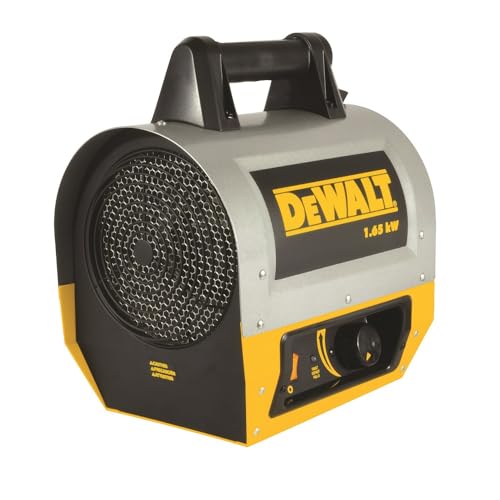
DEWALT Forced Air Electric Construction Heater (1.65 kW)

JNDRO Wall-Mounted Space Heater with Thermostat and Remote

DR. INFRARED HEATER DR218-1500W Workshop Heater
Dura Heat EUH1465 Electric Forced Air Heater with Pivoting Base
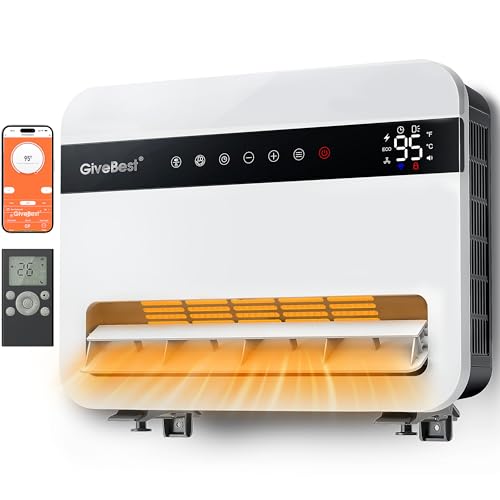
Givebest 1500W Wall Mount Space Heater

Dura Heat EUH1500 Electric Forced Air Heater
What Each Pick Brings To The Table
Most 120-volt heaters try to warm a whole garage and end up doing neither job well. The Vornado Velocity HD takes the opposite route, concentrating a focused stream of heat on the area you actually occupy. Its 30-degree tilt head lets you aim warmth at a workbench, a project car, or your hands without heating the rafters along the way.
A rugged grab-and-go shell suggests this thing wants to be moved around the shop, and the 6-foot cord gives you reach without hunting for an extension. A snap-off pre-filter catches shop dust, which matters more than it sounds in a space full of sawdust and drywall fragments.
Positive Points
- Directional tilt head keeps heat on the workbench instead of the ceiling.
- Two fan speeds let you tune airflow to the task at hand.
- Removable pre-filter pulls off in seconds for a quick rinse.
- Glove-friendly controls mean fewer fumbling moments in cold weather.
- Compact frame fits on a bench, shelf, or the floor without dominating the space.
Points To Note
- Spot-heat design means larger detached garages may feel unevenly warmed.
- Pre-filter needs regular cleaning in dusty woodworking environments.
Who It Suits Best
DIYers and weekend tinkerers who mostly want heat where their hands are, not a toasty empty bay behind them.
Where Another Pick Suits Better
For full-room warming in a larger detached shop, the Dura Heat EUH1500 spreads its 5,120 BTU across the whole space more evenly.
DEWALT built this for contractors who need dependable heat on a standard outlet, and the 1.65 kW output reflects that reality. Around 5,630 BTU per hour on a 120-volt line is honest performance for a jobsite-friendly unit. You trade raw heat for the convenience of plugging into any household receptacle.
The compact body sits on a jobsite cart or garage floor without getting in the way of toolboxes. A built-in fan pushes warm air outward rather than letting it pool at your feet, and the heavy-gauge steel shell holds up to the scrapes and bumps of working life.
Real Benefits
- 1.65 kW output runs on a standard 120V household outlet.
- Forced-air fan distributes heat across the work area quickly.
- Jobsite-ready steel housing tolerates drops and rough handling.
- Lightweight enough to reposition between tasks without strain.
Less-Strong Areas
- Lower BTU output means a chilly detached garage may still feel underheated.
- Fan noise can be noticeable in quiet home-shop settings.
- Limited reach from a standard outlet may require an extension cord in larger bays.
Made For
Tradespeople and homeowners with small, enclosed garages who want a portable unit they can move from job to job.
Look Elsewhere When
You need steady warmth across a detached three-bay shop, where the Dura Heat EUH1465’s 250-square-foot rating earns its keep.
Floor space in a small workshop is sacred, which is exactly why a wall-mounted unit like the JNDRO makes sense. The 1500-watt element sits high on the wall and the oscillation sweeps warmth across the room rather than blasting a single spot. You reclaim the floor for toolboxes, sawhorses, or a parked bike.
An ECO thermostat mode (a setting that dials output up or down to hold your chosen temperature) takes some of the babysitting out of long sessions. The included remote and LED display make it easy to nudge the temperature without crossing the room.
What Helps Most
- Wall-mount design keeps floors clear in tight spaces.
- Adjustable oscillation (60, 90, or 120 degrees) spreads heat across the room.
- 24-hour timer supports overnight or scheduled warm-ups.
- ECO mode trims power use when the target temperature is reached.
Trade Offs
- Wall installation requires basic drilling and a stud finder’s attention.
- Less suitable for very tall ceilings where heat rises above the occupant zone.
Right Fit For
Anyone running a small home gym, hobby room, or tidy workshop where floor space matters more than raw output.
Skip It When
You want rugged, no-fuss heat in a dusty garage, where the Vornado Velocity HD’s grab-and-go style fits better.
Forced air warms the air, but infrared (radiant heat that warms objects and people directly, like sunshine through a window) warms what it touches first. The DR218 leans into that difference with a 1500-watt radiant element, making it a strong match for greenhouses, plant rooms, and workshops where the goal is keeping tender things alive through a cold snap. The enclosed, permanently lubricated motor is built for long hours without demanding much from you in return.
A simple, no-frills design keeps the focus on steady, silent warmth. Without a roaring fan, the unit blends into quieter workspaces where a high-velocity heater would be unwelcome.
Useful Strengths
- Radiant heat warms plants, tools, and people directly without raising dust.
- Totally enclosed motor is rated for long operating cycles.
- Silent operation suits workshops where conversation matters.
- Compact footprint fits between benches or against a wall.
Worth Bearing In Mind
- Radiant heat falls off quickly with distance, so close placement matters.
- Fewer features than wall-mounted or fan-driven competitors.
- Best for enclosed spaces rather than open, drafty garages.
Best Suited To
Greenhouse owners and hobby gardeners who need frost protection without stirring up dust or drying out the air.
A Better Fit Elsewhere
For a workshop where you want full air warming, the Dura Heat EUH1465 forced-air design makes more sense.
Ceramic elements (heating coils inside a ceramic plate that radiate warmth efficiently and cool quickly when power drops) have earned their reputation in workshops for a good reason. The Dura Heat EUH1465 pairs that element with a high-velocity fan and a steel body that shrugs off the scrapes of daily shop life. The 250-square-foot rating covers most single-car and modest two-car garages comfortably.
The pivoting base lets you redirect airflow without dragging the whole unit across the floor, and a built-in thermostat keeps the room from yo-yoing between cold and hot. A six-foot power cord reaches the nearest outlet without forcing a rearrangement of the space.
Strong Points
- PTC ceramic element delivers quick, responsive heat.
- Pivoting base directs warm air where you need it most.
- Steel body stands up to garage wear and tear.
- 5,120 BTU output covers up to 250 square feet.
- Built-in thermostat removes the on-off guesswork.
Honest Caveats
- Yellow finish shows scuffs and shop grime over time.
- Not weatherproof, so outdoor or open-air use is off the table.
Feature Card
Perfect Match For
Workshop regulars who need steady, full-room warmth and want a unit that survives contact with the rest of the shop.
Not Your Match When
You want silent, dust-free radiant heat for plants, where the DR. INFRARED HEATER DR218 fits the bill.
The Givebest takes the wall-mounted heater concept and adds the kind of smart-home integration that some folks expect in 2026. Voice control through a smart speaker, a remote, and ECO mode come together in a slim white housing that disappears against most garage walls. You may find the 120-degree oscillation especially useful in a converted garage where seating or a workbench is offset from the heater.
For hobby rooms or finished garage conversions, this is a tidy choice. The trade-off is that it needs a clean, dry environment rather than a rough service bay.
Real-World Strengths
- Smart speaker compatibility for hands-free temperature nudges.
- Wall-mount profile keeps walkways and floors open.
- 120-degree oscillation spreads warmth across wider rooms.
- Remote control for adjustments without crossing the room.
Factors To Consider
- Smart features require a stable Wi-Fi signal in the garage.
- Not designed for heavy dust, grease, or sawdust environments.
Who Should Grab It
Homeowners running a converted garage as a hobby room, gym, or office and want voice control plus tidy aesthetics.
Swap It Out When
Your garage sees heavy shop use, where the Dura Heat EUH1465’s rugged ceramic design handles dust and debris better.
There is a reason the EUH1500 has hung around workshop floors for years. The tubular steel cabinet and built-in turbo fan are built for the rough side of garage life, and the 5,120 BTU output handles up to 250 square feet without straining. Owners commonly value the included ceiling and wall mounting kit, which frees up floor space in a busy shop.
An adjustable stand lets you point the heat in the right direction, and a fan-only mode turns it into a circulator in warmer months. The carry handle is a small touch that earns its place every time you reposition.
What Makes Sense
- 5,120 BTU output covers up to 250 square feet.
- Tubular steel cabinet handles the bumps of workshop life.
- Wall or ceiling mounting kit included for flexible placement.
- Adjustable stand angles heat toward the work area.
- Fan-only mode provides air circulation in summer.
Details To Watch
- Heavier than portable ceramic units, so plan mounting ahead of time.
- Forced-air output can stir up sawdust and fine debris.
Whose Shelf It Belongs On
Detached garage and shop owners who want a no-nonsense unit they can mount and largely forget about.
Reach For A Different Pick When
Smart-home integration matters, where the Givebest wall-mount unit’s connected features earn their premium.
Factors To Consider When Choosing 120v Electric Garage Heaters
Match the heater to the square footage
A 1,500-watt unit at 120 volts generally warms somewhere between 150 and 300 square feet, depending on insulation, ceiling height, and how often the door opens. Single-car garages usually fall in the comfortable middle, while detached two-car shops benefit from forced-air models like the Dura Heat EUH1465 or EUH1500.
Decide between forced air, ceramic, and infrared
Forced-air heaters warm the air and push it around, which is great for full-room heat. Ceramic elements heat up and cool down quickly and pair well with a fan. Infrared (radiant) heaters warm objects and people directly, ideal for greenhouses and spot use. Pick the style that matches the job, not the other way around.
Think about placement and mounting
Wall and ceiling-mounted units keep floors clear but require installation. Portable heaters can move with you but take up bench or floor space. For shop-heavy garages, mounted options tend to stay out of the way of dropped tools and rolling carts.
Plan for safety and electrical capacity
A standard 15-amp household circuit handles most 1,500-watt heaters, but avoid daisy-chaining extension cords or sharing the circuit with high-draw tools. Overheat shut-off, tip-over protection, and cool-touch grilles all add peace of mind in a working shop.
Key Considerations Across These Picks
Common Shopping Slip Ups
The most frequent mistake is buying a heater that is too small for the space. A 1,500-watt unit may feel underwhelming in a drafty three-car garage, and shoppers sometimes blame the heater instead of the room. Measure the square footage, check insulation, and consider how often the door opens. Another trap is choosing a wall-mounted unit without confirming stud placement, which leads to frustrating install day. Finally, ignoring noise levels can turn a comfortable workshop into an irritating one, especially for long sessions.
What The Higher Tier Buys
Spending more in this category typically buys tougher steel bodies, longer components life, and stronger fans that move more air per minute. Premium models also tend to include mounting kits, longer cords, and better thermostat accuracy, which adds up to less fiddling over the life of the unit. The upgrade is worth it for daily-use workshops, while occasional hobbyists can comfortably settle on a mid-tier pick.